
Diesel generator fuel return carries the spill back from the injection pump, and where the line ends decides the tank temperature and the air in the fuel. Tesla Power runs the return below the fuel surface and sizes it for the spill. This guide shows how to size the line before you request a quotation.
- The return carries 2-4 times the burn on a common rail engine, so it is the larger flow on the circuit.
- Ending the return above the fuel level aerates the tank and lets the set hunt under load.
- A return that sits next to the suction draws its own warm fuel straight back into the engine.
- Draw the route on the enquiry, and the frames in the export frame range are quoted with the right connections.
Why does the return carry more fuel than the engine burns?
The injection pump delivers a fixed volume per stroke and the injector uses a fraction of it, so the rest goes back to the tank. A common rail engine at 320kW may burn 68 L/h while the pump circulates 200 L/h, and the difference returns warm. That spill is what keeps the pump cool and what carries air out of the rail. Most diesel generator manufacturers state the ratio on the data sheet, and Chinese diesel generator suppliers usually quote the burn alone. Tesla Power answers the four items inside the quotation rather than afterwards.
The ratio matters for the pipe. A circuit sized on the burn runs the return at three times the design flow, and the loss rises with the square of the flow. It also matters for the tank, because 130 L/h of warm fuel returning to a 500 L tank will raise the tank temperature several degrees an hour until the surface loses the heat.
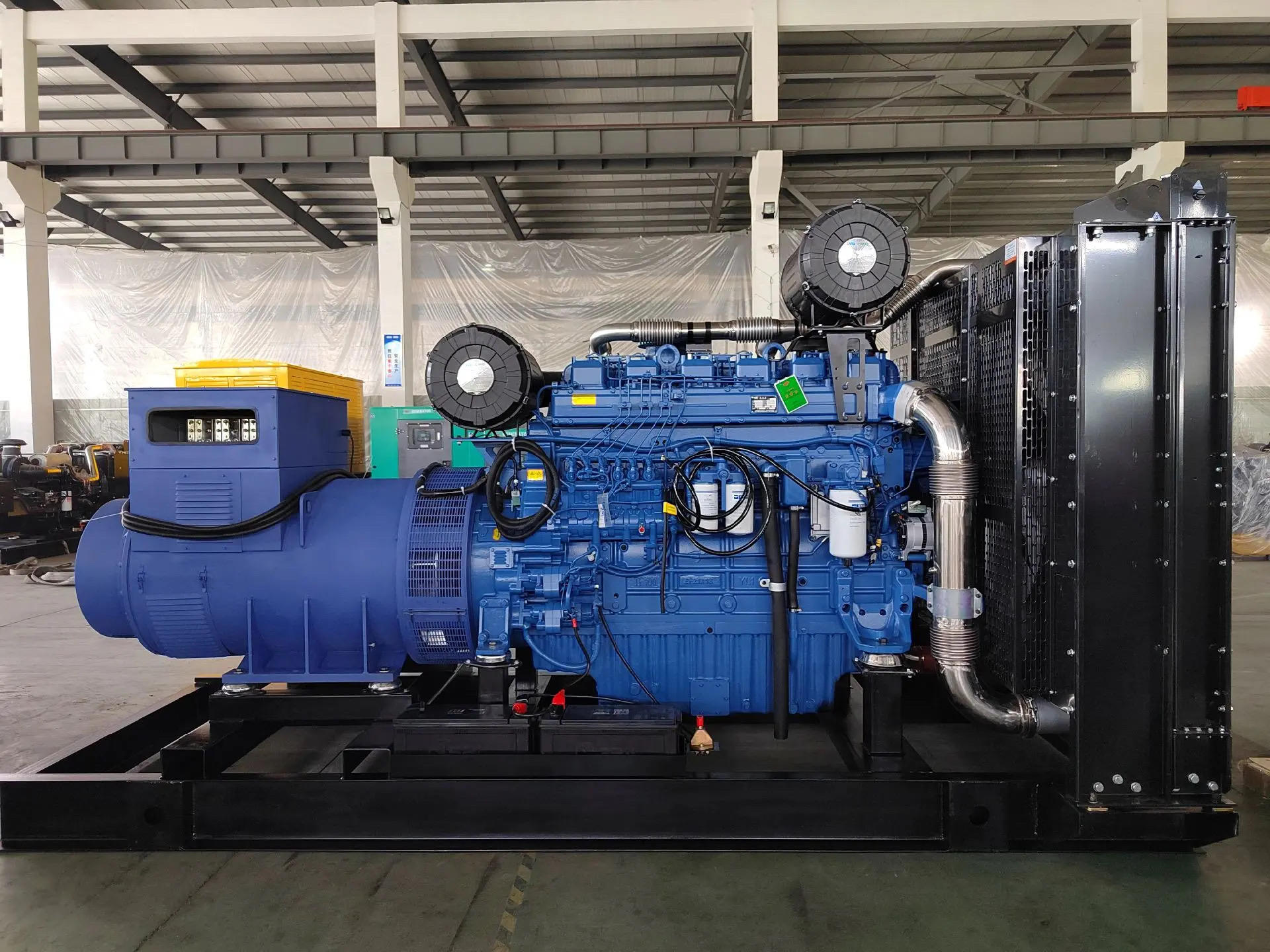
How hot does the returned fuel get?
The return leaves the pump at 10-25°C above the fuel in the tank, depending on the load and the pump type. At full load a common rail pump returns fuel near 60°C, and a mechanical pump returns it nearer 45°C. The tank then loses that heat through its surface, and the balance point decides the steady temperature.
Work the case at 320kW with a 500 L tank, using the fuel energy basis in the ISO 3046-1 consumption reference. The engine burns 68 L/h and returns 200 L/h at 60°C, so the heat arriving is about 200 × 0.84 × 30 = 5,040 kJ/h, where 0.84 is the specific heat of the fuel in kJ per kg per kelvin. A bare steel tank of that size loses roughly 3,000 kJ/h at 10°C above ambient, so the tank climbs until the loss matches the input, which settles near 17°C above ambient.
| Load | Burn rate | Return flow | Tank rise above ambient |
|---|---|---|---|
| 100% | 68 L/h | 200 L/h | 17°C |
| 75% | 51 L/h | 185 L/h | 14°C |
| 50% | 34 L/h | 170 L/h | 11°C |
| 25% | 17 L/h | 155 L/h | 8°C |
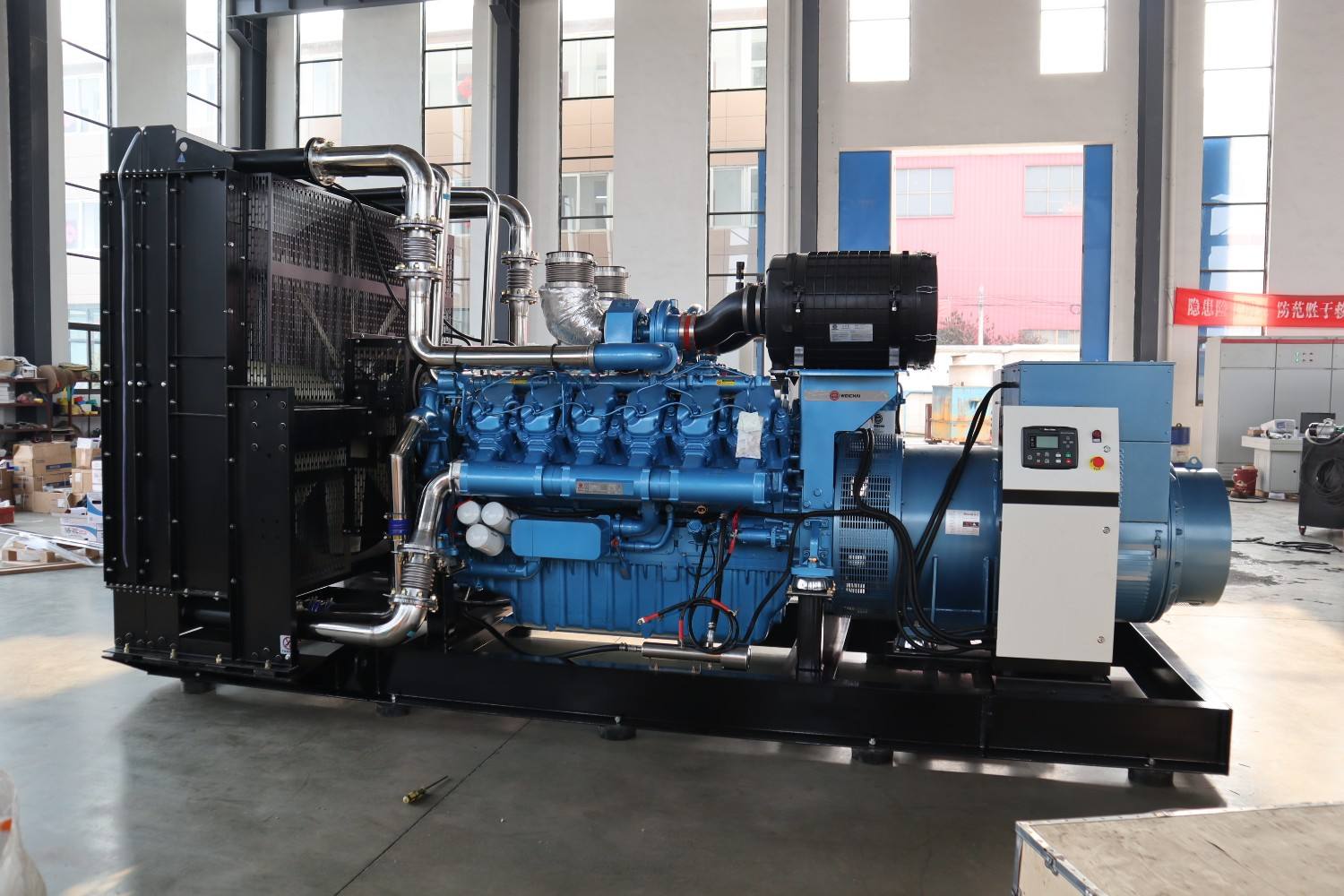
What happens when the return ends above the fuel level?
It aerates the tank. The returning fuel falls through the air space and entrains bubbles, and those bubbles reach the suction point and travel to the injection pump. The engine then misfires or hunts, and the symptom appears only below a certain tank level, which is what makes it hard to diagnose on site. Yangzhou Tesla Power states the ambient and the altitude beside the rating.
The same arrangement also foams a tank that is nearly empty, and foam is worse than bubbles because it can fill the suction strainer. A return that ends 50mm below the lowest fuel level removes both faults, and the cost is a longer dip tube rather than a new tank. A diesel generator fuel return line sized on the burn runs three times over its design flow and heats the tank faster. That is the single most common fuel fault we see on sets commissioned elsewhere, and it is the first thing we check on the 400kW frame on the WP13 platform when a site reports hunting.
Why should the return stay away from the suction?
A return next to the suction sends the warmest fuel straight back to the engine, which shortens the loop and raises the return temperature further. The tank then stratifies with a hot layer at the return end and a cooler layer everywhere else, and the gauge reads an average that hides both. Move the two connections to opposite ends of the tank and the whole volume becomes the mixing chamber.
The distance that works is about two-thirds of the tank length, or 500mm on a small baseframe tank. Where the tank is too short for that, a dip tube on the return that ends near the bottom produces enough mixing on its own. A site with a day tank and a main tank gets the same benefit from returning to the day tank rather than to the main. A diesel generator for a bulk tank therefore specifies the return end point on the drawing rather than leaving it to the fitter. Tesla Power keeps the reading beside the load record rather than in a covering letter.
How does hot fuel change the engine output?
Hot fuel is less dense, so the injection pump delivers less mass per stroke and the engine loses power. Diesel at 60°C is about 3% less dense than at 20°C, and the loss appears as a small power shortfall at full load that no gauge explains. It also loses lubricity, which matters more on a rotary pump than on a common rail.
The fix is to keep the tank temperature down rather than to compensate at the pump. A tank at 17°C above ambient in a 35°C room sits at 52°C, which is inside the limit. The same tank in a closed room at 45°C reaches 62°C and the fuel begins to lose the margin the injection system was set for. A diesel generator for standby duty runs a shorter spill loop, so the same tank stays cooler.
Which bore does the return need?
Size the return for the spill at a velocity under 1.0 m/s, which at 200 L/h needs a 10mm bore and at 400 L/h needs a 14mm bore. Most builds use the same bore as the suction for simplicity, and that is safe because the suction is sized tighter. The return should not be smaller than the suction on a common rail engine.
Check the return line for back pressure as well, because some engines specify a maximum at the pump outlet. A return that rises above the tank or runs through a long horizontal section holds a head that the pump sees, and a pump that works against back pressure returns less fuel and runs hotter. Route the return downhill to the tank wherever the layout allows. A diesel generator in a cold store keeps that heat as an advantage, because the return warms the tank through a winter night.
What does the factory check on the return circuit?
Our test bay runs the set at full load for two hours with the return connected to a tank at the site height, and records the return temperature at the tank inlet and the tank temperature at the start and end. The difference between the two tells us whether the tank can shed the heat, and the trend over two hours tells us where it will settle.
The bay also checks the return for air after a filter change, because that is when air enters the circuit. A clear section of hose at the return, fitted for the test and removed before shipment, shows bubbles that a gauge would miss. Tesla Power Equipment records the result on the test sheet beside the fuel pressure, and the factory and the test bay keep the sheet with the order.
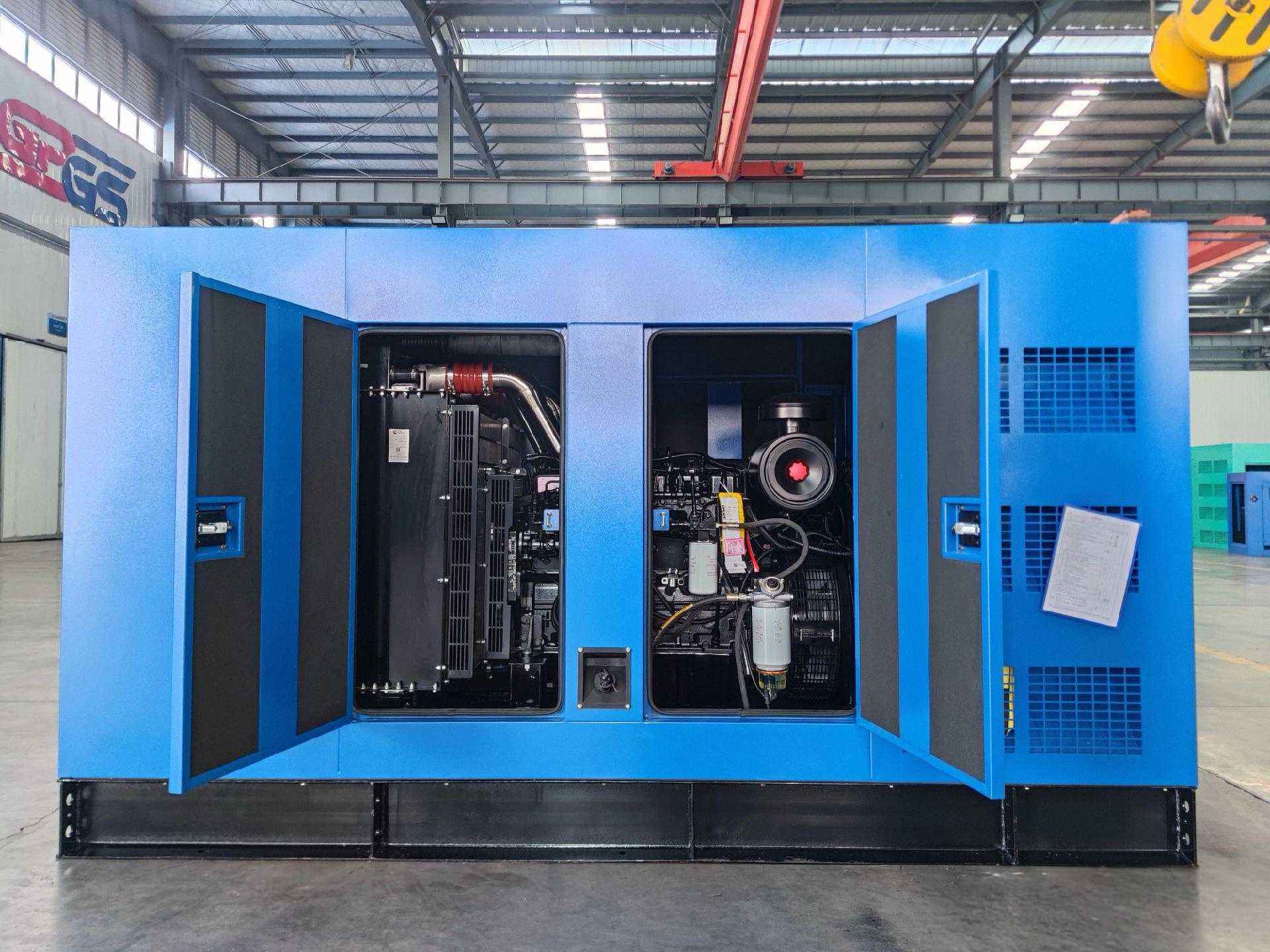
How should the enquiry state the return circuit?
State four items: the tank capacity, whether the tank is baseframe or separate, the height of the return connection above the lowest fuel level, and the ambient where the tank sits. The four decide the tank temperature, and the temperature decides whether the site needs a cooler or a larger tank.
Send the four with the load list to the export desk, and the reply carries the return bore, the dip tube length and the tank connection positions on a sketch. The site planning notes carry the same four items as a form, and the same sketch goes into the technical file so the build matches the drawing.
Where does a return circuit fail in service?
It fails at the dip tube, which cracks at the weld where it passes through the tank top. A cracked tube lets the return spray above the fuel level, and the fault looks like an aeration problem with no obvious cause. A tube that reaches the tank bottom with a 45° cut end avoids the spray and the crack, because the weld sits below the fuel surface where the vibration is damped.
The second failure is a blocked return filter, where the engine has one. A blocked return raises the pump housing pressure and the seal begins to weep, and the weep appears as a fuel smell rather than a leak. Change the return filter at the same interval as the main filter, and record the pressure at the pump outlet while the engine is at full load. Tesla Power reads that figure on the site sheet before the plate is printed.
What is recorded at handover?
Three figures go on the handover sheet: the return temperature at the tank inlet, the tank temperature after two hours at full load, and the fuel pressure at the pump outlet. The three together prove the circuit holds the rating, and they give a service engineer a baseline. A return temperature that has climbed 8°C in a year points at the tank rather than the pump. The same frame appears in the 500kVA silent set with the ATS option, where the plate states the same basis.
Record the dip tube length and the connection positions on the same sheet, because a replaced tank is the common cause of an aeration fault. The monthly run in the NFPA 110 routine is when a rising tank temperature is usually noticed. A genset for a buried main tank with a day tank returns to the day tank, and the note on the sheet says so. Without it, a fitter connects the return to the main tank and the day tank overflows on the first long run. Tesla Power writes the figure into the offer line so the basis travels with it.
Frequently asked questions about diesel generator fuel return
It cannot on any engine with a spill circuit, because the pump needs the flow to cool itself and to carry air out. Blanking the return raises the housing pressure and damages the seal within hours. Some engines allow a restricted return, and the manual states the orifice size.
It needs one where the return joins a common line from two sets, so one pump cannot push fuel into the other. A single set returning to its own tank does not need one, and a valve that sticks closed is worse than no valve at all.
Usually because the return dip tube was disturbed and now sprays above the level, or because a joint on the return was left loose. A smell with no visible leak is the signature of both. Check the tube first, then the joints, then the tank vent.
Between 8°C and 17°C above ambient at steady state on a baseframe tank, depending on the load and the tank surface. A larger tank or a cooler room lowers the figure. Measure it rather than assume it on a site where the room runs hot.
To the day tank, which is where the engine draws from. Returning to the main tank means the day tank slowly empties while the main tank receives its spill, and the transfer pump then cycles more often than it needs to.
It does, because the float reads volume and hot fuel occupies slightly more of it. The error is under 1% over the range a tank sees, so it matters for a billing check rather than for a running plant.
The same bore as the return line, ending 50mm below the lowest fuel level with a 45° cut. A tube smaller than the line throttles the return, and a tube that stops short of the fuel sprays into the air space.
The diesel generator CE marking requirements cover the assembly, and the fuel circuit drawing sits in the technical file rather than on the declaration. Conformity assessment for the assembly checks the drawing against the build. Tesla Power files the sketch with the test sheet so the two can be read together.