
Choosing a diesel generator manufacturer means matching a published rating to your load list, then checking the factory that builds it. Tesla Power follows that order on every export enquiry: fix the specification first, compare the data sheet against a 500kVA silent set, and verify the works before any deposit moves.
- Pull the data sheet for the rating you need, not the headline figure on the catalogue page.
- Ask which engine and alternator models sit inside the set, and write down the model codes.
- Check the quality records and the conformity file that travel with the shipment.
- Confirm which load bank test the set must pass before it leaves the works.
What does a diesel generator manufacturer build for export?
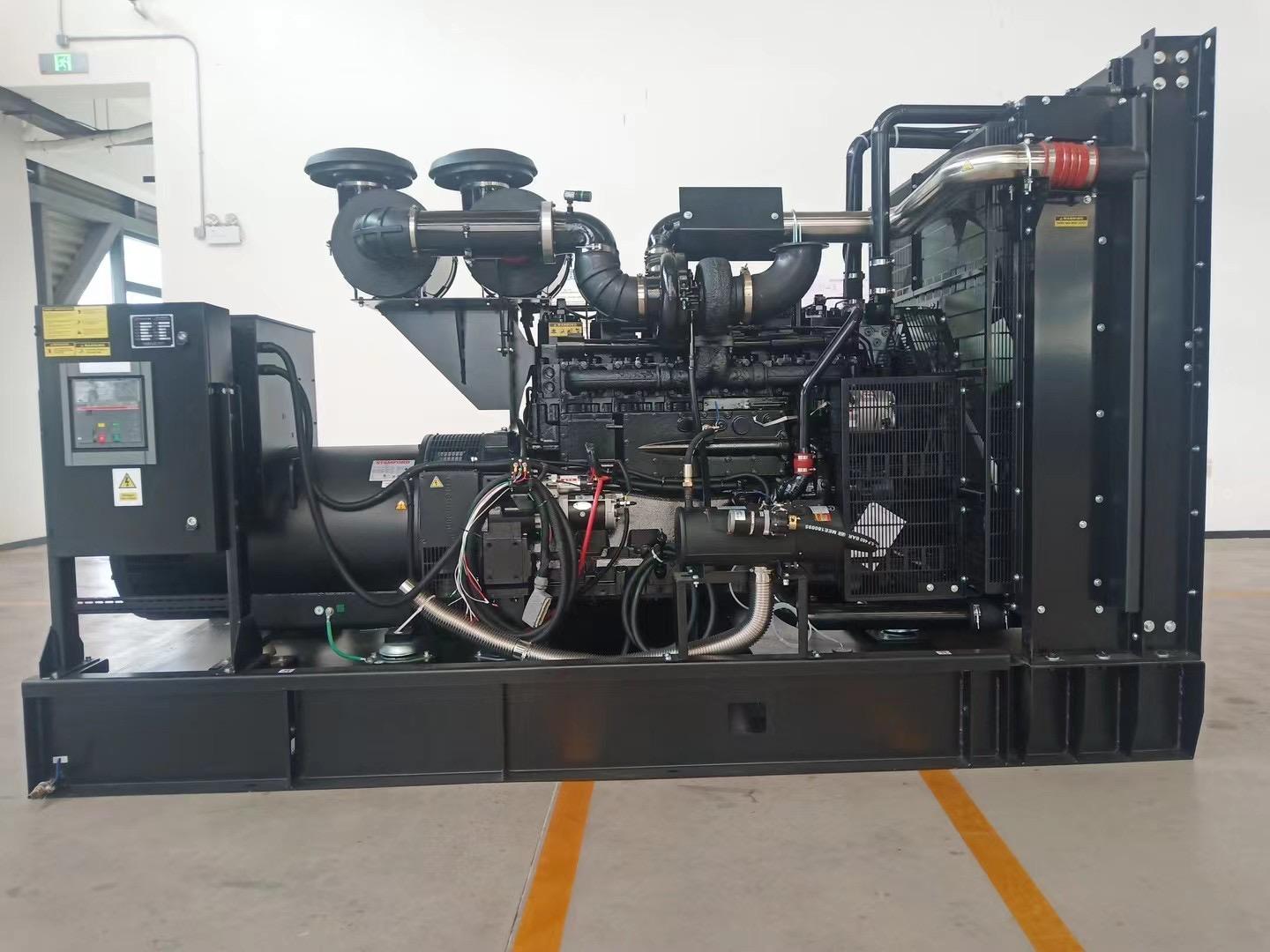
An export factory assembles an engine, an alternator, a control panel and a cooling package onto one skid, then tests the assembly as a single machine. The buyer is not buying four parts. The buyer is buying a tested set whose rating has to hold at the site, and that is why the data sheet matters more than the catalogue photograph. A rating quoted without ambient and altitude conditions is an incomplete offer.
The scope line on a purchase order usually names the enclosure, the automatic transfer switch and the fuel system as separate items. Each one changes the shipping envelope, the footprint and the price, so a factory has to quote them as options rather than fold them into a single figure. Two bidders can look identical on the headline rating and differ by 30% once the options are listed.
Which factory capabilities decide the rating on the data sheet?
A data sheet is a claim about a machine at stated conditions. The two conditions that move a rating most are ambient temperature and site altitude. A factory that publishes both is telling you how it tested the set, not how it hopes the set will behave in a hot week. Derate curves are the evidence, and a sheet without them is a catalogue entry rather than a specification. The inspection steps are set out in our pre-shipment inspection notes.
Ask for the engine model code, the alternator frame and the insulation class. Those three items decide whether a repair in year six is a parts order or a rebuild. A diesel generator for export projects leaves the works with a matching nameplate and a signed test sheet, which makes the set easier to insure and easier to resell.
How do you compare diesel generator manufacturers before you order?
Put every bidder on the same scope. A quote for a bare skid and a quote for a containerised set with an automatic transfer switch are not comparable, and the difference usually sits in the options list rather than the headline rating. Write the scope once, send the same document to each factory, and ask for the same four numbers back: rating, fuel burn, footprint and mass. Tesla Power returns those four figures on a single page for every offer.
Then compare the evidence behind the numbers. A factory that returns a data sheet, a test record and a parts list is showing you its process. A factory that returns a price and a photograph is asking you to take the rest on trust. Keep the comparison sheet and the source documents in one folder, because the same file answers the questions that arrive after the order is placed. This export set page shows the four figures in one place, which is the format to copy.
How is a load list turned into a kVA figure?
Start with the running load, not with a guess. Take a site with 150kVA of motors and drives and 100kVA of lighting and small power. The arithmetic sum is 250kVA, and a diversity factor of 0.8 gives 250kVA × 0.8 = 200kVA. A 25% growth margin brings that back to 200kVA × 1.25 = 250kVA, so the enquiry should ask for a 250kVA set rather than a 200kVA one.
| Item to verify | What to ask the factory for | Document that proves it |
|---|---|---|
| Continuous rating | The rating at site ambient and altitude | Data sheet with a derate curve |
| Engine | Make and model code, not a power band | Nameplate photograph and spec sheet |
| Alternator | Frame size and insulation class | Type test record |
| Testing | The load bank run at rated load | Factory acceptance test report |
| Conformity | The file that travels with the set | Signed declaration of conformity |
Read the table from the top. The rating line is the one that has to match the site, because every other line follows from it. A set that is right on the rating and wrong on the engine model still cannot be repaired in your market, and a set that is right on both but untested is a prototype with a warranty.
What power range should an export manufacturer quote?
Export factories publish ranges rather than single models, and the range is a commercial convenience rather than a technical limit. A 50kVA to 2000kVA catalogue means the same works can weld a small skid and a container frame, but it does not mean every step inside the range is stocked. Ask which steps are standard and which are built to order.
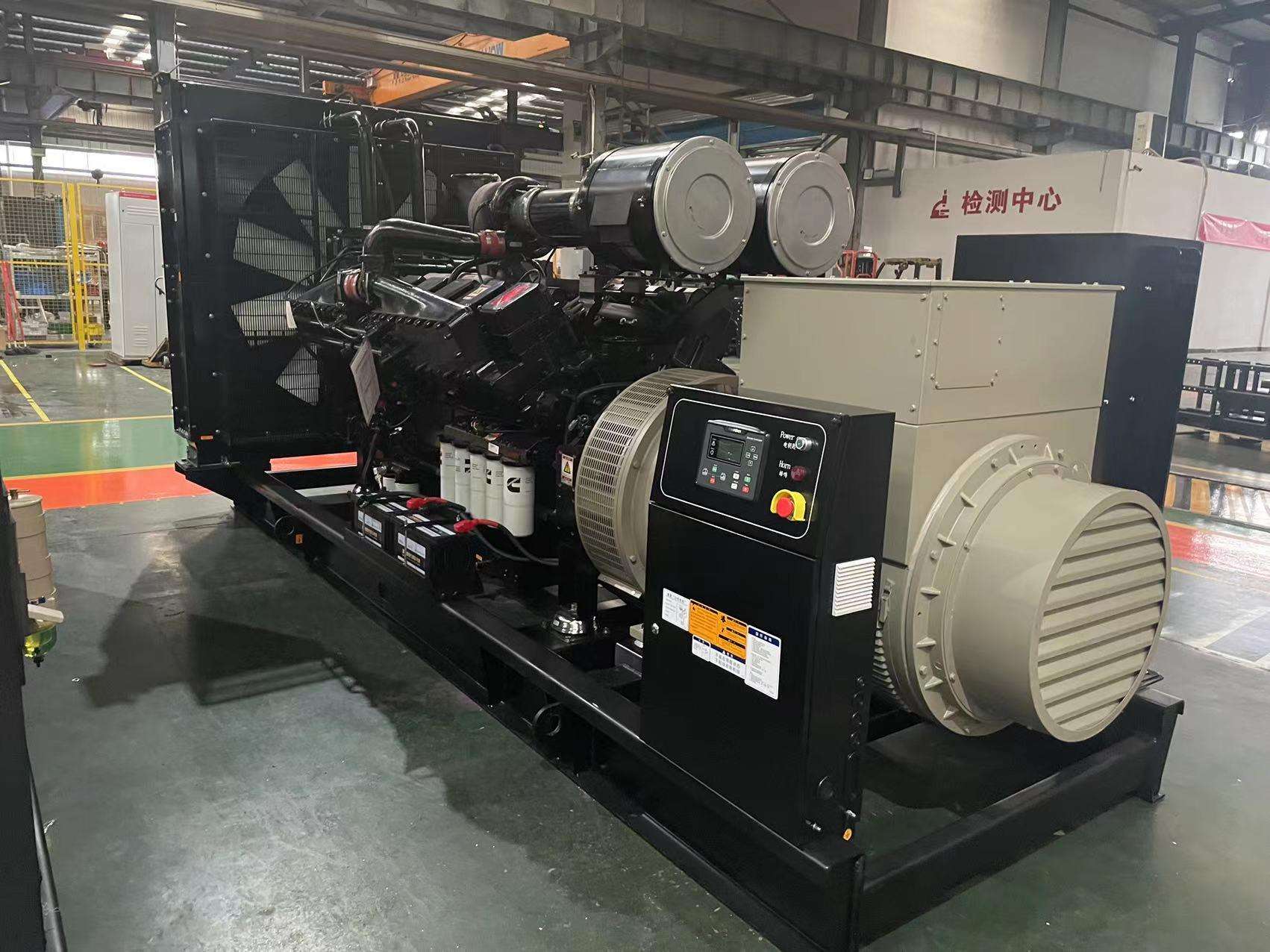
The step you order should come from the load list, not from the catalogue. A set sized one step above the calculated figure buys margin; a set sized one step below buys a nuisance trip on the first hot afternoon. A diesel generator in container frames needs the louvre area checked at the same time, because the enclosure sets its own temperature. When the load list is still moving, move up a step and write the reason on the order. Tesla Power Equipment lists the frame sizes on each product page so the step is easy to check against the Weichai-engined export set.
How is a factory audited before shipment?
An audit is a short list of checks with evidence attached. The auditor walks the line, reads the nameplate against the data sheet, watches the load bank run, and photographs the set before it is crated. The output is a file, not an opinion, and the buyer should read it before the container is booked.
A buyer who cannot travel can still run the audit by asking for four things: the test report with the readings, the nameplate photograph, the packing list and the loading plan. If those four agree with each other and with the offer, the set is probably what was ordered. If one of them is missing, ask why before the container leaves.
What documentation travels with an export set?
The document set is short and it is the same for every market. A data sheet, a factory acceptance test report, a declaration of conformity, a wiring diagram and a maintenance schedule. ISO 8528-1 fixes the rating classes that the data sheet has to name, and the ISO 8528-1 reference is the one to cite when a rating is questioned. Tesla Power prints that reference number on the data sheet, so the citation can be checked without an email.
For a European project the file also carries the emission stage under (EU) 2016/1628 and the noise data. The diesel generator CE marking requirements for that market sit in the same folder, and the conformity assessment for the European market reads from the same test sheet. For a US project the file carries the EPA tier instead. Neither document is a claim about our own works; both describe what a regulation asks a manufacturer to record. See the (EU) 2016/1628 regulation for the emission wording, and our conformity notes for the file structure.
Where does a manufacturer sit next to ISO and IEC?
The standards do not rank factories. They define what a factory has to measure and record. ISO 8528-1 names the power rating classes, IEC 60947-2 covers the circuit breaker that sits between the alternator and the load, and the NFPA 110 standard sets the start time and runtime for life-safety sets in the US.
A buyer who reads all three gets a consistent picture of the same machine. A buyer who reads only one may order a set that meets the start time but cannot carry the load, or one that carries the load but trips the breaker on transfer. Tesla Power keeps the standards list beside the offer, and our works notes show how the test sheet is built from them.
How do you verify a factory before you place a deposit?
Verify the entity, the address and the line. A trading company can quote a factory price, but the name on the conformity declaration has to match the name on the test report. Ask for the business licence, the factory address and a short video of the line, then match those against the offer.
The second check is the reference list. Two or three projects in your own market tell you more than a brochure, because the buyer can describe what happened after delivery. A diesel generator for standby duty is usually the set that has to start on the worst night of the year, so ask that buyer how it behaved. Yangzhou Tesla Power keeps the test sheet, the packing list and the loading plan in one folder, and the same folder goes to the port. Contact the engineering team with a load list to start the check.
Frequently asked questions about diesel generator manufacturers
Three is enough and five is usually too many. Three quotes show you the spread in price and in scope, and they keep the paperwork manageable. Beyond three you spend more time reading offers than you save, and the extra bids often repeat the same engine and alternator combination. Pick the two strongest and ask each a follow-up question before you decide.
The name on the test report. A trading company can arrange a set, and many do it well, but the test report and the conformity declaration are signed by whoever built the machine. Ask which legal entity signs those documents. If it is not the company quoting you, you are buying through a middle layer, and the service route after delivery runs through that layer too.
Ask for the model code rather than the brand name alone, because brands sell several engine families. A well-known engine brand with the wrong model code can still be the wrong set for a duty class. Tesla Power quotes the engine model and the alternator frame on every offer, so the two documents can be checked line by line before the order is placed.
A load bank run at rated load usually takes two to four hours once the set is warm. The report should record the voltage, the frequency, the load steps and the exhaust temperature at each step. A test that is finished in twenty minutes has probably measured the set at part load, which tells you much less about how it behaves on site.
Deposit terms vary by factory and by order size, so treat any single figure as an example rather than a rule. What matters more is what the deposit buys: a fixed specification, a delivery window and a named test. Ask for those three in writing with the deposit receipt, and hold the balance against the test report rather than against the ship date.
Yes, and that is the usual route for an export order. Send the load list with the duty class, the site conditions and the altitude, and ask for the rating at those conditions. A factory that answers with the reference rating instead of the site rating has not read the enquiry, and the offer will be short once the site conditions are applied.
Compare the nameplate against the data sheet on the day the set lands, not at commissioning. Photograph the plate, the engine model and the alternator frame, and send those three images to the seller the same week. A mismatch is far easier to resolve while the container is still at the port, and the test sheet from the works is the document that settles the question. Tesla Power adds the same three photographs to the handover file.