
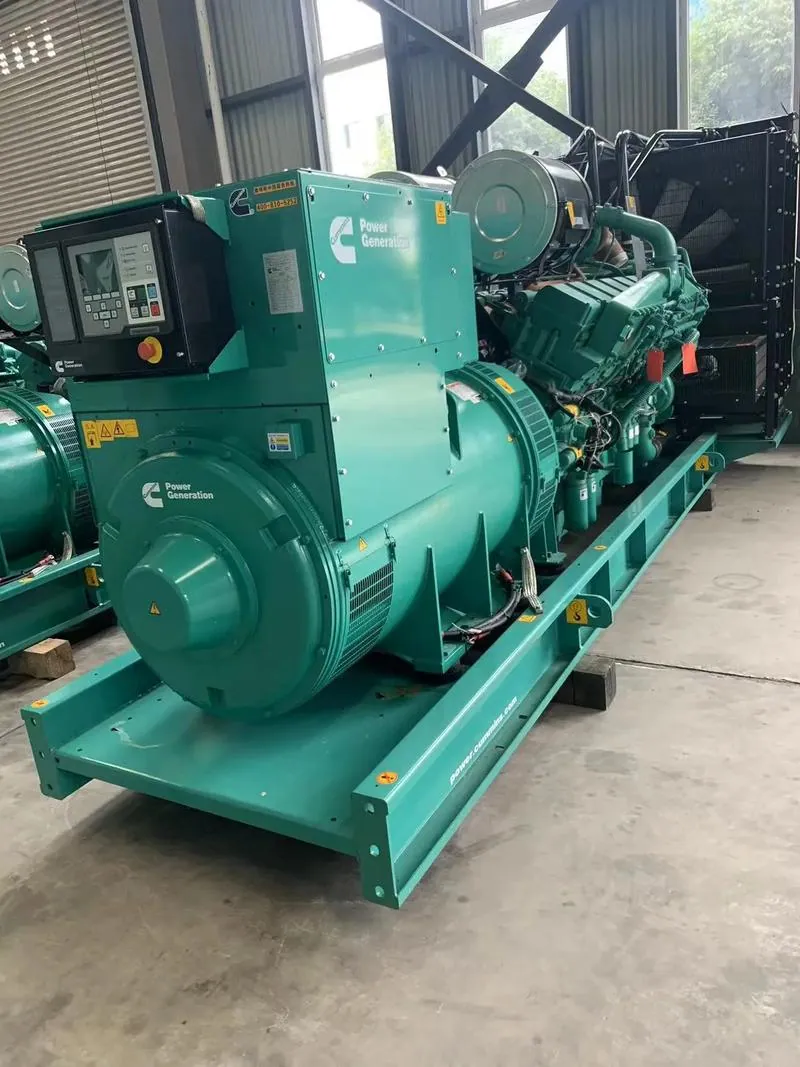
EU Machinery Regulation replaces the Machinery Directive for generator sets placed on the EU market from 20 January 2027. Tesla Power's export documentation desk reads the text because the change reaches every set we ship to member states. This guide covers the dates, the conformity file and the questions to ask an exporter now.
- 20 January 2027 is the date the Regulation becomes mandatory, according to the European Commission machinery sector page.
- Directive 2006/42/EC and Council Directive 73/361/EEC are repealed as of that same date.
- Parts already apply: Articles 26 to 42 have applied since 20 January 2024.
- The change is documentary: the same machine, a different conformity file and declaration.
What EU Machinery Regulation replaces, and when
EU Machinery Regulation in force from 20 January 2027 replaces the Directive for every set placed on the market after that date. The text was adopted by the European Parliament and the Council on 14 June 2023 and published in the Official Journal as OJ L 165, 29.6.2023, pp. 1–102. Because it is a Regulation rather than a Directive, it applies directly in every member state instead of being copied into national law first, so the rule text is identical across all 27 markets on the first day. Our notes on the certifications an export generator set has to carry cover the parallel paperwork that travels with the set.
Tesla Power Equipment has supplied EU-bound generator sets for years, and the file that travels with each unit is where the work now concentrates. Two dates matter more than the rest. The European Commission states on its machinery sector page that the Regulation applies on a mandatory basis as of 20 January 2027, and the EUR-Lex summary repeats the same line in almost the same words: the Regulation will apply from 20 January 2027. Machinery placed on the EU market before that date must still comply with Directive 2006/42/EC, and manufacturers may state on an EU declaration of conformity that such machinery also conforms with the Regulation where applicable. The instrument named on the declaration is the single line that decides which file a set needs.
Both sources also record that a corrigendum was issued to correct a clerical error in the application dates of the original version, which is a good reason to work from the consolidated text rather than from a copy that has been circulating since 2023.
| Provision | Applies from | Status |
|---|---|---|
| Article 6(7), Articles 48 and 52 | 19 July 2023 | Already in force |
| Article 50(1) | 20 October 2023 | Already in force |
| Articles 26 to 42 | 20 January 2024 | Already in force |
| Article 6(2) to (6), (8) and (11), Article 47, Article 53(3) | 20 July 2024 | Already in force |
| Amending Regulation (EU) 2024/2748 | Adopted 9 October 2024 | Emergency-procedure amendments to the 2023 text |
| Regulation (EU) 2023/1230, all provisions | 20 January 2027 | Replaces Directive 2006/42/EC |
Why did the EU choose a Regulation, not a Directive?
A Directive leaves room for 27 national transpositions and 27 sets of wording, while a Regulation applies directly in every member state. The Commission describes the shift as a way to increase legal certainty through uniform application, and to align the machinery rules with the New Legislative Framework. For an exporter, one consolidated text means one set of obligations to read, rather than 27 national readings that can drift apart over time.
The trade-off is that there is no national flexibility to rely on when a clause is unclear. Five substantive changes arrive with the text: AI-powered safety functions, cyber-safety for software and control systems, a revised assessment route for higher-risk machinery, updated product-category rules, and digital instructions. Article 6(9) also requires member states to report machinery accidents. EU OEM manufacturers and their agents follow the same file rules whatever the brand on the nameplate.
What changes in the technical file for a genset?
The physical machine keeps the same rating definitions. ISO 8528-1:2018 classifies the application, rating and performance of generating sets, and that classification is what a European 400 V, 50 Hz distribution board is built around. What changes is the legal instrument named on the paperwork, not the engine or the alternator, and not the rating the site was originally designed to carry.
The EU declaration of conformity has to reference Regulation (EU) 2023/1230 rather than Directive 2006/42/EC. The risk assessment has to be current rather than copied from an older file, and the technical documentation has to match the set that actually ships, including the controller firmware and any enclosure or trailer fitted after the base unit was built. Tesla Power documents the enclosure as a separate assembly for that reason.
The rating maths stays put. A 400 V three-phase set drawing 900 A at full load runs 8 h per acceptance test, so the recorded energy is 400 V × 900 A × 1.732 × 8 h ÷ 1000 = 4988 kWh. Confirm the alternator frame against that 4988 kWh figure, not against the nameplate alone, and keep the reading in the technical file. Every rating in the generator set range we assemble carries its own file, because the enclosure and the controller fitted at order time change what the declaration has to cover.
Does a generator set need a notified body?
Not automatically, and this is the question most often answered wrongly in both directions. The Commission describes the Regulation as addressing the conformity assessment of machinery presenting a higher risk factor, and its recommendation-for-use sheets distinguish between machinery listed in Annex IV of the current Directive and Annex I of the Regulation. If a product category appears in that Annex, a notified body is involved; if it does not, the manufacturer can normally complete the procedure internally. Whether a set, or a configuration such as a lifting frame or a road-going trailer, falls inside that Annex is a question to settle against the text itself, or with the national market surveillance authority of the destination country.
EU Machinery Regulation CE marking requirements fall to the manufacturer, and conformity assessment for exporters follows Annex I of the Regulation. Every EU manufacturer placing a set on the market carries the same obligation to name the correct instrument on the declaration. When a notified body is involved, check its scope before accepting a certificate: the Commission's NANDO system lists bodies notified under both the Directive and the Regulation, and warns that voluntary certificates from bodies not acting as notified bodies have no value in a market surveillance or customs check. A certificate with a CE marking printed on it is, on that page's own terms, not acceptable. Products such as our containerised generator sets remind us that the enclosure changes the assessment as well as the footprint. Tesla Power confirms the notified-body scope against NANDO before the file is sealed.
Can the instructions and the declaration be digital?
Yes, within conditions, and this is a genuine change rather than a tidying-up. The Commission lists among the Regulation's effects that it clarifies the conditions under which the instructions for use and the declaration of conformity can be provided in a digital format, so a printed manual is no longer the only compliant route. The conditions sit in the text and should be read before the paper copy is dropped, because obligations attaching to a digital format are not those attaching to a shared drive.
For buyers the practical ask is short: state in the contract which format you will accept, and whether a printed set still has to travel with the machine. Agreeing that point early is cheaper than arguing about it after the crate has landed. If the destination authority expects paper at the border, a digital-only declaration creates a hold that no one budgeted for. Tesla Power's engineers confirm the accepted format with the buyer before the file is sealed.
How does this sit alongside the other EU rules a genset meets?
The machinery rules are one layer, not the whole stack. A compliance review of the outdoor equipment rules lists several instruments applying in parallel for generator-type equipment: the Low Voltage Directive 2014/35/EU and the EMC Directive 2014/30/EU covering the electrical side, the Outdoor Noise Directive 2000/14/EC for noise, and Regulation (EU) 2016/1628 on engine emissions for non-road mobile machinery.
Treat that list as a checklist of separate files to request, not legal advice; verify each instrument against its own official text. Documentation is a shipping matter too: the declaration, instructions and technical file have to reach the destination in a form that customs and market surveillance can read. Tesla Power's team cross-checks the machinery file against the emissions and electrical files so a missing sheet does not stop a container. Our notes on shipping documents for export generator projects cover the same discipline from the logistics side.
What should buyers ask an exporter before 20 January 2027?
Start with the arithmetic. From 26 September 2026 to 20 January 2027 the gap is 4 days + 31 days + 30 days + 31 days + 20 days = 116 days. The sum is easy to verify: September keeps 4 days after the 26th, then October, November and December add 31 days, 30 days and 31 days, and January adds 20 days. A set placed on the EU market on 19 January 2027 is assessed under Directive 2006/42/EC; the identical set placed one day later falls under Regulation (EU) 2023/1230. One calendar day separates two different legal frameworks.
Four questions cover most of the risk, and EU Machinery Regulation for exporters changes the paperwork rather than the machine. Tesla Power's technical team answers all four in writing for every EU-bound order, before the contract is signed. Which legal instrument will the declaration name? Does the declared configuration match the set that ships? Is a notified body involved, and is it listed in NANDO for machinery? Will the instructions arrive in a format your authority accepts? A supplier who can answer all four in writing before the order is a supplier who has read the Regulation.
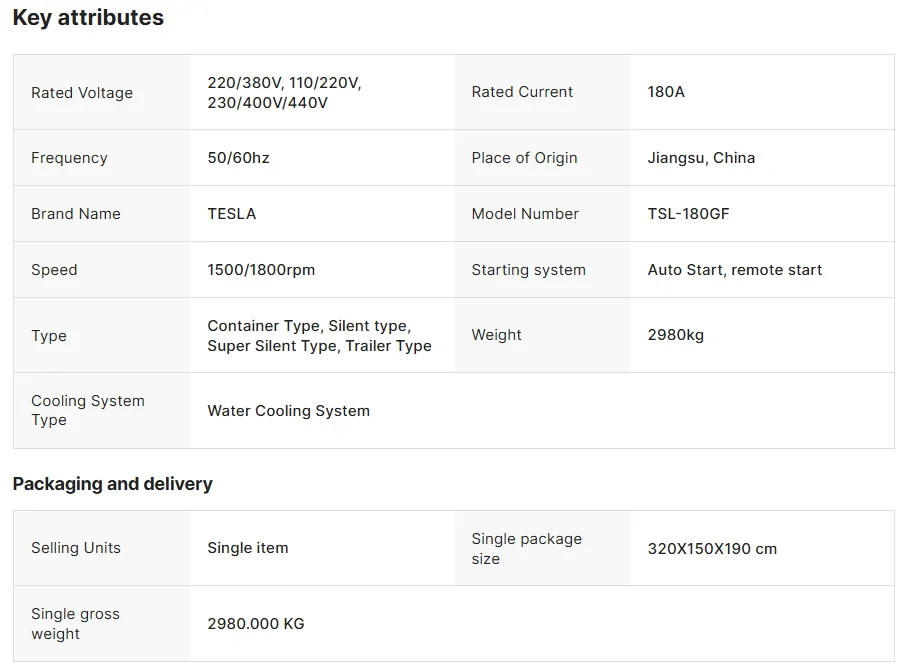
Compare the configurations you are quoting against your destination's own reading of Annex I before the declaration is drafted, not after the crate has shipped.
Where to verify the wording yourself
The EU Machinery Regulation in practice rewards one careful read of the consolidated text, and the three sources below are the ones we keep open. Tesla Power Equipment checks all three against every EU-bound file before it is sealed, and all three were retrieved on 26 September 2026. The EUR-Lex record for Regulation (EU) 2023/1230 carries the official text, the summary and the staged application dates. The EUR-Lex consolidation page states the 20 January 2027 application date in plain language and explains what the Regulation changes. The ISO record for ISO 8528-1:2018 covers the rating and performance classification that the technical file references.
Read the Regulation on EUR-Lex (official text), check the consolidated version on EUR-Lex (CELEX 32023R1230), and confirm the rating definitions in ISO 8528-1:2018. If you want the questions above answered for a specific configuration, contact our technical team with the rating, the enclosure type and the destination port.
Questions buyers and exporters ask
Does Regulation (EU) 2023/1230 apply to a generator set?
A generator set is machinery within the meaning of the EU rules, so a set placed on the EU market from 20 January 2027 falls under the Regulation. Confirm the exact scope against the official text for your configuration, because enclosures, trailers and lifting frames can change how a product is classified.
Can a declaration of conformity issued under 2006/42/EC still be used after 20 January 2027?
For machinery placed on the market before that date, the Directive remains the applicable instrument and the existing declaration stands. For machinery placed on the market afterwards, the declaration has to reference the Regulation. The placing-on-the-market date is what separates the two.
Does the Regulation change engine emission requirements?
No. Engine emissions for non-road mobile machinery sit under Regulation (EU) 2016/1628, which applies in parallel and is a separate file with its own approval evidence. The machinery Regulation governs the safety and conformity documentation for the assembled set.
Is a notified body mandatory for every generator set?
No. Whether a notified body is involved depends on whether the product category sits in the higher-risk Annex referenced by the Regulation. Where it does, the body must be notified for machinery; where it does not, the manufacturer can usually complete the procedure internally.
May the instructions be supplied as a digital file only?
The Regulation clarifies the conditions under which instructions for use and the declaration of conformity may be provided in digital format, so paper is not automatically required. The conditions are set out in the text and should be checked before you agree to drop the printed copy.
What happens to sets already in service in the EU?
Machinery already placed on the EU market before 20 January 2027 stays under the rules it was placed under. The Commission states that manufacturers may additionally declare conformity with the Regulation on an existing declaration, but that is optional.
Does a rebuilt or re-rated set count as new machinery?
The Commission's machinery page states that the rules apply to products placed on the market for the first time, and also where existing machinery is modified to such an extent that it becomes de facto new machinery. If you are rebuilding or re-rating, treat the question as open and check with the relevant national authority.
Where should this be written into a purchase contract?
Name the instrument, the configuration and the format. A clause requiring a declaration of conformity that references Regulation (EU) 2023/1230, covers the set as shipped including the enclosure and controller, and is delivered in an agreed format, closes most of the gap.
Reviewed by the Tesla Power engineering team, Yangzhou — generator set assembly, factory acceptance testing and export documentation.