
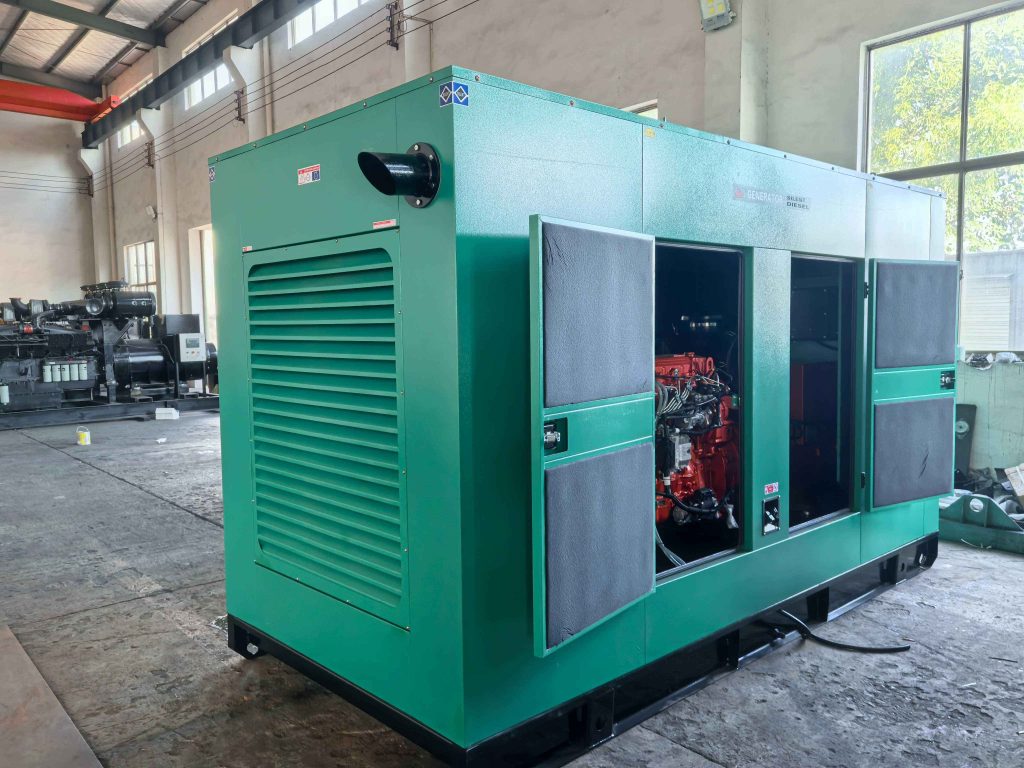
The EU Outdoor Noise Directive applies to generator sets by one number: 400kW. Below that figure the documentation set must show a declared level under the permitted band. At or above it, the set carries a noise marking that Tesla Power checks before quoting a European project.
- Below 400kW the set sits in Article 12, and its declared sound power level must not exceed the level permitted for its prime power band.
- At or above 400kW the set sits in Article 13: no limit applies, but the sound power level must still be marked.
- The number being marked is sound power level LWA, not the sound pressure your engineer reads on a meter at seven metres.
- Pel for a generator set means prime power under ISO 8528-1, clause 13.3.2 — not the standby rating.
What does the EU Outdoor Noise Directive actually cover?
The Directive addresses noise emitted into the environment by equipment used outdoors, and it lists the equipment it covers in Articles 12 and 13. Both lists point back to definitions in Annex I. For generator sets the definition is Annex I, item 45: an internal combustion engine driving a rotary electrical generator to produce a continuous electrical supply. The same definition governs the export certification file that travels with the unit.
That wording matters more than it first appears. It captures the complete unit — engine, alternator, coupling and base frame — and not a bare engine sold for someone else to package. A set built from a Cummins or Perkins engine inside a Tesla Power canopy falls inside the definition just as a factory-built unit does. The Directive does not ask whether the set is quiet, only for a declared number and, in one power range, a ceiling on that number.
The scope is broad enough to catch assemblers as well as integrated factories, which is why the phrase EU Outdoor Noise manufacturers is not a marketing claim but a description of who must hold the file. A Chinese EU Outdoor Noise suppliers listing will include packagers who do not measure a sound power level, so the paperwork rather than the country of assembly decides which ones can place a set in Europe.
Why does the 400kW line decide the route?
Article 12 gathers the equipment whose declared sound power level must stay under a limit. Its entry for generator sets reads power generators below 400kW. Article 13 gathers equipment subject to noise marking only, and its generator entry reads power generators at or above 400kW. The two articles are mutually exclusive, and the boundary is inclusive on the upper side.
The practical consequence is not the decibel figure. It is the conformity assessment. A set in Article 12 sits inside a limit regime, so the manufacturer has to produce the noise data and follow one of the assessment procedures the Directive sets out, which can involve a notified body. A set in Article 13 has no permissible level to exceed, so the manufacturer declares the measured value under its own internal production control.
Buyers sometimes read Article 13 as a lighter category and assume it means the set is exempt. It is not exempt: the marking duty is mandatory for each unit the EU Outdoor Noise Directive in Europe places on the market, and the declared figure has to be defendable in the technical file. The same reasoning applies to a set built for a specific tender, where the EU Outdoor Noise Directive for the project becomes part of the contract rather than a general legal backdrop.
Sound power and sound pressure are not interchangeable
A generator canopy is usually sold on a sound pressure figure, quoted at a stated distance — commonly dB(A) at seven metres. The Directive works in sound power level, written LWA, expressed in dB per 1 pW. The two quantities are related but stay separate, and the gap between them grows or shrinks with the measurement surface and the room. Tesla Power declares the two figures separately on every set for this reason.
This is the most common source of confusion in a European tender. A datasheet offering 75 dB(A) at 7 m tells the buyer what a listener hears at that distance in a stated environment. It does not state LWA, and it cannot be substituted into a noise declaration. Ours is declared separately for this reason, and published guidance on silent set noise levels covers the canopy side of the same conversation. Use the table below to place a project before the technical file is opened.
| Item | Article 12 route | Article 13 route |
|---|---|---|
| Applies to | Power generators below 400kW | Power generators at or above 400kW |
| Permissible sound power level | Limit applies by Pel band | No limit applies |
| Noise marking | Required | Required |
| Conformity assessment | Procedure under the Directive, notified body possible | Internal production control |
| Defining power | Prime power, ISO 8528-1 cl. 13.3.2 | Prime power, ISO 8528-1 cl. 13.3.2 |
The last row is easy to skim past and expensive to get wrong. If a quote states a standby figure where the Directive expects prime power, the declared Pel is understated and the band selection moves.
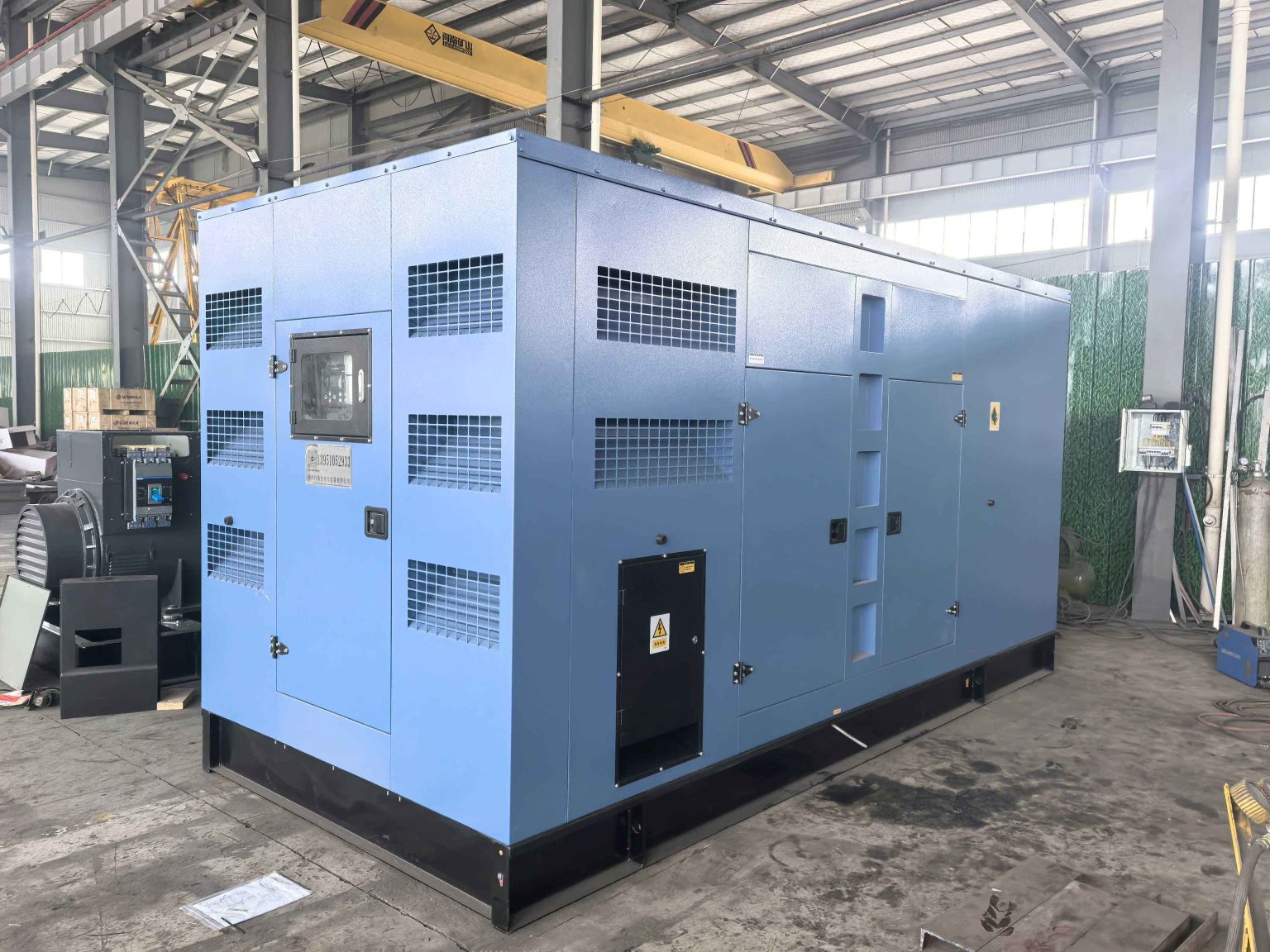
The permissible sound power levels, in the Directive's own bands
Article 12 carries the limit values themselves. Annex III is the measurement part — it tells the test house how to measure each equipment type, by item number, and does not contain the limits. Buyers who ask their supplier for the Annex III limits are asking for the wrong document.
For welding and power generators the table gives three bands, each with a Stage I value effective from 3 January 2002 and a Stage II value effective from 3 January 2006. The Stage II column is the one that applies to equipment placed on the market now, and it is the column a buyer should quote when comparing suppliers of EU Outdoor Noise Directive for buyers in a European tender.
| Pel band | Stage I | Stage II |
|---|---|---|
| Pel up to 2 | 97 + lg Pel | 95 + lg Pel |
| Above 2, up to 10 | 98 + lg Pel | 96 + lg Pel |
| Above 10 | 97 + lg Pel | 95 + lg Pel |
Read the formula rather than a single number. The permissible level rises with the logarithm of the electrical power, so a larger set is allowed to be louder in absolute terms. The permitted result is rounded to the nearest whole number, with a value below 0.5 going down and 0.5 or above going up. That rounding rule comes from the Directive itself, so a calculated 96.9 becomes 97 rather than staying at 96.9.
Take a 320kW prime set in the top band. The base-10 logarithm of 320 is about 2.505, so Stage II gives 95 + 2.505 = 97.5 dB per 1 pW, rounded to 98 dB per 1 pW. Stage I would give 97 + 2.505 = 99.5, or 100 dB per 1 pW, which is why the column matters and why a superseded figure is not interchangeable with the current one.
What must the noise marking show?
Article 13 says the declared sound power level of the listed equipment is subject to noise marking only. The same marking duty applies to the Article 12 equipment, because the marking requirement is not the thing Article 13 removes, and the limit is what disappears above 400kW. Both routes therefore end with a marked figure.
The marking carries the CE marking together with an indication of the sound power level. Where the equipment also falls under other directives that provide for the CE marking, the same marking indicates conformity with those as well, and any transitional choice must be described in the accompanying documents. A buyer inspecting a delivered set should find the figure on the machine itself, not only in the folder, so Tesla Power Equipment marks the level at the works and re-checks it against the file before dispatch.
Where does the prime power rating come from?
The Directive does not leave the power value to negotiation. Its footnote defines Pel for power generators as the prime power according to ISO 8528-1, clause 13.3.2, in kW. That is a defined rating condition, not a marketing label, and it is the reason prime and standby ratings have to be settled before any noise document is written. It also fixes what the EU Outdoor Noise Directive quality records for the file have to show, because every later figure traces back to this one rating.
Prime power is the rating for continuous operation under a varying load, following the manufacturer's maintenance schedule. Standby power is a higher, limited-hour figure intended for outage duty. Because the standby figure is the larger of the two, quoting it as Pel would push the set into a band or a scope it does not occupy. On a 400kW boundary machine that misstatement can move the set across the Article 12 and Article 13 line entirely, so Tesla Power fixes the rating basis in writing before the noise work starts.
For an export order the safe habit is to fix that basis in writing before the noise work starts, so the declaration traces to one agreed condition rather than to whichever figure looked strongest in the sales conversation.
How is a 400kW boundary machine classified?
Consider a set offered at 400kW. The Article 12 entry covers power generators below 400kW; the Article 13 entry covers those at or above 400kW. A machine declared at exactly 400kW therefore sits in Article 13, and no permissible limit applies to it. The set needs the marking, but it has no ceiling to breach.
Change one input and the answer moves. If the same physical set is sold on a 350kW prime rating and a 400kW standby rating, then Pel under the Directive is 350kW, not 400kW. The set is now below the line, sits in Article 12, and needs a declared level under the Stage II band for 350kW: 95 + log10(350) = 95 + 2.544 = 97.5 dB per 1 pW, rounded to 98 dB per 1 pW. Two quotes for the same hardware can therefore sit in different articles even though the machine is identical, which is why the rating basis belongs on the quotation and why a buyer should ask which article the supplier is using.
What changes between Stage I and Stage II?
The Directive published two stages. Stage I applied from 3 January 2002 and Stage II from 3 January 2006. For the generator bands the Stage II figures are two decibels lower than Stage I across all three bands, which is a tightening of roughly a factor of 1.6 in sound power. The stages are not alternatives a supplier may pick between, because Stage I is the earlier obligation and Stage II is the current one.
One detail trips up careful readers. A footnote in Article 12 marks certain equipment types as merely indicative for Stage II, in which case the Stage I figures continue to apply until the Directive is amended. Generator sets are not in that list, so for sets the Stage II figures are the operative ones. A buyer checking a declaration should confirm the supplier has read the same footnote the same way, which is the check Tesla Power runs on every set it quotes into the European market.
Which papers should an RFQ ask for?
Most problems in this area trace to four recurring errors. The first is treating a sound pressure figure as the declared value, because the directive works in sound power level. The second is quoting standby power as Pel, which misstates the band and, at the boundary, the article. The third is assuming Article 13 means exempt; it means unlimited, not unmarked. The fourth is asking for Annex III limits, which live in Article 12 while Annex III holds the measurement method.
A purchase order can close all four by naming the EU Outdoor Noise Directive documentation for the project at the quotation stage. The RFQ should ask for the prime power figure in kW, the article the supplier places the set in, and the declared sound power level in dB per 1 pW as a figure on the set, the declaration and the technical file alike.
Naming these three items converts a vague compliance question into a checklist that can be checked against the Directive in a few minutes, rather than a gap that surfaces after the unit has shipped. Buyers who want the route confirmed in writing should ask for conformity assessment for the Directive, since that phrase forces a named procedure, and the product range shows the bands the factory builds for European projects.
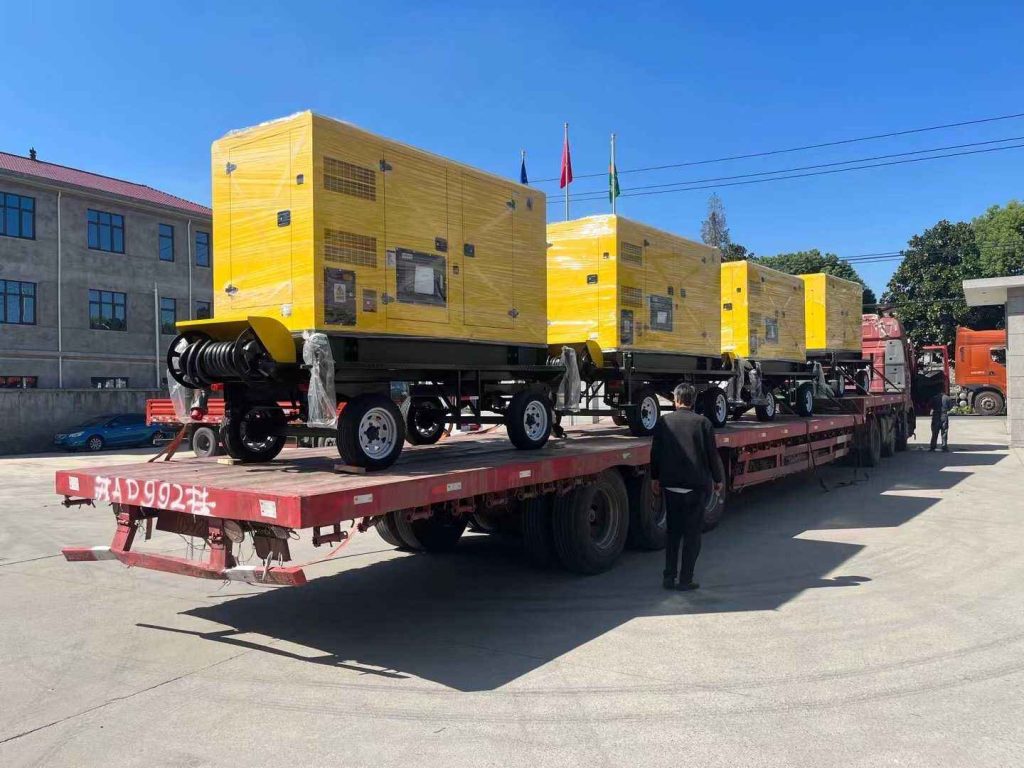
Tesla Power Equipment issues the documentation set with the shipping file, so the noise declaration, the technical file and the nameplate are cross-checked before the export crate is sealed.
How do I verify the wording myself?
The Directive is public, and the consolidated European text on EUR-Lex reproduces Article 12 in full with the limit table. The ISO 8528-1 standard listing carries the prime power definition the Directive footnote refers to. Annex I item 45 and the Article 12 footnote are short enough to read in a few minutes, and reading them removes most of the ambiguity in a supplier's answer, which is why checking them before a tender is worth the quarter of an hour it takes.
The team quotes the rating basis on every RFQ response, so the buyer can check the placement without asking twice. Checking the primary sources yourself settles the two questions that matter most: whether the set sits in Article 12 or Article 13, and which power band the declared level has to sit under.
Frequently Asked Questions
Does the EU Outdoor Noise Directive apply to a diesel generator set?
Yes, under the term power generator rather than generating set. Annex I, item 45 defines it as a device with an internal combustion engine driving a rotary electrical generator to produce a continuous electrical supply. A packaged diesel set assembled with a canopy falls inside that definition.
At what power does a generator set leave Article 12?
The boundary is 400kW. Article 12 covers power generators below 400kW. Article 13 covers power generators at or above 400kW. A set declared at exactly 400kW therefore sits in Article 13, and the comparison must use prime power in kW, not standby.
Which power rating is used for the Pel figure?
Prime power. The Directive footnote defines Pel for power generators as the prime power according to ISO 8528-1, clause 13.3.2, in kW. Standby figures are higher and, if used by mistake, will move the set into the wrong band and possibly the wrong article.
Is Annex III where the noise limits are listed?
No. Annex III sets out the measurement method for each equipment type by item number. The permissible sound power levels sit in Article 12. A supplier who sends only an Annex III document has not sent the limit table that applies to the set.
What level is permitted for a 320kW generator set?
A 320kW set falls in the top band, Pel above 10. The Stage II value is 95 + lg Pel, and the base-10 logarithm of 320 is about 2.505, giving 97.5 dB per 1 pW, rounded to 98. That is the ceiling the declared sound power level has to stay under.
Is a set above 400kW exempt from noise requirements?
Not exempt, only unlimited. Article 13 removes the permissible sound power level, not the marking. The manufacturer still declares the sound power level, marks it on the equipment alongside the CE marking, and holds the supporting evidence in the technical file.
Can a sound pressure figure at seven metres be used instead?
No. Sound pressure at a stated distance describes what a listener hears in a given environment. The Directive works in sound power level, in dB per 1 pW, which is a property of the set. The two cannot be substituted for one another in a declaration.
Does Stage I still apply to generator sets?
No. Stage II has applied since 3 January 2006, and equipment placed on the market now is judged against the Stage II column, which is two decibels lower across the three generator bands. A few equipment types are listed as merely indicative for Stage II; generator sets are not among them.
Where do I send the rating figure for a quote?
Send the prime power rating in kW, the destination country and the intended duty through the enquiry page. Tesla Power confirms which article applies and what the noise documentation has to show before the order is built, and buyers who want to check the power bands the factory builds can start from the main range listing before they send the details across.