
Generator set aftercooler choice sets the charge air temperature, and that temperature decides how much of the rating survives a hot afternoon. Check the specification against the site ambient, then compare supplier offers before the order. Tesla Power reads the charge figure from the test sheet; send the ambient record to the technical desk and we confirm it.
- Read the charge air temperature as a rise above ambient, not as an absolute figure.
- Check whether the cooler shares the jacket water circuit or has its own radiator.
- Add the cooler pressure drop to the air path budget before the duct is drawn.
- Record the charge temperature at full load, because that is where the derate begins.
What does a generator set aftercooler do?
It cools the air between the turbocharger and the inlet manifold, because the turbo heats the air as it compresses it and hot air carries less oxygen for the same volume. Cooler charge air means more oxygen in the cylinder, more fuel that can be burnt cleanly and more power from the same displacement. The cooler is therefore part of the rating rather than an accessory. A cooler that is too small for the ambient shows up as a rating that falls away in the afternoon rather than as a fault code.
The turbocharger can push the charge above 180 °C at full load, and the cooler brings it back towards the ambient. How close it gets depends on the circuit, the cooler size and the ambient itself. Tesla Power reports the charge temperature as a rise above ambient, because an absolute figure quoted at 20 °C ambient says very little about a site that runs at 45 °C.
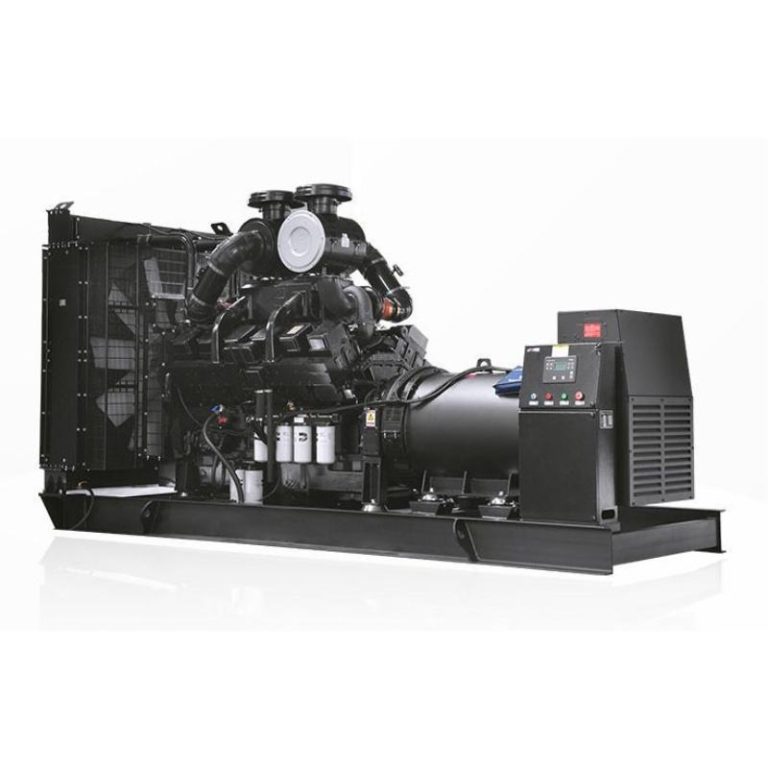
Which circuit cools the charge air?
There are two arrangements. A jacket water aftercooler runs the charge through a core fed by the engine coolant, which is simple and cheap and limits the charge to about 90 °C. A separate circuit aftercooler uses its own low temperature water and its own radiator, and it brings the charge much closer to ambient. The two arrangements look similar on a general arrangement drawing and behave very differently in a hot yard.
The separate circuit buys charge density and costs a pump, a thermostat and a second radiator core. On a hot site that extra density is the difference between holding the rating and derating by a tenth of it. Tesla Power Equipment fits the separate circuit on desert builds as standard, because a jacket water cooler cannot reach the charge temperature the ambient demands.
| Cooler type | Charge temperature | Note |
|---|---|---|
| Air to air, separate radiator | Ambient plus 15 °C | No water circuit to bleed |
| Jacket water, shared radiator | About 90 °C | Simple, but limits charge density |
| Separate circuit water | Ambient plus 12 °C | Best density, extra pump and core |
| Air to air, roof mounted | Ambient plus 18 °C | Long duct adds pressure drop |
Why does a separate circuit need its own radiator?
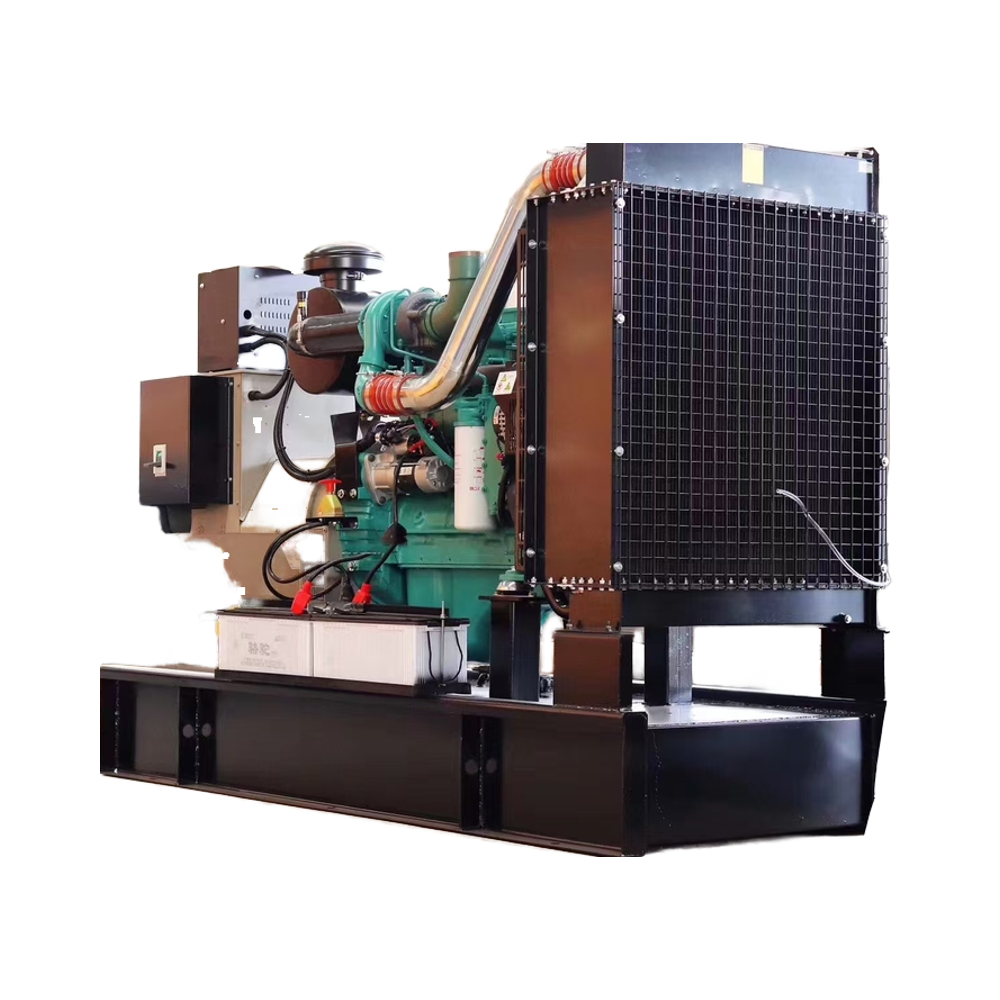
The low temperature circuit rejects heat at a much lower temperature difference than the jacket circuit, so it needs more face area for the same heat. Sharing the jacket radiator would push the jacket temperature up and lose the gain the separate circuit was fitted for. Two cores in one frame is the usual answer on a compact build. Two cores in one frame also means two fans or one fan with two duties, and the fan power rises with both.
The second core also has its own pressure cap, its own fan duty and its own bleed points, which is why the loop drawing grows. Tesla Power draws the two circuits in different line weights so a technician does not bleed the wrong one. A separate circuit bled at the jacket point leaves air in the charge cooler and the gain disappears.
How much does charge temperature cost?
Every 10 °C of charge temperature costs roughly 1% of the rating, because the density falls and the fuel limit follows it. A set that holds its rating at 25 °C ambient therefore loses several percent at 45 °C, and the loss arrives at the moment the site needs the power most. The cooler is where that loss is won or lost. The loss is gradual, so a site rarely notices it until the load grows and the set stops holding.
The heat load is worth a figure. A 500kVA set at 0.8 pf delivers 400kW, and the charge cooler takes about 30% of the heat the radiator rejects: 400kW x 30% = 120kW. That heat has to leave through a core, which is why the cooler and its radiator are sized together rather than separately.
What happens in a humid climate?
Cooling humid air below its dew point condenses water in the cooler, and that water has to drain rather than sit in the core. A cooler with no drain connection fills slowly and then carries water into the cylinder on the first hard acceleration. The drain is a small fitting that decides whether the cooler survives a wet season. A drain that ends inside the canopy simply moves the water to the baseframe, where it sits under the set.
Condensation also washes oil vapour out of the charge and leaves it in the drain, which is why the drain should go to a catch bottle rather than onto the floor. Yangzhou Tesla Power fits a drain and a sight glass on every tropical build, and the commissioning sheet records how much water the bottle collects in the first hour. A bottle that fills twice in a day points to a cooler that is too large for the duty.
How is the circuit checked in service?
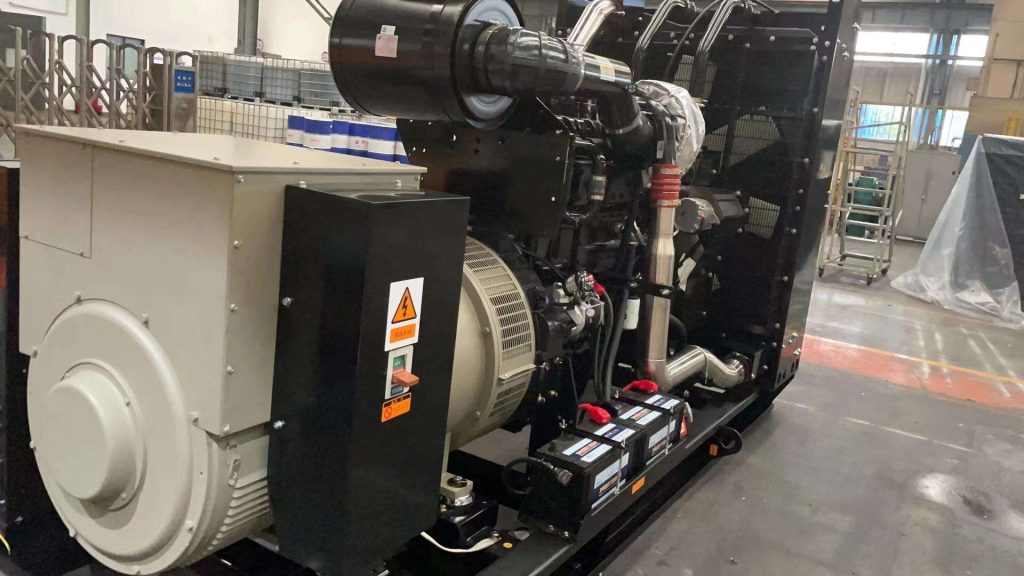
Read the charge temperature at full load and compare it with the rise above ambient on the test sheet. A rise that has grown by more than 5 °C points to a fouled core, a failing pump or a thermostat that is stuck open. Then check the coolant level in the low temperature circuit, because that circuit is the one a technician forgets. A thermostat stuck open keeps the low temperature circuit cold at light load and hides a fouled core until the load rises.
Check the pressure drop across the cooler against the air path budget, since a blocked cooler raises the drop and lowers the boost. A charge cooler that is fouled on the air side shows as a loss of boost with a normal exhaust temperature. Log both the charge temperature and the pressure drop, and compare them with the commissioning figures. Tesla Power compares the two figures on every service visit.
What should a buyer put on the enquiry?
Send the ambient record for the hottest week, the altitude, the humidity, the duty cycle and the rating the site needs at that ambient. Add whether the set sits in a container or a plant room, because the air path changes the cooler performance. Those six items decide the circuit, and they also show whether the offer has quoted a rating at a standard ambient.
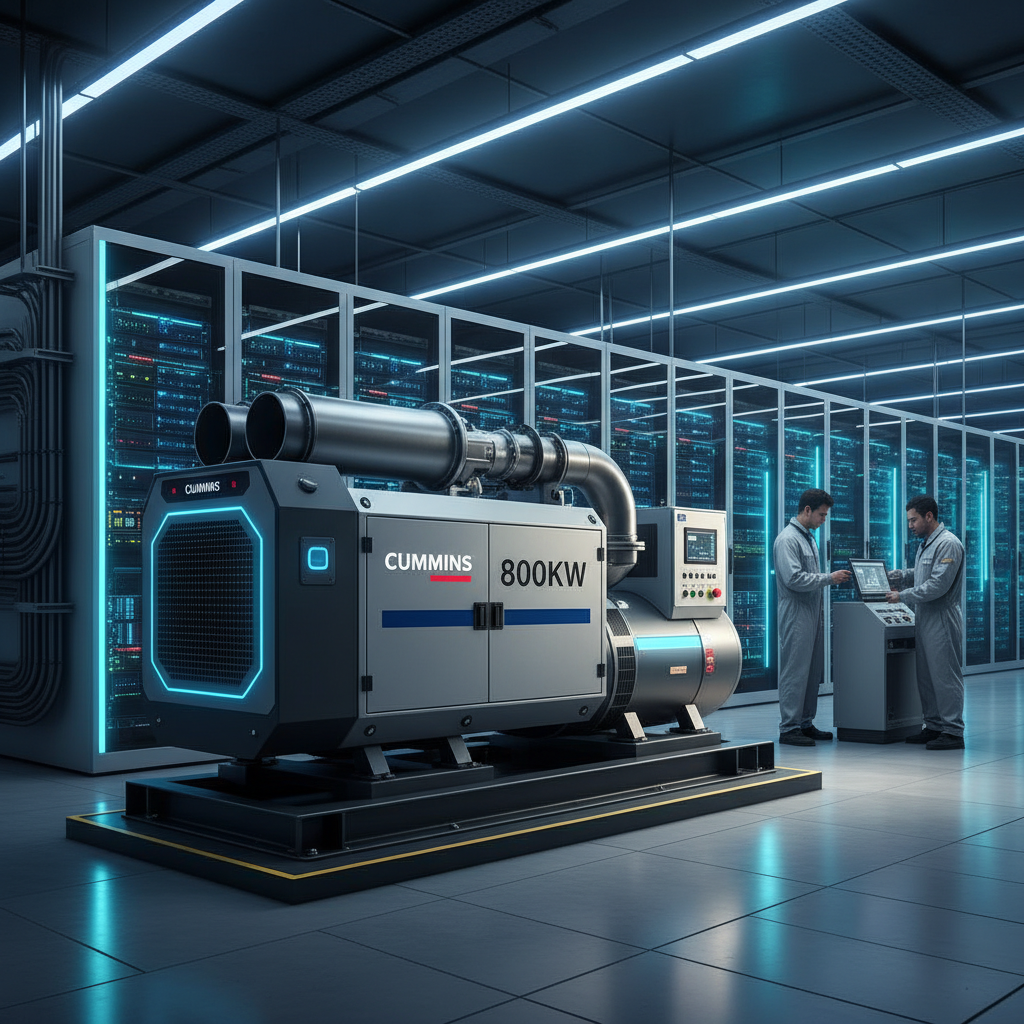
The wording on the offer matters too. Generator set aftercooler manufacturers often quote a charge temperature with no ambient beside it, and Chinese generator set aftercooler suppliers sometimes fit a jacket water cooler on a site that needs a separate circuit. Ask for generator set aftercooler for a desert site, generator set aftercooler in a tropical yard and generator set for a container build as three separate cases. Tesla Power prints the charge rise, and the 1000kW container build shows the twin core.
What does the handover file record?
The file carries the circuit type, the charge temperature rise at full load, the pressure drop across the cooler, the coolant volume of the low temperature loop and the ambient the figures were taken at. One page covers the cooler when those five items sit under the engine serial number. Add the conformity assessment for the charge cooler when the installation is part of a permit package.
Hand the page to the technician who services the loop rather than to the buyer who placed the order. the Yangzhou factory describes the bay where the charge temperature is measured. the commissioning notes lists the frames that ship with a separate circuit, the build range explains how the low temperature loop is bled on site, the ISO 8528-1 duty definitions sets the rating basis the charge figure was taken on, and the NFPA 110 maintenance routine covers the load steps the set was accepted on.
Frequently asked questions about generator set aftercooler
It can be replaced, and it is a large job because the second radiator, the pump and the pipework all have to fit inside a frame that was not drawn for them. Decide the circuit from the ambient record before the order. A conversion after delivery costs more than the original option.
Cooler charge air lowers the exhaust temperature at the same load, because less fuel is needed for the same power. That is why a fouled cooler shows as a loss of boost with a normal exhaust reading. Read the charge temperature and the boost together rather than the exhaust alone.
A core that was washed on the air side and left damp restricts the flow until it dries, and a coolant circuit refilled without bleeding carries air. Check both before assuming the core has failed. A rise that appears the day after a service is usually the service rather than the cooler.
A larger core cools more and adds pressure drop and weight, and past a point the gain in density is smaller than the loss in boost. Size the cooler to the ambient and the duty rather than to the largest core that fits. An oversized cooler also collects more condensate in a humid climate.
Clean the air side at every major service on a dusty site and at every second service on a clean one. The water side follows the coolant interval. A core that is cleaned on the air side and neglected on the water side still loses performance, so treat both faces as service items.
Thin air carries less mass for the same volume, so the turbo works harder and the charge leaves hotter, while the cooler rejects less heat into thinner air. Both effects push the charge temperature up. Recheck the figure at the site altitude rather than at sea level. Tesla Power applies the correction before quoting.