
Generator set altitude loss is the capacity an engine gives up as the air thins with height, and the rules below show how to apply that correction before a frame is chosen. Tesla Power reads the site height against the engine aspiration and states the result on the offer, so a quotation holds at the height it runs at.
- Separate the two losses, because a naturally aspirated engine gives up about 4% per 1000m and a turbocharged one about half that.
- Check the radiator against the same height, since a thinner air mass carries less heat away at the same fan speed.
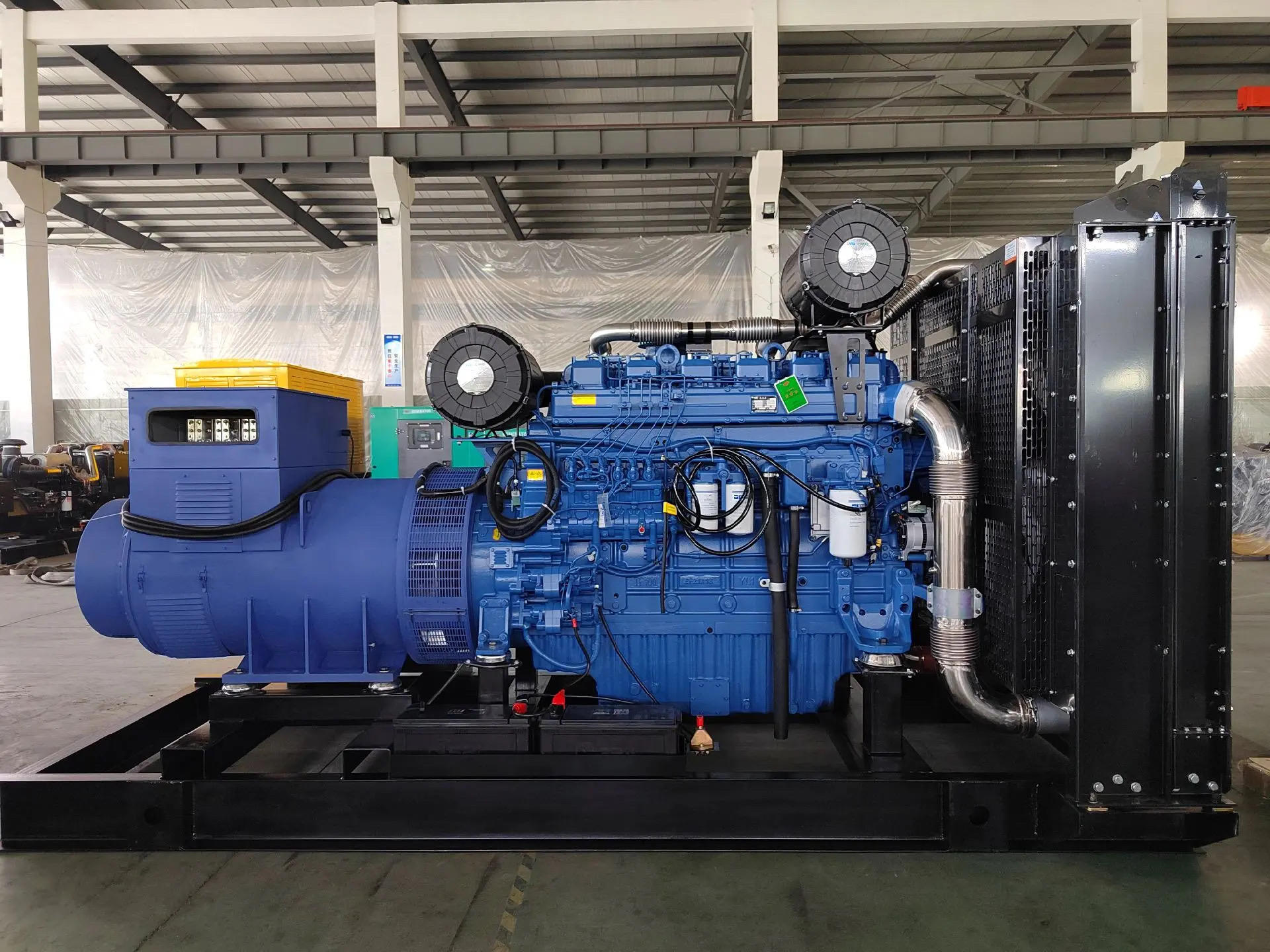
- Read the correction on the 400kW frame on the Weichai WP13 platform, where the altitude and the ambient sit on one line.
- State the height on the enquiry even at 300m, because a supplier who assumes sea level quotes a machine the site cannot load.
What does generator set altitude loss change for a site?
It changes the kilowatt the engine can produce, and therefore the load the frame carries before the alternator is considered at all. A 200kVA set rated at sea level and 40 ℃ carries 160kW at 0.8 power factor. At 2000m the same engine produces about 9% less, so the set carries 150kW and the alternator is no longer the limit. The plate still reads 200kVA.
The loss arrives twice in the same machine. The engine loses air mass per stroke, which cuts the fuel it can burn, and the radiator loses heat rejection because the air crossing the core is thinner and carries less energy per cubic metre. A site that corrects only the first and buys a larger core for the second still ends up with a figure that is optimistic.
How much does a naturally aspirated engine lose per 1000m?
About 4% of its rated output for every 1000m above the reference, which is close to the fall in air density itself. A naturally aspirated engine draws its charge by the pressure difference the piston creates, so the mass of air in the cylinder follows the ambient pressure almost exactly. At 1500m the pressure is roughly 84 kPa against 101 kPa at sea level, and the 17% density loss shows as about 6% of output rather than the full 17%.
The reason the loss is smaller than the density fall is that the engine is fuel limited at part of its range rather than air limited. Tesla Power Equipment works from the maker's chart where one exists and falls back to the 4% rule where it does not. A naturally aspirated engine rated at sea level runs slightly rich at full rack, and at altitude the same rack setting gives a mixture closer to stoichiometric, so some of the density loss is recovered as better combustion. The 4% figure already includes that effect.
| Site height | Naturally aspirated loss | Turbocharged loss | What the site notices |
|---|---|---|---|
| Sea level | None | None | The reference condition |
| 1000m | About 4% | About 2% | Within most design margins |
| 1500m | About 6% | About 3% | A 200kVA frame loses its reserve |
| 2000m | About 9% | About 5% | Black smoke at full load appears |
| 2500m | About 12% | About 7% | The next frame size is needed |
Why does a turbocharged engine lose less at height?
Because the compressor raises the pressure back toward sea level, and the wastegate holds the intake manifold at a set figure regardless of what the ambient does. A turbocharged engine at 2000m can still reach a manifold pressure close to its sea level value, so the air mass per stroke is partly restored. What it cannot restore is the exhaust energy available to drive the turbine, since the exhaust is also thinner.
The result is a loss of about 2% to 3% per 1000m on a turbocharged engine against 4% on a naturally aspirated one, and the gap widens as the height rises. The compressor also has to run at a higher pressure ratio to reach the same manifold figure, which lifts the intake temperature after the compressor and puts more work on the intercooler. That is the second reason a turbocharged set at 2000m is not simply a sea level set with a smaller correction.
Which figure is measured to establish the altitude loss?
Four figures, and the supplier needs all of them. The site height above sea level, taken from a survey rather than a map contour. The ambient temperature at that height, because a cold mountain site and a hot plateau lose capacity for different reasons. The relative humidity, which is small at height but not zero. The load the site expects, expressed as kW and as a power factor.
The height itself is often wrong on an enquiry. Generator set altitude loss for the plant room on a hillside is read from the room rather than the gate, since 250m of contour is worth 1% of the rating. A site described as 1200m may sit at 1450m at the plant room, and a 250m difference is 1% of the rating. We ask for a GPS reading from the plant room door rather than a figure from the project brief, and the two disagree often enough to be worth the question. Tesla Power Equipment keeps that reading on the order file beside the engine chart.
How is the correction applied to a 200kVA frame at 1500m?
Work it through the two limits in order. Work the height and the ambient together, because the two multiply. A turbocharged 200kVA set at 1500m loses about 3% to density and another 3% to a 45 ℃ ambient, so 160kW × 0.94 = 150kW. The set carries 150kW where the sea level plate promises 160kW, and the gap is 6% nobody sees on the nameplate.
The alternator is checked against the same figure. A 200kVA alternator at 0.8 carries 160kW, so at 150kW it sits at 94% of its rating and inside its class F margin. The engine is the limit, as it usually is at height, and the answer is either a larger frame or a lower site load. A buyer who corrects only the alternator sees a comfortable machine and misses the engine entirely.
What happens to the radiator at the same height?
It rejects less heat, because the mass flow of air through the core falls with density while the fan moves the same volume. A core sized for sea level loses roughly 1% of its heat rejection per 300m, so at 1500m it holds about 95% of its design figure. That loss lands on a cooling system that usually has 10% of margin, which is why a set at 1500m often runs hot before it runs out of power.
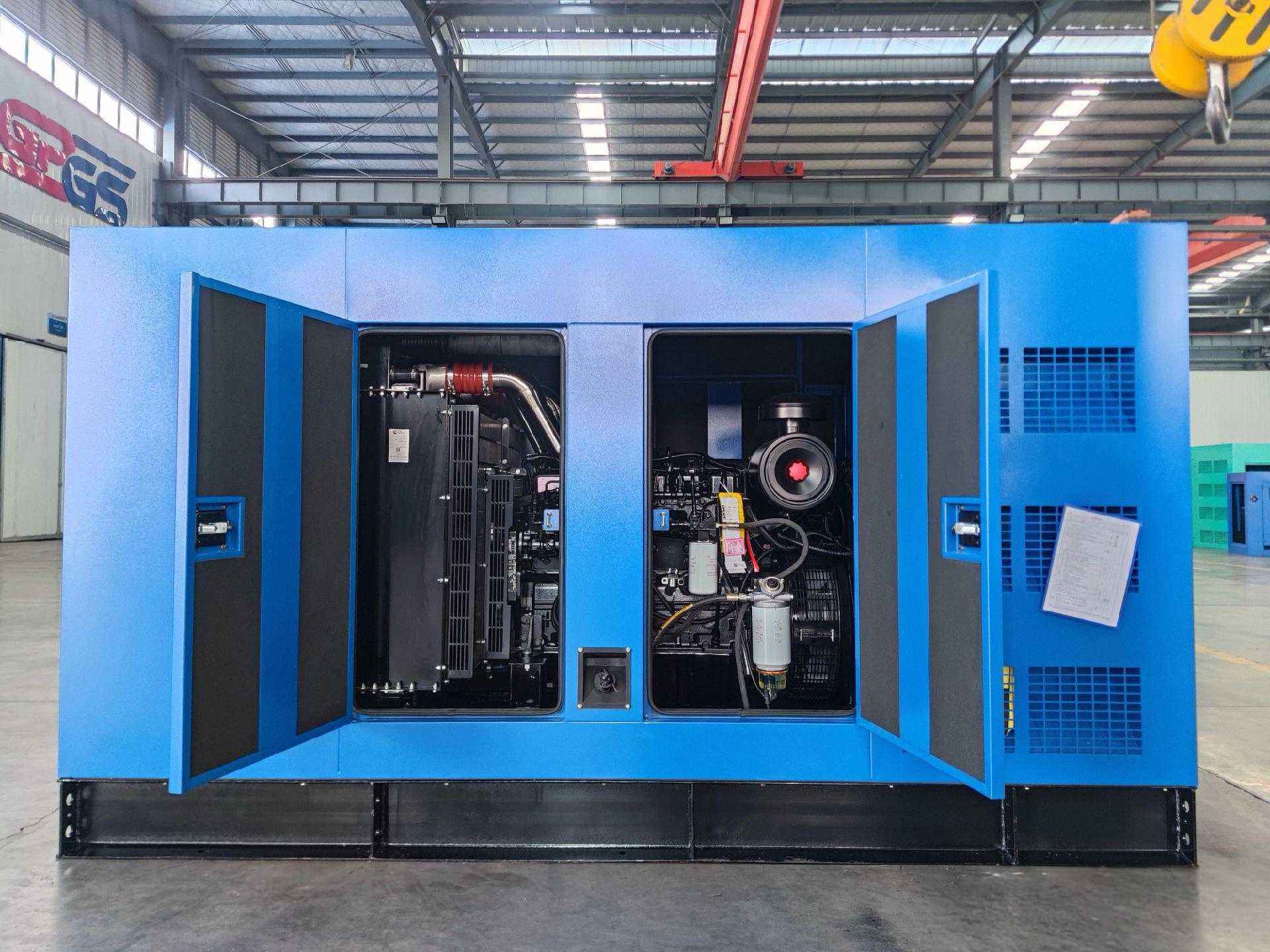
Three fixes sit on the cooling side. Generator set altitude loss for the site with a container build adds a fourth, because the louvre area is fixed and the fan cannot move more volume. A larger core with more rows costs depth in the canopy. A higher fan speed costs noise and power. A remote radiator costs pipework and a second pump. Our own preference on a mountain order is the remote radiator, because the pipe run can be short on a container build and the fan noise moves away from the plant room. Tesla Power has fitted that arrangement on three plateau sites and on one coastal hill where the room sat below the core.
Where does altitude loss show up first on site?
Black smoke at full load is the first sign, because the fuel rack reaches its stop before the air mass supports the fuel. The second is a coolant temperature that climbs 5 ℃ higher than the same set at sea level, which the controller reports but rarely alarms. The third is a frequency that sags under a step the same frame accepted at sea level, because the engine has less torque reserve.
We have seen a mine order at 2200m where the site reported smoke on every shift and a fuel consumption 8% above the data sheet. The set was correct for sea level and 12% short of air at the site, and no amount of injector work fixed it. A frame one size larger solved it, and the correction had been available on the data sheet all along.
Which engine types suit a high site?
Three arrangements cover most mountain sites. A turbocharged engine with an intercooler holds its figure best and is the usual choice above 1500m. A turbocharged engine without an intercooler is cheaper and loses more, because the compressor outlet temperature reaches the intake directly. Generator set altitude loss in a cold climate reads the other way, since the density gain from cold air offsets part of the height effect and the chart line flattens. A naturally aspirated engine is the simplest and the worst at height, and it survives on small sets where the load is light.
The derating chart matters more than the arrangement. Generator set altitude loss in a hospital plant room at 1800m is read beside the NFPA test schedule, and the two together decide the frame. A chart drawn at 40 ℃ and sea level with a single line for 1000m intervals lets a buyer read the figure at the site height without arithmetic. Chinese generator set manufacturers who publish that chart can be compared with each other; the ones who publish a single rating cannot.
- Above 1500m, ask for the turbocharged option with an intercooler and the chart that goes with it. Generator set altitude loss for standby duty is read at the same height, since an emergency set is tested at the site rather than at the works.
- Between 1000m and 1500m, a turbocharged engine without an intercooler usually holds the load.
- Below 1000m, the difference is small enough to sit inside a normal design margin.
How does altitude interact with ambient temperature?
The two corrections multiply rather than add, and the order matters for the figure a buyer reads. A site at 45 ℃ and 1500m takes 3% for temperature and 3% for height on a turbocharged engine, which gives 0.97 × 0.97 = 0.94 of the plate. A buyer who adds the two percentages gets 6% and overstates the loss by a fifth of a percent, which is harmless on one frame and material on a tender.
The interaction runs the other way as well. A cold site at 2000m loses less to temperature and more to density, so the net figure can be close to a hot site at sea level. That coincidence is why a supplier who quotes one correction without the other is guessing, and why the enquiry should carry both figures rather than a single site description. Tesla Power writes both on the offer line for that reason.
Where does the correction belong on the offer and the plate?
On the offer, as a corrected figure with the height and the ambient beside it. On the plate, as the reference rating with the class and the power factor, because the plate states the machine rather than the site. The two are read together at handover, and a mismatch between them is a documentation question rather than a performance one.
Ask for the chart the supplier used, not just the number it produced. The engineering notes on site planning cover the site data a buyer should collect, and the ISO 8528-1 rating definitions fix the reference condition both offers must name, and the NFPA 110 emergency power rules set the test schedule a hospital site follows at that height. A tender that carries the height, the ambient and the load receives offers that can be ranked.
Which records prove the correction was applied at handover?
Three do. The offer carries the corrected figure and the basis. The test sheet carries the ambient and the barometric pressure at the factory run, which is usually sea level. The commissioning record carries the site height, the ambient and the load, and the three together show whether the set performs as the offer promised.
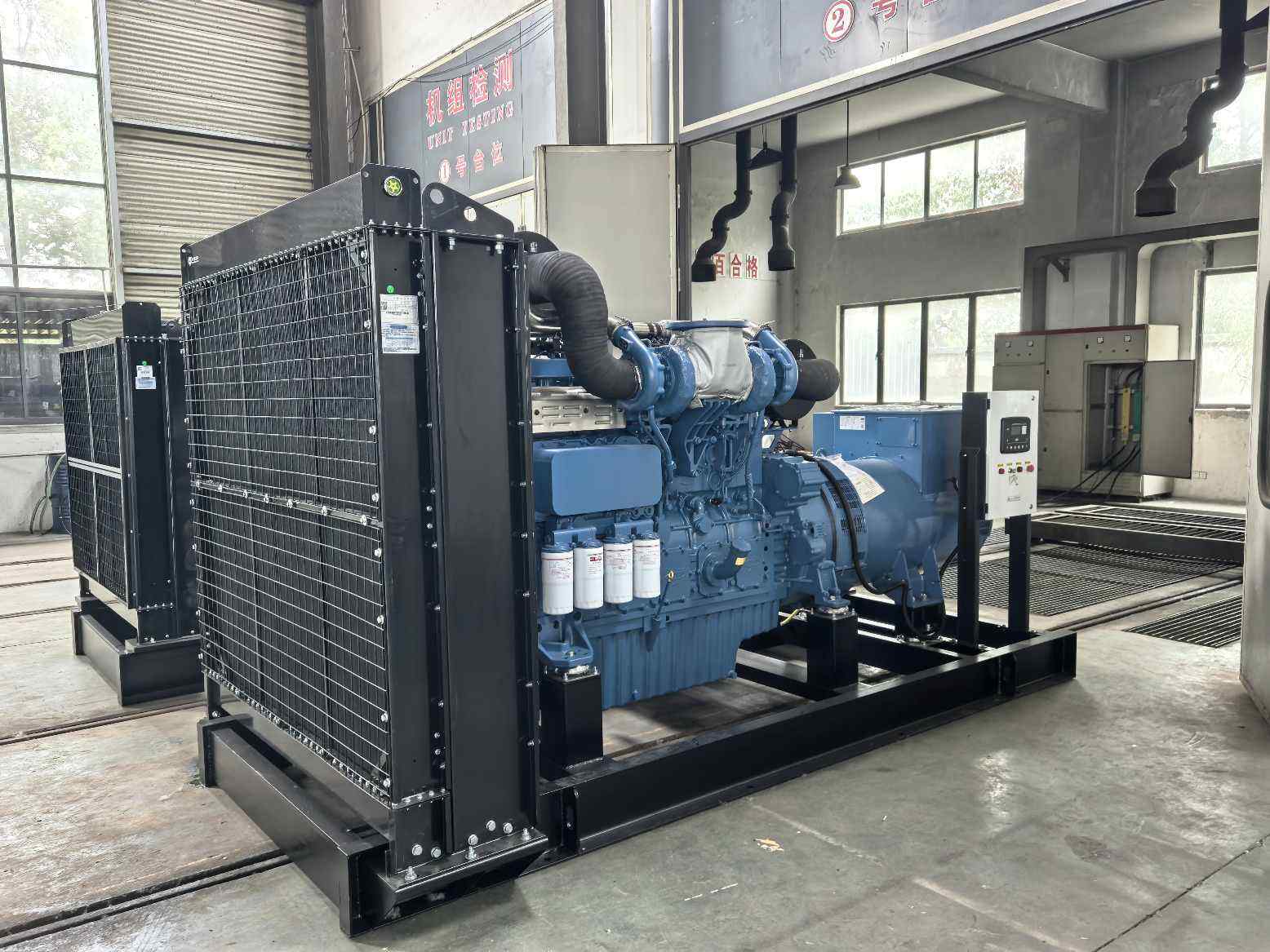
Yangzhou Tesla Power writes the height and the correction onto the offer, the same frame appears in the 500kVA silent set with the ATS option in the same chart form, and the factory and the test bay records the barometric pressure with every load bank run. On a mountain order we also record the manifold pressure at full load, because that figure shows whether the turbocharger is reaching its map or fighting the altitude. The 120kW set on the WP6 platform is charted the same way.
Conformity assessment for the assembly reads the corrected rating against the plate and the chart, and a gap there is a file problem rather than a site problem. Send the height, the ambient and the load to our export desk and the reply carries the corrected frame. Tesla Power issues that as a one page schedule rather than a paragraph.
Frequently asked questions about generator set altitude loss
Most data sheets start at 1000m, and some start at sea level. The figure is small below 1000m and inside a normal design margin, so a site at 600m rarely needs a frame change.
It needs a smaller one, about 2% to 3% per 1000m rather than 4%. The compressor recovers part of the density loss, and the intercooler decides how much of that it keeps.
It can be set to a lower full load stop, which reduces smoke and does not restore power. The engine still has the same air mass, so the adjustment trades a clean exhaust for less output.
It affects the cooling more than the output, because the air passing the winding is thinner. An alternator corrected for a 45 ℃ ambient at sea level is usually inside its margin at 1500m, and the engine limits the set first.
About 6% of its heat rejection at 2000m, on the 1% per 300m rule. That loss lands on a cooling system with about 10% of margin, which is why a mountain set often runs hot before it runs short of power.
It is on a container build, where the pipe run is short and the fan noise moves away from the plant room. On an open frame the larger core is usually cheaper than the pipework.
The height of the plant room, the ambient at that height, the load in kW and the power factor. A site described only by name leaves the supplier to assume sea level and 40 ℃, and the frame arrives short. Tesla Power asks for all four before quoting, and the enquiry form carries a field for each of them.
It raises it per kilowatt hour, because the engine works harder for the same output and the turbocharger runs at a higher pressure ratio. A site at 2200m can see 8% more fuel per kWh than the sea level figure on the data sheet.