
Generator set carbon monoxide is the gas a diesel exhaust carries out of the engine, and the plant room is where it collects when a joint leaks. Read how the gas forms and how the room is arranged around it. Tesla Power marks the discharge path, so send the room plan to our sales desk for a quotation.
- Ask where the exhaust leaves the building, because a discharge below a window returns the gas to the room.
- Check the joints between the manifold and the silencer, since a leaking bellows is the usual source.
- Look at the ventilation path, because air that enters low and leaves high carries heat and not the gas.
- Ask what the sensor trips, because an alarm without a shutdown leaves the set running in the gas.
What does generator set carbon monoxide do to a plant room?
Carbon monoxide binds to haemoglobin far more readily than oxygen does, so a concentration that leaves the room comfortable in oxygen terms still reduces what the blood can carry. The gas has no colour and no smell, which means the room gives no warning before the reading climbs. Tesla Power Equipment treats the gas path as part of the set rather than as part of the building, because the pipe that carries it starts at the manifold.
The plant room is the risk because it is enclosed and because it holds the joints that nobody sees once the set is installed. A bellows that was tight on the test bay can open after a season of vibration, and the gas then enters a space a person walks into without a monitor. The room layout, the discharge point and the sensor are therefore part of the set specification rather than an afterthought at commissioning.
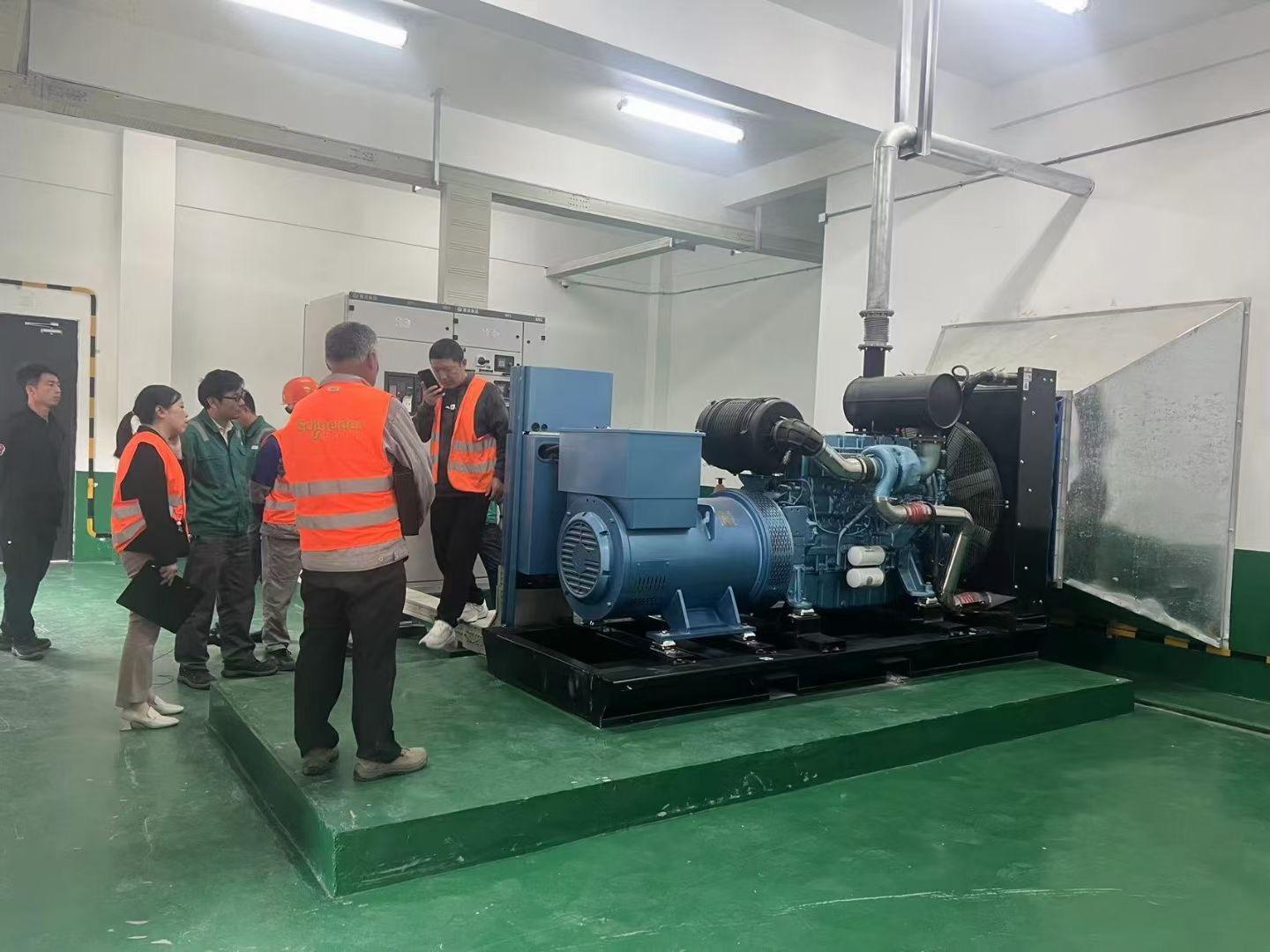
Why does the reading climb when the set works harder?
A diesel engine runs lean at part load and approaches a richer mixture as the load rises, and carbon monoxide forms when the fuel and air ratio moves that way. The highest reading therefore comes at full load and during the first seconds of a start, before the turbocharger has built its boost. A set that is tested at a light load and signed off on that reading has not been tested at the point where the gas is worst.
The exhaust also leaves the engine hotter and faster at full load, so a joint that leaks a little at part load leaks more when the pipe is hot and the flow is high. A generator set for a plant room with a long horizontal run needs the joints counted and the supports spaced, because every unsupported length is a place where the pipe can move and open. the installation notes treat the run as a pressure boundary rather than as a duct.
| Load point | What the gas does | What it means for the room |
|---|---|---|
| Cold start, first 20 s | Rich mixture, reading spikes | Start the sensor before the set cranks |
| Quarter load | Lean, low reading, cool pipe | A light test does not prove the seal |
| Full load, steady | Highest sustained reading | Test the seal at this point |
| Load rejection | Short rich excursion | Hold the alarm delay, do not mask it |
| After a bellows failure | Gas inside the room | Trip the set, do not just alarm |
How much air does the room actually need?
Combustion air for a 320kW engine runs near 1,200 m³/h at rated load, and the room ventilation has to supply it without starving the set or pulling the room into a vacuum. A 400kVA set at 0.8 pf carries 320kW, so 400kVA × 0.8 = 320kW is the figure both the combustion air and the heat rejection are sized on. About 8% of that leaves as heat through the engine and alternator surfaces, and clearing it with a 12 K rise needs roughly 1.8 m³/s of air.
Ventilation removes heat and supplies oxygen and does not remove carbon monoxide, because the gas has to leave through the pipe rather than be diluted inside the room. A room with generous air changes can hold a comfortable temperature and an unsafe reading at the same time. That distinction separates a ventilation calculation from a gas safety design, and the 500kVA silent set with the ATS gear carries the air figures on the same sheet as the rating.
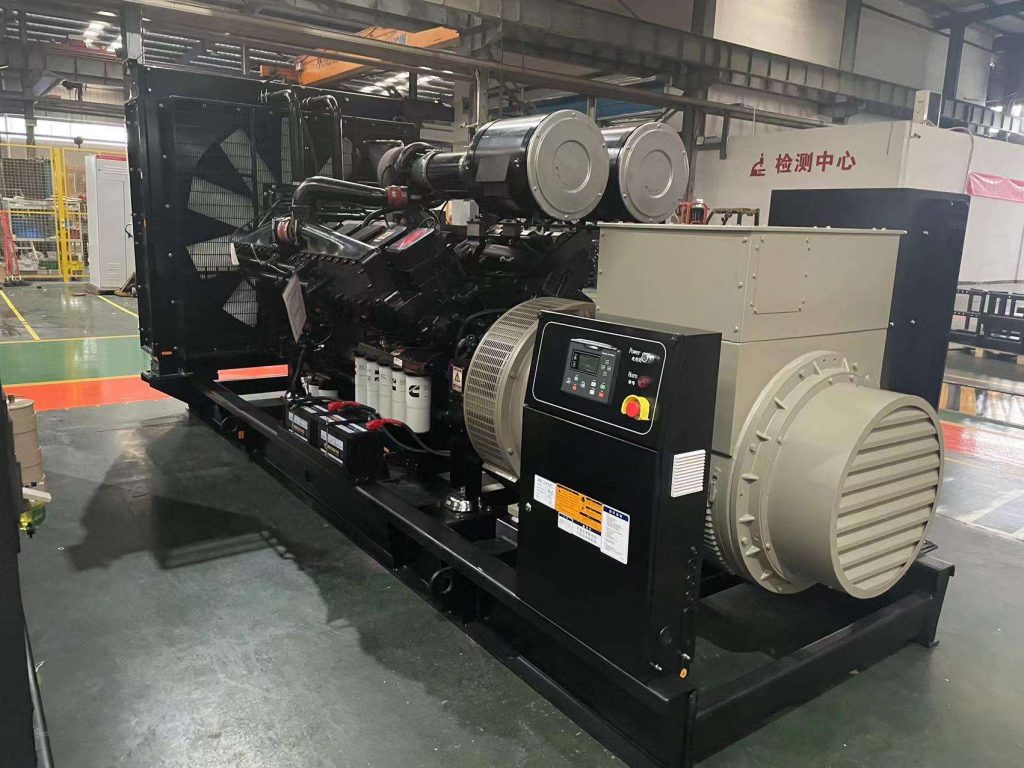
Where should the sensor sit in the room?
The sensor sits where a person breathes rather than where the pipe runs, so the usual position is at head height on a wall a technician walks past. Carbon monoxide is close to the density of air, so it mixes through the room instead of pooling on the floor or rising to the ridge. A sensor mounted at the discharge point reads the gas before it has mixed and says nothing about the air at the door.
A second sensor near the door gives the reading that matters to a person entering, and the pair also shows whether the room is mixing or stratifying. A generator set in a basement room with no opening at high level needs that pair in the order rather than in a later variation. Tesla Power lists which frames can be supplied with a factory-fitted sensor pair and which are left for the site to wire.
What does a shutoff damper change?
A shutoff damper closes the combustion air inlet when the set stops, and its job is to keep the room warm and to stop cold air washing a hot engine. It does not stop carbon monoxide, and a damper on the exhaust is a different device with a different purpose. A buyer who confuses the two ends up with a room that holds its heat and a set that still leaks gas at a failed bellows, and the room rules behind a Level 1 installation sit in the NFPA 110 standby rating table.
The exhaust side needs a proper discharge: above the roof line, away from any intake, and with a rain cap that does not restrict the flow enough to raise back pressure. Tesla Power draws the discharge on the layout with the height and the distance from the nearest opening marked, because a stack that ends under a window returns the gas to the building it came from.
Which records prove the alarm and the trip work?
Three records prove the protection: a calibration certificate for each sensor, a bump test with a known gas concentration, and a trip test that shows the set shutting down rather than only sounding. A sensor that alarms and does not trip leaves the set running inside the gas, which is the failure that matters most and the one a certificate alone does not exclude. the generator set range lists which frames carry the trip relay as standard.
The bump test belongs on the annual routine beside the load test, because a sensor cell drifts and a certificate issued at delivery says nothing about the cell a year later. Yangzhou Tesla Power issues the calibration sheet with the set and marks the cell replacement date on the same page, so the site knows when the reading stops being trustworthy.
What should the order state about the gas path?
The order should state the discharge height, the distance from the nearest opening, the sensor count and position, and what the trip does when the reading passes its limit. Those four lines turn a safety requirement into a build instruction, and most generator set manufacturers leave them to the installer because the set leaves the works without a room around it. The duty class the room is designed for follows the ISO 8528-1 rating groups.
Chinese generator suppliers who quote a sensor with the set make the interface explicit, and a generator set for the first year of service pays for that clarity the first time a cell is due for replacement. The alternative is a site that inherits a set, a room and an alarm panel with no drawing that connects them, and a technician who has to guess which device trips what.
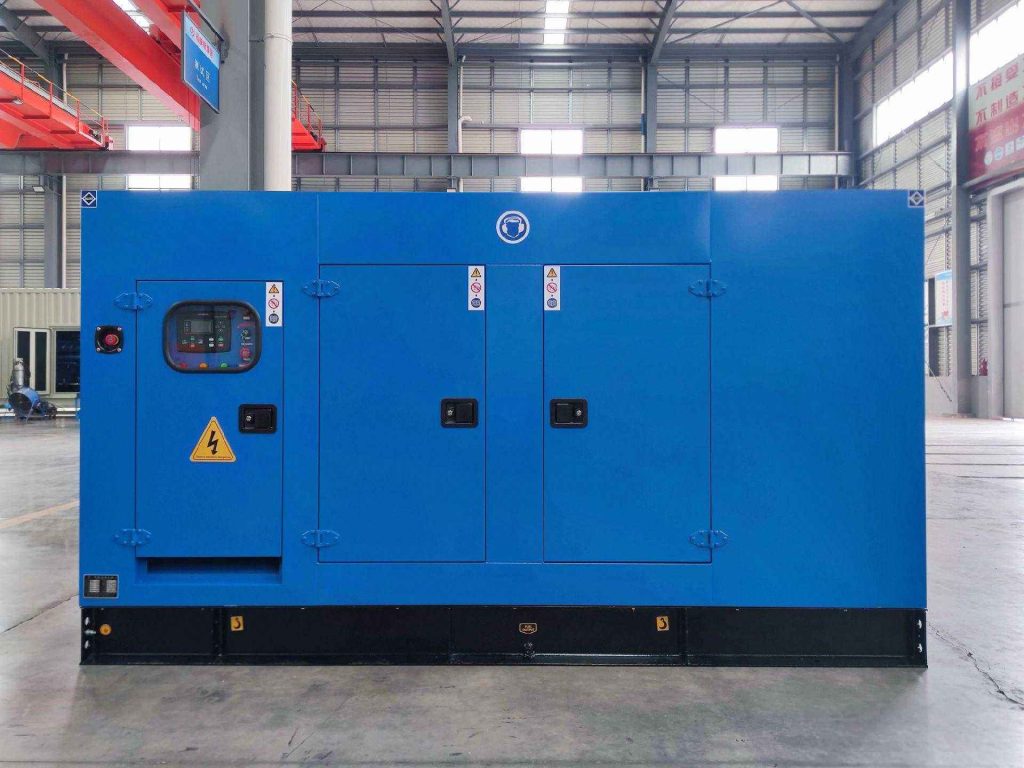
What does the handover file carry for the room?
The handover file carries the discharge drawing, the sensor positions, the trip logic and the calibration dates, all on one sheet with the serial number of the set. A buyer who reads it can tell whether the alarm trips or only sounds, and whether the sensor sits on the walking route or in the roof void. Tesla Power issues that sheet with the set, so the site starts from a drawing rather than from a panel of unlabelled terminals.
The file also carries the ventilation figures, because the room is sized on the heat the set rejects and a later partition changes the flow. Generator set documentation for a plant room is only complete when the air figures and the gas figures sit on the same page, and the discharge and sensor checks follow the works in Jiangsu routine before the set is crated.
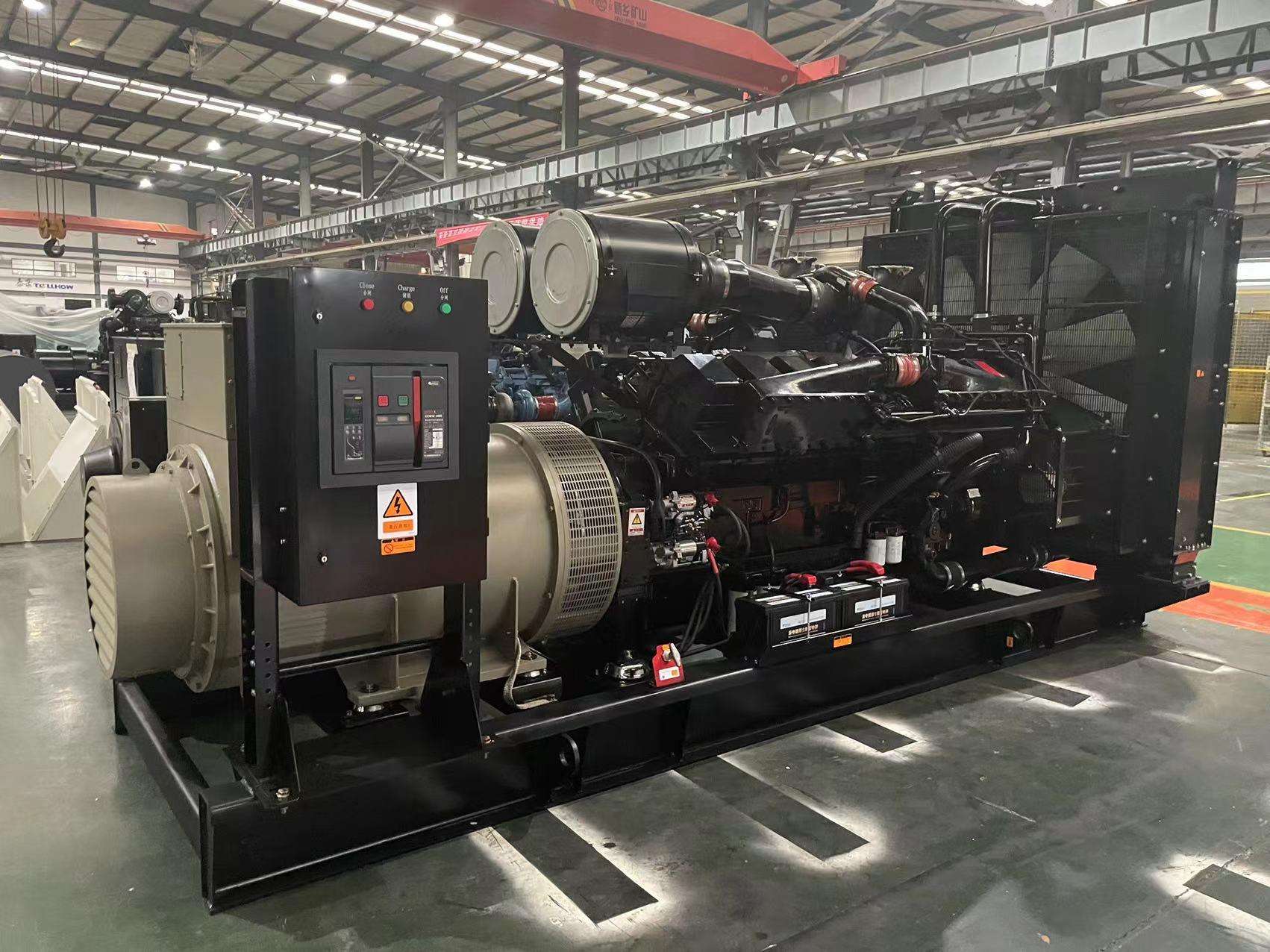
Send the room plan and the discharge route with the enquiry, and the set, the stack and the sensor come back as one answer instead of three items that have to be reconciled on site. Tesla Power writes that answer into the offer, so the gas path is visible before the order rather than after the first reading.
Frequently asked questions about generator set carbon monoxide
It does when the canopy exhausts into an enclosed room instead of through a pipe to outside. A canopy is not a gas treatment device, and a set inside a canopy inside a room has two boundaries that both have to seal. Ask where the canopy discharge goes before the set is sited.
An alarm protects a person who hears it and is trained to leave, and it does not stop the set. A trip closes the risk whether or not anyone is present. Most plant rooms want both, with the trip delayed long enough to avoid a nuisance stop.
The interval follows the sensor maker's data sheet and the site routine, and the usual answer for a standby room is at every annual load test. A cell past its replacement date can pass a bump test and drift the next week, so the date matters as much as the test.
No, because dilution is not removal and the source keeps running. Ventilation is sized on heat and combustion air, and a leak is fixed at the joint. Treating a leak with more air moves the problem rather than solving it.
Above the roof line, clear of any opening, and far enough from an intake that the plume does not re-enter the building. The distance depends on the roof shape and the prevailing wind, so it belongs on the drawing rather than in a general rule.
An outdoor set does not collect gas in a room, and it can still discharge into a covered walkway or a plant well. The question is whether the plume can gather where a person stands, and Tesla Power asks for the site plan before answering it.