
Generator set radiator sizing starts from the heat the engine and the alternator reject, not from the footprint of the frame. Tesla Power sets out the four figures we measure before a core is ordered, and shows what a supplier needs on an enquiry before the price means anything.
- Add jacket water, oil cooler and aftercooler heat into one figure, because the core carries all three at once.
- Fix the ambient design point before the core is picked, since the fan sees the air at the grille and not the yard average.
- Size the face from the air volume and the face velocity, then check the fan against the resistance of the discharge path.
- The frames themselves are listed in the range of frames the factory builds, where each plate states its own ambient basis.
What does generator set radiator sizing decide on a 400kVA frame?
On a 400kVA frame at 0.8 power factor the alternator delivers 320kW, and the engine rejects about 150kW to the jacket water, 40kW to the oil cooler and 50kW to the charge air. Those three lines add to 240kW that the core has to pass into the air stream. That total sets every other number on the sheet, including the fan diameter and the room opening.
A core quoted by frame size alone is a part number rather than a thermal duty, and the gap shows on the first hot afternoon when the coolant alarm trips at 95 ℃. Frames built for a 40 ℃ market and sold into a 45 ℃ site carry the same casting and a different core. We read the site figure from a week of grille temperature records rather than from a climate table for the nearest city.
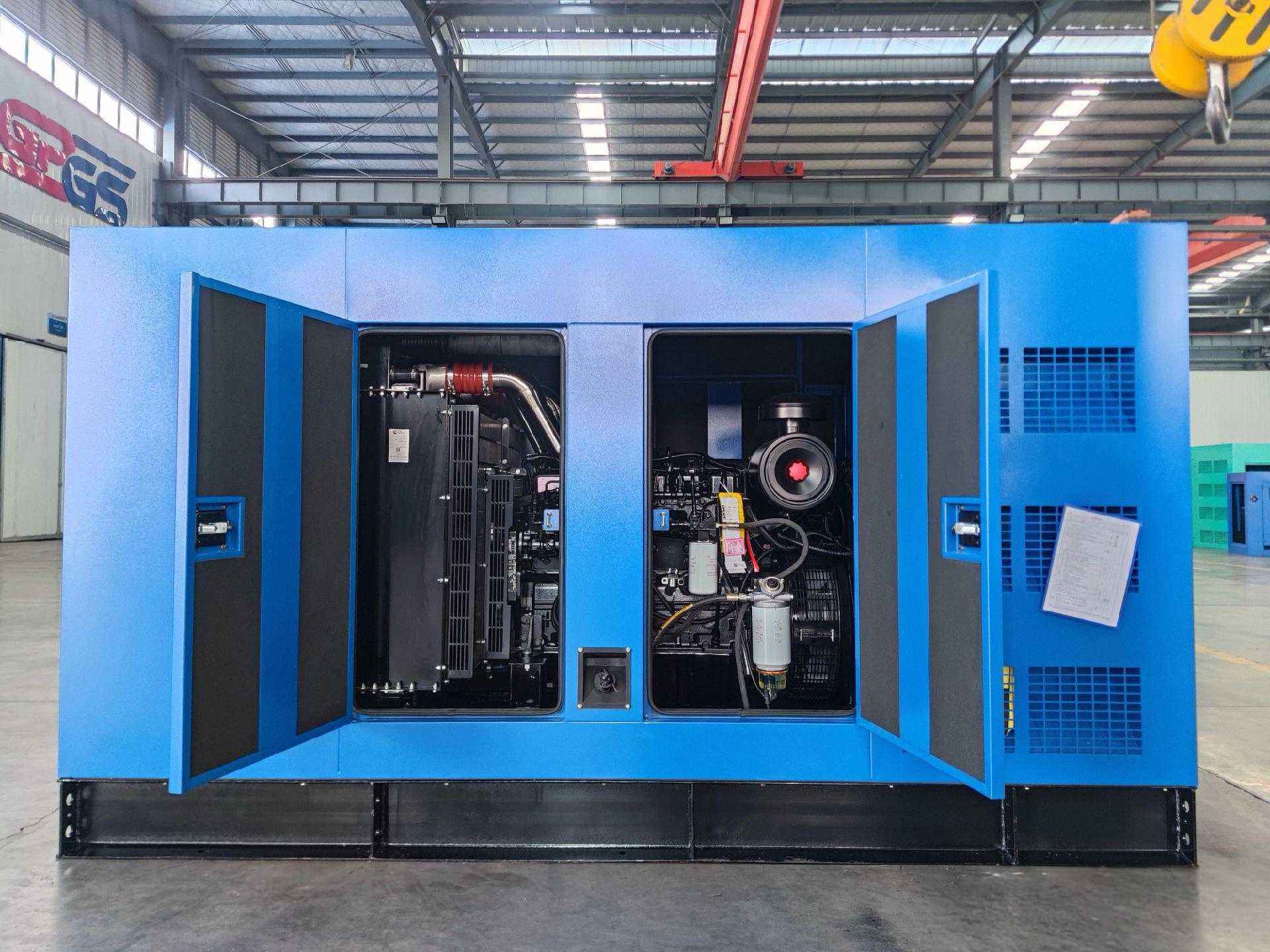
How is the heat load added up from the engine data sheet?
Read three lines from the data sheet and add them. Jacket water is quoted at the rated point, the oil cooler figure sits beside it, and the aftercooler figure appears only when charge air is cooled by water rather than by air. A set with an air to air aftercooler passes that third load straight to the atmosphere and needs a smaller core for the same electrical output.
The trap sits in the rating point. A data sheet quotes heat rejection at the standby rating or at the prime rating, and the two differ by about a tenth on the same block. Mixing a prime heat figure with a standby electrical rating gives a core short by that tenth, which is enough to put the set on the alarm at 45 ℃. Yangzhou Tesla Power keeps the sheet beside the alternator data so the two figures travel together rather than being matched at the end.
Our check is a single paragraph of arithmetic. At 80% load the 400kW set delivers 320kW, the core rejects 240kW, and 240 ÷ 400 = 60% is the share of the rating that leaves through the radiator. A set quoted at 55% is a set whose heat rejection came from a cooler rating point, and the two figures cannot both be right on the same block.
Which core face area carries 240kW at 45 ℃?
Work from the air side rather than from a catalogue table. At 45 ℃ and 1000 m the air weighs about 1.03 kg per cubic metre, so a fan moving 8.0 cubic metres a second passes 8.24 kilograms a second. Divide 240kW by the product of that mass flow and the specific heat of air, 1.005 kJ per kilogram kelvin, and the rise across the core comes to 29 K.
Face velocity then sets the area. A core run at 4.2 metres a second through the net face needs 1.90 square metres once the frame is allowed for. Push the same air through 1.2 square metres and the velocity climbs past 6 metres a second. Pressure drop rises with the square of velocity, the fan moves right along its curve, and the air volume falls below the number the core was sized for.
| Item | Figure at 400kVA | Where it comes from |
|---|---|---|
| Jacket water | 150kW | Data sheet at the rated point |
| Oil cooler | 40kW | Data sheet, engine auxiliary |
| Aftercooler | 50kW | Water cooled charge air only |
| Core total | 240kW | Sum of the three lines |
| Air flow | 8.0 m³/s | Fan curve at the system resistance |
| Rise across core | 29 K | 240kW over 8.24 kg/s times 1.005 |
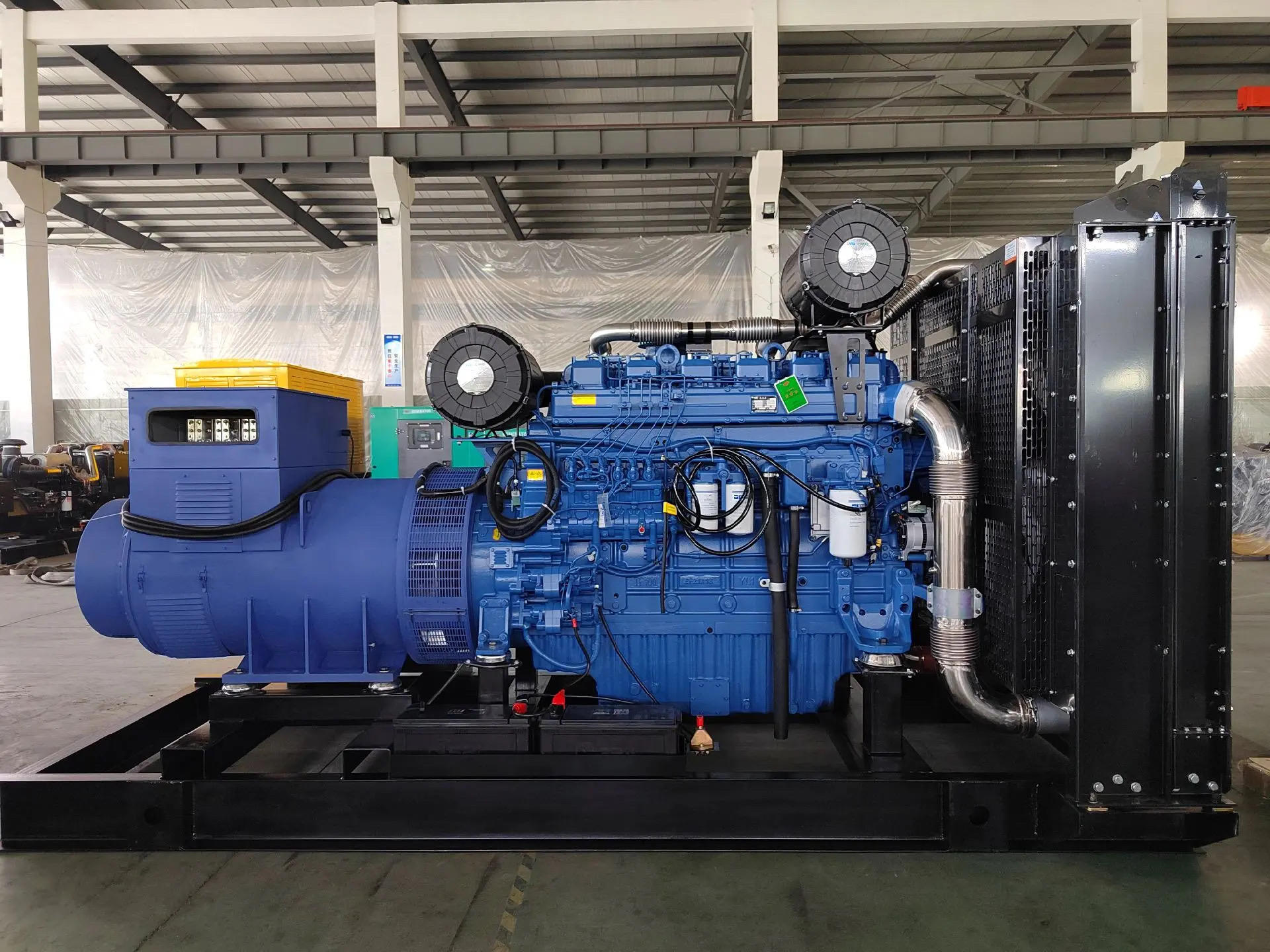
Where does the ambient design point come from?
It comes from the site record, not from a climate table for the nearest city. A yard that peaks at 43 ℃ in the shade reads 47 ℃ at a grille facing west at four in the afternoon, because the wall radiates and the air stalls against it. The design point is the figure at the grille, and that is the one the core is selected against.
A set inside a container adds more. The louvre bank cuts the open area to about 45% of the frame, the air turns twice before it reaches the core, and the inlet temperature sits 6 to 8 K above the yard for much of the day. Our test bay measures the figure with the doors closed, because that is the condition the set meets in service rather than the condition it meets on a bench. Tesla Power records it for every order.
The same correction applies to a generator set in a plant room, where the intake draws from a wall that has already been warmed by the alternator. Two site rules follow. Leave 1 m of clear air in front of the grille, and keep any wall at least half a fan diameter away from the discharge. Both are cheap at the drawing stage and costly after a canopy is landed on a pad with no room left in it.
How much does altitude move the air side of the core?
Altitude thins the air, and a core is a mass flow device rather than a volume flow device. At 1000 m the density is about 11% below sea level, so the same fan and the same duct carry 11% less mass and the rise across the core climbs by that proportion. The 29 K above becomes 32 K at 1000 m and 36 K at 2000 m.
The engine loses rating on a similar slope, which partly hides the effect. A turbocharged block holds its figure better than a naturally aspirated one, so a site at 2000 m often keeps its electrical rating and still needs a larger core. A generator set for standby duty at that height carries the same plate as one at sea level and a core two rows deeper. The figure belongs on the offer sheet beside the rating, where a buyer can read it against the site conditions.
What does an oversized core cost against a tight one?
An oversized core costs money in three places. It costs in the core itself, in the fan power needed to push air through a larger face, and in the space it takes inside a canopy. A core 20% larger on face area adds about 6% to fan power at the same velocity, which on a 400kVA set is small against the cost of a derated machine.
A tight core costs more later. Running a core at 6 metres a second raises the pressure drop across the block, the fan moves toward the right hand end of its curve, and the margin against a dirty core disappears inside one season. A site that cannot clean the core on schedule needs the larger face rather than a larger fan.
The choice belongs on the offer as two lines rather than as a note. Tesla Power quotes the standard core and the high ambient core side by side, with the ambient each one is selected against, so the buyer picks with the price in view.
Where does generator set radiator sizing go wrong on export orders?
The first error is a core selected at 40 ℃ for a site that peaks at 45 ℃, which is a 6% loss of capacity hidden inside a part number. The second is a duct or a louvre bank added after the core was chosen, which moves the fan working point and cuts the air volume. The third is a heat rejection figure quoted at prime rating against an electrical rating quoted at standby.
Each error is invisible in a price comparison and visible in the first summer. A buyer who asks for the ambient, the altitude, the rating point and the system resistance gets an answer that can be checked. Tesla Power asks for all four before a core leaves the drawing board, which is why the reply arrives as a schedule rather than as a figure.
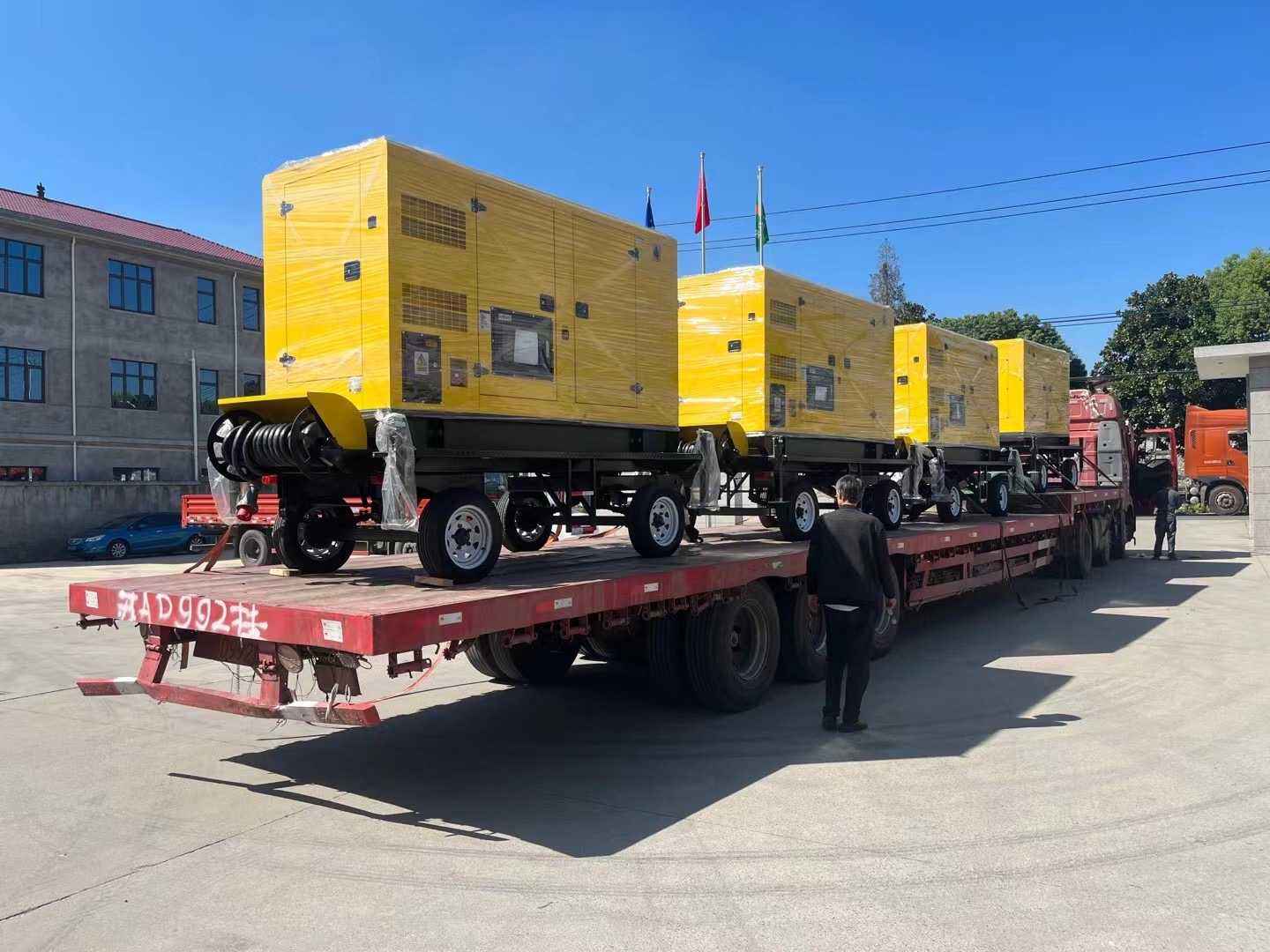
Which drawings belong with a generator set radiator sizing quote?
Ask for four documents with the quote. The core drawing carries the face dimensions and the row count. The fan curve carries the system resistance plotted against it. The air path drawing carries the room or the canopy. The heat rejection sheet carries the rating the core was selected at. With those four pages a second supplier can be compared without a site visit. A generator set for a hot climate needs a larger core than the same rating for a temperate site. A generator set for a plant room follows the room airflow rather than the radiator size. The generator set for standby duty carries a smaller core than one for continuous work. A generator set in parallel operation adds the second frame to the same cooling calculation.
- A fan curve without a plotted system resistance is a sales sheet, not a selection.
- A core drawing without row count cannot be checked against a cleaning schedule.
- A heat rejection sheet without the rating point cannot be compared with the plate.
- A room drawing without the louvre free area leaves the air volume unknown.
How is the core checked once the set is on site?
Tesla Power runs the set at 80% of the rating for two hours with the ambient recorded at the grille, and log the coolant temperature every fifteen minutes. A core that suits the site settles 8 to 12 K below the alarm point. A core that is tight climbs through the second hour and reaches the alarm on the third. The reference condition is defined in the ISO 8528-1 rating definitions, which names the tolerance and the test point.
Cleaning belongs on the same schedule. A core run at 4.2 metres a second collects dust on the leading row, and the blockage shows as a rising coolant figure long before it shows as a visible mat. The engineering notes on site planning set out the interval for common site types.
What changes when the core sits inside a container?
Tesla Power Equipment treats a container as a correction rather than a core change. The intake sits lower, the air is warmer inside the box, and the louvre free area sets the volume that reaches the radiator. The 1000kW container build for standby duty carries its derating chart beside the plate for that reason.
A generator set for a container build needs one more figure on the enquiry, which is the ambient inside the box rather than outside it. A site at 40 ℃ outside may see 47 ℃ at the intake, and the correction follows the higher number. Both temperatures are printed on the offer, because the gap between them is where a container order goes wrong. The reference condition is defined in the NFPA 110 emergency power rules, which names the tolerance and the test point.
Which records close the file on a core selection?
Most generator set manufacturers publish a reference figure and leave the correction to the buyer, and Chinese generator set suppliers rarely state the basis beside the figure. That is why the four items belong in the enquiry rather than in a covering letter. The 500kVA silent set with the ATS option carries the ambient and the altitude on the same line, and the factory and the test bay records the intake figure for every order.
Conformity assessment for the assembly then checks that the plate matches the file rather than the quotation. Send the site sheet and the load list to our export desk, and the reply comes back as a schedule with the ambient and the altitude already written beside the rating.
Frequently asked questions about generator set radiator sizing
The sum of jacket water, oil cooler and aftercooler heat, taken at the same rating as the electrical output. On a 400kVA set that is 240kW. A supplier who quotes a core against the electrical rating alone leaves out one of the three lines, and the gap appears at the first sustained load above 80%.
It helps less than buyers expect. A bigger fan moves more air, and it also draws more power and makes more noise. Where the limit is face area, a larger fan pushes velocity up rather than mass flow, and pressure drop rises with the square of that velocity. Change the core before the fan.
Because 45 ℃ is the figure most export sites see at the grille, while 50 ℃ is often a design allowance nobody measures. A core selected at 50 ℃ and run at 45 ℃ carries about 6% margin. A core selected at 40 ℃ and run at 45 ℃ is short by the same amount, and the direction of the error decides the outcome.
Not properly. The core and the fan are one unit, and the working point sits where the fan curve crosses the system resistance. A core quoted without a curve hides both numbers. Ask for the crossing point in writing and check it against the duct or the louvre bank you plan to fit.
Once at the end of the dusty season on a clean site, and monthly on a site near a road or a quarry. The interval follows the site rather than the calendar. A core washed on schedule holds its margin for a decade, and the same core left alone loses about a tenth of its air flow within two seasons.
A pressurised system runs the coolant hotter without boiling, and a higher cap rating allows a smaller core for the same duty. A 0.9 bar cap raises the boiling point by roughly 22 K over an open system. The cap is part of the thermal design and belongs in the same document as the core drawing, because a cap of the wrong rating moves the boiling point and hides a tight core.
The heat rejection sheet at the quoted rating, the fan curve with the system resistance drawn on it, and the commissioning record with the ambient beside the coolant figure. Three pages that a warranty question is read against, and the file is issued with the set rather than after the shipment.
It needs a different working point rather than a different fan. Hot air is thin air, so the same fan moves less mass and the core rejects less heat at the same speed. The figure is read at the grille for that reason, since a fan selected at 20 ℃ loses about 8% of its mass flow by 45 ℃. Tesla Power reads that figure on the site sheet before the plate is printed.