
Genset acoustic balance splits the sound power between the exhaust, the fan, the engine and the alternator before any lining is bought. Check the specification against the boundary limit, then compare supplier offers before the canopy is built. Tesla Power writes the split on the drawing; send the site plan to the technical desk and we confirm it.
- Split the sound power by source first, because the exhaust and the fan rarely share a treatment.
- Read the boundary limit as a sound pressure at a distance, not as a sound power at the set.
- Buy the silencer grade from the octave band that dominates rather than from the overall figure.
- Leave a margin for the site, since a reflective wall beside the canopy adds a few decibels.
What does genset acoustic balance mean?
It means dividing the total sound power of a set between the sources that produce it, then spending the attenuation budget where it buys the most reduction. A canopy lined to the same depth on every face treats the quiet sources and leaves the loud one untouched. The balance is a calculation before it is a material choice. A set that fails a boundary limit usually has one untreated path rather than a generally thin canopy.
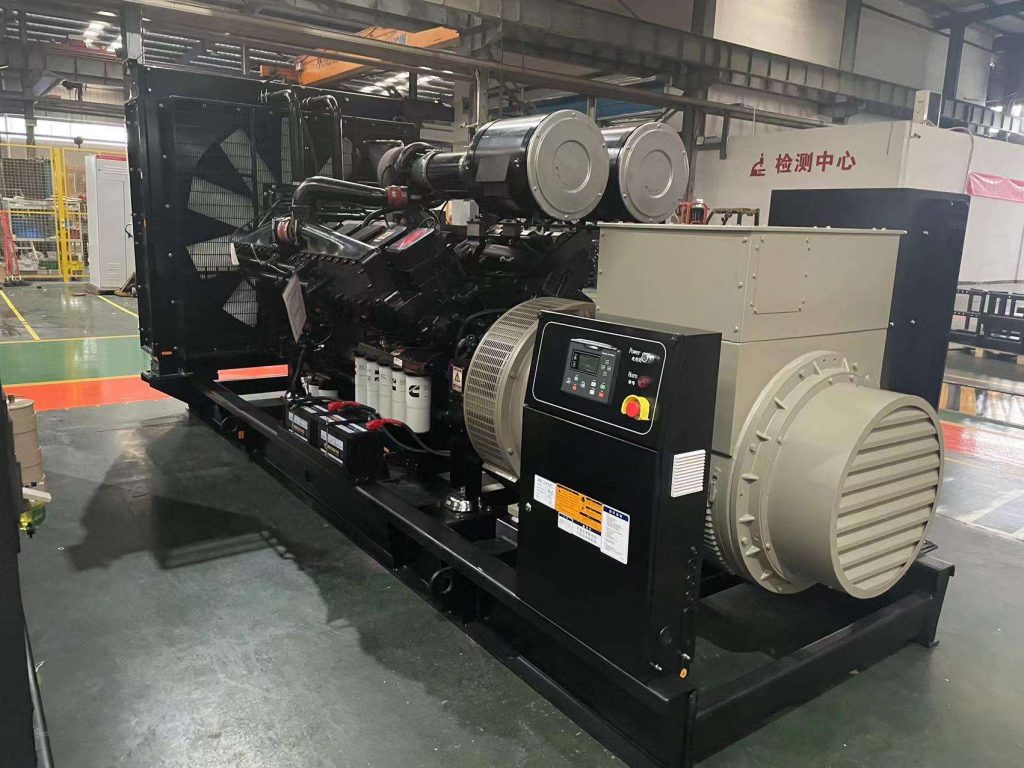
The four sources are the exhaust outlet, the radiator fan, the engine block and the alternator, and their shares change with the set and the enclosure. A set with a large fan and a short exhaust behaves differently from a set with a remote radiator and a long stack. Tesla Power measures the four sources separately in the bay, because a split taken from a catalogue rarely matches the build.
Which source dominates the spectrum?
On most diesel sets the exhaust outlet carries the largest share of sound power, and it dominates the low octave bands where a lining is least effective. The fan comes next and dominates the middle bands, where a louvre and an absorber work well. The engine block and the alternator carry the rest, and they are the easiest to treat because they sit inside the canopy. A fan at the front of a canopy radiates straight at the boundary, while the same fan behind a louvre does not.
The octave band matters more than the overall figure, because a boundary limit is written against a weighting curve and the curve is not flat. A set that measures well overall can still fail at 125 Hz where the limit is tight. Tesla Power reports the four sources in octave bands rather than as one number, which is what a lining choice needs.
| Source | Share of sound power | Treatment that works |
|---|---|---|
| Exhaust outlet | About 40% | Silencer grade and a stack direction |
| Radiator fan | About 30% | Acoustic louvre and a larger face |
| Engine block | About 20% | Canopy lining with a protective facing |
| Alternator | About 10% | Lining and sealed cable entries |
How is the attenuation budget split?
Take the boundary limit, add the distance correction and the site correction, and the result is the sound power the canopy has to reach. Then subtract the untreated sources to see how much attenuation each path needs. A path that needs 25 dB(A) takes a different silencer grade from a path that needs 12 dB(A). The budget is written per path so the fabricator can see which face needs the thicker panel and which can stay plain.
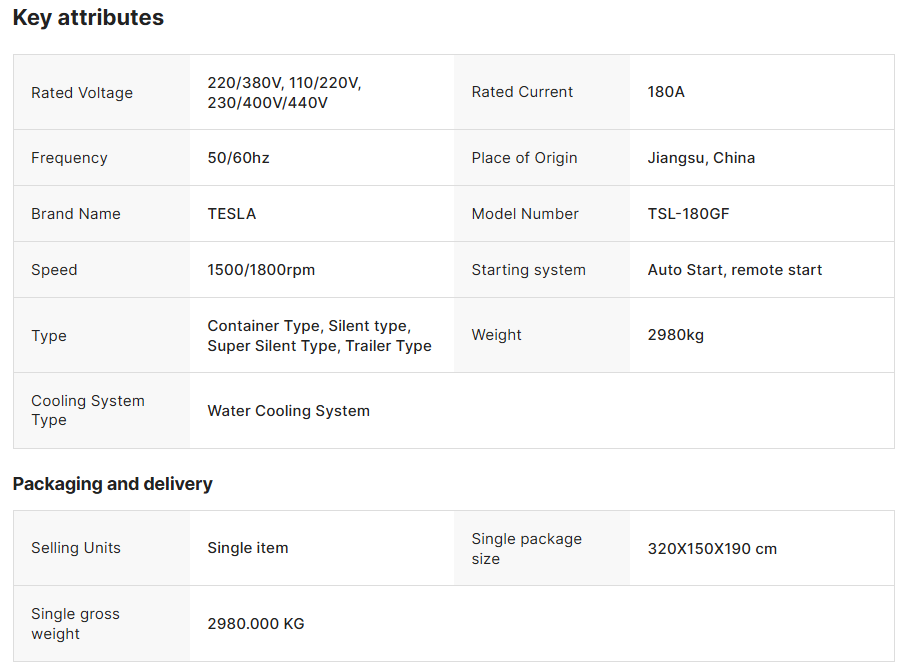
The split follows the shares rather than the ease of treatment. Spending on the fan louvre when the exhaust is the loud source buys a quiet middle band and leaves the boundary figure unchanged. A 500kVA set at 0.8 pf delivers 400kW and typically reads near 75 dB(A) at one metre, so the budget starts from a figure that is already high.
Why does distance take 6 dB off?
Sound pressure falls by about 6 dB(A) each time the distance doubles in a free field, because the same power spreads over four times the area. A set that reads 75 dB(A) at one metre reads about 69 dB(A) at two metres and 63 dB(A) at four. The fall is reliable outdoors and much less reliable in a yard with walls. Indoors the fall is closer to 3 dB(A) per doubling, because the walls reflect the sound back into the room.
Each doubling of distance takes 6 dB(A) off the figure, so eight metres is three doublings from one metre: 75 dB(A) - 3 x 6 dB(A) = 57 dB(A). A reflective wall beside the canopy can add several decibels back, which is why the site plan belongs with the calculation. Tesla Power applies the site correction before it quotes a canopy grade.
What does a canopy lining actually absorb?
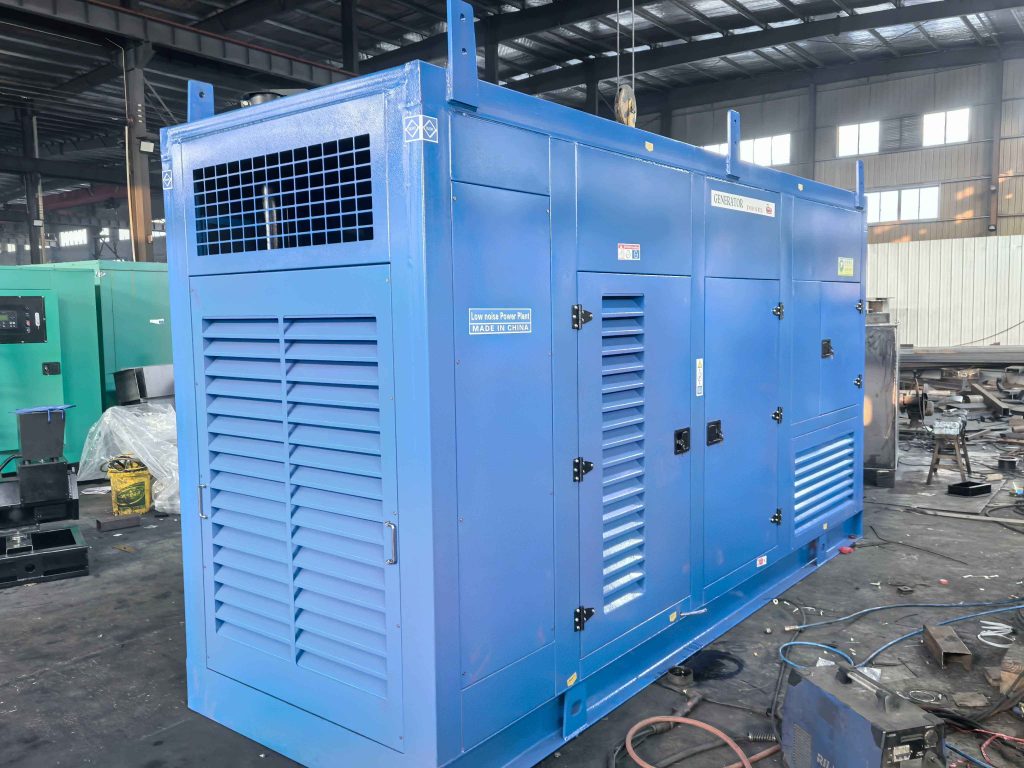
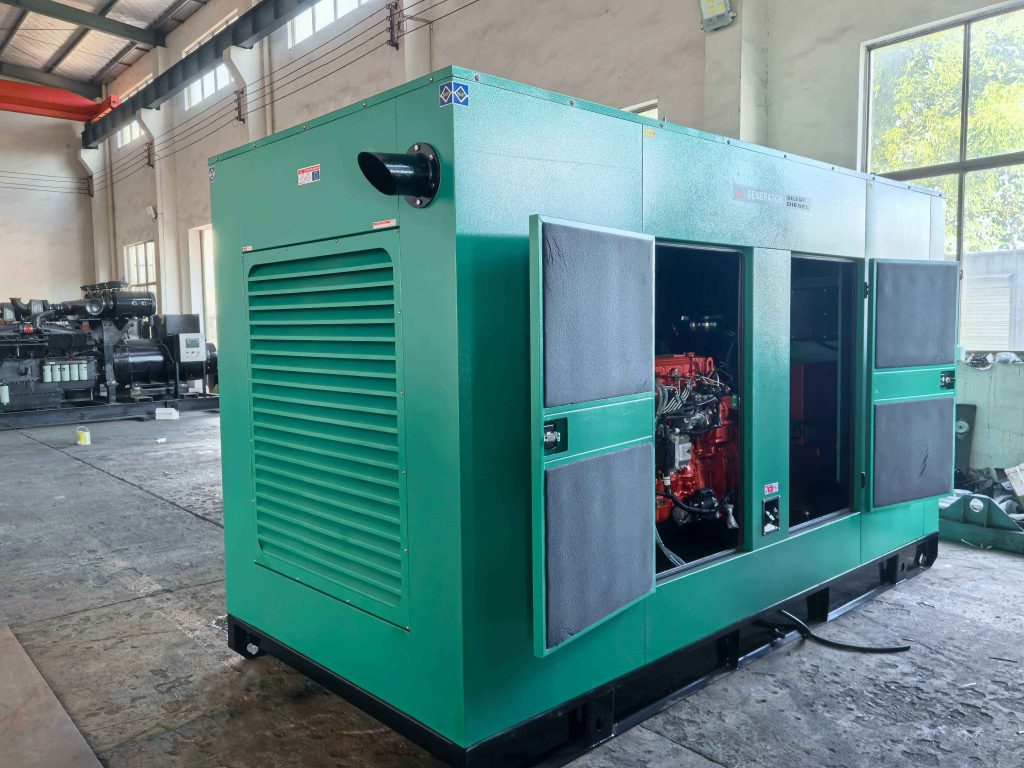
A foam lining absorbs the middle and high bands well and the low bands poorly, which is why a canopy alone rarely fixes an exhaust problem. A mineral wool panel with a perforated facing does better at low frequency because it is thicker. The thickness buys low frequency performance and the facing buys durability. A thin panel over a deep air gap performs better than a thick panel bonded straight to the steel.
The lining also has to survive oil, heat and washing, so a panel that absorbs well and degrades in a year is not a saving. Fit a protective facing on the engine side and keep the lining away from the exhaust manifold. Tesla Power Equipment specifies the panel by octave band performance rather than by thickness, because two panels of the same thickness can differ by 6 dB(A) at 125 Hz.
How is the figure proved at the boundary?
Measure at the boundary point named in the permit, with the set at the load the permit assumes, and average several readings around that point. A single reading beside a wall reads high and a reading in a gap reads low. Take the set of readings and report the highest, because that is the figure an inspector will use. Wind moving across the microphone adds a few decibels of its own, so take the readings in still air where possible.
Then measure again at half load, because a set that passes at full load can fail at half load when the fan runs at a fixed speed and the exhaust note changes. Log the load, the distance, the ambient and the weather, since wind and rain both move the figure. Yangzhou Tesla Power repeats the boundary test after the canopy is finally positioned on site.
What should a buyer put on the enquiry?
Send the boundary limit with the distance and the weighting, the site plan with the reflecting walls, and the load the permit assumes. Add the octave band data if the authority published it, because a limit written at 125 Hz is a different problem from one written as an overall figure. Those five items decide the canopy grade. A limit written as a sound power level is a different document from one written as a sound pressure at a boundary.
The wording on the offer matters too. Genset acoustic balance manufacturers often quote a single overall figure with no octave band data, and Chinese genset acoustic suppliers sometimes price a lining without stating which band it absorbs. Ask for genset acoustic balance for a canopy build, genset acoustic for a boundary limit and genset for a hospital as three separate cases. Tesla Power writes the split on the drawing, and the 1000kW container build shows the lined canopy.
What does the handover file record?
The file carries the four source levels in octave bands, the boundary limit, the distance correction, the canopy grade and the measured boundary reading. One page covers the noise case when those five items sit under the set serial number. Add the conformity assessment for the canopy when the installation is part of a permit package.
Hand the page to the site engineer who answers the inspector rather than to the buyer who placed the order. the Yangzhou factory describes the bay where the sources are measured. the commissioning notes lists the frames that ship with a lined canopy, the build range explains how a louvre is cleaned without damaging the absorber, the ISO 8528-1 duty definitions sets the rating basis the load case comes from, and the NFPA 110 maintenance routine covers the load steps the set was accepted on.
Frequently asked questions about genset acoustic balance
It can, and it is expensive, because the lining has to be fitted around a set that is already in place. The louvre and the silencer are easier to change than the wall panels. Decide the grade from the boundary limit before the canopy is built, and treat an upgrade as a last resort.
Only if the exhaust is the dominant source at the boundary point. A larger silencer on a set whose fan dominates buys very little. Measure the split first, then buy the treatment that matches the dominant path. A silencer one grade up is cheap compared with a canopy rebuild.
Background noise falls at night, so the same set reads higher against a quieter background and the complaint arrives. The absolute level does not change. Check the limit against the night time background rather than against a daytime measurement taken in a busy yard.
It matters a great deal, because a canopy beside a wall radiates into the yard and a canopy in a corner radiates twice. Moving a set three metres can change the boundary figure by several decibels. Draw the position on the site plan before the canopy grade is fixed.
It is measured in a bay with a known acoustic environment, using several microphone positions around the set. A single reading in a workshop is a sound pressure and cannot be converted without knowing the room. Ask for the method and the environment with the figure.
Carry about 3 dB(A) below the limit, because the site correction is an estimate and the weather moves the reading. A design that lands exactly on the limit passes in the bay and fails at the boundary. Tesla Power states the margin on the noise page rather than leaving it to the installer.