
Genset battery charger settings decide whether a standby set starts on the first crank after months of waiting. Check the specification against the battery type, then compare supplier offers before the order. Tesla Power writes the figures on the panel schedule; send the battery data to the technical desk and we confirm them.
- Set the float figure from the battery maker chart rather than from the charger default.
- Check the charge current against the battery capacity before the charger is ordered.
- Fit a temperature sensor, because a battery in a cold room needs a higher float figure.
- Test the battery on load at commissioning rather than reading the terminal voltage alone.
What does a genset battery charger do?
It holds the starter battery at full charge while the set sits idle, which on a standby set can be months at a time. A battery that is left to self discharge sulphates and loses capacity, and the loss is permanent. The charger exists to stop that happening rather than to charge a flat battery quickly. A battery that has been left at half charge for a season loses capacity that no charger can put back.
That makes it a continuous duty device rather than an accessory, and it has to survive the same years the set does. A charger that fails quietly leaves a set that looks ready and will not crank. Tesla Power fits a charger with a visible fault lamp and a volt free contact, because a silent failure is the one that strands a site.

Which float figure belongs on the charger?
A 24 V lead acid battery floats near 27.6 V at 25 °C, and an AGM battery of the same nominal voltage floats slightly lower. The figure comes from the battery maker chart rather than from the charger menu, because a charger default set for a flooded battery will overcharge an AGM one. Overcharging dries a battery out and undercharging sulphates it. A float figure taken from a menu rather than from a chart is the most common reason a battery dies early on a standby set.
The boost figure sits above the float, near 29.4 V for a flooded battery, and it is applied for a few hours after a discharge. A charger that stays in boost for more than 8 h boils the electrolyte away over a season. Tesla Power sets the boost time on the panel schedule and labels the charger with the battery type, because a replacement charger installed without that label is a warranty claim waiting.
| Battery state | Reading on a 24 V system | Action |
|---|---|---|
| Float, at 25 °C | 27.6 V | Hold, with the sensor fitted |
| Boost after a discharge | 29.4 V | Four hours, then back to float |
| At rest, fully charged | 25.6 V | Normal for a healthy battery |
| At rest, half charged | 24.0 V | Charge and run a capacity test |
How much charge current does a battery need?
A lead acid battery takes a charge current near a tenth of its capacity in amp hours, so a 200 Ah battery wants about 20 A. A charger that is much smaller will still hold a healthy battery and will not recover a flat one before the next outage. A charger that is much larger heats the battery and shortens its life. The charge current also decides the recharge time after an outage, which is what a site with a short duty cycle cares about. A charger sized for the recharge window rather than for the capacity alone keeps the site ready between outages.
The arithmetic is simple and worth writing down. A 24 V system with a 200 Ah battery needs about 10% of capacity in charge current: 200 x 10% = 20 A. Size the charger from that figure and check the mains supply it needs, because a charger on a small circuit is a charger that trips the breaker.
Why does temperature change the figure?
A cold battery takes a higher float figure and a hot one takes a lower figure, and the difference over a 40 °C swing is more than a volt on a 24 V system. A charger with no temperature sensor therefore overcharges in summer and undercharges in winter, which is the worst of both. The sensor is a small part that decides the battery life. A battery room that swings from frost to forty degrees needs the sensor more than a room that stays mild.
The sensor goes on the battery case rather than in the charger, because the charger sits in the panel and the panel is not the battery. Tesla Power Equipment fits the sensor on the case and writes the compensation figure on the schedule. A site that replaces a battery without moving the sensor has a charger that is now guessing.
What happens when the charger fails?
The battery discharges slowly and the set still starts for a while, so the failure is invisible until the day it matters. A set that cranks slowly on a test run and starts normally the next day is a set with a charger problem rather than a battery problem. Read the charger output before replacing the battery. A voltmeter on the charger output is worth more than a lamp, because it shows a charger that is working and drifting.
A charger that fails high is worse, because it boils the battery and leaves acid in the battery tray. Yangzhou Tesla Power fits a charger that limits the output to 110% of the figure and reports a fault rather than one that keeps pushing. The fault contact goes to the controller so the alarm appears with the other alarms rather than on a lamp nobody reads.

How is the battery proved at commissioning?
Read the terminal voltage at rest, then read it again during a crank and watch how far it falls. A battery that drops below about 18 V on a 24 V system during a crank is weak, even if it reads full at rest. Then run a timed discharge test if the site needs a documented figure. A capacity test at commissioning is the only figure that predicts the first winter, and it takes an hour with a load bank.
Log the rest voltage, the crank voltage, the charger output and the battery date code on the commissioning sheet. A battery that is already two years old at commissioning has less life than a new one and the buyer should know. The four figures take twenty minutes and they settle the first winter call. Tesla Power keeps the four figures with the battery date code.
What should a buyer put on the enquiry?
Send the battery type, the capacity, the ambient range in the battery room, the mains supply available and the alarm contact the site wants. Add whether the set has to start in a cold climate, because that changes the capacity as well as the float figure. Those six items decide the charger and the battery together.
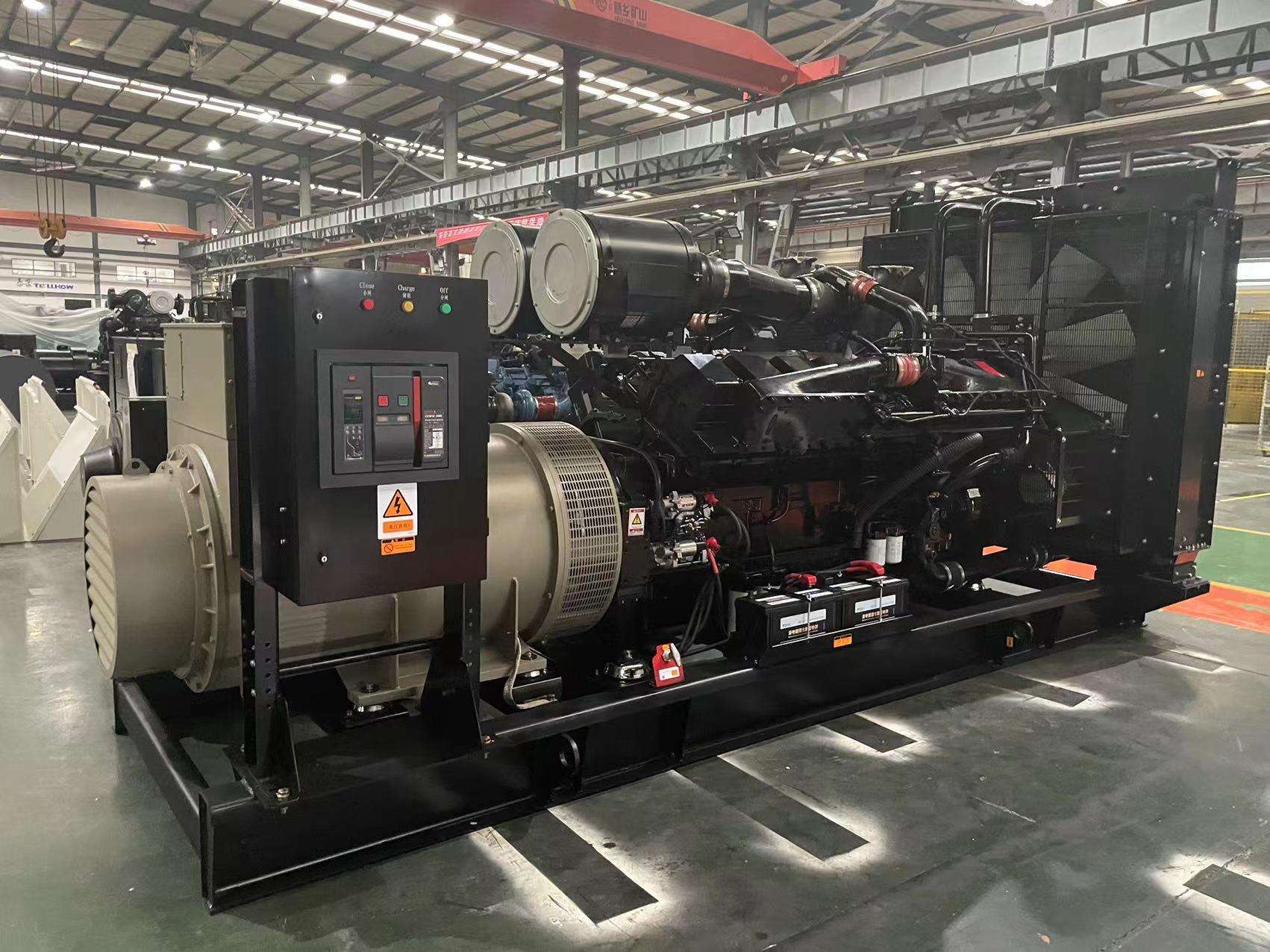
The wording on the offer matters too. Genset battery charger manufacturers often quote a current with no float figure, and Chinese genset battery suppliers sometimes ship a battery with no date code. Ask for genset battery charger for a standby set, genset battery for a cold climate and genset for a remote site as three separate cases. Tesla Power writes the figures on the schedule, and the 1000kW container build shows the battery tray.
What does the handover file record?
The file carries the battery type and capacity, the float figure, the boost figure and time, the temperature compensation and the crank voltage at commissioning. One page covers the starting system when those five items sit under the set serial number. Add the conformity assessment for the charger when the installation is part of a permit package.
Hand the page to the technician who changes the battery rather than to the buyer who placed the order. the Yangzhou factory describes the bay where the crank test is run. the commissioning notes lists the frames that ship with a dual charger, the build range explains how the battery is isolated before a service, the ISO 8528-1 duty definitions sets the rating basis the starting system was sized on, and the NFPA 110 maintenance routine covers the load steps the set was accepted on.
Frequently asked questions about genset battery charger
A panel can hold a battery on a remote site with no mains, and it needs a regulator to avoid overcharging. It cannot deliver the charge current a flat battery needs in the hour before an outage. Use a panel as a maintainer rather than as a charger, and size the regulator for the panel.
Check the charger output first, then check the mains supply to the charger, which is often a circuit that gets switched off with the lighting. A charger that is off looks identical to a charger that is broken. Read the output at the terminals before replacing anything.
It needs a charger sized to the new capacity, which usually means a larger one. A charger left at the old size will hold the battery and will not recover it after a long outage. Match the charger to the capacity when the battery is replaced rather than afterwards.
Three to five years is typical on a standby set with a working charger, and less on a site that runs hot. A battery that is more than four years old is on borrowed time. Write the date code on the battery and check it at every annual service.
It removes the water top up and it hides the state of the electrolyte, so a fault shows later. On a remote site the trade is usually worth it. On a site with a technician the flooded battery gives more warning. Choose by who visits the site rather than by price.
A charger of that size draws very little, which is why it is often put on a shared circuit. The risk is the shared circuit rather than the load. Give the charger its own breaker and label it, so a technician does not isolate it while working on something else. Tesla Power marks the circuit on the panel schedule.