
Genset canopy lining sets how much noise the panels absorb and how the surface survives heat, rain and washing. Compare the layer stack, the facing and the fixings against the site before you accept an offer. Tesla Power builds the lining into the panel drawing; send the noise target to the technical desk and we confirm the layers.
- Ask for the layer stack in millimetres rather than for a material name.
- Check the facing against the temperature the panel will reach.
- Look at the fixings, because a lining that drops into the fan is worse than a noisy one.
- Ask how the lining is replaced on site, not only how it is fitted in the factory.
What does genset canopy lining do?
It takes energy out of the noise before the panel has to block it, so a lined canopy works as an absorber and a barrier at once. Bare steel reflects sound back into the enclosure and passes it through the wall. A lining turns part of that energy into heat inside the foam. On a set at full load the gain at the measuring point is often several decibels, and it costs nothing in fuel. Absorption only helps where the noise actually passes, so the lining belongs on the air path and not on the panel behind the control box.
The lining also changes the airflow, because a louvre packed with foam has less free area than a bare one. A lining that fills the louvre cuts the cooling air and raises the canopy temperature by more than the noise gain is worth. Size the free area with the lining in place rather than after it. Tesla Power draws the two on one sheet so the conflict is visible before the build.
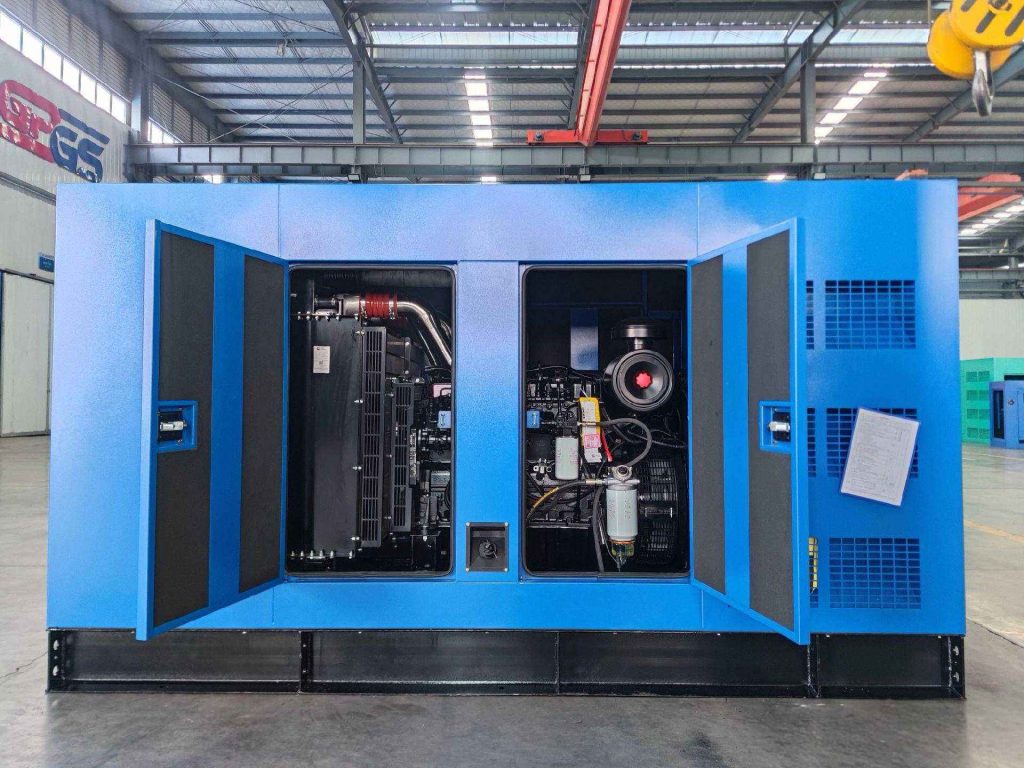
Which material suits which panel?
A closed cell foam suits a canopy that sees rain and washing, because it does not hold water against the steel. An open cell foam absorbs more at low frequency and it also holds water, so it belongs behind a sealed facing. A mineral wool batt absorbs well and it settles over years, which leaves the top of the panel bare. Match the material to the wetting the panel sees.
The facing matters as much as the absorber. A perforated sheet protects the foam and lets sound through, and it only works while the holes stay open. A solid facing turns the panel back into a barrier with no absorption at all. Ask for the open area of the perforated sheet as a percentage, because a facing with too few holes is a solid panel with extra weight.
| Layer | Typical figure | Note |
|---|---|---|
| Absorber foam | 25 mm to 50 mm | Closed cell where water is present |
| Air gap | 20 mm behind the foam | Cheaper than more foam |
| Facing | 0.5 mm perforated sheet | Holes must stay open |
| Fixing pin | One every 300 mm | Washer spreads the load |
How thick should the lining be?
Thickness buys low frequency absorption and it costs free area inside the canopy. A 25 mm layer is enough to kill the mid band that makes a set sound harsh, and a 50 mm layer reaches further down. Doubling the thickness does not double the absorption, so past a point the extra millimetres buy very little and take space from the radiator.
An air gap behind the foam is cheaper than more foam. A 20 mm gap between the foam and the steel moves the absorption curve down without adding weight, and a panel with 25 mm of foam over that gap often beats a plain 50 mm layer. A panel 2 m by 1 m at 50 mm takes 0.1 m3 of foam: 2 m x 1 m x 0.05 m = 0.1 m3. Tesla Power Equipment marks the gap on the section.
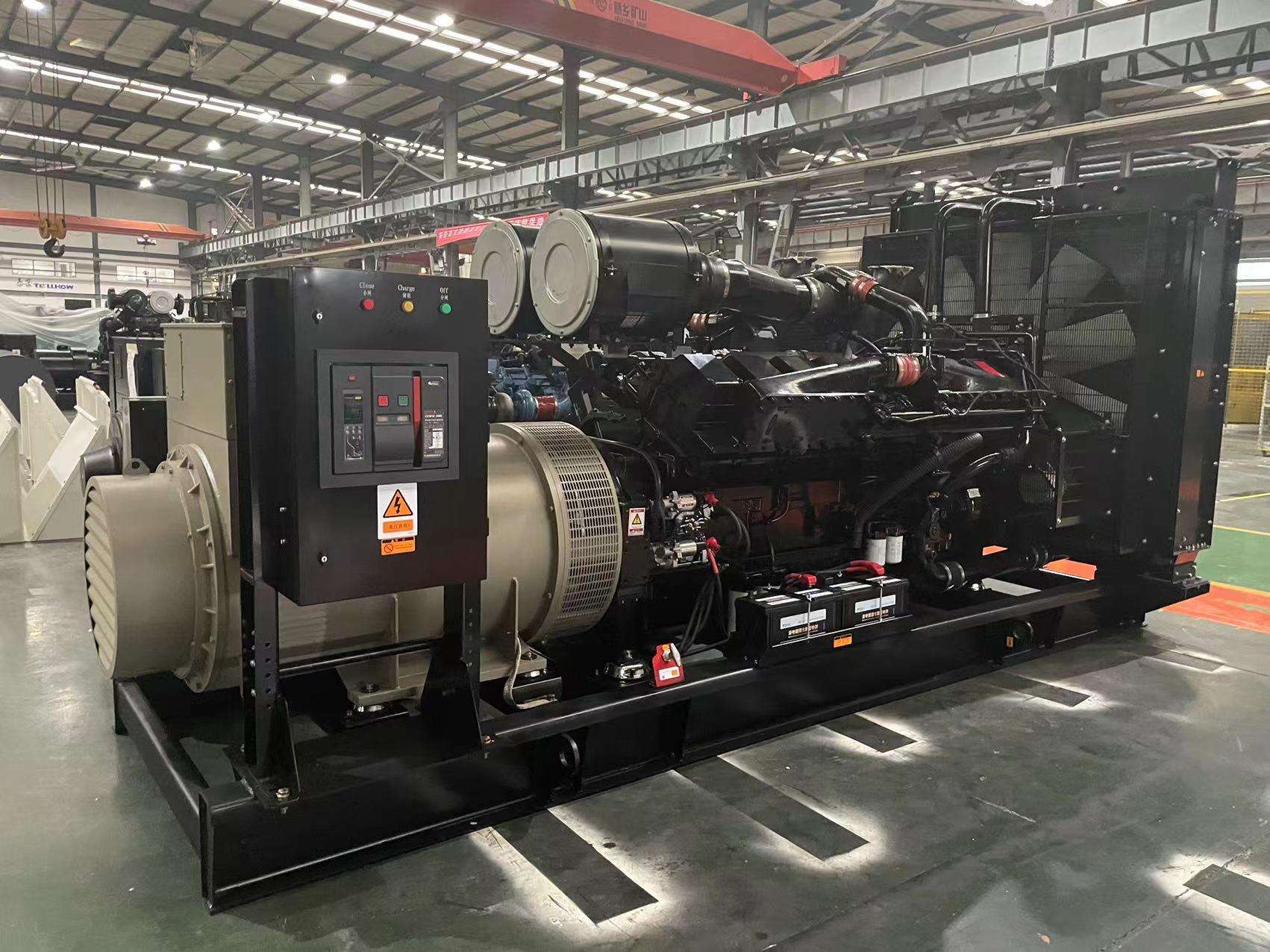
How does the lining affect airflow?
Every millimetre of lining takes free area from the louvre, and the louvre is where the cooling air enters. A lining added after the airflow was sized is a lining that throttles the set. The symptom appears as a higher canopy temperature and a derated output on a hot afternoon, not as a noise problem. Check the free area figure with the lining already deducted.
The same applies at the outlet, where the fan pushes the hot air out. A lined outlet duct loses area twice, once to the lining and once to the bend. Keep the outlet free area above the fan requirement and line the straight run only. A 500kVA set at 0.8 pf gives 400kW, and at 80% load that is 320kW: 400kW x 80% = 320kW, so the outlet is not the place to save millimetres.
What holds the lining in place?
A steel pin welded to the panel and a large washer is the fixing that survives vibration, and the pin spacing decides whether the lining stays flat. A pin every 300 mm holds a vertical panel for years. A pin every 600 mm leaves the foam free to flap, and a flap wears the facing until it tears at the corner.
Adhesive alone is not a fixing on a canopy that reaches 70 C in the sun. The glue softens, the foam sags and the bottom of the panel collects a roll of wet foam. Use adhesive to seal the edges and pins to carry the load. Tesla Power Equipment pins the lining on the panel jig rather than in the finished canopy, so the spacing is the same on every panel.
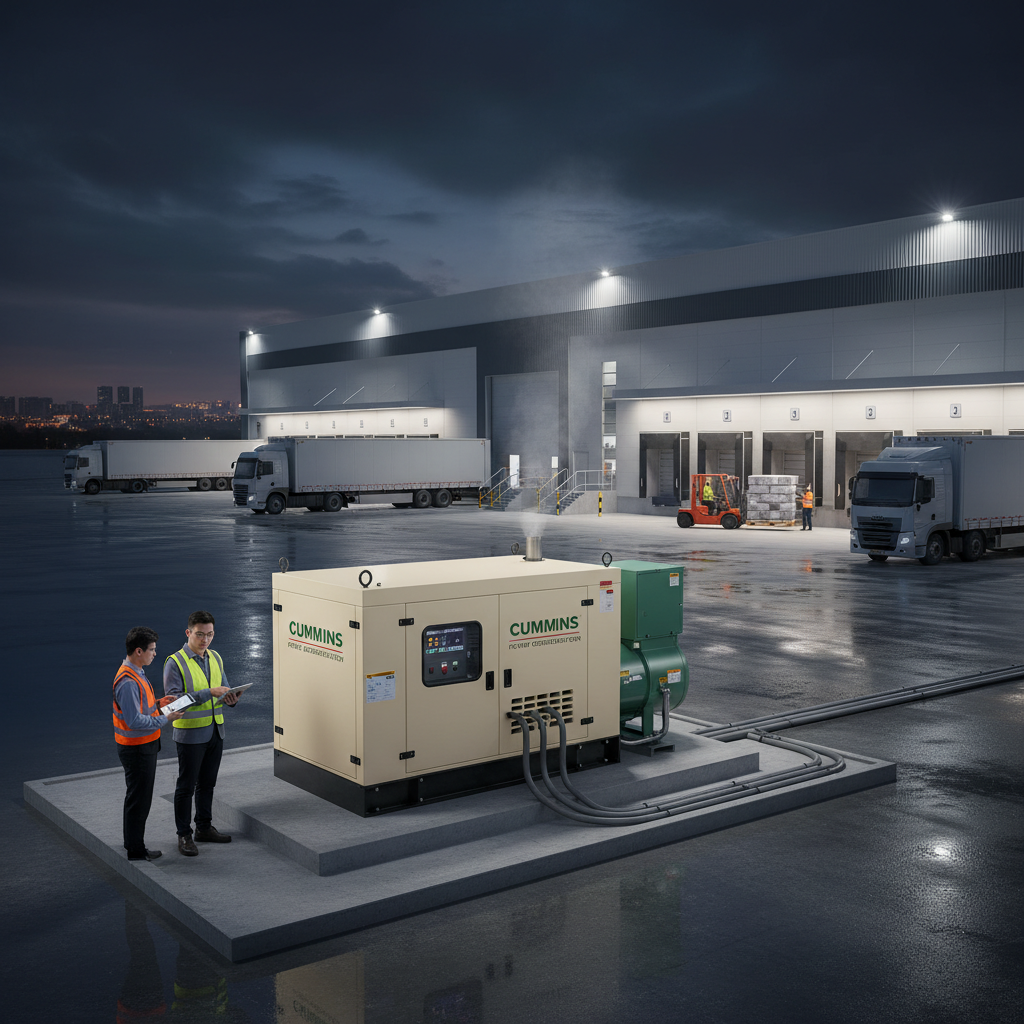
How is the lining cleaned and replaced?
A closed cell facing can be washed with a hose, and an open cell lining cannot. A site that washes the canopy every month needs a facing that takes water and a drain at the bottom of the panel. A site that washes the canopy rarely needs a lining that does not trap dust in the first place. Ask the question before the material is chosen.
Replacement is a design decision, because a lining that is glued and pinned cannot be changed without cutting the facing. A removable cassette costs more at the factory and saves a day on site, and a cassette that is not labelled is a cassette that goes back the wrong way round. Yangzhou Tesla Power ships spare cassettes with the first order for sites that run the set hard. The cost of the spare is small against the cost of a canopy that has to be stripped.
What does the offer need to state?
The offer should name the absorber, the density, the thickness, the facing and the pin spacing, and it should give the free area of the louvre with the lining in place. Five items on one line tell the buyer more than a page of marketing. Ask for the free area figure in square metres rather than as a percentage of the bare louvre.
The wording on the offer matters too. Chinese genset canopy suppliers often quote a lining as a material name with no thickness, and a genset canopy lining manufacturers page can list a foam that the factory does not stock. Ask for genset canopy lining for the noise target, genset canopy for a hot yard and genset in a coastal plant room as three separate cases. Tesla Power prints the stack on the drawing.
What does the handover file record?
The file carries the layer stack, the density of the absorber, the free area of the louvre, the pin spacing and the noise figure measured before the lining went in. One page covers the lining when those five items sit under the set serial number. Add the conformity assessment for the panel build when the canopy is part of a permit package.
Hand the page to the technician who will wash the canopy rather than to the buyer who placed the order. the Yangzhou factory describes the panel jig where the lining is pinned, the commissioning notes lists the canopies that ship with a cassette, the build range explains how the free area is measured, the 500kVA silent set with ATS changeover shows the enclosure the lining goes into, the ISO 8528-1 duty definitions sets the noise basis the figure comes from, and the NFPA 110 maintenance routine covers the panel standard behind the build. Tesla Power keeps the page with the drawing.
Frequently asked questions about genset canopy lining
It can if there is free area to spare in the louvre, and most canopies have very little. Measure the free area first and add the lining only where the louvre is oversized. A lining added to a tight louvre raises the canopy temperature and shortens the life of every cable inside it.
Past about 50 mm the extra depth buys very little in the band that matters, so a thicker layer is not automatically a quieter set. An air gap and a sealed panel edge often do more than another 25 mm of foam. Spend the space on the gap and the fixings before adding thickness.
Water runs down the inside of the panel and softens the adhesive, and the foam then hangs from the top pins. A closed cell absorber and a drain at the bottom stop the water reaching the glue. Check the drain before blaming the foam.
A perforated sheet holds its shape and protects the foam from a brush, and a mesh lets more sound through but tears on a rough site. A perforated facing with an open area of about 30% is the usual compromise. Ask for the open area rather than the hole size alone.
A lined canopy is often three to six decibels quieter at the measuring point than a bare one, and the figure depends on where the measurement is taken. Ask for the figure with the distance and the load stated. A number without those two conditions cannot be compared with another offer.
It does on most sites, because a foam inside a canopy sits next to a hot exhaust. Ask for the fire class of the absorber and the facing as a pair. Tesla Power supplies the certificate with the panel drawing so the file is complete on arrival.