
A genset containerised build puts the set inside an ISO shell, so the shell decides cooling, lifting and paint life. Compare the size, the floor loading and the paint system against the yard before you accept an offer. Tesla Power builds on a standard shell; send the yard data to the technical desk and we confirm the spec.
- Check the shell size against the set and the service space, not against the set alone.
- Ask for the floor loading at the mounting points rather than the average.
- Look at the paint system, because a shell that rusts in two years is a shell that was cheap.
- Ask how the container is lifted and where the certificate comes from.
What is a genset containerised build?
It is a generator set mounted inside a steel shell built to the ISO container envelope, with the doors, louvres and cable entries cut into that shell. The envelope matters because the shell then travels, stacks and lifts with the same gear as any other container. A set in a bespoke enclosure has to be shipped as a heavy lift, and a containerised build does not.
The build also fixes the service access, because the shell walls are the only place to put a door. A set that needs a top-end overhaul needs a roof hatch as well as a side door, and a shell that has neither is a shell that comes apart on site. Tesla Power draws the access openings before the set is placed, since moving a louvre after the cut is a repaint.
Which container size fits which set?
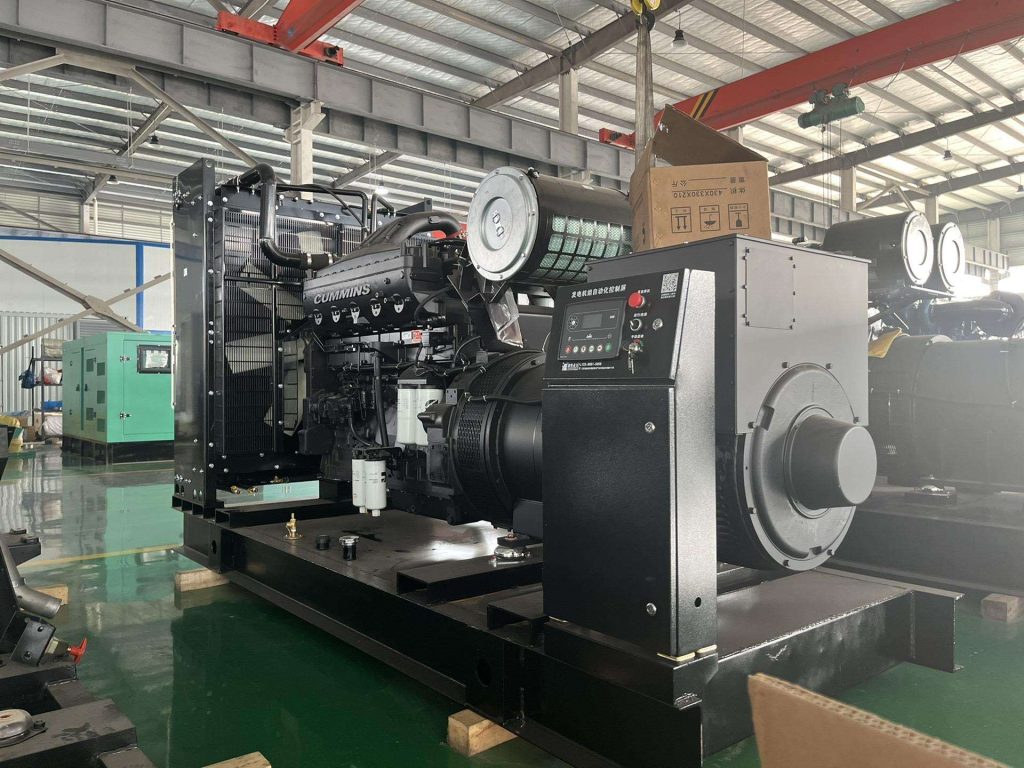
A 20 ft shell takes most sets up to about 1,250kVA and a 40 ft shell takes the larger frames with the radiators at one end. The limit is not the rating but the length of the set with the radiator and the alternator in line, and the radiator is the part that surprises buyers. Measure the set and add the service space at the alternator end before choosing the shell.
A 40 ft shell with a small set wastes volume and it also wastes cooling air, because the louvre area is set for a bigger machine. A short shell with a large set puts the radiator too close to the louvre and the hot air short circuits back in. Ask for the set length and the shell internal length on one drawing. Tesla Power Equipment keeps the two dimensions on the general arrangement so the gap is visible.
| Item | Typical figure | Note |
|---|---|---|
| Shell | 20 ft ISO container | 40 ft above 1,250kVA |
| Floor plate | 5 mm steel | Doubler under each tank foot |
| Paint system | 3 coats, 240 microns | 4 coats on a coastal site |
| Lifting | Corner castings, rated each | Certificate with the shell |
How is the set fixed inside the shell?
The set sits on a skid that is bolted to the container floor through a steel pad, and the pad is what spreads the load into the cross members. Bolting straight through the floor plate puts the whole load on one corrugation. Ask for the pad size and the number of bolts, because those two figures decide whether the floor survives a road leg.
The floor plate itself is usually 5 mm steel on a containerised build and it is thinner on a cheap shell. A set with a filled base tank puts a point load where the tank feet sit, and a thin floor plate dishes between the cross members. Ask for the floor thickness and the cross member pitch. Yangzhou Tesla Power adds a doubler plate under every tank foot on a set above 1,000kW.
How is the container kept cool?
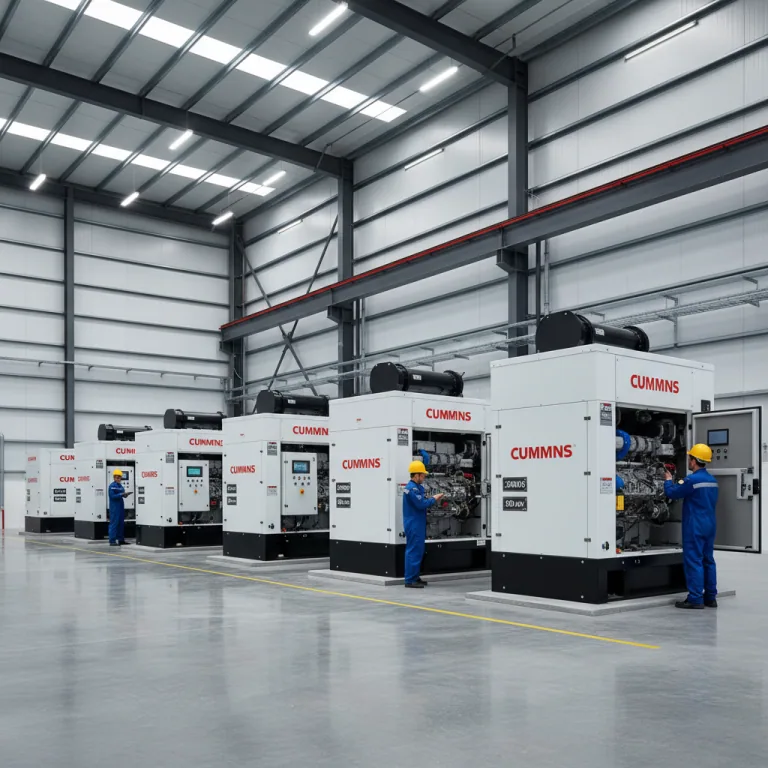
Cooling is the part of a containerised build that goes wrong first, because the shell has less free area than a canopy of the same footprint. The radiator fan pushes air through the core and the shell has to let that air in and out without pulling it back. A louvre sized on the fan volume alone will recirculate at part load.
The usual answer is a louvre at the radiator end and an outlet above it, with a baffle between the two so the hot air leaves upwards. A shell in a hot yard also needs the air to enter low and leave high, since the coolest air is at the bottom. Ask for the louvre free area in square metres and the baffle position on the drawing. A 1,250kVA set at 0.8 pf gives 1,000kW: 1,250kVA x 0.8 = 1,000kW, and most of that leaves the shell as heat.
What does salt air do to the shell?
Salt air attacks the cut edges and the welds first, because those are where the coating is thinnest. A shell painted to a nominal thickness with no edge stripe is a shell that shows rust at every louvre corner within two years. Ask for the stripe coat and the dry film thickness on the edges rather than on the flat panel.
The paint system is usually three coats at about 240 microns for a standard yard and four coats on a coastal site. A fourth coat on a shell that will be washed is cheaper than a repaint on site. Ask for the system by coat and thickness, not by colour. A shell that arrives with a colour card and no thickness figure cannot be inspected. Tesla Power prints the coat schedule on the shell label.
How is the build tested before shipment?
The shell is tested for water tightness with a hose test on the doors and the louvres, and the set is run inside the shell at full load to prove the cooling. A build that is tested with the doors open has not been tested at all. Ask for the load, the ambient temperature and the duration of the run, and note that a hose test of one minute proves very little on a louvre that faces the weather.
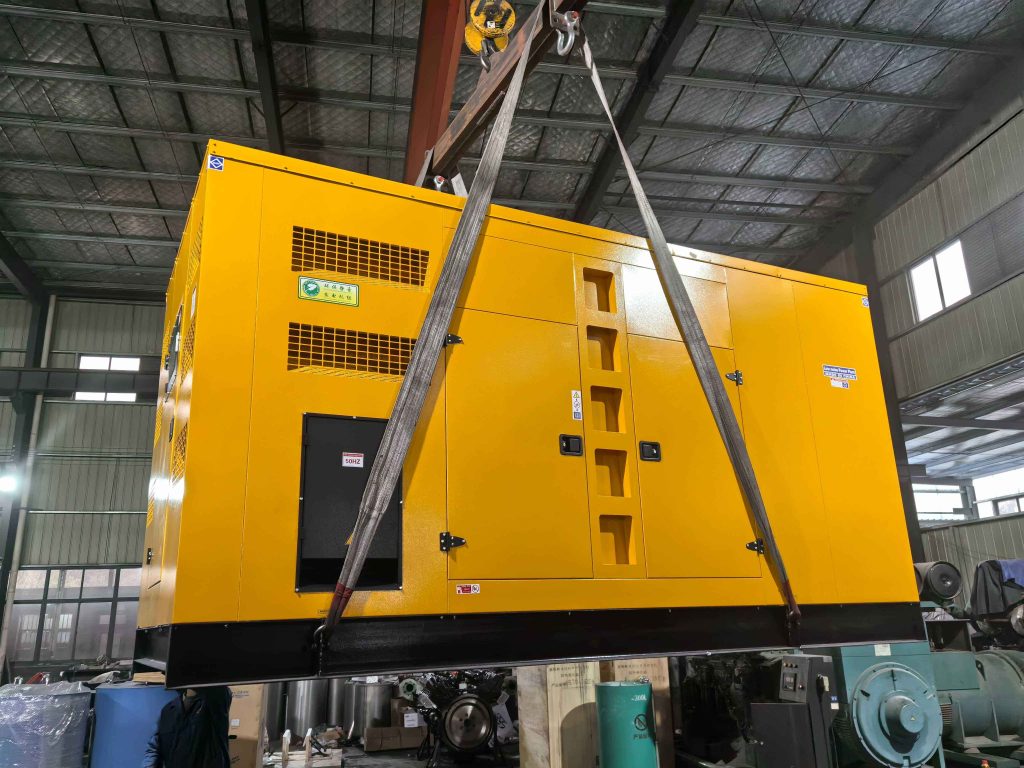
The lifting points are proved with a load test on the corner castings, and the certificate travels with the shell. A containerised build that is lifted by the frame instead of the castings is a build that voids the shell warranty. Ask for the test certificate and the rated load per casting. Tesla Power tests at 110% of the working load and photographs the four castings.
What does the offer need to state?
The offer should give the shell size, the floor thickness, the paint system, the louvre free area, the access openings and the lifting rating. Six items on one line let a buyer check the build against the yard without reading a drawing set. Ask for the internal length as well as the nominal size, because a 20 ft shell is not 20 ft inside.
The wording on the offer matters too. Chinese genset containerised suppliers often quote a shell by nominal size with no floor or paint figure, and a genset containerised build manufacturers page can show a paint system the factory buys in. Ask for genset containerised build for a hot yard, genset containerised for the port leg and genset in a salt atmosphere as three separate cases. Tesla Power prints the six items on one line.
What does the handover file record?
The file carries the shell serial, the floor thickness, the paint system by coat, the louvre free area, the lifting certificate and the load test result. One page covers the build when those six items sit under the set serial number. Add the conformity assessment for the shell when the containerised build is part of a permit package for a port or a plant.
Hand the page to the technician who will wash the shell rather than to the buyer who placed the order. the Yangzhou factory describes the bay where the shell is cut and painted, the commissioning notes lists the frames that fit a 20 ft shell, the build range explains how the louvre free area is measured, the 1000kW container build shows the frame that matches the duty, the ISO 8528-1 duty definitions sets the rating basis the load test uses, and the NFPA 110 maintenance routine covers the container standard behind the envelope.
Frequently asked questions about genset containerised builds
It can, and the floor and the corner castings are the two items to inspect first. A used shell has a floor that has carried cargo and castings that may have been repaired. Ask for the CSC plate and the last survey date before a set goes inside.
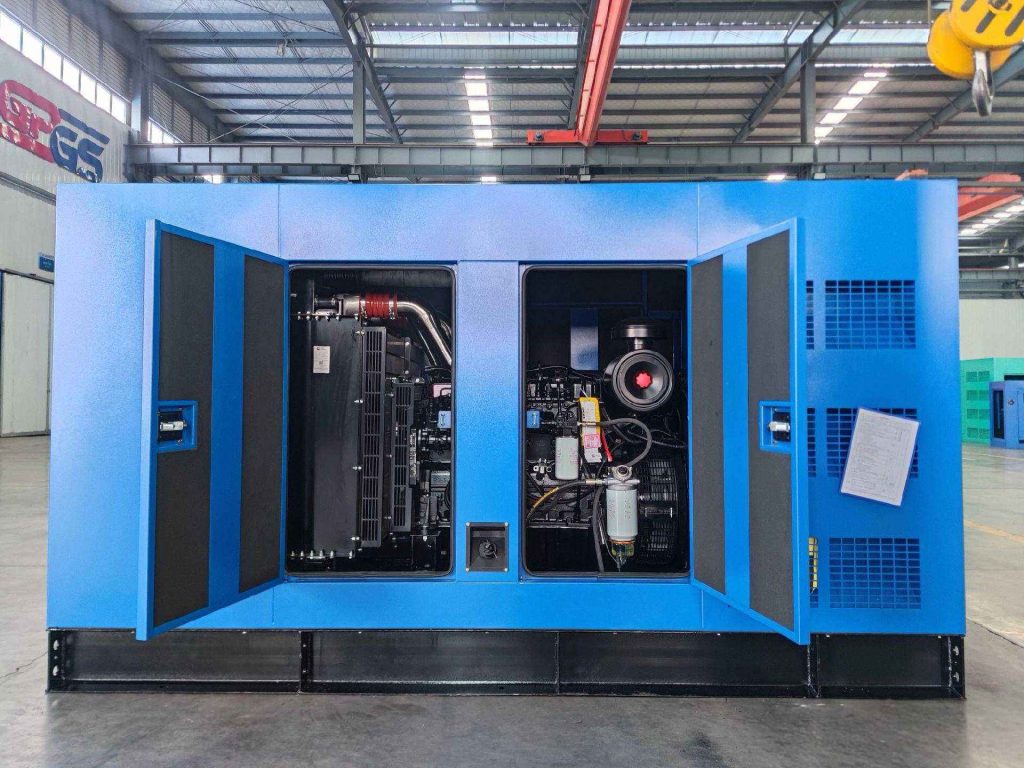
It is usually quieter at the louvre because the shell mass is higher, and it is not quieter at the doors unless the seals are good. A container door is a large flat panel with a thin gasket. Ask for the noise figure with the doors shut and the distance stated.
Leave room at the alternator end for a person and a tool, and room above the set for a lifting chain. A set that fills the shell is a set that cannot be serviced. Ask for the internal length and compare it with the set length plus the two clearances.
It does on a set that needs a top-end overhaul or a turbo change, because those jobs come out upwards. A hatch is cheap at the factory and expensive to cut on site, since the cut goes through the paint system. Ask for the hatch size with the offer.
Four coats at about 300 microns with a stripe on every edge is the usual figure for a coastal yard, and three coats at 240 microns suits a dry site. The edges matter more than the flat panel. Ask for the edge thickness rather than the average.
The shell work and the paint run in parallel with the set build, so the build adds a few weeks rather than months. The item that sets the date is the louvre and door cutting after the paint. Tesla Power cuts before the paint so the edges are coated, which is why the sequence is written on the drawing.