
Genset coolant tank volume follows the circuit rather than the frame size, because a tank that is too small lets the pump draw air on a cold start. Tesla Power sets out the four figures we check before a tank is released, and shows what a buyer should see in a supplier quote.
- Measure the whole circuit, since the engine, the core and the pipe all hold coolant that expands when hot.
- Allow 10 to 15% of that total as expansion volume, taken between the cold and hot marks on the shell.
- Set the low level above the pump inlet, because a tank below the pump lets air in at the seal.
- The frames themselves are listed in the range of frames the factory builds, and each data sheet carries a circuit volume.
What does genset coolant tank volume decide on a 330kVA set?
On a 330kVA set at 0.8 power factor the alternator delivers 250kW, and the circuit holds about 42 litres across the engine, the core and the hoses. The tank has to take 10 to 15% of that as expansion, which is 4.2 to 6.3 litres between the cold mark and the hot mark on the shell.
A tank sized on the engine alone is short by the core and the pipe, and the shortfall shows as coolant on the floor after a long run. Yangzhou Tesla Power measures the circuit from the drawing rather than from the data sheet, and Chinese genset suppliers rarely do, because a remote radiator adds 20 litres that no engine figure contains, and a water cooled aftercooler adds six more on the same block. The figure belongs on the drawing rather than in a covering letter, where a site crew reads it once.
How is the circuit volume counted?
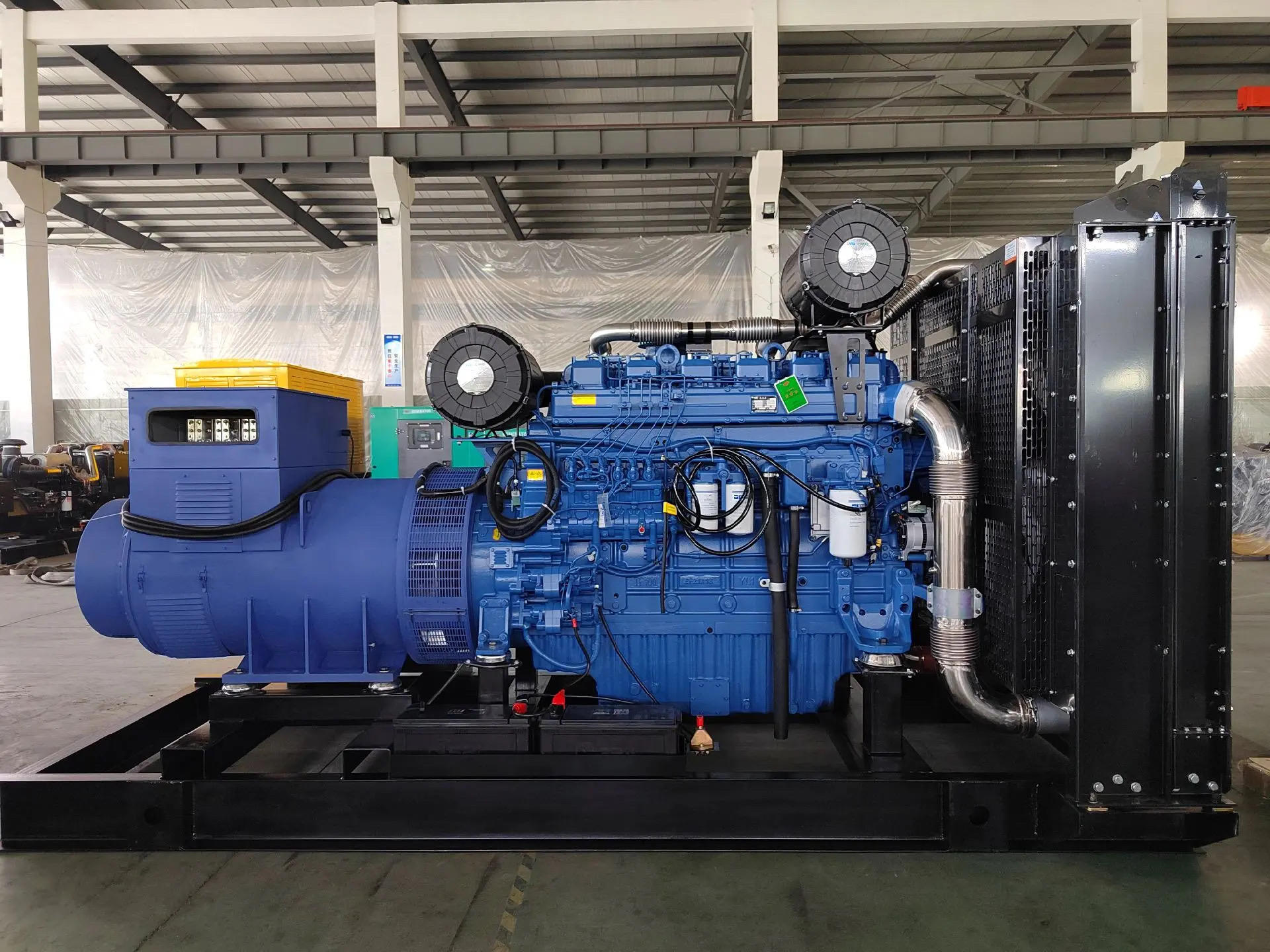
Add four figures: the engine jacket, the radiator core, the hoses and any remote pipe. An engine of this size holds 12 L, the core holds 9 L, and the hoses hold 3 L, so 12 + 9 + 3 = 24 L is the figure most data sheets quote. On a 330kVA set at 0.8 power factor the alternator delivers 250kW, and a tank at 15% of that 24 L circuit needs 24 × 0.15 = 3.6 L of expansion space. A skid build with no remote run stops at that number.
The circuit on a set with an oil cooler and a water cooled aftercooler holds more. The aftercooler circuit on the same block adds 6 litres, and a remote radiator at 40 metres of 80 mm pipe adds 20. Those two additions are where a tank order goes wrong, because no data sheet carries them and the drawing is the only place they appear. A record taken at the same hour each week shows a slow change before it becomes a fault.
| Part of the circuit | Volume | Note |
|---|---|---|
| Engine jacket | 12 L | Data sheet figure |
| Radiator core | 9 L | Core drawing |
| Hoses | 3 L | Measured on the skid |
| Aftercooler circuit | 6 L | Water cooled charge air only |
| Remote pipe | 20 L | 40 m of 80 mm bore |
| Circuit total | 50 L | Sum of the five lines |
Why does the tank need 10 to 15% expansion volume?
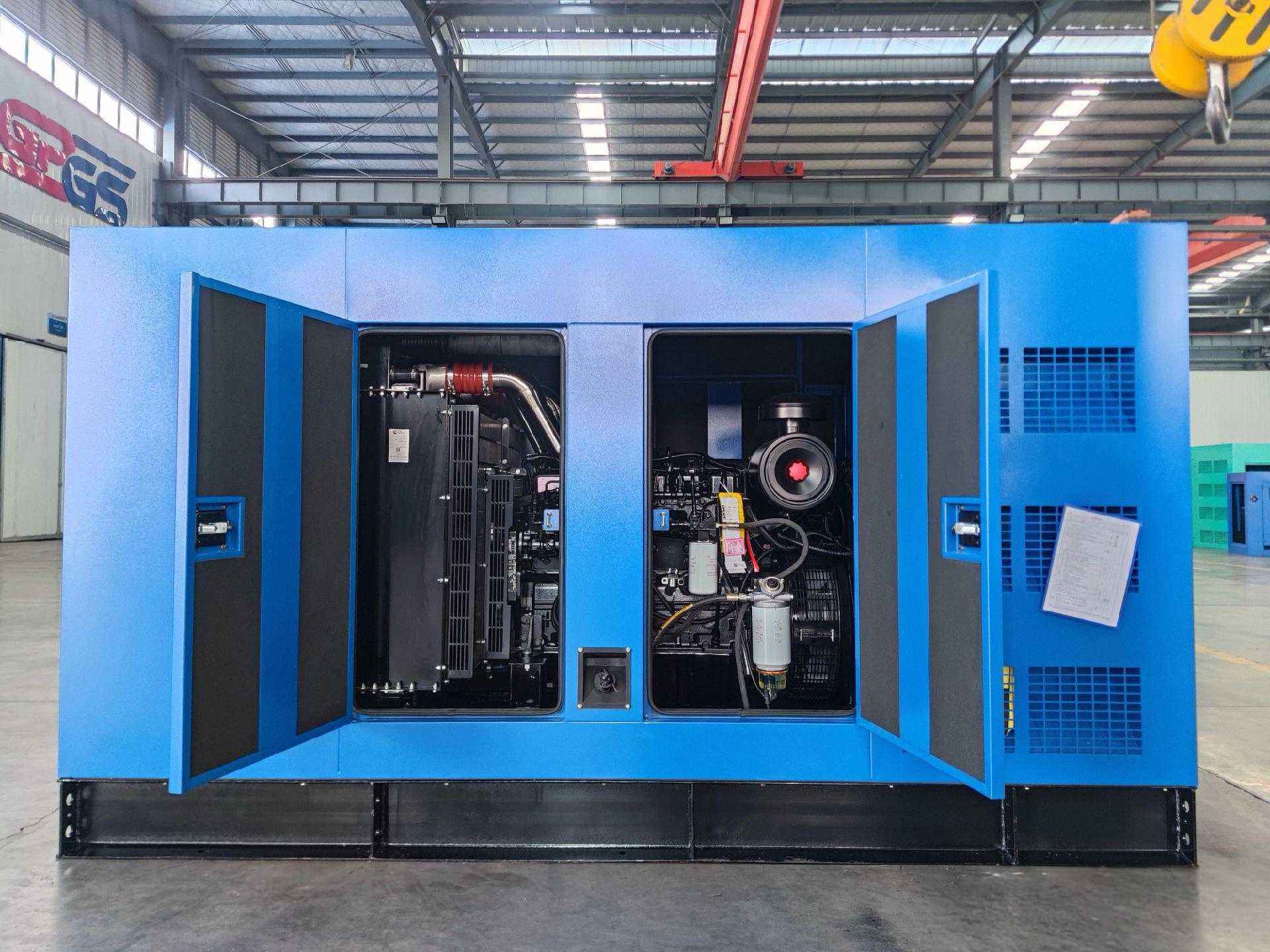
Coolant expands by about 4% between 20 ℃ and 90 ℃, and the figure rises with the glycol concentration. A 50% mix expands by nearly 6% over the same range, so a 50 litre circuit gains 3 litres, and the tank has to hold that volume without lifting the cap on every long run.
The 10 to 15% figure covers the expansion plus the reserve a site needs for a slow weep. A tank at exactly the expansion volume leaves no margin, and a joint that loses 200 ml a month then trips the low level switch inside a season. Tesla Power sizes to 15% on any circuit with a remote run, and prints the figure beside the tank volume on the offer sheet. What the site keeps in a folder answers the question in minutes rather than in a week of email.
Where should the low level mark sit?
It sits above the pump inlet by at least 150 mm on a skid build, and by the static head on a remote one. A tank that sits level with the pump lets the seal draw air on a cold start, and that air then collects in the core where it stops heat transfer and confuses every later diagnosis.
The cold mark and the hot mark are two different lines, and a site that fills to the hot mark on a cold morning has overfilled the circuit. The coolant then leaves through the cap on the first long run, which reads as a head gasket fault rather than as a filling error that cost nothing to avoid. Both marks belong on the shell, not on a label. The cost of the check is an hour on a scheduled visit and a shift of downtime when it is skipped.
What does the pressure cap do to the tank?
The pressure cap sets the boiling point of the whole circuit, so a 0.9 bar cap raises it by about 22 K over an open system. That headroom allows a smaller core and a smaller tank on the same duty, which is why the cap rating and the tank volume belong on one drawing rather than on two sheets.
A cap that is too weak vents early and loses coolant on every long run, which shows as a low level rather than as a temperature fault. A cap that is too strong holds pressure the hoses were not built for, and the first sign is a split hose rather than a gauge reading, usually on the hottest day of the year. Field reports from hot sites and from cold stores point the same way on this point.
How does a remote circuit change the tank?
It multiplies the volume and it moves the tank. A circuit that grows from 24 to 50 litres needs 7.5 litres of expansion space rather than 3.6, and the tank has to sit at the highest point of the circuit so that air collects there rather than in the core.
A genset coolant tank for a plant room sits at the highest point and holds the circuit under positive pressure at the top of the run, where pressure is lowest and the coolant is closest to boiling. On a roof radiator 10 m up, the tank belongs beside the radiator rather than beside the engine, and the drawing has to show it there before the roof steel goes up.
What is a deaeration tank and when is it needed?
A genset coolant tank in a container carries the same deaeration duty. A simple expansion tank does not deaerate, which is where the tank order goes wrong on a remote circuit. A deaeration tank separates air from the coolant before the pump takes it, and it is needed where the circuit runs at high flow or where the core sits below the engine. It has a baffle and a small vent line to the top of the circuit.
On a set with a remote radiator and a 4.2 litre a second flow, the pump can carry air round the circuit for hours while the core runs with a gas pocket at the top. The symptom is a temperature difference across the core that no flow figure explains, and it clears as soon as the circuit is vented at the highest point. The arithmetic is short, and the assumptions behind it decide the answer more than the arithmetic does.
Where does genset coolant tank sizing go wrong on site?
The first error is a tank sized on the engine volume, which leaves out the core and the aftercooler. The second is a tank mounted below the pump, which lets air in at the seal. The third is a circuit filled to the hot mark when cold, which pushes coolant out on the first run.
Each error shows as a low level rather than as a fault code, and a site that tops up weekly for a year replaces a tank that was not the problem. Tesla Power sees that pattern on roughly one order in twenty, and the fix is a mark on the shell rather than a new tank. The record that separates the three is the level at the cold mark, taken on three consecutive mornings at the same hour and written in the same book.
Which checks belong in a tank survey?
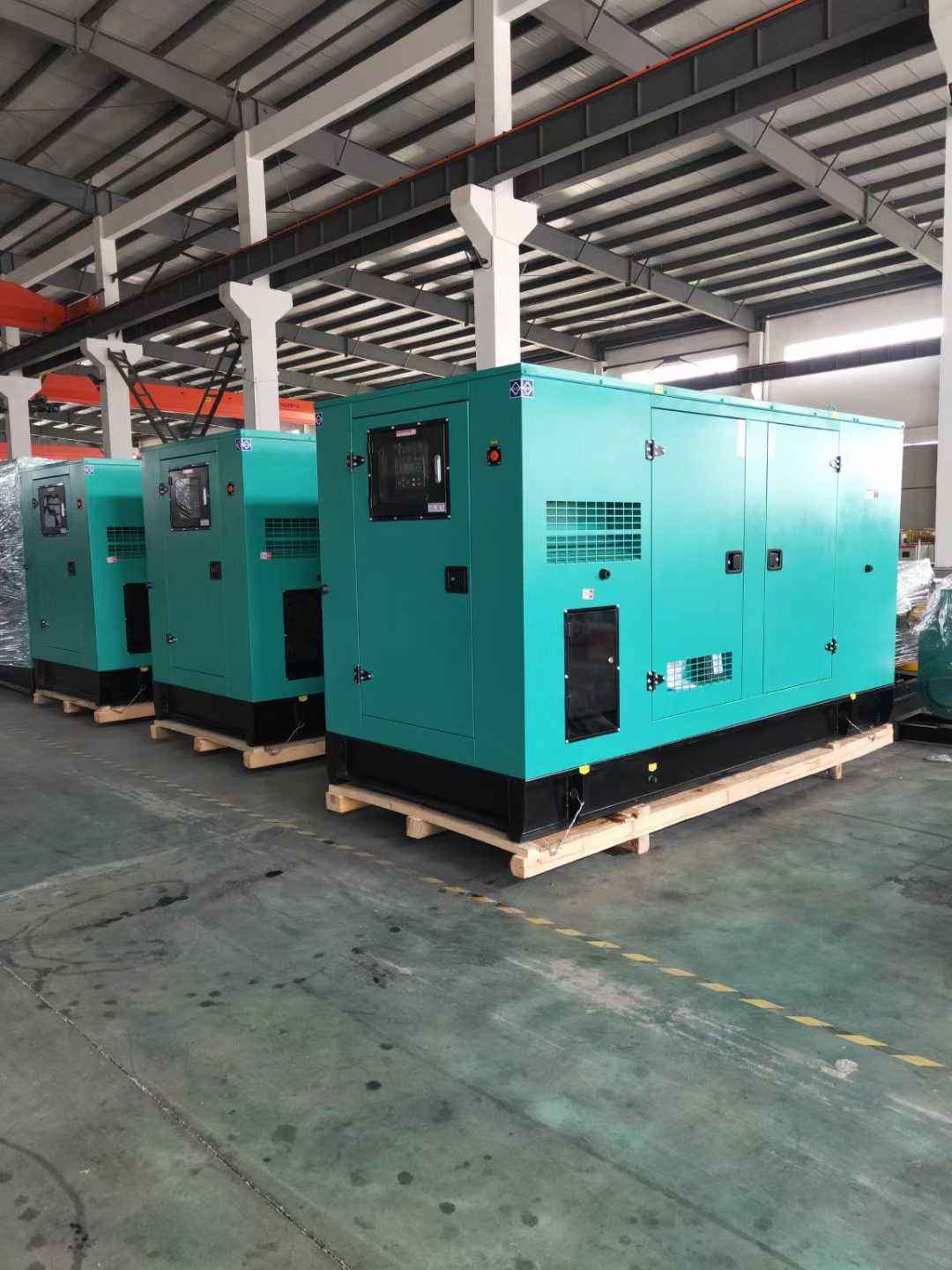
The survey rests on five checks, and the list has not changed in a decade of export orders. Each of the five is a measurement rather than an opinion, which is why two engineers reading the same set reach the same tank volume. The circuit volume comes from the drawing, the tank volume is read at the cold mark, and the height of that mark above the pump inlet is measured. The cap rating is read off the cap, and the level is taken after two hours at 80% load.
Those five turn into a drawing with the marks set. With those five a buyer can see whether the tank suits the circuit without a second visit, and a site can prove a level loss against a record rather than against memory. The survey takes twenty minutes on a drawing and an hour on a set that has run for a season.
Which documents settle a tank question?
Three documents do it, and all three are filed with the order, which is more than most genset coolant tank suppliers in china provide. They ship as one file rather than as three attachments. The circuit drawing carries the volume and the highest point, the tank drawing carries both marks, and the commissioning sheet carries the level at the cold mark with the cap rating beside it.
Conformity assessment for the assembly checks that the file matches the set, and the tank drawing is one of the pages it checks. Chinese genset suppliers rarely issue that page, which is why the volume so often goes unstated. The reference conditions behind the rating sit in the ISO 8528-1 rating definitions, and the monthly test for a standby set follows the NFPA 110 emergency power rules.
How is a tank proved after it is fitted?
The proof run fills to the cold mark and holds 80% for two hours, stop and let the set cool overnight. The level in the morning should sit within 2 mm of the cold mark. A level that has fallen means the circuit is venting somewhere other than the tank, a level that has risen means it was overfilled, and a level that has not moved proves the volume. The same frame appears in the 1000kW container build for standby duty, where the plate states the same basis.
Tesla Power reads that diary on a warranty claim, which is why the morning level is worth writing down. A diary of morning levels separates the two inside a week. The 400kW frame on the Weichai WP13 platform carries a pressed tank with both marks, the 500kVA silent set with the ATS option uses the same shell, and the engineering notes on site planning set out the level checks for a remote circuit, and the factory and the test bay records the cold level on every order. A drawing that names the route answers a question the data sheet leaves open.
Frequently asked questions about genset coolant tank volume
Take 10 to 15% of the circuit volume as expansion space between the cold and hot marks, then add the reserve you want for a slow weep. On a 42 litre circuit that is 4.2 to 6.3 litres. A remote circuit of 50 litres needs 7.5 litres at the 15% figure.
It can be at the 10% end of the range, because the coolant expands less from 20 ℃ to 70 ℃ than it does to 90 ℃. It cannot go below 10%, because the reserve for a weep and the volume for a cold start both come out of the same space.
So the pump sees positive pressure at the seal rather than a vacuum. A tank level with the pump lets air in on a cold start, and that air collects at the top of the core. On a remote circuit the tank has to sit at the highest point for the same reason. Tesla Power reads that figure on the site sheet before the plate is printed.
It does, because a 50% mix expands by nearly 6% between 20 ℃ and 90 ℃ where water expands by 4%. A circuit on a 50% mix therefore needs the 15% end of the range rather than the 10% end, and the tank drawing should name the concentration.
An expansion tank absorbs the change in volume and holds the circuit under pressure. A header tank sits at the top of the circuit and vents to atmosphere. A pressurised system uses the first, and an open system on an older set uses the second. Tesla Power Equipment keeps the correction on the offer, so two quotations can be compared.
A genset coolant tank for standby duty needs a weekly look rather than a monthly one. Weekly on a set that runs daily, and monthly on a standby set tested under the NFPA 110 schedule. The check is worth more than the interval: a level read cold, at the same spot, on the same day of the week shows a weep that a random check hides.
It can, if the circuit has a spare port at the highest point and the pump inlet sits below the new cold mark. Tesla Power supplies the tank and the bracket as a kit, with the marks set for the circuit volume rather than for the frame.
The level at the cold mark on the morning after a two hour run at 80% load, recorded beside the cap rating. A level within 2 mm of the mark proves the tank holds the expansion. A level that has moved proves the circuit is losing coolant.