
Genset crankcase vent routing decides whether blowby leaves the engine cleanly or pushes oil out of every seal, and the route matters as much as the vent. Check the specification against the blowby figure, then compare supplier offers before the canopy is built. Tesla Power draws the route; send the data to the technical desk and we confirm it.
- Size the vent from the blowby figure rather than from the engine displacement.
- Route the vent downhill to a separator, because a low point collects oil and blocks.
- Keep the vent clear of the radiator intake, since oil mist coats a core quickly.
- Check the vent at every service, because a blocked vent shows as an oil leak first.
What does a genset crankcase vent do?
It lets the blowby gas that leaks past the piston rings leave the crankcase without pressurising it. A sealed crankcase with no vent builds pressure until the gas finds its own way out through a seal, a gasket or the dipstick tube. The vent gives the gas a controlled path and keeps the pressure near atmospheric. A vent that is sized for the wrong flow is a vent that works on a new engine and fails on a worn one.
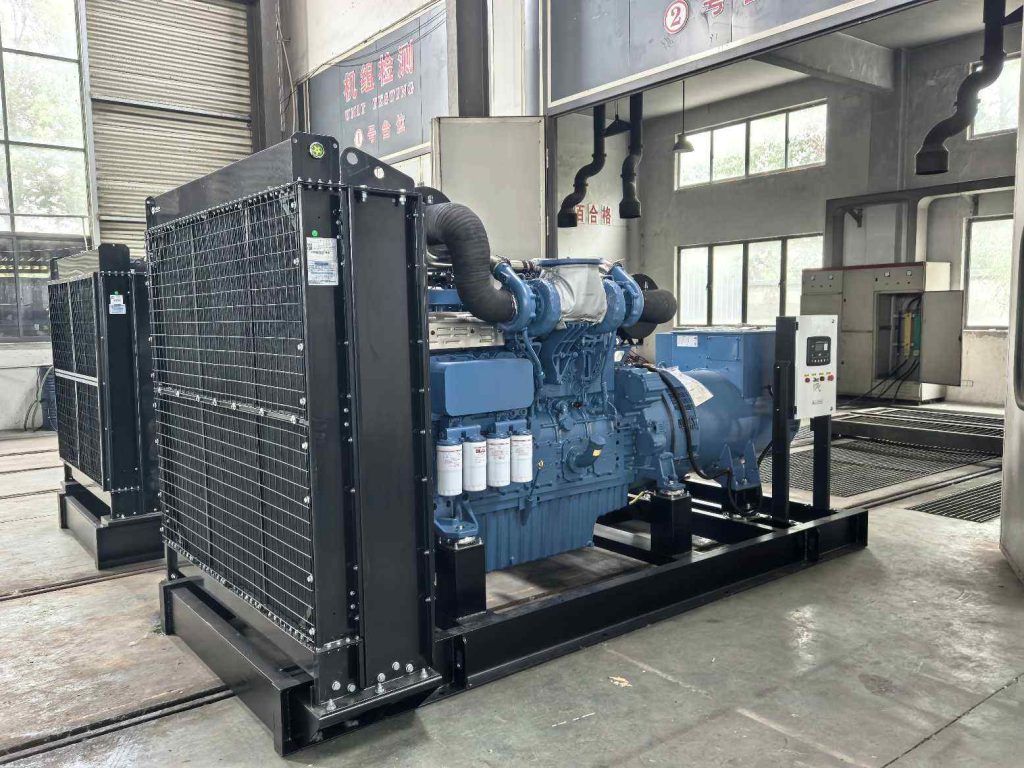
The gas carries oil mist with it, so the vent also has to separate the oil and return it to the sump rather than spreading it over the canopy. A vent that ends in open air under the set coats the baseframe in a film that is 0.1 mm thick within a season that collects dust. Tesla Power routes the vent through a separator on every export build, because a misting vent is the first thing a site complains about.
How much blowby is normal?
A new engine passes a small and steady amount of blowby, and the figure grows slowly as the rings and the bores wear. The maker publishes a limit against load, and a reading above that limit at full load means the engine is due for attention. A figure that has doubled in a year is a warning even when it sits under the limit. A blowby figure quoted without a load beside it is a figure that cannot be compared with anything. A reading above 10% of the maker limit at full load is the point to plan a service.
The measurement is made with a flow meter on the vent with the engine at full load and at working temperature. A 500kVA set at 0.8 pf delivers 400kW, and blowby above 3,600 L/h at that load is a worn engine: 60 L/min x 60 = 3,600 L/h. A reading taken at idle says very little, because blowby falls with load.
| Item | Figure | Note |
|---|---|---|
| Blowby at full load, new engine | Under 3,600 L/h | Measured at working temperature |
| Separator type | Cyclone or mesh | Sized for the flow, not the engine size |
| Route fall | Continuous to the separator | A low point collects oil and blocks |
| Outlet position | Away from the radiator face | Mist on a core derates the set |
Why does an open vent mist oil?
The gas leaves the crankcase at speed and carries oil droplets that were thrown off the rotating parts. An open vent drops the pressure at the outlet, the droplets slow down and settle on whatever is nearby. The mist is thin, so the deposit builds slowly and the first sign is a dusty film rather than a puddle. A separator that is mounted above the rocker cover drains back by gravity, and one mounted below it does not.
A separator uses a mesh, a cyclone or a set of baffles to catch the droplets and return them to the sump. The separator needs to be sized for the flow, because an undersized one passes the mist straight through. Tesla Power fits a cyclone separator on a turbocharged engine, because the blowby volume on that build is higher than a naturally aspirated one.
What happens when the vent blocks?
Crankcase pressure rises and the engine starts to leak from the weakest seal, often at 0.2 bar of pressure, which is usually the rear main or the rocker cover gasket. The leak looks like a seal failure and the seal is replaced, and the new seal leaks within a month. A set that leaks from several places at once has a vent problem rather than a seal problem.
A blocked vent also pushes the dipstick out and can blow oil into the air intake through the breather connection. On a cold site the vent can freeze where condensate collects in a low point of the route. Tesla Power Equipment routes the vent with a continuous fall to the separator and insulates it on a cold climate build, because a frozen vent is the same fault as a blocked one.
How is the vent routed on a canopy build?
The route runs from the rocker cover to the separator, then to the intake or to atmosphere depending on the emission standard that applies. Keep the run short, keep it falling towards the separator and keep the outlet away from the radiator face. A vent outlet in front of the radiator coats the core in a season and the set derates. A vent outlet that ends inside the canopy spreads the mist over the alternator windings as well as the core.
A closed crankcase system returns the gas to the intake, which keeps the mist inside the engine and satisfies the stricter standards. It needs a check valve so the turbo cannot pressurise the crankcase at boost. Tesla Power uses a closed system on a Tier 4 Final build and an open system with a separator on a simpler site, and the drawing names which one applies.
How is blowby measured?
Fit a flow meter to the vent outlet with the engine at working temperature and at full load, and read the figure after it stabilises. Take a second reading at half load, because the ratio between the two says more about ring condition than either figure alone. A blowby figure that is high at idle and normal at load points to a vent restriction rather than to wear. A reading taken on a cold engine is lower than the same engine at working temperature, so warm it first.
Record the reading with the hour meter, the load and the ambient, and compare it with the previous service. A trend line is worth more than a single pass or fail. A set with a rising trend is a set to plan an overhaul for rather than a set to keep running until it fails on site. Yangzhou Tesla Power keeps the trend on the service sheet. A rise of 5% between two services is worth a second look.
What should a buyer put on the enquiry?
Send the engine model, the emission standard the site has to meet, the ambient range and whether the set is turbocharged and the 3 emission standards the site may fall under. Add the canopy type and the intake arrangement, because both change where the vent can go. Those six items decide the system, and they show whether the offer has quoted a vent at all.
The wording on the offer matters too. Genset crankcase vent manufacturers often quote a breather filter with no separator, and Chinese genset crankcase suppliers sometimes ship a route that rises to the outlet. Ask for genset crankcase vent for a canopy build, genset crankcase for a cold climate and genset for a rental fleet as three separate cases. Tesla Power prints the route, and the 1000kW container build shows the separator.
What does the handover file record?
The file carries the blowby figure at full load, the separator type, the route drawing, the outlet position and the reading at the last service. One page covers the vent when those five items sit under the engine serial number. Add the conformity assessment for the vent route when the installation is part of a permit package.
Hand the page to the technician who checks the separator rather than to the buyer who placed the order. the Yangzhou factory describes the bay where blowby is measured. the commissioning notes lists the frames that ship with a closed system, the build range explains how a frozen vent is cleared without damaging the separator, the ISO 8528-1 duty definitions sets the rating basis the blowby limit comes from, and the NFPA 110 maintenance routine covers the load steps the set was accepted on.
Frequently asked questions about genset crankcase vent
It can on a simple site, and it puts oil mist on the baseframe and the ground beneath. A separator before the outlet is the better answer. Route the outlet away from the door and away from the radiator face, and check it at every service.
Several leaks at once point to crankcase pressure rather than to several failed seals. Check the vent and the separator before replacing any seal. A new seal on a pressurised crankcase leaks within a month, and the second replacement is the expensive one.
It needs a separator and a check valve rather than a filter, because the gas returns to the intake and any oil in it burns. A filter in that line restricts the flow and raises crankcase pressure. Follow the maker arrangement rather than adding parts to it.
Condensate collects in the lowest point of the route and freezes there, and the vent then behaves as if it were blocked. Route the vent with a fall to the separator, insulate the run and keep the low point out of the route. A frozen vent is a pressure problem rather than a cold problem.
It does on a closed system, because the gas returns to the intake and the oil mist burns. A worn engine with high blowby can fail an emission test that a healthy engine passes. Read the blowby figure with the emission result rather than separately.
Check it at every service and clean it when the blowby reading rises without a change in the engine. A separator that is half blocked raises crankcase pressure and looks like a worn engine. Tesla Power lists the separator as a service item on the engine plate.