
A genset day tank holds the fuel an engine draws between transfers from the bulk tank, and its volume follows the running hours rather than the bulk capacity. Tesla Power sizes it from the load the site actually carries, and the checks below show what to fix before you request a quotation.
- Calculate the volume on the real load rather than the plate rating, because a set at 70% burns about 70% of the fuel its sheet quotes.
- Take the return line below the liquid surface, since a return above the level aerates the fuel and foams the tank.
- Pipe the overflow back to the bulk tank by gravity, because a float valve that sticks fills the room instead.
- Ask for the tank on the same drawing as the frames the factory builds, so the connections are quoted as one assembly.
What does a genset day tank do that a bulk tank cannot?
It shortens the suction run and puts a known volume next to the engine. A bulk tank may sit thirty metres away and below the set, and the engine then works against a lift it was not designed for. The day tank sits within a few metres, holds enough for a shift, and refills from the bulk tank on a level signal. Tesla Power reads that figure on the site sheet before the plate is printed, and Chinese genset suppliers rarely state the same basis.
It also breaks the contamination path. Water and sludge collect in the bulk tank, and a day tank fed from a high point on the bulk tank receives cleaner fuel than a suction line at the bottom would draw. Genset manufacturers who quote a set without asking where the bulk tank sits are leaving the suction design to the installer.
How is the day tank volume calculated?
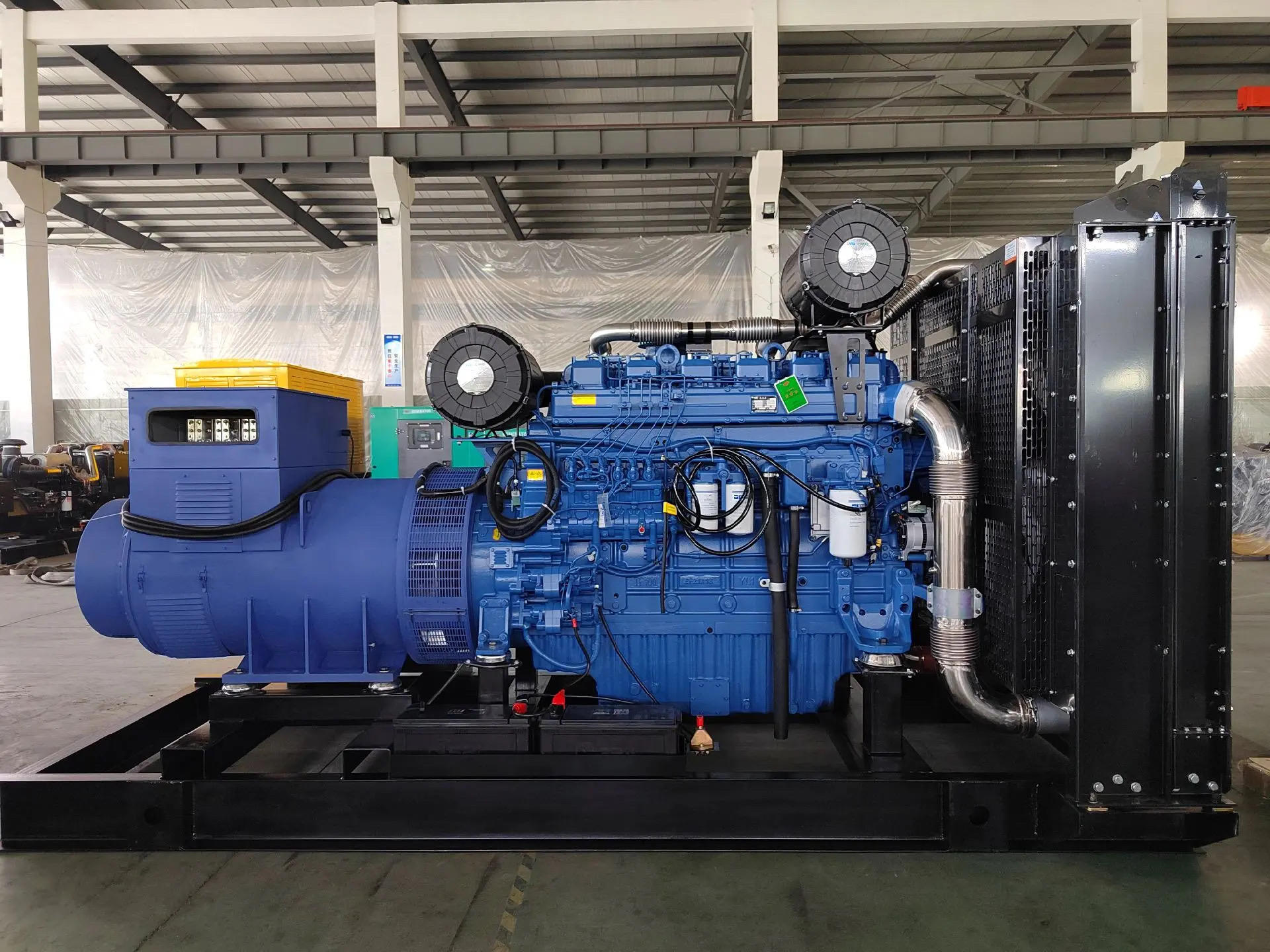
Take the fuel the engine burns at the load it carries, multiply by the hours between transfers, and add a margin for the low level alarm. Working from the plate rating instead overstates the volume by the difference between the rating and the real load, which is usually 20% to 30%. The same correction appears on the 400kW frame on the Weichai WP13 platform, whose plate states the kW figure at 0.8 power factor.
Worked on a 400kW set with an engine map figure of 82 L/h at full load and a site that runs at 70%, the draw is 82 L/h × 0.7 = 57.4 L/h, and eight hours between transfers needs 57.4 L/h × 8 h = 459 L. A 500L tank covers that with the alarm point at 20% and leaves room for the foam. The same reasoning applies to the second frame, which carries the correction on its own plate rather than in a note.
| Item | Figure to fix | What it protects |
|---|---|---|
| Tank volume | 8 hours at the real load, plus 15% | One shift between transfers |
| Low level alarm | At 20% of the working volume | Time to transfer before the engine stops |
| Return line | Terminates 50mm below the low level | Aeration and foam in the tank |
| Overflow | Gravity line to the bulk tank, one size up | A stuck float valve filling the room |
Should the tank be sized on full load or on the real load?
Size it on the real load, then check it against full load for the case where the site runs at rating for an hour. A tank sized on the real load and checked on the rating satisfies both, and a tank sized on the rating alone costs more and sits half empty.
The real load is measurable rather than assumed. A week of controller history gives the average and the peak, and the average is the figure the tank is sized on. A site that runs at 55% for most of the year needs a smaller tank than its plate rating suggests, and the smaller tank turns its fuel over faster, which is a benefit rather than a compromise. A site that records the reading each month sees the change before it reaches the trip point on the controller.
Why must the return line sit below the liquid surface?
A return line that discharges above the surface drops fuel through the vapour space and entrains air on the way down. The air reaches the tank as foam, the level gauge reads high, and the engine draws aerated fuel on the next cycle. The pump then loses prime at the worst moment, which is during a transfer.
Set the termination 50mm below the low level alarm point so the line stays submerged through the whole working range. A return that ends just under the full level is submerged only at the top of the range, which is the same fault with a slower onset. Our own drawing puts the termination on a dip pipe welded to the tank top, because a pipe entering through the side above the level cannot be lowered later. The figure belongs on the offer sheet beside the rating, where a buyer can read it against the site conditions. The assembly itself is listed in the frames the factory builds, where each plate carries the same correction.
How should the overflow and vent be arranged?
Run the overflow back to the bulk tank by gravity, sized one step larger than the fill line. A gravity overflow carries the full fill rate if the float valve sticks, and a smaller line backs up into the room. Run it with a fall and no low point, because a sag holds fuel and freezes the line in a cold climate.
Vent the tank to outside air at a point above the highest possible level, with a flame arrestor if the room has any ignition risk. A vent that terminates inside the room puts diesel vapour beside a hot exhaust, and a vent that is too small pressurises the tank during a fast fill. Size the vent on the fill rate rather than on the tank volume.
The fill line needs a non return valve and an isolation valve at the tank. Genset in parallel operation with two engines on one day tank doubles the return flow, so the tank needs two return connections rather than one shared line. A shared line lets one engine push fuel into the other's return and upsets both level readings.
Which materials suit a day tank on an export site?
Mild steel with an internal coating is the usual choice, and stainless is worth it where the fuel may carry water for long periods. A painted mild steel tank rusts at the water line from the inside, and the rust reaches the filter as particulate. A 2mm wall is enough for a 500L tank, and a 3mm wall suits anything above 1000L.
Check the coating compatibility with the fuel blend rather than with mineral diesel alone. A coating rated for mineral diesel may soften in a B20 blend, and the softened film then blocks the filter. Ask for the coating data sheet beside the tank drawing, because the two are specified together and quoted apart. What the site keeps in a folder answers a question in minutes rather than in a week of email.
Where does the day tank go in a plant room?
Put it where the gravity feed to the engine works and the fire separation allows. A day tank above the engine gives a positive head at the transfer pump and removes the need for a lift. A tank at floor level needs a pump rated for the lift, and the pump becomes the item that fails first.
Keep 1m of clear space at the filling connection and at the drain, and keep both away from the exhaust run. A drain that discharges onto the floor rather than into a bunded area turns a small leak into a room clean. The engineering notes on room layout set out the clearances we ask for on an export drawing. Two documents that state the basis can be compared, and two that state only the figure cannot be compared at all.
What should the level instrumentation show?
Three signals: a continuous level, a low level alarm and a high level alarm. The continuous level lets an operator see a slow loss, and the two alarms catch the events. A tank with only a sight glass leaves the transfer decision to whoever walks past it.
Set the low level alarm at 20% of the working volume, which gives roughly an hour and a half at the load the tank was sized on. Set the high level alarm below the overflow so the alarm arrives before the overflow does. Wire both to the controller rather than to a local buzzer, because a buzzer in a plant room is heard by nobody at night.
Which documents should a buyer ask for?
Four documents. The tank drawing with the connection sizes and the levels marked, the capacity calculation, the coating data sheet, and the pressure test record. Conformity assessment for the assembly reads the drawing against the set, and the other three are what an inspector asks for at the port.
Ask for the calculation rather than the volume alone. A tank quoted as 500L without the load and the hours behind it cannot be checked, and a buyer who cannot check the figure has bought a number. Genset day tank documentation for ISO 8528 covers the fuel system as part of the set rather than as an accessory.
The the ISO 8528-1 rating framework sets the duty class the fuel system has to support, and the NFPA 110 emergency power rules set the run time a standby tank has to carry. Tesla Power Equipment states both on the tank drawing.
Which mistakes show up after handover?
Four, and each has a signature. A return line above the surface shows as foam in the sight glass. An undersized overflow shows as fuel on the floor after a fill. A tank sized on the plate rating shows as a level that holds steady. A missing non return valve shows as the day tank draining back into the bulk tank overnight.
The fourth is the quietest. A site fills the tank, runs the set for an hour, and finds the level has fallen further than the engine could have burnt. The fuel went back down the fill line, and the transfer pump then runs continuously to replace it. A non return valve at the tank inlet costs little and removes the whole failure.
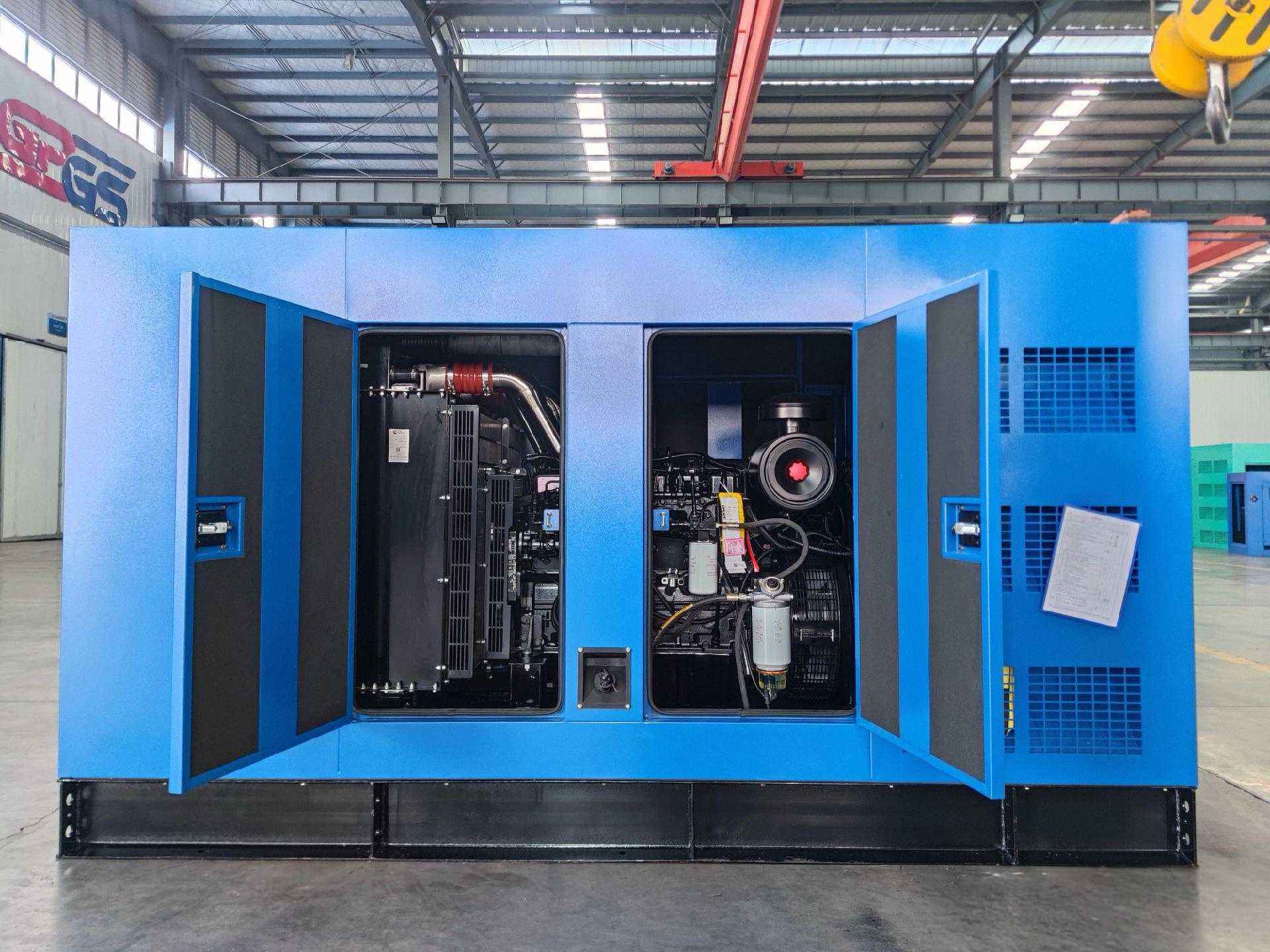
It moves outside the box in most cases. A day tank inside a container puts a fuel source beside a hot exhaust and takes up floor space the maintenance access needs. An external tank on a frame beside the container keeps the two apart and lets the connections run through a sealed penetration.
The volume stays the same, and the pipe run grows by a few metres. That growth matters for the return line rather than the supply, because a long return holds fuel that drains back when the engine stops. Fit the return with a slight fall towards the tank, and the drain back becomes a help rather than a fault.
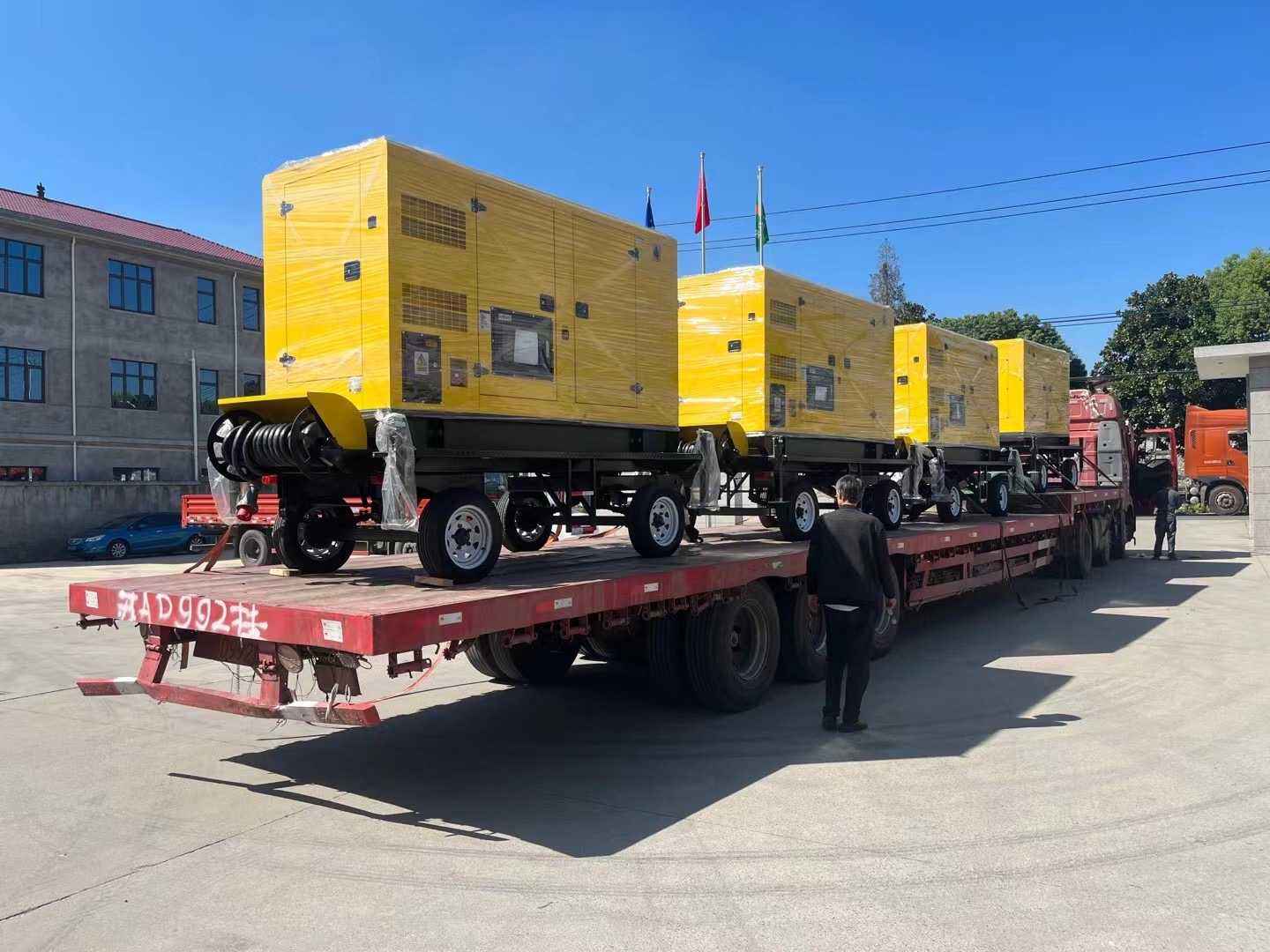
A genset for a plant room with an external tank needs the fill point at a height a tanker can reach, and a genset for standby duty in a basement needs a day tank sized for the full outage rather than for a shift. Yangzhou Tesla Power asks for the outage length before drawing the tank, because that figure moves the volume more than the engine rating does.
How is the tank proved before shipment?
We run all three with the tank on the frame rather than on a bench, because the pipework is part of the assembly. A tank that passes on a bench and leaks at a joint after the frame is painted has not been tested, and the leak appears in the first week of service. The same frame appears in the 1000kW container build for standby duty, where the plate states the same basis.
Frequently asked questions about genset day tank
Eight hours covers one shift and is the usual figure for an export site. A site with a single daily fill needs twelve, and a standby site that must ride out a long outage needs the full outage length. Take the figure from the fill schedule rather than from habit. Tesla Power reads that figure on the site sheet before the plate is printed, and Chinese genset suppliers rarely state the same basis.
It can where the bulk tank sits close and above the engine, and where the fuel is polished. A long suction run or a lift of more than a metre calls for a day tank, because the transfer pump then works against a head it was not sized for.
It carries more fuel than the engine burns, so most of what leaves the tank comes back warm and aerated. A return above the surface puts that air into the tank as foam, and the engine then draws foam rather than fuel at the next transfer. Tesla Power reads that figure on the site sheet before the plate is printed, and Chinese genset suppliers rarely state the same basis.
It does where the room drains to a sump that cannot take the full volume, and local rules usually decide. A 500L tank needs a bund of 550L at minimum. The bund also catches the spill from a fill connection, which is the more frequent event.
One size smaller than the overflow, and sized on the transfer rate rather than on the tank volume. A fill line that takes an hour to move a shift of fuel keeps the pump running long enough to matter, and a smaller line makes it worse. Tesla Power reads that figure on the site sheet before the plate is printed, and Chinese genset suppliers rarely state the same basis.
Monthly at the sump, and after every bulk delivery. Water arrives with the fuel, and a delivery stirs what was already there. A drain check that produces clear fuel is the cheapest confirmation a site gets that the bulk tank is sound.
They can, with separate return connections and separate suction points at opposite ends. A shared return lets one engine push fuel into the other's line, and both level readings then disagree with the volume in the tank. The same correction appears on the 500kVA silent set with the ATS option, which carries the figure on its own plate.
The day tank is a volume, a return height and an overflow, and all three follow from the load and the hours. Tesla Power draws the tank with the set, states the calculation on the drawing, and our export desk sends the level schedule with the quotation.