
Genset duct pressure is the static the fan must overcome before air reaches the radiator, and every bend, silencer and grille adds to it. Check the specification against the duct route, then compare supplier offers before the room is built. Tesla Power adds the budget up; send the route drawing to the technical desk and we confirm it.
- Add every element on the route, including the grille and the silencer at the far end.
- Keep the duct velocity near 6 m/s, because a fast duct costs pressure and makes noise.
- Allow one extra bend in the budget rather than assuming the route stays as drawn.
- Measure the fan static at commissioning and compare it with the budget figure.
What does genset duct pressure measure?
It measures the resistance the air path presents to the fan, expressed as a static pressure in pascals. The fan is chosen for a duty point of flow against static, and a ducted route moves that point. Push the static up and the fan slides down its curve to a lower flow, which is the same as fitting a smaller radiator. The static is measured at the fan inlet, not at the grille, because the fan sees the whole route.
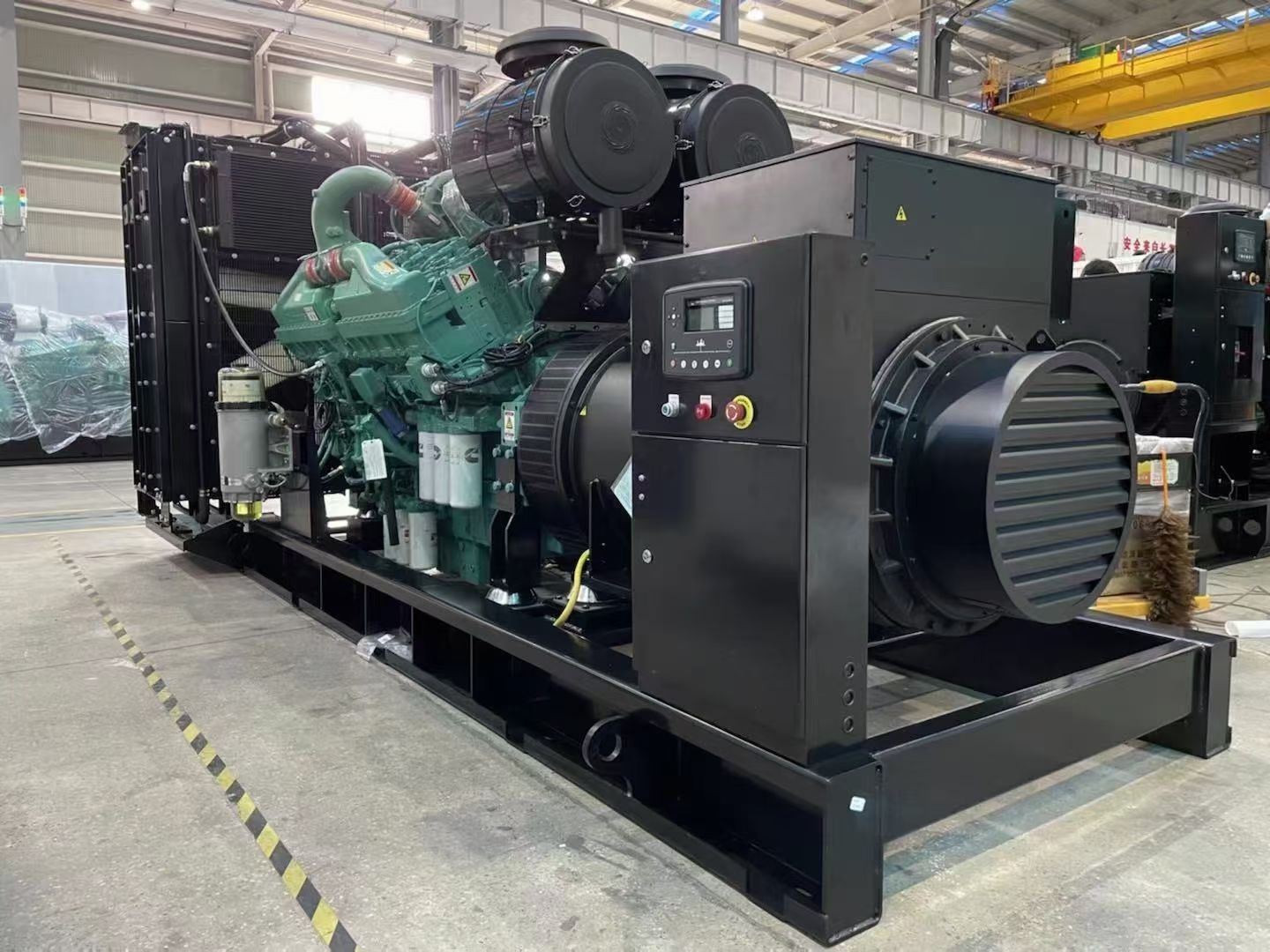
The budget therefore belongs to the room rather than to the set. A basement plant room with two bends, a silencer and a fire damper carries a very different static from a container with one straight louvre. Tesla Power builds the budget element by element before it selects the fan, because a fan chosen on the bare radiator has no room left for a duct.
How is the static budget built up?
List every element on the route and give each one a loss in pascals at the design flow. A 45% free area louvre costs about 20 Pa, six metres of straight duct at 6 m/s costs about 12 Pa, a single 90° bend costs about 15 Pa and a 600 mm silencer costs about 35 Pa. Add them and the total is the static the fan sees.
Then compare the total with the fan curve at the design flow, not at the peak flow. A 500kVA set at 0.8 pf delivers 400kW, and the duct path on that frame uses about 90% of the available static: 500kVA x 0.8 = 400kW. Leave the remaining tenth as margin for a route that gains a bend on site. Write the total on the drawing beside the fan curve so the two can be compared at a glance.
| Route element | Loss at design flow | Note |
|---|---|---|
| Louvre, 45% free area | 20 Pa | Rises sharply once the blade loads with dust |
| Straight duct, 6 m at 6 m/s | 12 Pa | About 2 Pa per metre on smooth sheet metal |
| One 90° bend, no vanes | 15 Pa | Falls by half with turning vanes fitted |
| Silencer, 600 mm | 35 Pa | The largest single item on most routes |
Why do bends cost more than straight duct?
A bend forces the air to change direction, and the outer wall of the bend becomes a high pressure region while the inner wall drops. The energy lost to that swirl is several times the loss of the same length of straight duct. A sharp 90° bend with no vanes is the worst case, and two of them in series cost more than twice one. Two bends in series are worse than the sum, because the second one receives disturbed air.
Use a radiused bend with turning vanes where the route allows it, and keep the bend away from the fan outlet. A bend close to the fan disturbs the flow before it has settled and costs more than the same bend two metres downstream. Tesla Power draws the bend radius on the layout, because a duct installer will otherwise use the tightest fitting that fits. A vane bend costs a fraction of a mitre bend and takes the same space on the drawing.
How much duct can the fan tolerate?
Read the fan curve and find the static at which the flow falls to the figure the radiator needs. That figure is the ceiling for the whole route, not for the duct alone. A fan that holds 150 Pa at the design flow can carry a route that totals 150 Pa, and it has nothing left for a route that totals 190 Pa. A route with a silencer at each end is the hardest case, because both ends add loss.
Long routes are therefore a fan selection question rather than a duct question. Tesla Power Equipment moves to a higher static fan or a larger radiator when the route passes the ceiling, and it tells the buyer which one changed. Adding duct insulation or a second silencer later eats the margin, so write the margin on the drawing.
What happens when the budget is exceeded?
The fan slides down its curve, the mass flow falls and the coolant temperature rises at full load. On a ducted inlet the symptom is a set that holds load in the morning and derates in the afternoon. The controller reports a coolant alarm, and the duct is the last place anyone looks. A datalogger on the coolant temperature shows the pattern over a week rather than a single visit.
A second outcome is motor overload on a belt driven fan, because the fan runs at a different point than the one it was selected for. Yangzhou Tesla Power checks the absorbed power against the motor rating at the budget static, not at the free air point. A route that is 40 Pa over budget is a small drawing change and a large cooling change.
How is the duct pressure proved on site?
Fit a manometer to a pressure tapping on the duct within a metre of the fan inlet and read the static with the set at full load. Compare the reading with the budget figure. A reading 20% above the budget means the route differs from the drawing, and the difference is usually a damper left closed or a fire damper fitted backwards. Use a digital manometer rather than a water column gauge for that reading.
Then measure the flow at the discharge grille and multiply by the free area. A flow below the radiator requirement confirms the static problem rather than a temperature sensor fault. Log the static, the flow and the ambient together, and repeat the reading after the first year of operation. Tesla Power writes the static on the commissioning sheet. A second reading taken a year later shows whether the route has changed in service.
What should a buyer put on the enquiry?
Send the route drawing with the duct length, the bend count, the silencer model and the grille free area. Add the ambient the set has to hold and the height above sea level. Those six items let a supplier build the budget, and they also show whether the quotation has priced a fan or simply a radiator.
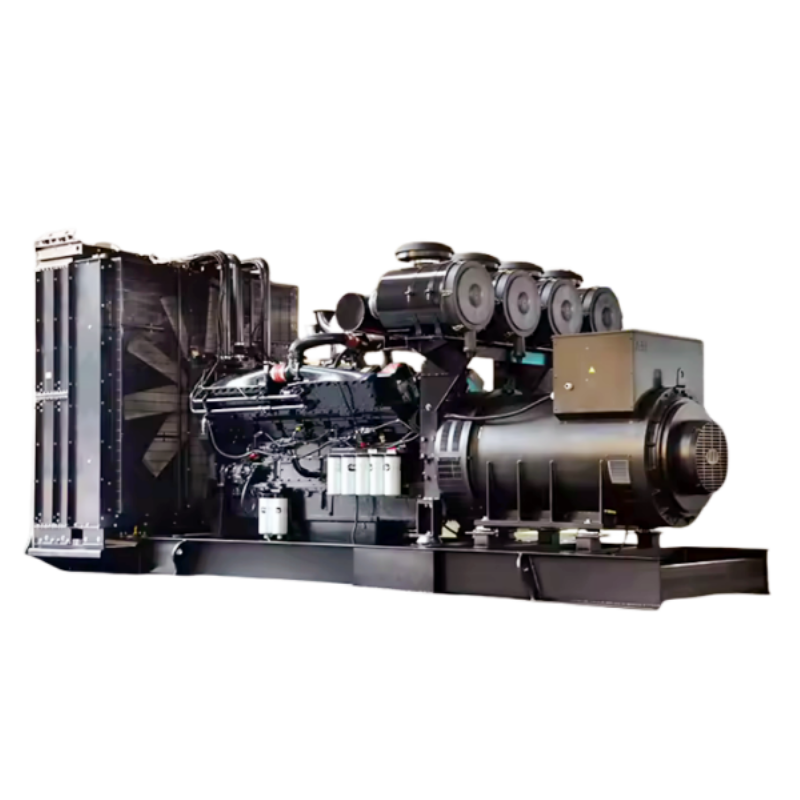
The wording on the offer matters too. Genset duct pressure manufacturers often quote a fan by airflow alone with no static figure, and Chinese genset duct suppliers sometimes price a route with no silencer and no fire damper. Ask for genset duct pressure for a basement room, genset duct for a roof run and genset for a container build as three separate cases. Tesla Power puts the budget on the drawing, and the 1000kW container build shows the ducted canopy.
What does the handover file record?
The file carries the element list with each loss, the total static, the fan curve at the design flow and the measured static at commissioning. One page covers the air path when those four items sit under the set serial number. Add the conformity assessment for the duct run when the room is part of a permit package.
Hand the page to the contractor who installs the duct rather than to the buyer who placed the order. the Yangzhou factory describes the test bay where the fan curve is proved. the commissioning notes lists the frames that accept a ducted outlet, the build range explains how a fire damper is checked without dismantling the duct, the ISO 8528-1 duty definitions sets the rating basis the fan was selected on, and the NFPA 110 maintenance routine covers the load steps the set was accepted on.
Frequently asked questions about genset duct pressure
A short flexible section is normal at the fan connection, because it isolates vibration. A long flexible run is not, because the corrugations add pressure that the budget rarely allows for. Keep the flexible part under a metre and count its loss as twice the same length of smooth duct.
Lining a duct with acoustic foam reduces the free area and adds friction, so the loss rises. The effect is small on a short route and significant on a long one. Add the lined loss to the budget at the start rather than discovering it when the temperature climbs.
An open door gives the fan a second path with almost no resistance, so the flow rises and the temperature falls. That result points to a duct budget that is over the fan ceiling. Treat it as a measurement of the problem rather than as a solution, because the door is closed in service.
A fire damper costs about 15 Pa when open and much more when partly closed, and a damper that has dropped is a total blockage. Check that the damper is open at every service and record the static reading, because a closed damper looks exactly like a duct that is too small.
The static the fan can produce falls with air density, so a route that passes at sea level can fail at 1,500 m. The duct loss falls as well, but not by the same amount. Recheck the budget against the site altitude rather than against a sea level fan curve.
Keep about a tenth of the available static in hand for the bends and grilles that appear during installation. A route built exactly to the fan ceiling has no room for a change, and the change usually arrives on the day the duct is fitted. Tesla Power writes the margin on the layout.