
A genset EMC path is the route interference takes from the alternator and the controller to the outside world. Compare the filtering, the screening and the earth bond against the site before you accept an offer. Tesla Power maps the path on the drawing; send the site layout to the technical desk and we confirm it.
- Ask for the earth bond drawing, because a bond is the first half of the path.
- Check the filter against the cable length it serves, not against the rating.
- Look at the controller cable, since a long unscreened run is an aerial.
- Ask which standard the set was tested to and at what distance.
What is a genset EMC path?
It is the route that electromagnetic interference takes from a source inside the set to something outside that it disturbs. The sources are the alternator, the switching devices in the controller and the inverter on a variable speed set. The path runs through the cables, the panel and the earth bond, and it ends at the nearest radio or the nearest sensor, which is usually a sensor the site has not thought about.
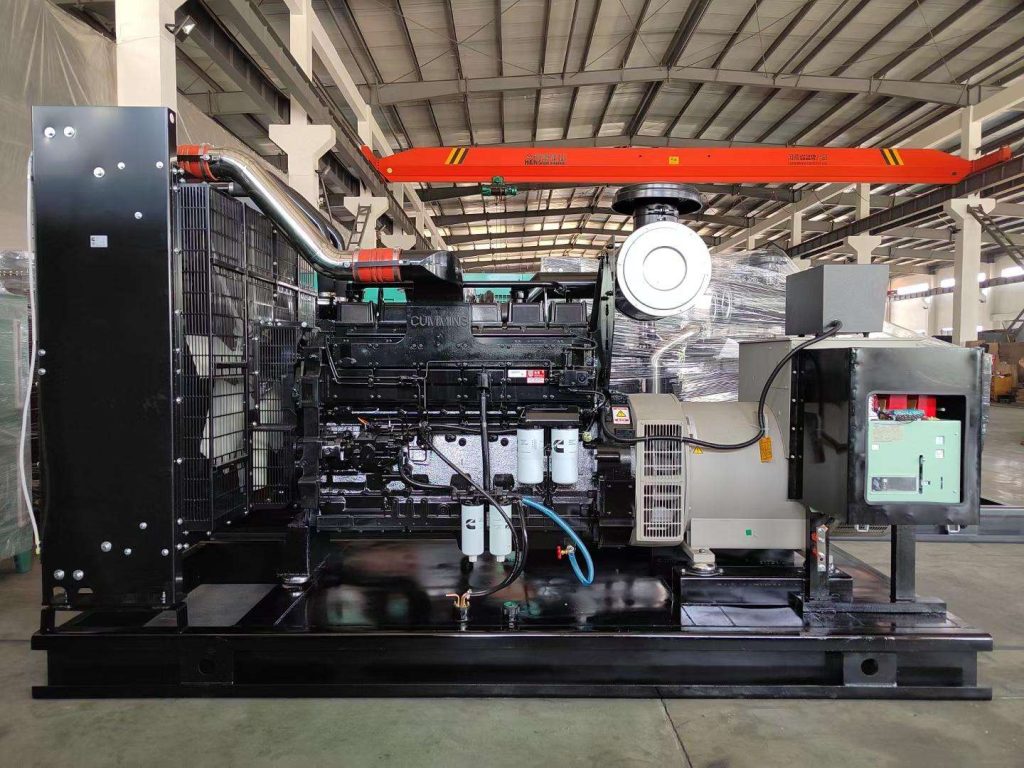
An EMC path is designed rather than discovered, because every part of it can be drawn. A set with a screened controller cable and a short earth bond has a path that stays inside the canopy. A set with an unscreened cable coiled beside a radio has a path that leaves it. Tesla Power draws the path with the bond and the screen on one sheet so the gaps are visible on the day the panel is closed.
Which emissions matter most?
Conducted emissions travel along the cables and radiated emissions travel through the air, and the two are fixed by different parts of the build. A filter at the alternator terminals deals with the first and a screened panel deals with the second. A set that passes one test and fails the other A build that treats the two as one item usually passes both at the first attempt. That is why a build sheet names the filter and the screen as two separate items.
The frequency band decides which is which, because a cable behaves as an aerial above about 30 MHz and as a conductor below it. A set that passes at 1 GHz in a laboratory can fail beside a radio at 50 Hz switching noise. Ask for the test report by band A single pass figure hides the band that failed and the fix that goes with it.
| Item | Typical figure | Note |
|---|---|---|
| Conducted band | Up to 30 MHz | Filter at the alternator terminals |
| Radiated band | 30 MHz and above | Screen and bond, not a filter |
| Distortion | Under 5% at rated load | Measured at the load, not at no load |
| Immunity | Tested to a stated field | The half buyers forget |
How is the alternator part of the path?
The alternator generates the fundamental and it also generates harmonics, and the harmonics are what the filter has to absorb. A set with a high waveform distortion feeds a load that heats up, and the same harmonics travel back along the cable as conducted emissions. The two effects That is why a filter alone rarely fixes a distortion problem.
An alternator with a low distortion figure is the cheaper answer to both, because the filter then has less to do. A 500kVA set at 0.8 pf gives 400kW: 500kVA x 0.8 = 400kW, and a distortion figure above about 5% on that machine shows in the filter size. Ask for the distortion at the rated load rather than at no load. Tesla Power Equipment states the figure A figure quoted at no load flatters every machine.
What does the controller contribute?
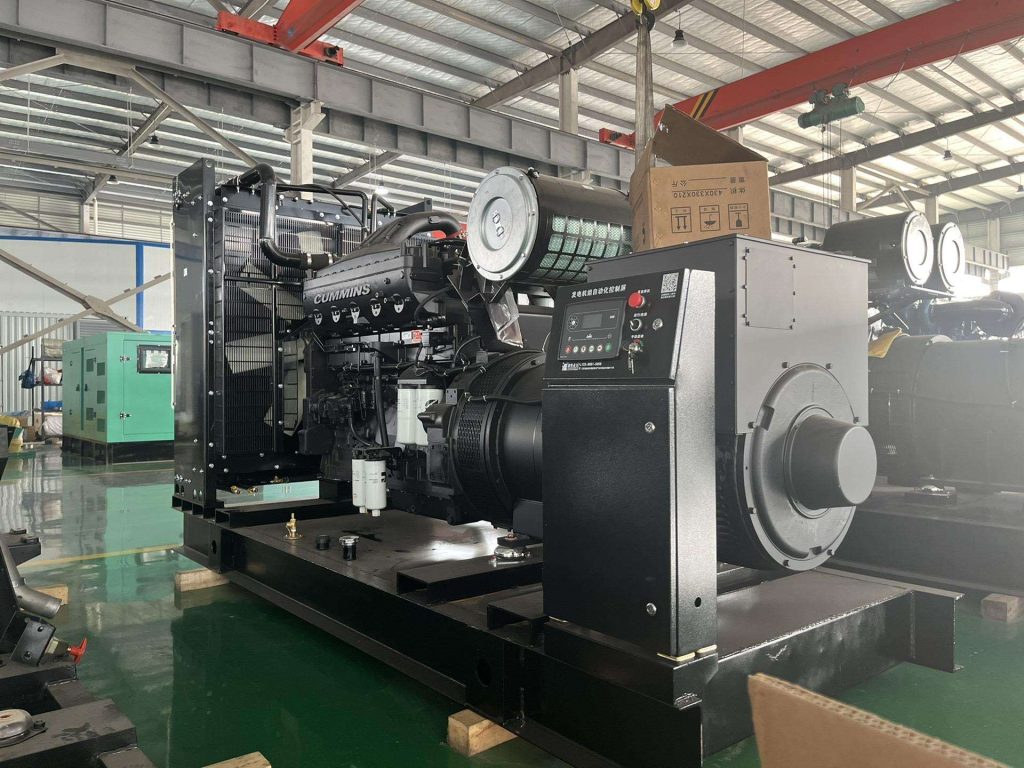
The controller switches at a high frequency and it carries a microprocessor, so it is both a source and a victim. A controller that is screened and bonded is quiet, and the same controller in a painted panel with a coiled cable is a transmitter. The difference is the installation Two identical controllers can behave differently in two canopies. A controller that is quiet in one panel is not proof that the next panel will be quiet.
The controller cable is the part that gets extended on site, and every metre added makes the path worse. A screened twisted pair with the screen bonded at one end is the usual specification, and a second bond at the far end is what a good installer adds. Ask for the cable type and the bond points. Tesla Power supplies the cable with the screen A screen bonded at one end is an aerial with a wire on it.
How is the set tested for EMC?
The set is tested in a laboratory for conducted and radiated emissions and for immunity to an external field, and the test is done at a stated distance. A report that does not state the distance cannot be compared with another report. Ask for the distance, the band and the load condition A report without those three figures is a report that cannot be read by a buyer.
Immunity is the half that buyers forget, because a set that emits little can still stop when a radio transmits nearby. A controller that resets under a handheld radio is an immunity failure and it is found on site rather than in the laboratory, and the difference is a site visit. Ask for the immunity level and the field strength it was tested at. Yangzhou Tesla Power tests the controller against a handheld transmitter A handheld radio is the test that matches what a site actually does.
What does the site have to do?
The site completes the path, because the earth bond, the cable route and the nearby equipment are all outside the canopy. A set bonded to a building earth that is separate from the panel earth carries a current that the designer did not plan. Ask for one earth and one bond point rather than two. A second bond is the most common reason a set hums on a shared earth.
A cable route that runs beside a signal cable couples the two, and no filter in the canopy fixes that. Keep the power and the signal cables apart by the figure in the installation guide and cross them at right angles where they must cross. Ask for the separation figure with the drawing. A site that ignores it has a set that passes the test and fails the radio. Tesla Power prints the separation figure on the cable route sheet.
What does the offer need to state?
The offer should give the filter rating, the screen and the bond points, the distortion figure, the test standard and the test distance. Five items on one line let a buyer check the set against the site and against the radio equipment nearby. Ask for the immunity level as well, because it is the line An immunity figure is the one line that predicts a site complaint.
The wording on the offer matters too. Chinese genset EMC suppliers often quote a filter as a part number with no rating, and a genset EMC path manufacturers page can show a screened panel the factory builds only on request. Ask for genset EMC path for a drive, genset EMC in a panel and genset for the panel as three separate cases. Tesla Power prints the five items The second of the three cases is where the two sides usually differ.
What does the handover file record?
The file carries the filter rating, the screen and bond points, the distortion figure, the test report and the separation figure. One page covers the path when those five items sit under the set serial number. Add the conformity assessment for the EMC path when the destination asks for a declaration under its own directive and the report is the evidence, and the bond points are the first thing an auditor checks.
Hand the page to the electrician who will bond the set rather than to the buyer who placed the order. the Yangzhou factory describes the bay where the panel is screened, the commissioning notes lists the frames with a filtered output, the build range explains how the bond is checked, the 1000kW container build shows the frame that matches the duty, the ISO 8528-1 duty definitions sets the emission standard the report follows, and the NFPA 110 maintenance routine covers the immunity rule The separation figure belongs on the same page as the bond detail.
Frequently asked questions about genset EMC paths
A set sold into a market with a directive needs a test and a declaration, and a set sold for spares does not. The test is on the assembly rather than the engine. Ask which market the set is declared for before the test is booked.
It can be fitted in the panel and it needs space and a bond, and a panel built without the space needs a new door. Order the filter with the set. A retrofitted filter hanging on a bracket is a filter that radiates.
The controller is not immune at that field strength, or the screen is bonded at one end only. Both are installation issues. Ask for the immunity level and check the bond before changing the controller.
It is not, because a screen that is not bonded at both ends carries nothing away. The bond is what makes the screen work. Ask for the bond points on the drawing rather than for the cable type alone.
The installation guide gives a figure and it is usually a few hundred millimetres, more on a long parallel run. Crossing at right angles is the answer where the two must meet. Ask for the figure rather than guessing.
The controller cable, because it is the longest unscreened run in most canopies and it is easy to extend. A screened pair bonded at both ends fixes most cases. Tesla Power supplies the screen and the gland so the bond is a site job rather than a factory one.