
The emissions standard that applies to a diesel generator set is set by the country where the machine will run, not by the factory that built it. Generator emission standards by country decide whether a 500kVA set can be commissioned, permitted and insured on a given site, and the answer changes from one market to the next. Tesla Power's export engineering desk confirms the destination rule on every quotation. A wrong-standard set is a write-off, not a discount. This guide compares the main tiers — EPA Tier 4 Final in the United States, EU Stage V under the MCPD, and China's GB 20891 with its non-road limits — and shows where each one draws the line on NOx, particulate matter and hydrocarbon output. A compliance team that fixes the applicable tier before the enquiry avoids rework, rejected permits and a machine that cannot be registered. The practical next step is to send the installation country and duty cycle to a manufacturer that can name the exact certificates the local authority will ask for.
- Confirm the installation country and the load profile before you request a quote.
- Ask each China generator supplier for the exact emission certificate the local authority will accept.
- Compare the EPA, EU and China tiers on NOx, PM and HC, not on price alone.
- Keep the test report and the expiry date with the certificate, since a certificate without both is not evidence.
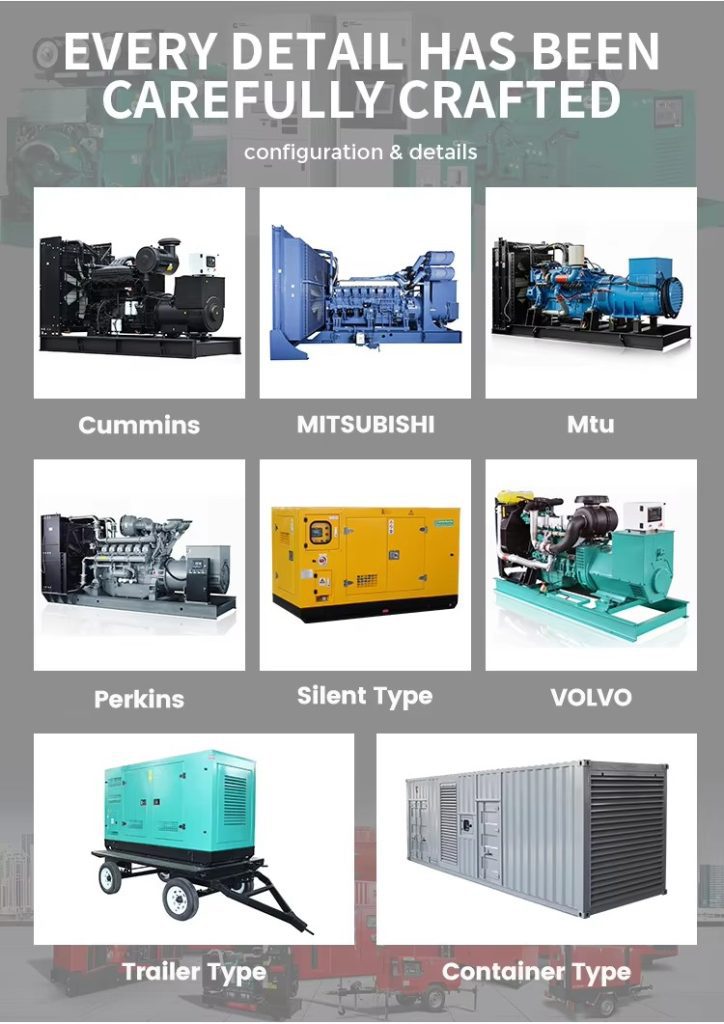
Why generator emission standards by country differ by market
The first question a buyer should answer is simple: which authority sets the limit that applies to the machine. The limit follows the site, not the builder, so a 500kVA set shipped to three countries must meet three different rules. A generator manufacturer lists the tier it was built to, but that line only matters once the destination is known. Treating the factory plate as the final word is a mistake. It causes most rejected permits.
Tesla Power Equipment publishes a destination matrix for every export model, because the same engine needs different aftertreatment for California, the EU and inland China. The matrix names the test cycle, the pollutant ceiling and the document the customs officer will ask for. A buyer who reads it before the enquiry avoids ordering a set that cannot be registered. The practical move is to fix the country first, then size the machine against that rule.
What does EPA Tier 4 Final require for a diesel genset?
The United States sets non-road engine limits through EPA Tier 4 Final, the strictest band for large stationary generator sets, and the rule tightens further below that output as well. The rule caps NOx and particulate matter together, so most sets need a diesel oxidation catalyst and a diesel particulate filter. A 1000kVA set at 0.8 power factor delivers 800kW, and that output must stay inside the federal ceiling during the prescribed test cycle. The 1000kVA export generator set we build carries the catalyst and the filter as standard for the US market.
The test cycle measures grams of pollutant per kWh, not per hour, so a lightly loaded set is not automatically clean. EPA publishes the allowable figures and the measurement method, and the certificate records the result at the rated point. Tesla Power quotes the EPA tier on the data sheet so a buyer can confirm it before shipment. A set that meets Tier 4 Final in the US still needs a separate showing for the EU or China. The test cycles do not line up.
How does EU Stage V under the MCPD apply to generators?
The European Union regulates stationary and mobile generator sets through EU Stage V, anchored in the Medium Combustion Plant Directive (EU) 2016/1628. The ceiling tightens as the rated output rises, and the rule names both the test cycle and the monitoring the operator must keep. A generator for data centres in the EU must meet a lower NOx line than the same machine sold for a remote pumping station. The EU 2016/1628 text sets the bands and the deadlines that a compliance team checks before ordering.
EU Stage V also expects a conformity assessment for the EU market, carried out by a notified body that issues the certificate the customs officer inspects. A generator factory in China that exports to Europe must hold that paperwork first. The container is sealed only after that. Tesla Power keeps the assessment file with the build record so the buyer can present it at the border. The limit at 50 Hz and the limit at 60 Hz are stated separately, so the frequency of the site matters as much as its location.
What are China's GB 20891 and GB/T 2820 limits?
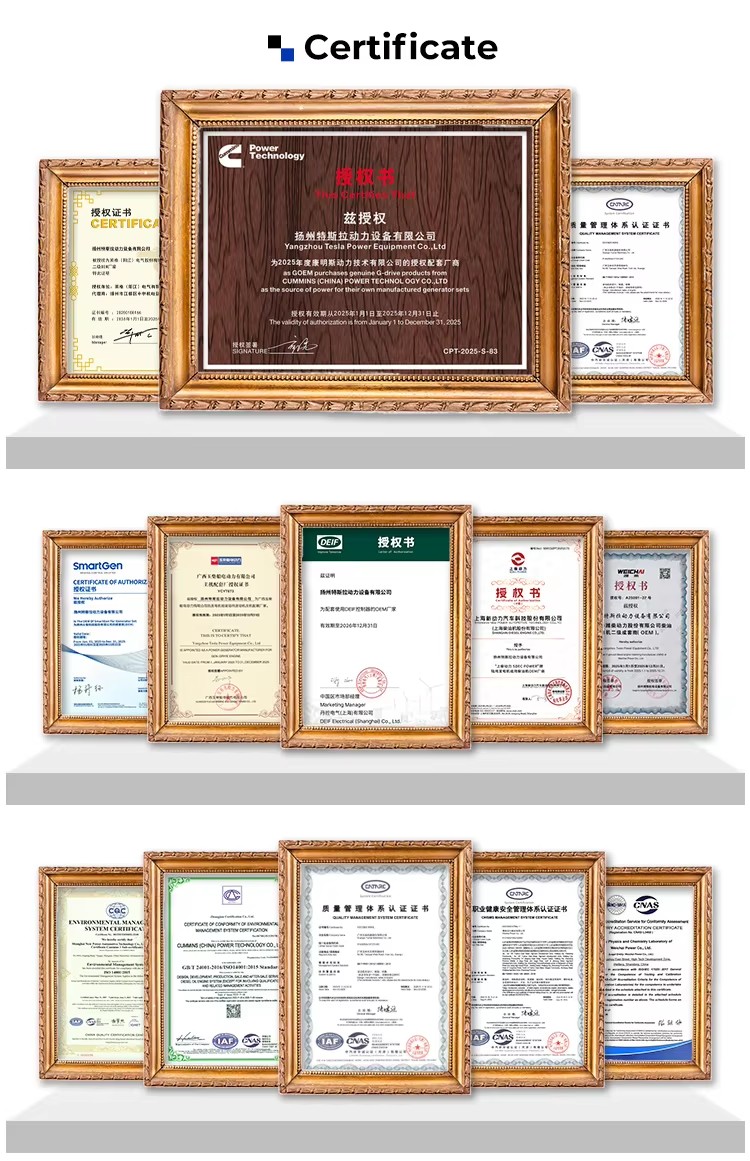
China sets its non-road limits through GB 20891, and the generator itself is built to the GB/T 2820 framework that mirrors ISO 8528. The GB 20891 ceiling applies to the engine, while GB/T 2820 defines the rating and the test method the set is checked against. A set sold inside China must meet the national line, and the same engine often needs a different calibration for export. Yangzhou Tesla Power builds both versions from one platform and labels each plate for the market it serves, and the about page shows the plant where both versions are produced.
The GB 20891 figures are published in grams per kWh, the same basis the US and EU use, which makes a three-way comparison straightforward. A generator for export projects should carry the plate that matches the destination, because switching the calibration after the set is built costs more than building to the right tier first. China's own GB/T 2820 rating bands let a buyer confirm the continuous and prime outputs before the contract is signed.
How do you read a generator emission data plate?
The data plate is the document a buyer should read first, because it states the tier, the test cycle and the rated point in one place. A 500kVA set running at 0.8 power factor delivers 400kW. At a 70% load factor over 2000 hours/year it produces 400kW × 0.7 × 2000 h = 560,000 kWh of electrical energy. The NOx limit of 3.5 g/kWh therefore allows 1.96 tonnes of NOx for that year, and the PM limit of 0.2 g/kWh allows 0.11 tonnes.
| Market | Standard | NOx ceiling | PM ceiling |
|---|---|---|---|
| United States | EPA Tier 4 Final | 0.40 g/kWh | 0.02 g/kWh |
| European Union | EU Stage V (EU) 2016/1628 | 0.66 g/kWh | 0.02 g/kWh |
| China | GB 20891 | 3.50 g/kWh | 0.20 g/kWh |
What the NOx limit means
NOx is the nitrogen oxide family formed at combustion temperature, and the ceiling is the grams allowed per kWh of electrical output. A set that passes the test at the rated point still needs the aftertreatment to hold that line as the load swings. The buyer should ask for the figure at 50 Hz and at 60 Hz, since the two cycles are not identical.
What the PM limit means
PM is the particulate matter caught by the diesel particulate filter, and the ceiling is far tighter in the US and EU than in China. A generator for prime power that runs thousands of hours a year accrues its PM budget quickly, so the filter size and the service interval matter. The plate states the interval the maker recommends, and the buyer should keep the record.
The plate also names the transient and steady limits, and a buyer who reads both avoids a set that passes one and fails the other. ISO 8528-1 rating standard defines the rating terms the plate uses, so the same word means the same thing across every market. Tesla Power prints the plate in the language of the destination authority to cut down on customs questions.
Which documents prove compliance at customs?
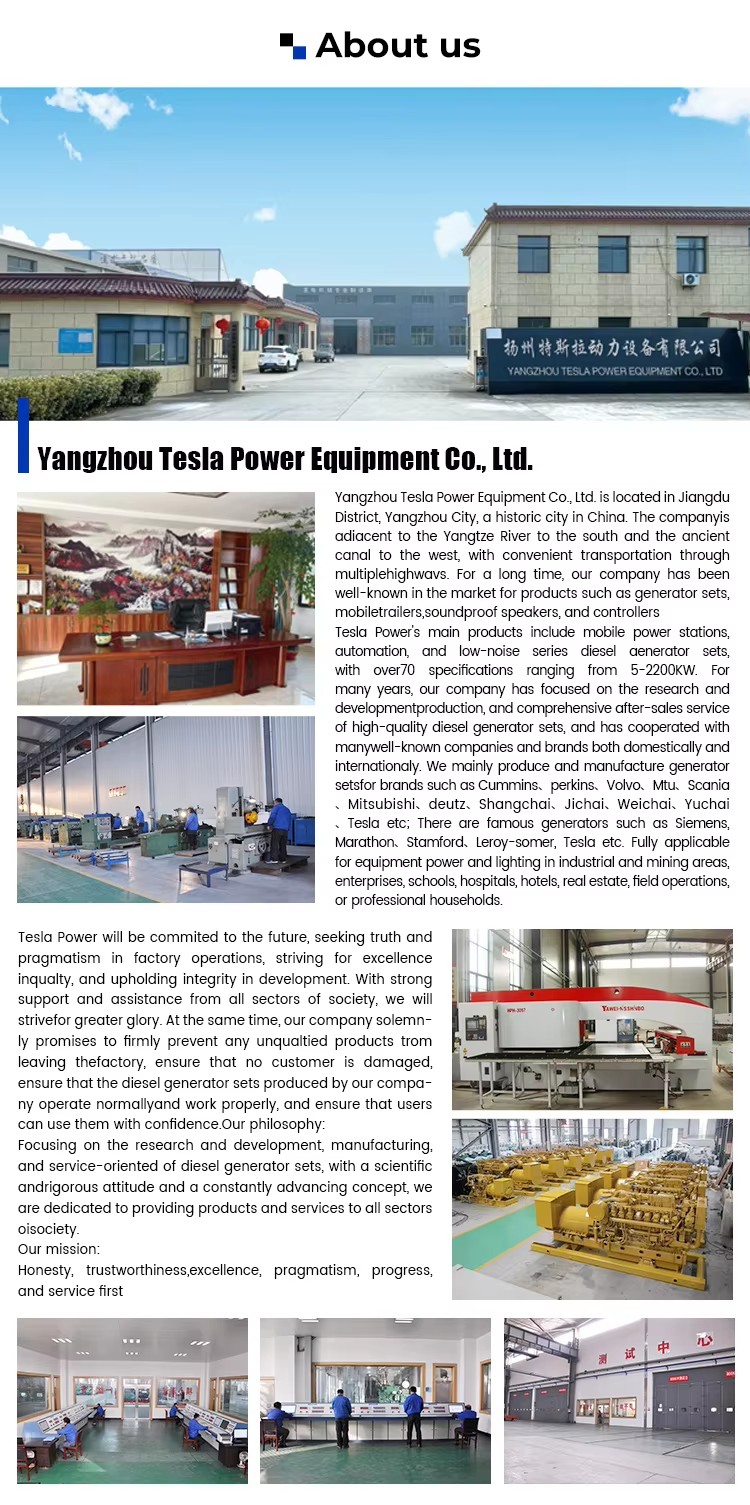
The document a buyer needs is the certificate issued against the correct standard, backed by the test report that shows the measured figure. A certificate without the report and the expiry date is a claim, not evidence a customs officer can verify. The set should also carry the conformity assessment for the EU market where that rule applies, and the EPA certificate where the US market applies. The help and advice page lists the paperwork we prepare for each destination.
The test report should show the rated point, the load sweep and the measurement method, because the officer compares the report to the plate. A standby set that runs few hours still needs the same certificate, since customs checks the build, not the runtime. Tesla Power files the report with the build record and ships a copy in the crate so the buyer has it on site. Keep the expiry date visible, because a lapsed certificate is treated as no certificate.
What happens if a set is built to the wrong tier?
A set built to the wrong tier is a write-off rather than a discount, because the limit follows the site and cannot be retrofitted cheaply. The aftertreatment, the calibration and the plate all differ between tiers, so the fix is usually a rebuild, not a tune. A buyer who discovers the mismatch at customs faces rework, storage and a missed commissioning date. The cost of confirming the tier before the build is a fraction of the cost of correcting it after.
The second failure mode is a set that meets the pollutant line but lacks the document the authority wants, which blocks registration all the same. Tesla Power treats the paperwork and the machine as one deliverable, because a clean set with the wrong certificate is still a set that cannot run. The buyer should name the exact standard in the purchase order so the responsibility is clear. An industrial set that skips this step often returns to the factory.
How should a buyer compare supplier quotes on emissions?
A buyer should compare quotes on the same tier, the same test cycle and the same rated point, because two sets that both claim compliance may be measured differently. Ask each supplier for the plate, the test report and the certificate, and confirm the NOx and PM ceilings line up with the destination rule. The 250kW export generator set we offer carries its tier on the data sheet so the comparison is direct. Price matters, but a cheaper set that fails customs costs more than a correct one.
The buyer should also confirm the load factor the quote assumes, since the pollutant budget depends on how many hours the set runs each year. A set sized at a 70% load factor for 2000 hours carries a different NOx total than one sized for 500 hours, and the quote should state which. Tesla Power quotes the assumed figures so the buyer can rerun the math for the real site. A generator for data centres in particular should pin down the runtime before the order is placed.
Are hybrid and gas generators exempt from these tiers?
Hybrid and gas units are not a free pass, because the diesel portion of a hybrid still meets the same tier, and gas sets meet a different but real ceiling. A generator for export projects that pairs a battery with a diesel engine must show the diesel side compliant, and the battery side meets separate electrical rules. Gas generators meet a methane or propane limit rather than the diesel NOx line, so the comparison is by a different standard, not by no standard.
The buyer should ask which part of the machine the certificate covers, because a hybrid plate that only lists the battery hides the diesel figure. Tesla Power states the diesel tier and the battery rules on separate lines so nothing is implied. A set that truly runs clean still needs the document the authority recognises, and a missing paper blocks registration the same way. Confirm the scope before the order, not after the container lands.
Frequently asked questions about generator emission standards
The authority is the environmental agency of the country where the set will run, not the factory that built it. A 500kVA set shipped to three markets must meet three rules, so the destination decides the tier before the build begins.
No, the cycles differ, so a set measured under one method does not automatically pass another. The buyer should confirm the cycle named on the certificate matches the destination rule before ordering the machine.
The certificate issued against the correct standard, backed by the test report and the expiry date, is what the officer inspects. A certificate alone, without the report, is treated as a claim rather than evidence.
Usually not cheaply, because the aftertreatment, calibration and plate all differ between tiers. The fix is normally a rebuild, so confirming the tier before the build is the lower-cost path.
Yes, customs checks the build, not the runtime, so a lightly used standby set still needs the full certificate for its market. The buyer should name the standard in the purchase order.
No, gas sets meet a different but real ceiling, and the diesel side of a hybrid meets the diesel tier. The buyer should ask which part of the plate the certificate actually covers.
Compare the same tier, test cycle and rated point, and confirm the NOx and PM ceilings match the destination rule. Tesla Power prints the tier on the data sheet so the comparison stays direct and the order stays clean.