
Genset excitation system choice decides how far the voltage falls when a motor starts, and the answer differs between a self excited set and one with a permanent magnet source. Read how each type holds a step. Tesla Power states the type on the data sheet, so send the load list to our sales desk for a quotation.
- Ask which excitation type is fitted, because the same frame behaves differently with each.
- Check the voltage recovery on a step, since that figure decides whether a motor will start.
- Look at the short circuit capability, because a set that cannot sustain a fault cannot clear one.
- Ask what the regulator is set to, because a setting changed on site can undo the rating.
What does a genset excitation system decide?
The excitation system sets the alternator's magnetic field, and the field is what holds the voltage while the load moves. A strong field recovers quickly from a step and a weak one lets the voltage sag until the engine catches up. The type of excitation therefore decides two things a buyer cares about: how deep the dip is on a motor start and how much fault current the set can deliver.
Those two answers are not free. A set with a permanent magnet source holds the voltage through a step that a self excited set cannot, and it costs more for the same frame and the same engine. Tesla Power Equipment quotes the excitation type beside the frame so the difference is visible before the comparison starts, because two sets of the same rating with different excitation are two different products.
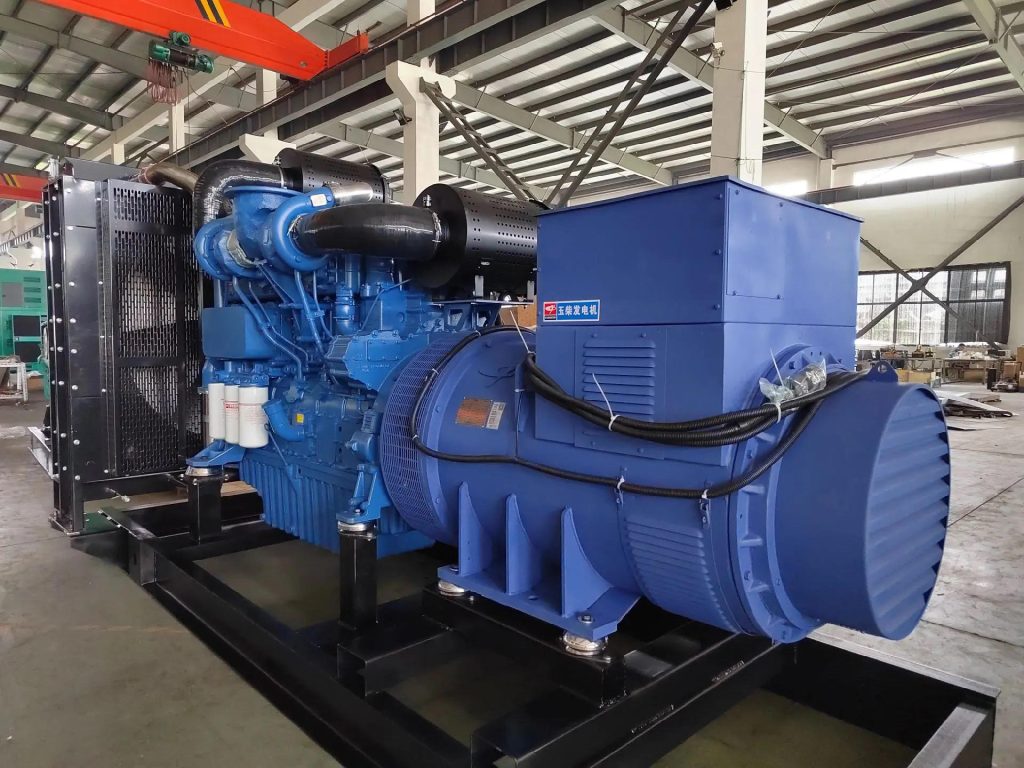
Why does a self excited set lose voltage on a motor start?
A self excited alternator draws its field current from its own output, so a fall in output voltage reduces the field that is supposed to correct it. The loop is stable at small steps and slow at large ones, and a motor start is a large step. The voltage sags, the field weakens with it, and the recovery waits for the engine and the regulator to work back up together.
The effect is worst on the first moments of the start, which is exactly when the motor draws its highest current. A genset for a site whose largest load is a direct-on-line motor needs the excitation chosen on that motor rather than on the total connected load, because the total says nothing about the shape of the demand. the sizing notes treat the largest motor as a separate input for that reason.
| Excitation type | Voltage on a step | What it suits |
|---|---|---|
| Self excited, shunt | Deep sag, slow recovery | Resistive and lighting loads |
| Auxiliary winding | Moderate sag | Mixed site with small motors |
| Permanent magnet source | Shallow sag, fast recovery | A large motor or a drive bank |
| Any type with a soft start | Step becomes a ramp | A site that can change the starter |
| Any type on a fault | Set by the sustained current | The protection that has to clear it |
What does a permanent magnet exciter change?
A permanent magnet source feeds the field from a separate machine on the shaft, so the field no longer depends on the output voltage. The alternator can then hold its voltage through a step and sustain a fault current that a self excited set cannot, because the excitation does not collapse when the output does. That is the whole difference, and it is worth paying for only where the load asks for it.
The cost sits in the extra machine and in the maintenance of a second rotating part. A set with a permanent magnet source and a failed diode in its rotating rectifier still runs and still holds voltage, which is an advantage on a site with no electrician and a disadvantage for fault finding. the 500kVA silent build with the ATS option lists the excitation type it is built with on the same sheet as the rating.
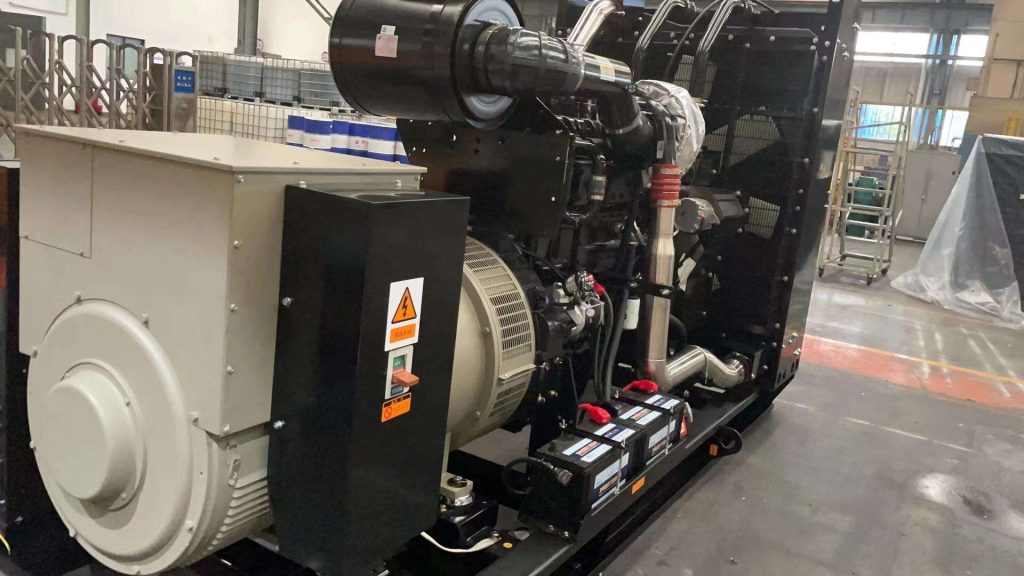
How is the excitation type read from the test record?
Tesla Power records a step applied at a known load, with the voltage before the step, the lowest point after it and the time to recover. A self excited set shows a deeper dip and a longer recovery than a permanent magnet set on the same step, and the two traces side by side answer the question without any discussion of type. Ask for the trace rather than for the type name, because the name does not carry the depth.
The record should also show the sustained current on a three phase fault, because that figure is what the protection is set against. A 400kVA set at 0.8 pf carries 320kW, so 400kVA × 0.8 = 320kW; at 400 V the rated current is 400,000 ÷ (1.732 × 400) = 577 A, and a set that sustains three times that for the seconds a motor needs has to hold 1,732 A from its excitation alone.
What does the regulator setting do to the recovery?
The regulator sets how hard the field is driven for a given error, and a fast setting recovers the voltage quickly at the cost of an overshoot. An overshoot of a few percent is harmless on a lighting load and is not harmless on a drive that trips on overvoltage. The setting therefore belongs to the site rather than to the frame, and it is the one parameter most likely to be changed after commissioning.
Droop is the second setting, and it decides how the voltage falls as reactive load rises. A single set on an island wants little droop and a set running in parallel with others wants enough to share reactive load without fighting. Tesla Power records both settings at the works test so a site that changes them has a baseline to return to, and the export product range states which frames carry a droop control as standard.
Which fault does a diode failure look like?
A failed diode in the rotating rectifier shows as a voltage that is lower than it should be, a field current that is higher than it should be and a set that carries less load before it complains. On a set with a permanent magnet source the symptom can be quieter, because the field source keeps working while one path in the rectifier does not. The two readings together identify the fault faster than either alone.
The waveform is the giveaway on a set with an oscilloscope attached, and most sites do not have one. The practical test is to compare the three phase voltages at the same load and look for the phase that sits low. Yangzhou Tesla Power records the three phase voltages at the works test so the comparison has a reference rather than a memory, and the transient limits the comparison is judged against sit in the ISO 8528-1 class definitions.
What should the offer state about excitation?
The offer should state the excitation type, the voltage dip on a stated step, the recovery time and the sustained fault current. Those four lines let a buyer check the set against the largest motor on the load list instead of against the rating. Most genset manufacturers name the type and leave the four figures out, which makes two offers impossible to compare, and the acceptance figures for a standby installation follow the NFPA 110 load test schedule.
Chinese genset suppliers who print the dip and the recovery make the choice explicit, and a genset for the first year of service shows the difference the first time a motor starts on a cold morning. A genset in a market where the starter type varies between sites needs that figure more than it needs another hundred kVA of headroom.
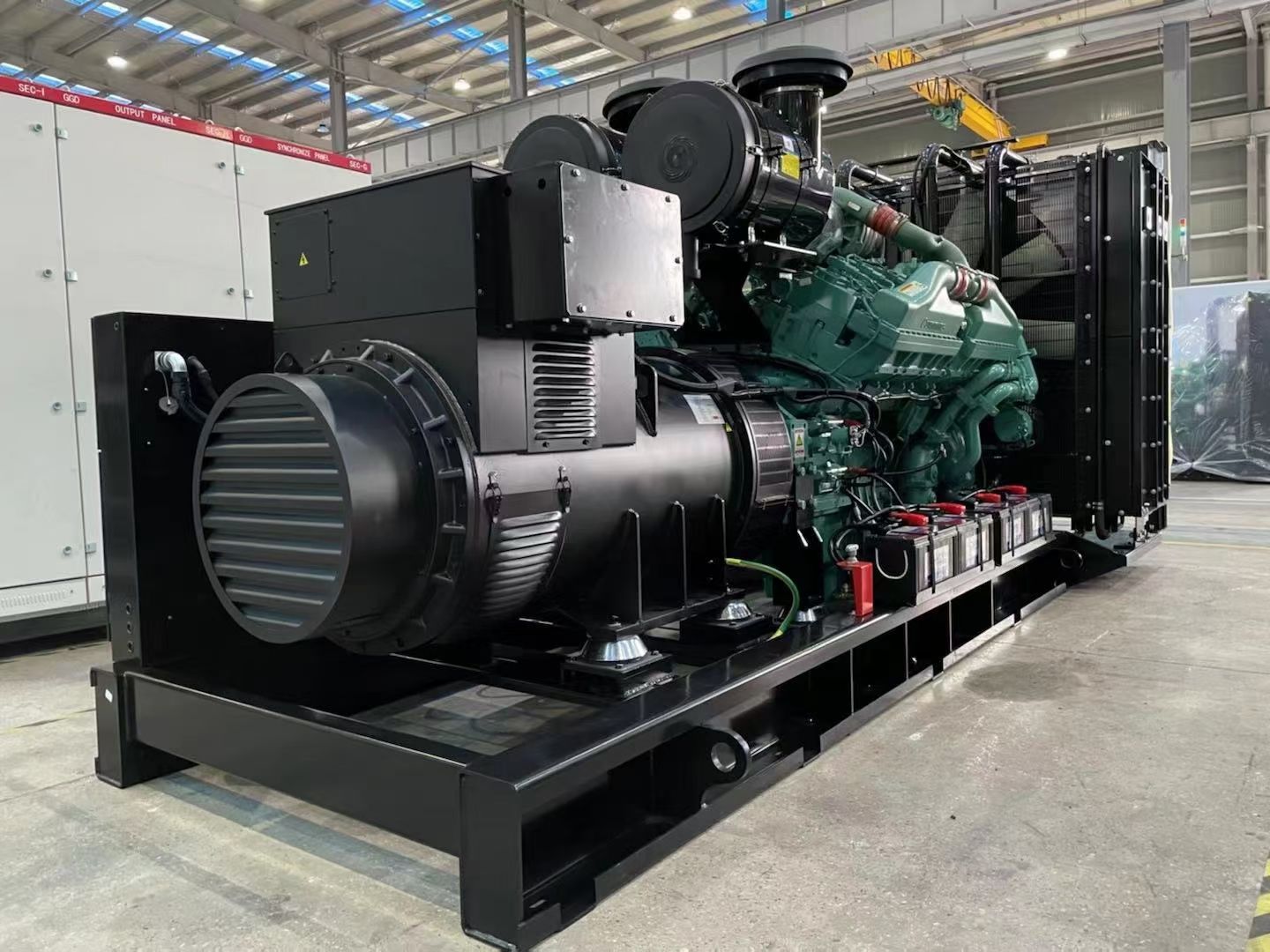
What does the handover file carry for the alternator?
The handover file carries the excitation type, the regulator settings, the three phase voltages at test and the fault current record, all on one sheet with the serial number. A buyer who reads it can tell whether the settings were left at the works values and what the voltage did on a step. Tesla Power issues that sheet with the set, so a later change has something to be measured against.
The file also carries the dip and the recovery figures on the same page, because a protection setting made without them is a guess. Genset documentation for an excitation system is only complete when the settings and the step trace appear together, and the alternator bay that produces both follows the works and the test bay routine.
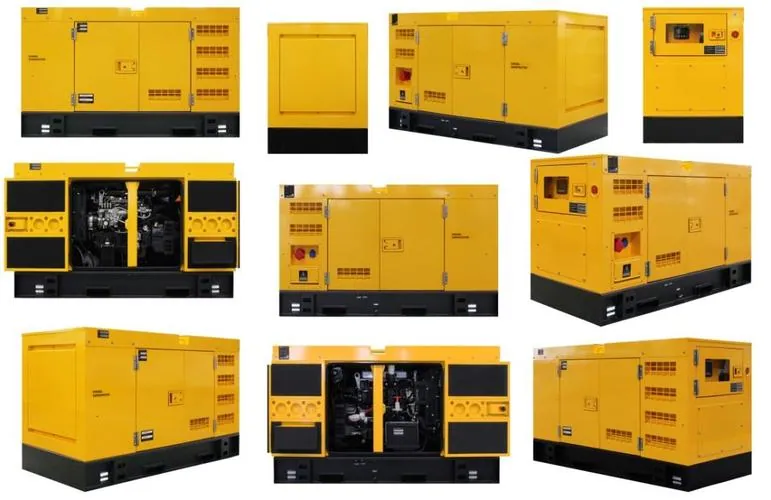
Send the largest motor and the starter type with the enquiry, and the excitation, the dip and the recovery come back as one answer instead of three items a site has to reconcile after the first start. Tesla Power writes that answer into the offer, so the step is visible before the order rather than at the first cold morning.
Frequently asked questions about genset excitation system
It is worth it when the largest load is a motor started direct on line and the site cannot change the starter. On a resistive load it buys nothing. Price the starter and the exciter against each other before the decision.
It can when the motor is small against the rating and the starter limits the surge. The limit is the dip the motor tolerates, and a motor that drops out at a given dip sets the answer. Ask for the dip rather than for a rule of thumb.
The regulator drives the field hard to correct the error and the field takes time to decay. A fast setting overshoots and a slow one recovers late. The right answer is the fastest setting that stays inside what the load tolerates.
It matters less than on a parallel set, and it still sets how the voltage falls as reactive load rises. A single set on an island usually wants little droop. A set in parallel wants enough to share without fighting.
By comparing the three phase voltages at the same load and finding the phase that sits low. A field current that is high for the load confirms it. The waveform test is quicker and needs equipment most sites do not carry.
It can be replaced and it can be reset, and either change needs a step test afterwards to prove the result. A regulator changed without a trace leaves the site with a setting and no evidence, and Tesla Power asks for the trace with any change.