
Genset fan power is a real load, and where it comes from decides whether it reduces the engine rating or loads the alternator. Check the specification against the drive type, then compare supplier offers before the order. Tesla Power puts the figure on the rating sheet; send the cooling layout to the technical desk and we confirm it.
- Ask whether the quoted rating is gross or net, because the fan sits between the two.
- Read the fan absorbed power at the duty point rather than at the free air point.
- Count an electric fan as alternator load, since it leaves through the terminals.
- Keep the belt tension on the service card, because a slipping belt under-cools and under-reports.
What does genset fan power mean?
It means the shaft power the radiator fan takes to move the cooling air, and on most sets that power comes off the engine before the flywheel. The fan is therefore part of the engine load rather than part of the electrical load. A set quoted at a net rating has already paid for the fan, and a gross rating has not. A fan that is quoted without its absorbed power is a fan whose cost has been hidden in the rating.
The distinction matters when two suppliers quote what looks like the same set. One quotes a gross figure with no fan deduction and the other quotes a net figure with it, and the difference is a few percent of output. Tesla Power quotes both figures on the rating sheet so a buyer can compare two offers without converting them by hand.
How is fan power calculated?
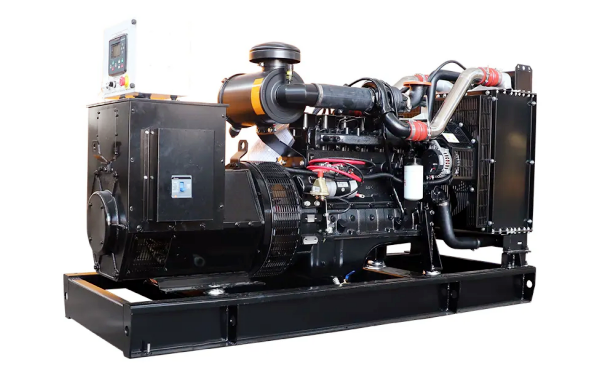
Multiply the air flow by the pressure the fan develops and divide by the fan efficiency, then add the drive loss. A fan moving 12 m³/s at 150 Pa with an efficiency of 60% absorbs about 3000 W at the shaft, and a belt drive adds a few percent on top of that. The figure rises with the cube of fan speed, which is why a faster fan costs far more than it looks.
The duty point is the whole calculation, because a fan that is quoted at free air moves more air and absorbs less power than the same fan against a radiator and a louvre. A 500kVA set at 0.8 pf delivers 400kW, and a fan that absorbs 5% of that takes 20kW before the alternator sees anything: 400kW x 5% = 20kW.
| Fan drive | Share of net rating | Note |
|---|---|---|
| Direct drive, engine mounted | 2% to 3% | Counted inside the net figure |
| Belt drive, fixed pulley | 3% to 4% | Adds drive loss and a tension check |
| Electric fan, alternator fed | 2% plus motor loss | Comes off the electrical output instead |
| Hydraulic fan drive | 4% to 6% | Suits a variable speed control |
Why does ISO 8528 separate gross and net?
The standard defines a gross rating at the flywheel and a net rating with the engine-driven auxiliaries in place, and the fan is the largest of those auxiliaries. A set declared under one basis and compared against a set declared under the other looks better or worse than it is. The label has to name the basis, otherwise the number means very little. Ask for the auxiliary list with the rating, because the list is where a hidden fan deduction shows up.
Most export buyers ask for the net figure because it is what the site can actually use. A set quoted at 400kW gross may deliver only about 97% of that once the fan, the water pump and the charging alternator are counted. Tesla Power Equipment prints both figures with the auxiliary list, which is the document that ends the argument.
What changes when the fan is electric?
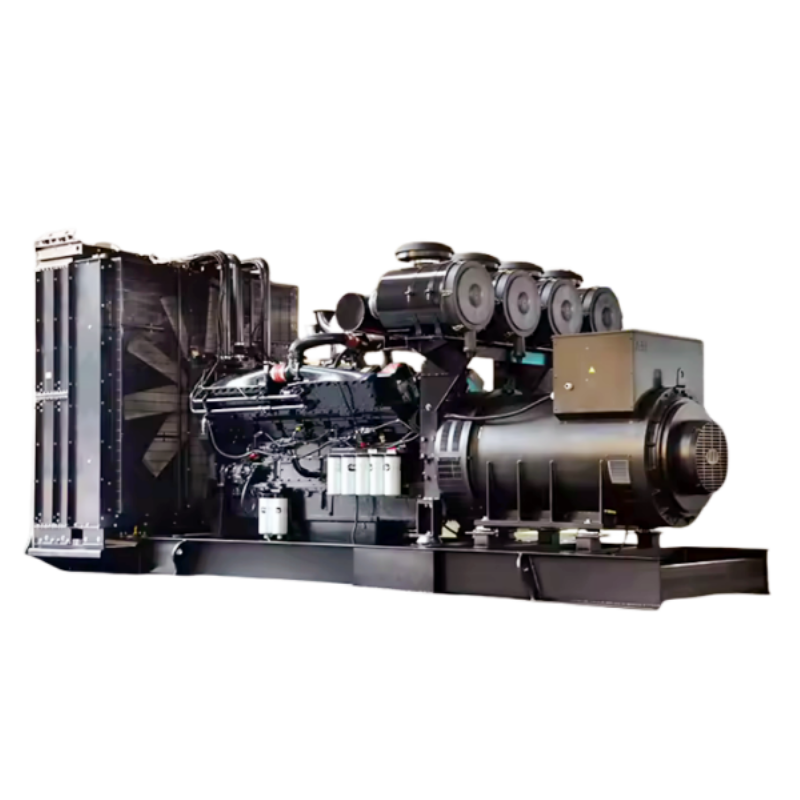
An electric fan draws from the alternator, so its power leaves through the terminals and reduces the power available to the load. The engine rating does not change, which sounds better and is not. A set with an electric fan loses the fan power from the electrical output rather than from the shaft, so the loss lands on the customer side of the breaker. The motor sits behind a fuse that a technician may not know about, and the fan stops without an alarm on the engine side.
The arrangement suits a variable speed fan, because the controller can slow the fan at part load and recover the power. It also adds a motor, a fuse and a failure mode that a belt does not have. Tesla Power lists the fan motor on the auxiliary schedule with its running current, because an electric fan that trips takes the cooling with it.
How does altitude change the fan load?
Thin air moves less heat per cubic metre, so the fan has to move more volume for the same cooling, and the absorbed power rises with the volume. At 1,500 m the air density is about 85% of the sea level figure, so a fan sized at sea level under-cools and a fan sized for the altitude absorbs more power than the sea level figure.
The set therefore loses output twice: once from the engine derate and once from the larger fan. A site sheet that carries the altitude lets both corrections happen at the quotation stage. Tesla Power asks for the altitude on every enquiry, because a set quoted at sea level and installed at altitude is the most common shortfall in export work. A fan chosen at sea level and fitted at altitude is the shortfall that appears in the first summer rather than in the quotation.
What happens when a fan is uprated?
A larger fan moves more air at the same speed and absorbs more power, and the extra power comes off the net rating. Fitting a bigger fan to cure an overheat therefore moves the problem from the radiator to the rating sheet. The net figure has to be recalculated, and the alternator has to be checked against the new shaft load. Recalculate the net figure before the drawing is released, because a fan change after release reaches the site as a surprise.
The same applies to a change of pulley. A smaller engine pulley speeds the fan up, and the absorbed power rises with the cube of that speed. Yangzhou Tesla Power recalculates the fan power whenever the pulley changes and prints the new net rating, because a fan uprate that is not written down becomes a warranty argument.
What should a buyer put on the enquiry?
Send the site altitude, the ambient, the fan drive type and whether the rating quoted is gross or net. Add the cooling layout and the louvre free area if the set sits in a room. Those six items let a supplier quote a net figure that the site can use, and they show whether the offer has converted a gross rating into a net one.
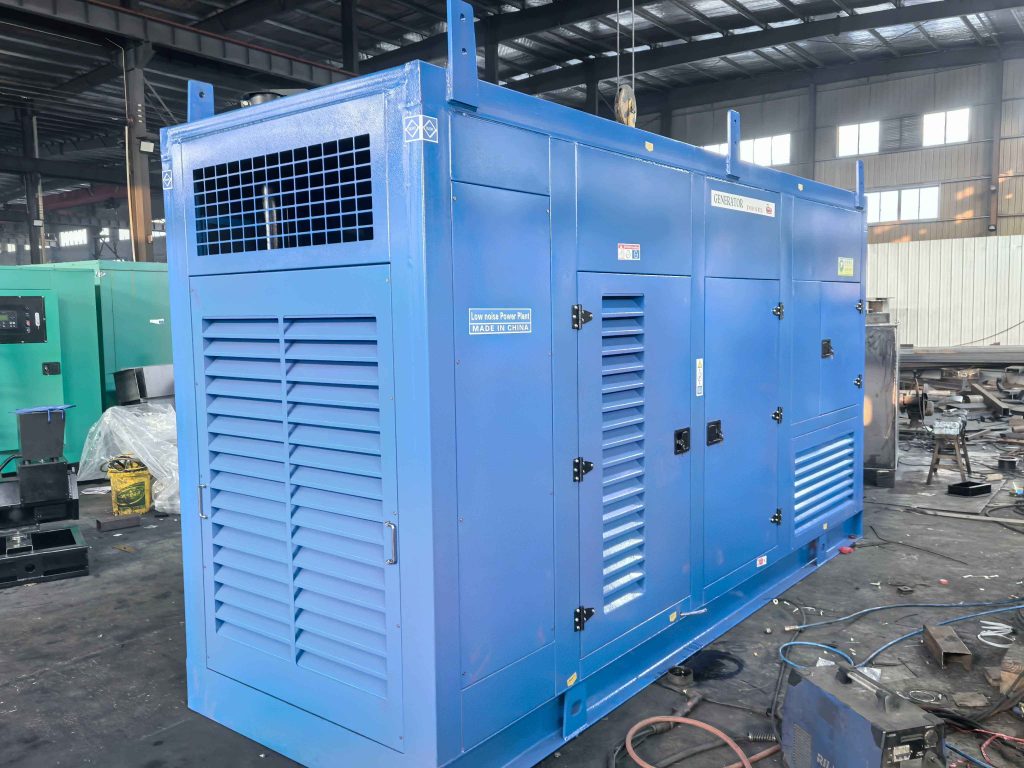
The wording on the offer matters too. Genset fan power manufacturers often quote a gross rating with no fan deduction, and Chinese genset fan suppliers sometimes fit a larger fan without recalculating the net figure. Ask for genset fan power for a canopy build, genset fan for a hot climate and genset for a rental fleet as three separate cases. Tesla Power prints the net rating, and the 1000kW container build shows the belt drive.
What does the handover file record?
The file carries the gross rating, the net rating, the auxiliary list with each absorbed power, the fan duty point and the belt tension figure. One page covers the rating when those five items sit under the engine serial number. Add the conformity assessment for the fan drive when the installation is part of a permit package.
Hand the page to the technician who sets the belt tension rather than to the buyer who placed the order. the Yangzhou factory describes the bay where the fan power is measured. the commissioning notes lists the frames that use an electric fan, the build range explains how a belt is retensioned after the first fifty hours, the ISO 8528-1 duty definitions sets the rating basis the net figure is declared on, and the NFPA 110 maintenance routine covers the load steps the set was accepted on.
Frequently asked questions about genset fan power
On a net standby rating it is included, and on a gross rating it is not. Ask the supplier which basis the label uses before comparing two offers. A difference of five percent on a 400kW set is 20kW, which is enough to matter on a site that is already close to its limit.
Only on a set that is not running, because the fan is the only path for the radiator heat. Running without a fan gains a few percent for a few minutes and then derates hard. An electric fan can be slowed at part load, which is the safe version of the same idea.
Hot air is less dense, so the fan moves less mass for the same volume and the radiator needs more volume to shed the same heat. The fan then runs further out on its curve and absorbs more power. The effect is small and it adds to the ambient derate rather than replacing it.
A clutch or a viscous drive saves power at low load, because the fan turns slower when the coolant is cool. On a standby set that runs at full load the saving is small. On a prime power set that runs at part load for long periods the saving is worth measuring.
Measure the shaft torque and speed on a belt driven fan, or the electrical input on an electric fan. A simpler check is to read the engine fuel rate with the fan fitted and again with a test fan of known power. The difference gives the absorbed power to within a few percent.
It reduces the flow and moves the fan back up its curve, so the absorbed power falls while the cooling falls faster. That is why a blocked louvre shows as an overheat with no change in the sound of the set. Tesla Power checks the louvre free area against the fan curve at commissioning.