
A genset fuel polishing loop moves stored diesel through a filter at a steady rate so water and particulate settle out before the engine draws them. Tesla Power specifies the flow, the filtration rating and the sampling points from the tank volume, and the steps below show what to fix before you request a quotation.
- Size the pump on the tank volume, not on the engine, because a loop that turns the tank over once a month keeps the fuel cleaner than one run at random.
- Fix the filtration rating at the pump inlet, since a filter downstream of the transfer pump passes whatever the pump has already sheared.
- Put a sampling point at the tank bottom, because that is where water and the heaviest particulate collect.
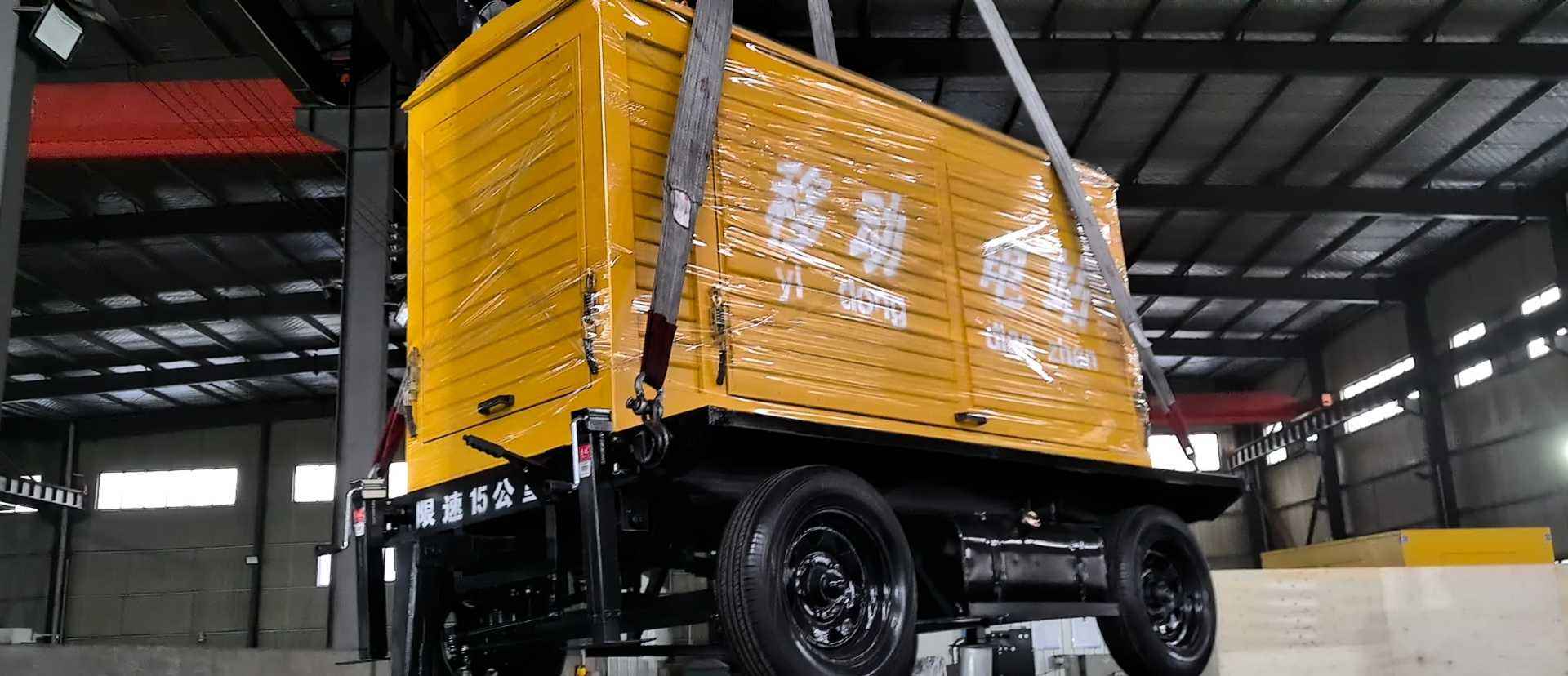
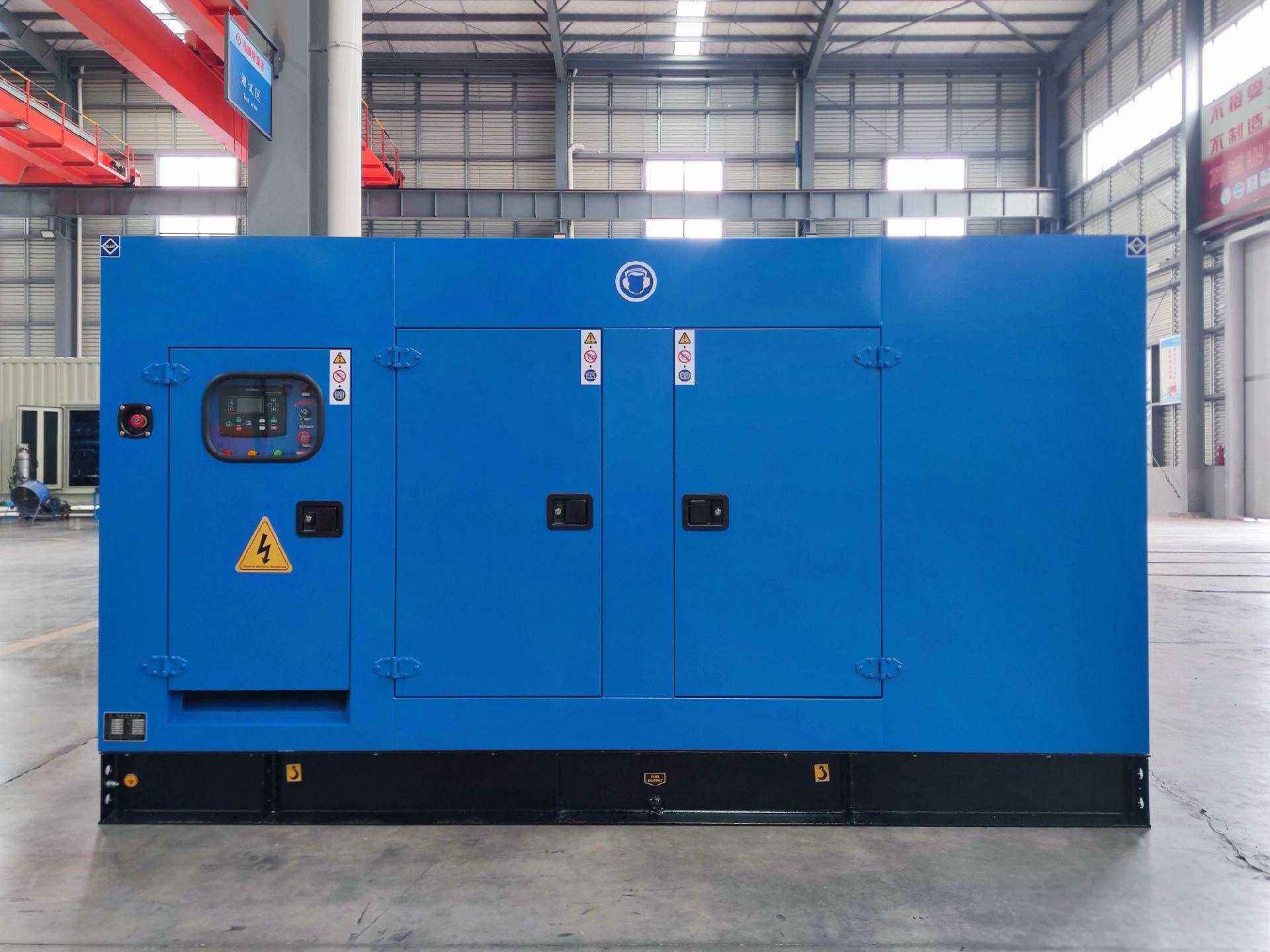
- Ask for the loop as a drawing beside the frames the factory builds, so the polishing skid and the day tank are quoted as one assembly.
What does genset fuel polishing remove from stored diesel?
It removes water, particulate and the biological growth that lives at the water interface. Diesel held in a vented tank takes on moisture through the vent, and the water settles to the bottom where it feeds a film of bacteria and fungus. That film produces acid and sludge, and the sludge reaches the injection pump as a soft black deposit.
The loop does not sterilise the tank. It removes the water the growth needs, and the growth stops reproducing once the interface is gone. A tank that has held water for two years needs a manual clean before a loop can keep it clean, and genset manufacturers who quote a skid without asking about the tank history are quoting half a system.
What flow rate should a polishing loop run at?
Size the flow so the loop turns the tank over in a working day rather than in an hour. A fast loop stirs the settled layer back into suspension and the filter then loads on material that would have stayed on the bottom. A slow loop draws from the bottom through a dedicated dip tube and returns to the top without disturbing what lies below.
Worked on a 2000L tank, a loop rated at 6000L/h turns the volume over in 2000L ÷ 6000L/h = 0.33h, which is about 20 minutes. Two passes a month at that rate is 40 minutes of running, and the filter sees the whole volume rather than a sample of it. A 1000L tank on the same skid turns over in 10 minutes, and the filter loads at half the rate.
| Item | Figure to specify | Why it matters |
|---|---|---|
| Loop flow | 3 to 6 tank turnovers per hour | Fast enough to work, slow enough not to stir |
| Filter rating | 4µm absolute at the pump inlet | The injection pump sees what passes here |
| Water removal | Coalescer ahead of the fine filter | Water blinds a fine element in hours |
| Run interval | Monthly, or every 200 running hours | Matches the sampling schedule |
Which filtration rating actually protects the injection pump?
A 4µm absolute rating at the pump inlet is the figure most injection pump makers ask for, and it is not the same as a 10µm nominal rating on the same housing. Nominal means a percentage of particles above the size are caught; absolute means nearly all of them are. The two numbers describe different filters, and a supplier who quotes one when the tender names the other has answered a different question.
Place the coalescer ahead of the fine element. Water blinds a 4µm filter in a few hours, and a blinded element opens on its bypass, which passes everything the filter was there to catch. A differential pressure gauge across the housing tells the operator when to change the element, and a gauge without a bypass indicator tells only half the story. Tesla Power asks for both readings on the commissioning sheet.
Where should the sampling points sit?
Three points, and each answers a different question. The tank bottom drain shows what has settled and whether water is present. The outlet of the coalescer shows whether the water removal stage is working. The line at the engine inlet shows what the injection pump actually receives, and that is the only figure that predicts a pump failure.
Sample at the same three points on the same schedule, and record the result as an ISO 4406 code rather than as a description. A code of 18/16/13 at the engine inlet means the fuel is dirtier than a common rail pump tolerates, and the number moves in a way a written note does not. Our own service file records the three codes for every polishing skid we ship, because a site that changes its supplier needs a baseline to compare against.
How often should the loop run on a standby site?
Run it monthly on a site that sits idle, and every 200 running hours on a site that exercises weekly. A standby tank with a full charge of fuel sits for months, and diesel held above 30 ℃ oxidises faster than the same fuel held cool. The monthly run is cheap and the alternative is a tank clean.
A site with a generator that runs daily needs a different schedule. The engine draws from the day tank rather than the bulk tank, so the bulk volume sits still while the day tank cycles. Tesla Power sets the interval from the bulk volume and the site temperature rather than from the engine hours, because the bulk tank is the one that degrades.
Put the interval on a label at the skid rather than in a manual. A site crew changes, and a label survives the change; a manual in an office does not. We started printing the interval on the skid after a warehouse in Lagos ran a loop twice in five years and then reported the fuel as bad.
Chinese genset suppliers often ship the skid as an option rather than as part of the set, which leaves the drawing split across two suppliers. Keep the skid and the day tank on one order so the suction height and the return line are designed together.
What does an ISO 4406 code tell a buyer?
It reports three particle counts in one line: particles above 4µm, above 6µm and above 14µm, each expressed as a code number rather than a count. A code of 18/16/13 describes fuel that has been filtered but not polished, and a code of 16/14/11 describes fuel a common rail pump tolerates for a long service life.
The code moves one step for every doubling of the particle count, so a two step change is a fourfold change in contamination. That is why the code is written rather than the count, and why a laboratory report that gives only a count is harder to compare across suppliers. Tesla Power writes the target code on the offer so the commissioning sample has something to be read against.
The standard behind the code is published by ISO, and the injection pump maker states the code its warranty assumes. A genset for a plant room with a common rail engine needs the tighter code, and a genset in parallel operation doubles the fuel drawn through the same bulk tank, which shortens the interval.
Two codes on one sheet are worth more than one. A site that reads 18/16/13 at the tank bottom and 16/14/11 at the engine inlet has proven the loop works, and a site that reads the same code at both ends has proven the loop is bypassed somewhere between them.
How does a polishing loop change the tank design?
It changes three details. The suction needs a dip tube that stops 50mm above the tank floor rather than a floating suction, so the loop draws the water layer rather than skimming the clean fuel on top. The return needs to discharge below the liquid surface so it does not aerate the fuel. The tank needs a sump with a drain at the lowest point.
A tank built without the sump cannot be polished properly, whatever skid is bolted beside it. The water collects across a flat floor, the dip tube cannot reach it, and the loop circulates clean fuel while the layer stays where it was. A sump 300mm square at one corner is enough, and it costs less to weld in at build time than to retrofit through a manhole. The figure belongs on the offer sheet beside the rating, where a buyer can read it against the site conditions.
Which documentation should travel with the skid?
Four documents. The flow and filtration data sheet, the element part number with the change interval, the sampling schedule with the three points named, and the ISO 4406 result from the factory run. Conformity assessment for the assembly reads the first of those against the file, and the other three are what a site uses after handover.
Ask for the element part number in writing rather than in a catalogue reference. A number that a local distributor can cross reference keeps the loop running; a catalogue page from a supplier who has stopped trading does not. Genset documentation for ISO 8528 covers the set rather than the skid, so the skid needs its own sheet beside it.
The the ISO 8528-1 rating framework sets the duty class the fuel system has to support, and the NFPA 110 emergency power rules set the monthly test that decides how often the fuel is drawn. Tesla Power Equipment lists the skid documents on the offer so the two are read together.
What does a polishing skid cost against a tank clean?
A skid costs less than one tank clean in most cases, and it costs far less than the downtime a contaminated tank causes. A tank clean needs the fuel transferred out, the sludge removed by hand and the fuel polished before it goes back, which is a day of work and a disposal cost. A skid runs while the plant works.
The comparison is not the purchase price alone. A skid needs an element change every 200 hours and a pump service every few years, and those are the running costs. A site without a skid pays the same money in one event, at a time it does not choose, and the event usually arrives during a storm when the set is carrying the site.
Which checks prove the loop is working?
Three checks, and each takes a minute. The differential pressure gauge across the element shows loading rather than blockage. The water indicator at the coalescer drain shows whether water is arriving. The ISO 4406 result at the engine inlet shows whether the loop is doing what the drawing promised.
A loop that passes the first two and fails the third has a plumbing fault rather than a filter fault. The commonest is a return line that discharges above the surface, which aerates the fuel and drives the entrained air through the injection pump. The second is a suction dip tube set too high, which draws clean fuel and leaves the water layer in place. Tesla Power asks for a photo of the tank top before shipping a skid, because the two faults are visible there and nowhere else.
A diesel generator for a data centre runs few hours and sits for months, so the loop is its main defence. Send the tank drawing and the engine model to our export desk and the reply names the flow, the element and the three sampling points.
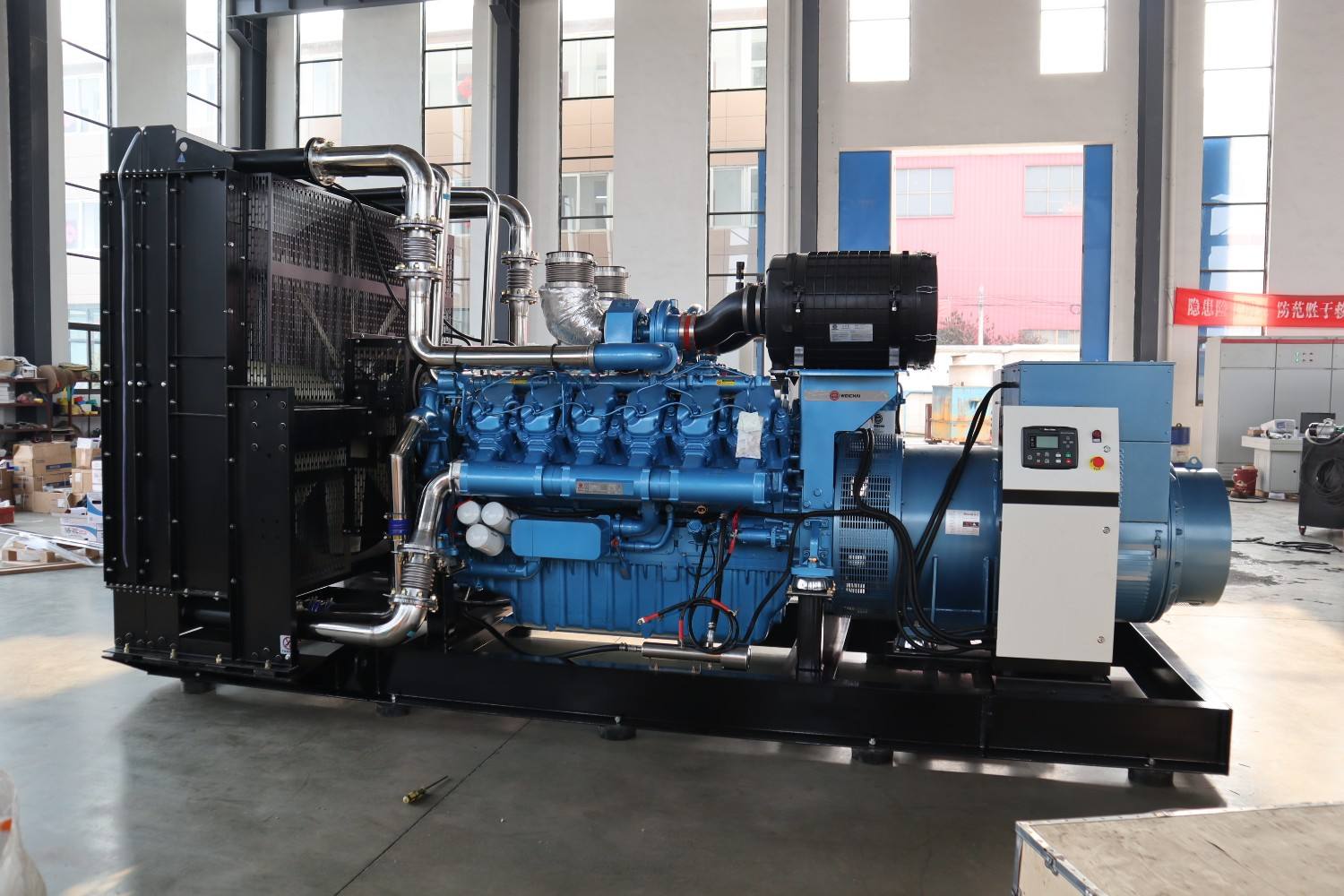
The same reasoning applies to a 400kW set on the Weichai WP13 platform, where the pump tolerances are tighter than on an older mechanical engine and the code at the inlet matters more. The factory states the inlet code in the offer rather than leaving it to a commissioning test.
How does biodiesel change the polishing schedule?
Watch the first month after a change of fuel rather than the first year. A site that switches to a blend and keeps the old interval sees a filter bypass open quietly, and the injection pump then runs on unfiltered fuel for a season. Yangzhou Tesla Power asks which blend a site intends to burn before specifying the element, because the answer changes the housing. The same frame appears in the 500kVA silent set with the ATS option, where the plate states the same basis.
A site that stores fuel for more than six months gains more from the loop than from any additive. The engineering notes on tank layout set out the storage limits, and a genset for a mine site that fills a bulk tank twice a year is the case those limits were written for, as is a genset for standby duty on a site where the fuel is bought once and burnt once.
Frequently asked questions about genset fuel polishing
Long enough to turn the tank over twice, so about 40 minutes on a 2000L tank with a 6000L/h skid. A longer run does no harm and stirs more of the settled layer, so stop at two turnovers rather than leaving the loop on all day.
It can, and many sites wire it that way so the loop works during a weekly exercise. The suction and the engine draw must be separate, or the loop starves the engine at full load. Keep the two connections at opposite ends of the tank.
A 4µm absolute rating at the engine inlet, with a coalescer ahead of it. A 10µm nominal element passes particles a common rail pump cannot tolerate, and the failure appears as a scored plunger rather than as a blocked filter.
It removes the water it draws, which is why the suction has to sit at the bottom. A coalescer separates the water and the drain carries it out. A loop with a floating suction removes particulate and leaves the water where it was.
On differential pressure rather than on a calendar, with a calendar limit of 200 running hours as a backstop. A gauge that reads high at 80 hours means water or growth is loading the element, and the cause needs finding before the next element goes in.
It is worth it above about 1000L, where a manual drain cannot reach across the floor. Below that, a sump drain and a monthly water check cover most of the same ground. The deciding figure is the tank volume rather than the engine rating.
An element every 200 hours and a pump service every few years, plus the power for a small motor. The figure is small against a tank clean, and a site that tracks it against the filter spend usually finds the loop cheaper than the contamination it prevents.
A polishing loop is a pump, two housings and three sampling points, and the drawing matters more than the hardware. Tesla Power sets the flow from the tank volume, then the element from the pump, and the test bay records the first ISO 4406 result before the skid ships.