
Genset fuel storage life runs 6-12 months in a vented tank and shortens with heat, water and air movement. Tesla Power sets a rotation plan from the tank size and the running hours, then samples the fuel before the first start. This guide shows how to plan the rotation before you request a quotation.
- Diesel oxidises from the day it is refined, and a vented tank speeds that up by breathing air.
- Water is the real accelerant, because it feeds the microbes that form a mat on the tank floor.
- Six months is a practical rotation limit in a hot climate and twelve in a cool one.
- State the tank and the running hours on the enquiry, and the frames in the range of export frames come with a rotation plan.
How long does diesel keep in a genset tank?
Between six months and a year in a vented tank, and longer in a sealed one. Refiners usually quote twelve months from the refinery gate for on-road diesel, and that figure assumes a sealed container at moderate temperature. A genset tank breathes with every level change and sits in a plant room that may reach 45°C, so the practical figure is shorter. Most genset manufacturers state a fuel standard on the data sheet and leave the interval to the site.
The limit is not a cliff. Cetane falls slowly, gums form slowly, and the fuel stays usable long past the point where it stops being good. A set started on eighteen-month fuel usually runs, and then leaves varnish on the injector tips that shows up as a hard start three months later. That delay is why the sample matters more than the calendar, and why a genset for standby duty holds the risk rather than the fuel.
What changes in diesel as it sits?
Three things change together. The lighter fractions evaporate through the vent, which raises the density and lowers the cetane number. Oxygen reacts with the sulphur compounds and the aromatics to form gums and acids. Water condenses on the tank wall and settles, and the interface between water and fuel becomes the place where microbes grow.
The microbial mat is the failure that surprises operators, because it looks like dirt rather than biology. It forms a brown sludge at the fuel-water interface, it blocks filters within hours of a start, and it returns within weeks of a tank clean unless the water is removed. A tank with a sloped floor and a low-point drain avoids most of it, and a tank with a flat floor and no drain collects it at the suction. Chinese genset suppliers rarely mention a sample interval, which is why the mat is usually found at the first breakdown rather than at a service.
Which conditions shorten storage life most?
Heat, water and air movement, in that order of effect on a site. A tank at 35°C oxidises roughly twice as fast as one at 20°C, and a half-empty tank breathes twice the air volume of a full one for the same throughput. A tank indoors in a hot country is the worst case, and a buried tank in a cool country is the best. A genset in a hot room oxidises its stock at twice the rate of one in a cool cellar. Yangzhou Tesla Power states the ambient and the altitude beside the rating.
Work the case at 1,000 L and 50 hours a year, on the consumption basis in the ISO 3046-1 reference. A 320kW set at 0.8 power factor is 320 ÷ 0.8 = 400kVA, and it burns 67 L/h, so 50 hours × 67 = 3,350 L, which is more than three tank volumes at 1,000 L. That site turns the fuel over more than three times a year and has no storage problem at all. A site that runs 10 hours a year uses 670 L and leaves the rest to sit, and that is the site the rotation plan is written for.
| Running hours a year | Fuel used | Tank turnovers | Rotation risk |
|---|---|---|---|
| 10 h | 670 L | 0.7 | High, sample every 6 months |
| 50 h | 3,350 L | 3.4 | Low, annual sample |
| 200 h | 13,400 L | 13 | None, the fuel turns over monthly |
| 1,000 h | 67,000 L | 67 | None, water is the only risk |
How is a fuel sample taken and read?
Take the sample from the low point of the tank, not from the top, and take it before the set runs so the water has settled. A clear glass jar held against a white surface shows the water layer, the haze and the colour in ten seconds. Send a second sample to a laboratory for cetane, sulphur and microbial counts where the site runs on a warranty.
The laboratory figures that matter are cetane index above 45, water below 200 mg/kg, and a microbial count below 10,000 cfu/mL. A tank above those limits needs polishing rather than topping up, because fresh fuel mixed into a contaminated tank becomes contaminated fuel. Sample the delivery line as well as the tank on a site that receives fuel by tanker. Tesla Power keeps the reading beside the load record rather than in a covering letter.
What does polishing do, and when is it needed?
Polishing circulates the fuel through a filter and a water separator, often for several hours, and returns it to the tank. It removes water, sludge and particles and leaves the chemistry alone, so a fuel with a low cetane number stays low. Polish a tank that shows water or a microbial mat, and polish on a schedule where the site cannot rotate stock.
The cost comparison is easy to state. A polishing service on a 1,000 L tank is a small fraction of a set of injectors, and a fraction again of a pump overhaul. A site with a 20,000 L bulk tank usually owns a small polishing rig rather than calling a contractor, because the rig pays for itself on the first contaminated delivery. Tesla Power writes the figure into the offer line so the basis travels with it.
Which biocide belongs in a contaminated tank?
A dual-purpose biocide that kills both the bacteria and the yeast, dosed at the label rate and circulated rather than poured in and left. A single-purpose product leaves one half of the mat alive, and the mat returns within weeks. Dose after cleaning rather than before, because a biocide on a heavy mat releases dead biomass that blocks the filters.
The dose needs the tank volume, not the fuel volume, and the label rate assumes a clean tank. A tank with a mat needs a shock dose followed by a maintenance dose at every delivery. Record the dose and the date on the tank, because a biocide that is dosed twice by two people is a wasted drum and a smell that lasts a month.
What is the rotation plan for a standby tank?
Burn the tank down to a quarter and refill once a year, which turns the stock over on a schedule rather than on a failure. Run the set on load for two hours while doing it, so the fuel passes through the filters and the water is carried out rather than left at the bottom. That run doubles as the annual load test and costs one afternoon.
Where the site cannot run the set, pump the fuel out through a polishing rig and back in, which achieves the same turnover without the hours. A site with two tanks can alternate them, which halves the volume sitting still. The plan belongs on the tank in writing, with the date of the last rotation, because a plan in a folder is a plan nobody follows.
What does the factory do about fuel in a new set?
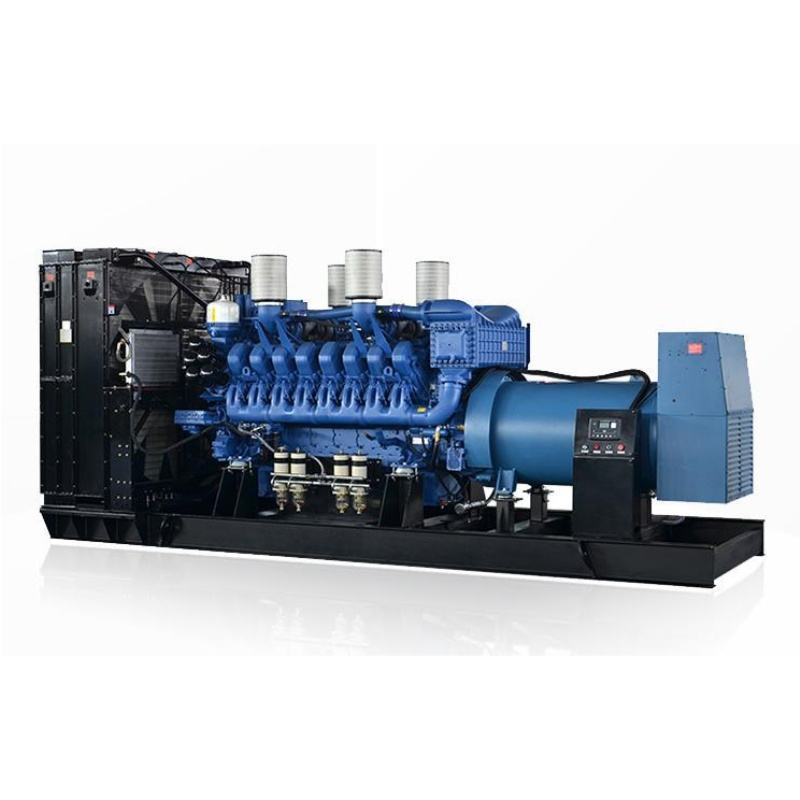
Our test bay runs each set on fuel from a settling tank that is sampled monthly, and the sample result is filed with the test sheet. The 400kW frame built on the WP13 platform is tested that way before the tank advice is written for the order. A set that leaves with contaminated fuel in the lines shows a filter warning inside the first month, and the cause is then the fuel rather than the engine. Tesla Power Equipment drains the lines and the filter before shipment for that reason.
Export sets ship dry, with the tank drained and the lines blown through, because fuel in a container is a dangerous goods question as well as a contamination one. The commissioning fuel then comes from the site, which is why the first sample matters. A site that fills from drums on the first day starts the set's life with the worst fuel it will ever see.
How should the enquiry state the storage arrangement?
State four items: the tank size, whether it is baseframe or bulk, the expected running hours a year, and the fuel delivery method. The four decide whether the set needs a polishing rig, a biocide schedule or nothing at all, and they change the spares kit rather than the frame.
Send the four with the load list to the export team, and the reply carries the tank recommendation, the sample interval and the filter grade for the fuel expected. The help and advice index carry the same four items as a form, and the answer goes into the service schedule so the first sample is not forgotten. The works and the test bay keep the sample result in the same folder as the test sheet.
What goes wrong when a tank is left for years?
The suction strainer blocks with a mat, the set starts and dies within a minute, and the site concludes the engine is at fault. The second failure is a tank that has corroded from the water line down, and a pinhole leak appears under the bund. The third is the gauge, which reads a level that includes a water layer the float cannot distinguish from fuel.
A genset for a bulk tank needs a polishing schedule written on the tank rather than in a folder. None of the three is expensive to prevent and all three are expensive to find. A tank drained and inspected every five years, with the inside coated or replaced where the steel has thinned, avoids the leak. A sample at the low point each year catches the mat before it reaches the strainer, and the monthly run in the NFPA 110 monthly routine is when the filters usually show it. A genset fueled from a tank with a water layer runs until the layer reaches the suction, and then stops without warning. Tesla Power reads that figure on the site sheet before the plate is printed.
Does fuel storage change the warranty position?
It does on most engine warranties, because the maker specifies a fuel standard and a contaminated sample voids a claim on the pump. Keep the delivery notes and the sample results in the same folder as the service records, so a claim can be answered with documents rather than with an opinion. A site that cannot produce a sample result is usually offered parts at cost rather than a warranty repair.
The standard itself is a national diesel specification, and the sulphur limit in it decides which injector materials are acceptable. A genset stored on high-sulphur fuel and later run on low-sulphur fuel needs the seals checked, because the older fuel swells a different elastomer. That switch is the one to plan rather than discover. Tesla Power answers the four items inside the quotation rather than afterwards. The same frame appears in the 500kVA silent frame with the ATS option, where the plate states the same basis.
Frequently asked questions about genset fuel storage
It can where the old fuel passes a sample, and it should not where the sample shows water or a microbial mat. Mixing spreads the contamination through the whole volume and turns a partial problem into a full one. Polish first, then mix.
Every six months on a hot site and once a year on a cool one, with a low-point sample rather than a dip. A tank that has not been sampled for two years should be drained and inspected rather than sampled, because the mat may already be at the suction.
It does, because the air space above the fuel is what breathes and what condenses. A tank kept above 80% full moves far less air for the same throughput, and it collects less water on the walls. Fill before a long idle period rather than after.
Haze is water held in suspension, and it appears when fuel cools below its cloud point or when it has absorbed water from the air. A hazy sample clears as it warms and leaves a water layer at the bottom. Haze that does not clear points at a microbial bloom.
It does not corrode and it does not shed scale, which helps. It also breathes through the walls and it cannot take a bund the way steel can. On a genset, steel with a lining and a low-point drain remains the practical choice.
The rig is the smaller cost and the filter elements are the larger one, since a contaminated tank may need several sets in the first pass. Budget two passes for a tank with a visible mat, and check the sample after each rather than after both.
The genset CE marking requirements cover the assembly rather than the site tank, and the fuel specification sits in the technical file as an operating limit. Conformity assessment for the assembly does not test the site fuel. Tesla Power states the fuel standard on the data sheet so the limit is visible.
It can on a large tank with a manhole, using a vacuum unit and a biocide wash, and it needs the tank empty and gas-free before anyone enters. A small baseframe tank is cheaper to replace than to clean, which is the usual answer below 500 L.