
Genset fuel sulfur becomes acid in the crankcase, and the oil's base number is what pays for it. Read how the acid forms, how the base number is read from a sample and what the record shows. Tesla Power writes the fuel limit into the offer, so send the fuel specification to our sales desk for a quotation.
- Ask what sulfur the set was built for, because the oil grade and the service interval both follow it.
- Check the fuel certificate from the terminal, since the grade at the pump is not the grade on the invoice.
- Look at the base number trend, because a falling figure is the first sign the fuel changed.
- Ask what the catalyst tolerates, because a passive exhaust device has a sulfur ceiling of its own.
What does genset fuel sulfur do inside the engine?
Sulfur leaves the cylinder as sulfur dioxide, and a fraction of it oxidises further to sulfur trioxide, which meets water vapour and forms sulfuric acid. Part of that acid leaves with the exhaust and part of it reaches the crankcase past the rings, where it meets the oil and is neutralised by the base additives the oil carries. Tesla Power Equipment writes the fuel sulfur range on the data sheet beside the oil grade, because the two are one decision rather than two.
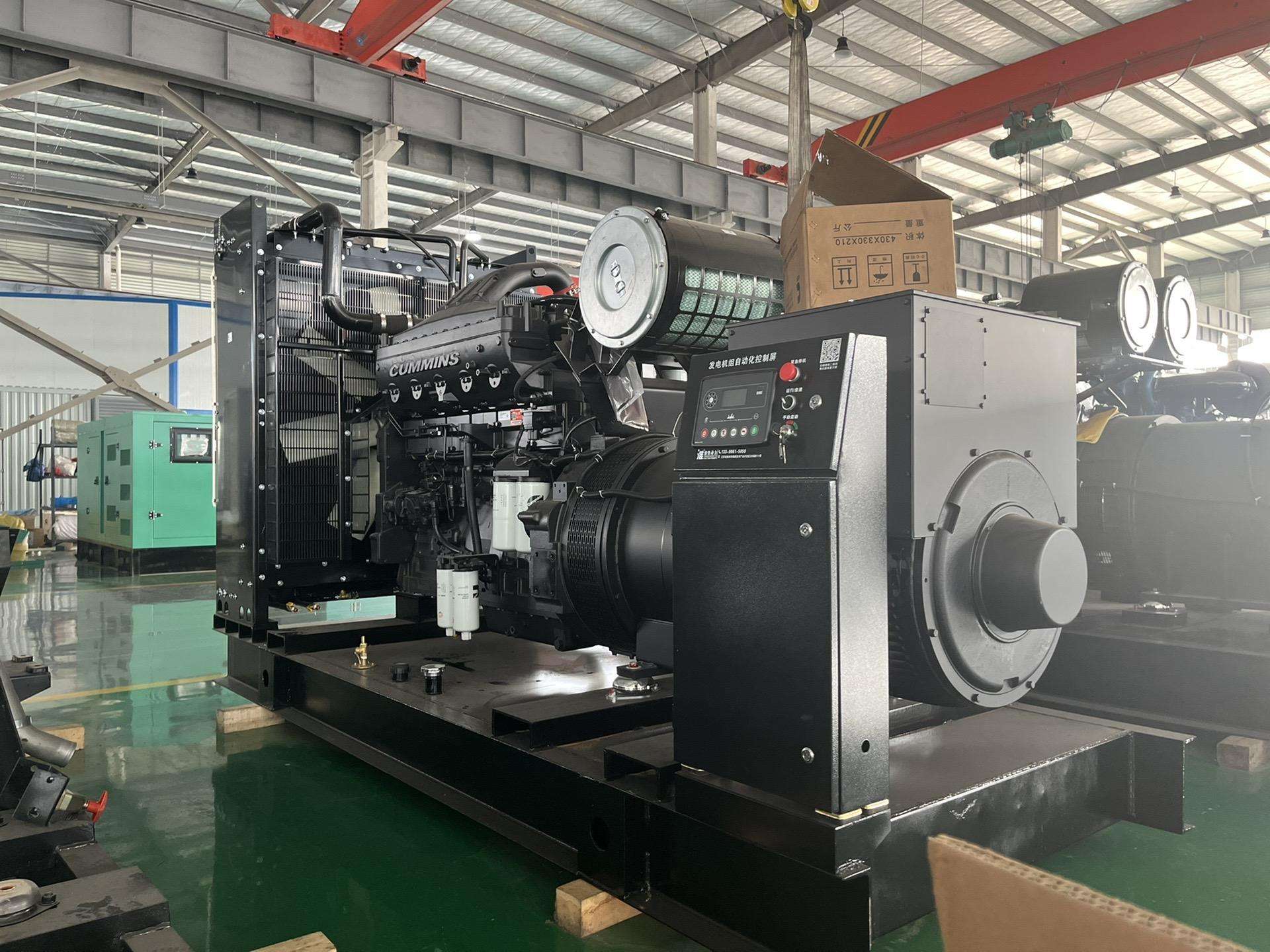
The load on the oil is continuous and invisible. A fuel at five hundred parts per million puts several times the acid into the crankcase that a ten part per million fuel does, and the oil does not report the difference until the base number has fallen far enough to be measured. By then the acid has already worked on the bearing shells and the liner surfaces, and the 500kVA silent package states the fuel range its oil grade was chosen for.

Why does sulfur shorten the oil change interval?
The base number measures how much acid the oil can still neutralise, and a high sulfur fuel spends it faster than a low sulfur one. A genset for a market where the pump fuel carries several hundred parts per million needs an oil with a higher starting base number and a shorter drain interval, because the same oil on the same hours will be exhausted sooner. A buyer who keeps the low sulfur interval and changes the fuel has quietly removed the margin the engine was built with, and Tesla Power states that margin beside the oil grade.
The interval is set from the trend and not from the calendar. A sample taken at fixed hours shows the base number falling at a rate, and the rate is what tells the site whether the drain interval can hold. A set on a fuel it was not built for shows a steeper slope on the first sample and gives the site a season of warning before the acid reaches the bearings.
| Fuel sulfur | Base number duty | What it means for the order |
|---|---|---|
| 10 ppm at the pump | Slow fall, long drain | Standard oil grade, standard interval |
| 50 ppm at the pump | Moderate fall | Sample at every service, watch the slope |
| 500 ppm at the pump | Steep fall | Higher base oil, shorter drain |
| 2,000 ppm at the pump | Very steep fall | Ask whether the frame is suitable at all |
| Unknown, delivered in drums | No basis to plan | Sample the drum before the first fill |
Which fuel specification belongs in the order?
The order should name the sulfur limit in parts per million, the standard the fuel is bought against and the sampling point on site. Naming a standard such as EN 590 fixes the sulfur ceiling at the pump, and naming the sampling point fixes where the certificate is taken, because a terminal certificate and a tank sample can disagree. A genset for a remote site where fuel arrives by drum needs the drum sampled rather than the terminal certificate accepted.
The sulfur limit also fixes the oil grade, so the two lines belong together on the same page. A quotation that states one without the other has left the buyer to combine them, and the combination is where most of the service cost sits over a ten year life. A genset in a market where the supply changes between deliveries needs the sampling routine in the fuel planning notes, because a terminal certificate and a tank sample can disagree.
How is the base number read on a used oil sample?
The base number is reported in milligrams of potassium hydroxide per gram of oil, and the figure falls as the oil neutralises acid. A fresh charge of a high base oil starts near 15 mg KOH/g and a standard charge near 10 mg KOH/g, so the same absolute fall means different things on the two oils. Read the figure against its own starting point rather than against a single site-wide limit.
The sample also carries viscosity, water and wear metals, and the four read together tell a different story from any one of them. A base number that falls while the viscosity rises points to acid and soot together, and a base number that falls with clean viscosity points to the fuel. A 500kVA set at 0.8 pf carries 400kW, so 500kVA × 0.8 = 400kW, and at about 0.21 L/kWh the burn runs near 84 L/h; a fuel at 500 ppm sulfur then puts roughly 35 g of sulfur through the engine every hour for the oil to neutralise.
That figure is why the base number is a consumable rather than a constant. Tesla Power reports it at every drain so the slope is visible while the oil still has margin, and a site that samples only when the engine sounds wrong has usually lost a season of warning.
What does sulfur do to the filter and the catalyst?
Sulfur raises the sulfate part of the particulate load, so a filter fills faster on a high sulfur fuel than on a low one at the same soot output. The sulfate also competes with soot for the space in the filter and does not burn off at the temperature a soot burn reaches. A filter sized on a low sulfur fuel and fed a high sulfur one reaches its service trigger sooner than the plan expected, which is why Tesla Power asks for the fuel specification before it quotes a filter.
The catalyst is the more expensive victim, because sulfur poisons the active sites that make a passive regeneration work and the poisoning is not reversed by a burn. A set that was ordered with a passive filter and then fed high sulfur fuel loses the very mechanism the filter depends on. the full frame range states which frames carry a catalyst and what sulfur ceiling each is built for, and the emission duty behind that ceiling follows the ISO 8528-1 classification rules.
Which records prove the fuel stayed within limit?
Three records prove it: the terminal certificate for each delivery, the tank or drum sample taken on site, and the base number trend across the service history. The certificate alone shows what was loaded and not what was burned, and the sample alone shows one moment without the history that makes it meaningful. Together they show whether the fuel and the oil are still matched.
The service history carries the drain interval and the base number at each drain, and the pair shows whether the interval was set from the trend or copied from a manual. Yangzhou Tesla Power issues the first fill grade with the set and marks the sample hours on the same page, so the site starts its trend from a known point rather than from the first surprise.
What should the offer state about fuel quality?
The offer should state the sulfur limit, the oil grade that limit requires, the drain interval that grade allows and the sample hours that prove it. Those four lines let a buyer price the service cost over the life of the set instead of discovering it at the first oil analysis. Most genset manufacturers state a fuel standard and leave the oil consequence to the buyer, and the service routine for a standby site follows the NFPA 110 pickup requirement.
Chinese genset suppliers who write the base number and the interval into the offer are easier to compare than those who quote a standard alone, and a genset for the first year of service shows the difference in the number of oil changes rather than on the quotation. The acid does not wait for the discussion to finish.
What does the handover file carry for the fuel?
The handover file carries the sulfur limit, the oil grade, the first fill base number and the sample hours, all on one sheet with the serial number of the set. A buyer who reads it can tell whether the interval was set for the fuel on site and whether the first fill matches the grade the engine expects. Tesla Power issues that sheet with the set, so the first service starts from a measured point.
The file also carries the catalyst ceiling where a passive filter is fitted, because the sulfur limit for the engine and the sulfur limit for the catalyst are two different numbers. Genset documentation for a fuel specification is only complete when both ceilings appear, and the fuel desk that checks them before dispatch follows the Yangzhou assembly line routine.
Send the fuel specification and the annual hours with the enquiry, and the oil grade, the drain interval and the sample plan come back as one answer instead of three items a site has to reconcile after the first delivery. Tesla Power writes that answer into the offer, so the acid load is visible before the order rather than at the first oil analysis.
Frequently asked questions about genset fuel sulfur
Many mechanical engines run on it with a higher base oil and a shorter drain, and the frame has to be built for it. The limit sits in the fuel system materials and the oil grade rather than in the cylinder alone. Ask before the order rather than after the first delivery.
An additive can raise the base reserve and it does not remove the sulfur from the fuel. The acid still forms and the oil still spends its base number. Treat an additive as a margin and not as a substitute for the right grade.
At every service at minimum, and more often on the first two services after a fuel change. The trend is what matters, and a trend needs three points before it can be read. Two points show a direction and three show a rate.
Because the base number is what is left to neutralise the acid that has not formed yet. The acid figure shows what has already arrived and the base figure shows the margin. A site that reads only one of them is reading half the story.
It usually costs more per litre and less per year in oil and bearings. The comparison belongs on the annual figure, and the annual figure is where a high sulfur supply stops looking cheap. Ask for both columns before the decision.
Some of the surface can be recovered and the lost active sites generally cannot, so prevention is the only reliable route. A catalyst that has run on high sulfur fuel is a replacement rather than a service, and Tesla Power states the ceiling before the order.