
Genset governor response decides how far the frequency dips when a load steps on and how quickly it recovers, and that dip is what the site actually feels. Check the specification against the load profile, then compare supplier offers first. Tesla Power sets the governor on the bed; send the load list to the technical desk and we confirm it.
- Read the response as a frequency dip and a recovery time rather than as one figure.
- Ask for isochronous control on a single set and droop only where sets run in parallel.
- Check the response at the load step the site actually has, not at a rated step.
- Record the dip at commissioning so a later change is visible.
What does genset governor response describe?
It describes how the governor reacts when the load changes, which on a generator set means how far the frequency moves and how long it takes to come back. A set carrying a steady load needs very little from the governor, and a set that sees a motor start needs a great deal. A mechanical governor senses speed through flyweights and an electronic one senses it through a pickup on the flywheel, yet the quantity the site feels is the same. The response is therefore a property of the site rather than of the engine alone.
Two figures describe it: the maximum dip and the settling time. A site with a large motor cares about the dip, because a dip below the motor protection setting drops the contactor. A site with a sensitive load cares about the settling time, because the load sees every oscillation until it settles. Many genset governor manufacturers publish a dip figure and leave the settling time out. Tesla Power reports both figures rather than one, because a set that passes on dip can still fail on settling.

What is droop and when is it used?
Droop is a deliberate fall in frequency as load rises, expressed as a percentage of frequency over the load range. A set with 4% droop runs at 100% speed at no load and at 96% at full load, which on a 50 Hz system is 50 Hz falling to 48 Hz. Droop also lets two sets share load without a communication link, because the set that droops least takes the most.
A single set on an isolated load runs better in isochronous mode, which holds frequency constant regardless of load. Droop is for paralleling, and applying it to a single set leaves the site at a lower frequency at full load for no benefit. Set the mode from the arrangement rather than from a default, and write the choice on the commissioning sheet. Tesla Power Equipment prints the mode beside the droop figure so a later retune cannot change one without the other.
| Item | Figure | Note |
|---|---|---|
| Isochronous mode | 0% droop | Single set on an isolated load |
| Droop for paralleling | 3% to 5% | Lets sets share without a link |
| Test step | Half the rating | Repeat at no load and half load |
| Settling time | From the class | Read it from the trace |
How is a load step measured?
Apply a step of known size with a load bank, record the frequency against time and read the dip and the settling time from the trace. A step of half the rating is a common test and a step of the site largest motor is a better one. Repeat at no load and at half load, because a governor behaves differently at each point. Record the step size and the load at which it was applied, since a dip figure without that context cannot be compared with another offer.
The transient also depends on the block, since a large engine with a heavy flywheel absorbs a step that a small one cannot. A 500kVA set at 0.8 pf delivers 400kW, and a step of 50% of that is 200kW: 400kW x 50% = 200kW. A set that holds that step within a few percent of frequency is a set that will start a large motor.
Why does a set hunt at light load?
A governor tuned for a heavy load is often too aggressive at light load, and the set then oscillates around the set point. The oscillation is small and it is audible as a beat in the exhaust note. A set that hunts at light load will not settle on a site that runs at low load for hours.
The cure is a gain and stability setting that suits the range the site uses, and sometimes a different mode below a load threshold. A governor that is stable at full load and unstable at quarter load is a governor set for the wrong end of the range. Tesla Power tunes on the load profile rather than on the rated load, because a standby set spends its life below rating.
Which performance class applies?
A published class describes the transient and steady state behaviour a set is expected to meet, and the classes are written for different applications. A class intended for a general load allows a larger dip than one written for a data centre. The classes are numbered rather than named for an application, so the buyer has to translate the site requirement into a class number before any offer can be read. Read the class the site specifies rather than the one the maker prefers.
The class is proved on a load bank rather than in service, so the test belongs with the commissioning rather than with the first outage. A set quoted to a class without a test trace is a set quoted on hope. Ask for the trace with the dip and the settling time marked on it, and Yangzhou Tesla Power stamps it into the handover file.
How is the governor set on site?
Set the speed at no load, then apply the site step and read the dip, then adjust the gain and stability in small steps until the recovery is clean. Do not adjust two settings at once, because the interaction is what makes tuning slow. One setting at a time, with a step test after each, is slower on the first afternoon and faster over the week. Record each change and the resulting dip so the direction of travel is visible.
Then run the set at the lowest load the site expects and confirm that it settles there as well. A governor that is right at half load and hunting at quarter load needs a different compromise rather than a different governor. Log the final settings with the dip and the settling time, and give the site the numbers rather than the screw positions. Tesla Power Equipment leaves the log in the controller as well as on paper.
What should a buyer put on the enquiry?
Send the load list with the largest motor, the starting method, the load profile and the frequency tolerance the site can accept. Add whether the set runs alone or in parallel and whether the load is sensitive to flicker. A load list that gives only a total kVA tells the supplier nothing about the step, because the total hides the largest motor. Those six items decide the governor mode and the tuning, and they show whether the offer has named a response figure.
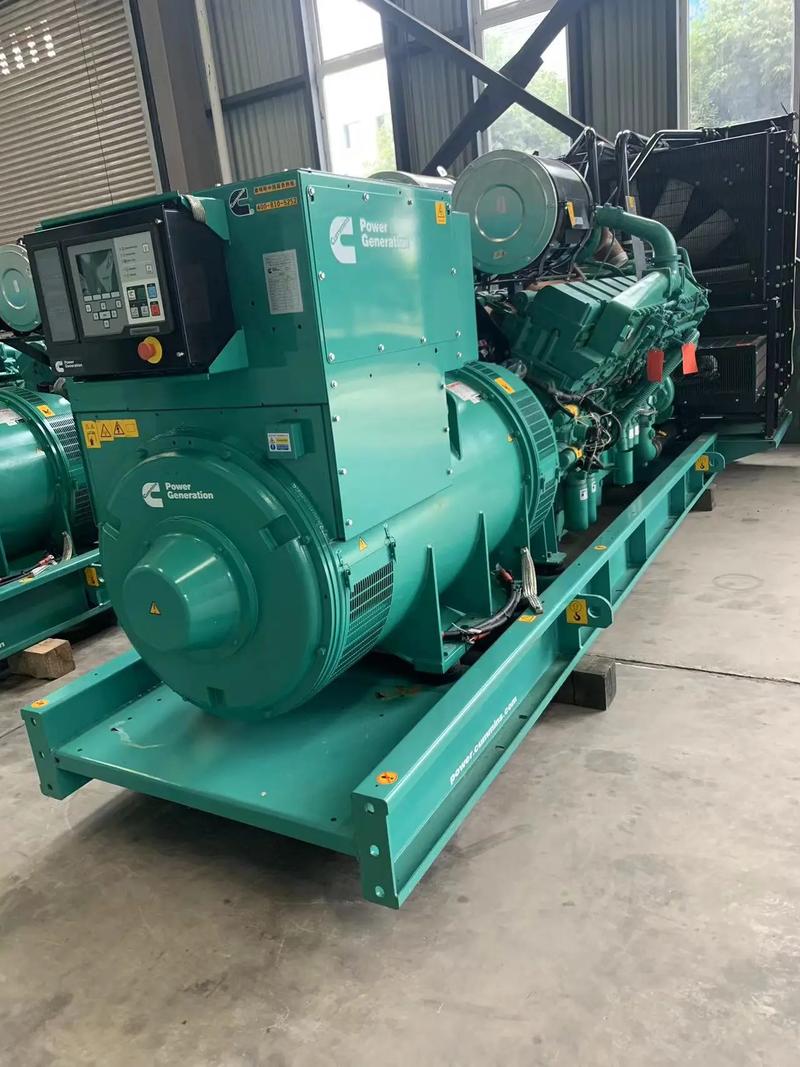
The wording on the offer matters too. Genset governor response figures are often quoted as one number with no test condition, and Chinese genset governor manufacturers sometimes ship a controller with a default map that was not tuned. Ask for genset governor response for a large motor, genset governor for a paralleled pair and genset for a data centre as three separate cases. Tesla Power prints the dip and the settling time, and the 1000kW container build shows the actuator.
What does the handover file record?
The file carries the governor mode, the droop figure, the dip at the site step, the settling time and the gain and stability settings. One page covers the response when those five items sit under the engine serial number. Add the conformity assessment for the governor setting when the installation is part of a permit package.
Hand the page to the technician who will retune the set rather than to the buyer who placed the order. the Yangzhou factory describes the bed where the step test is run. the commissioning notes lists the frames that ship with an electronic governor, the build range explains how the speed is set at no load, the ISO 8528-1 duty definitions sets the rating basis the step comes from, and the NFPA 110 maintenance routine covers the performance class the set was accepted against.
Frequently asked questions about genset governor response
It can be adjusted against the site load and the result is a guess, because the step the site applies is not repeatable. A load bank gives a known step and a trace. Tune on the bank and confirm on the site, rather than the other way round.
The motor draws several times its running current for a moment, and the engine has to accelerate its rotating mass against that load. The dip is the governor responding late. A larger engine or a softer starter reduces the dip more than a governor adjustment.
Droop runs the set at a slightly lower frequency at full load, which changes the load rather than the fuel rate in any meaningful way. The reason to avoid droop on a single set is the frequency the site sees, not the fuel. Set the mode from the arrangement.
A governor gain that is too low, an actuator that is sticking or a fuel system that is restricted. A recovery that has got slower over a year points at the actuator or the filter. Compare the trace with the commissioning trace before changing any setting.
They can if both have droop or a load sharing link, and if their governors are stable. Two sets of different size share load in proportion to their rating under droop. Mixing an isochronous set with a droop set on one bus is a common cause of instability.
Check it at commissioning and after any fuel system work, and run a step test at the annual service on a critical site. A governor that has drifted is invisible until a large motor starts. Tesla Power writes the commissioning trace into the file so the comparison is possible.