
Genset harmonic distortion is the share of non-fundamental current a set has to carry, and on a bus with variable speed drives that share changes the alternator rather than the engine. Tesla Power Equipment measures it from a site record, then states the K factor and the derating so a supplier quotation can be compared line by line.
- Record the current spectrum rather than the total, because the fifth and seventh orders heat a winding differently from the eleventh and thirteenth.
- Size the alternator on the K factor, not on the kW, since two 500kVA machines of the same rating can differ by a third in drive capacity.
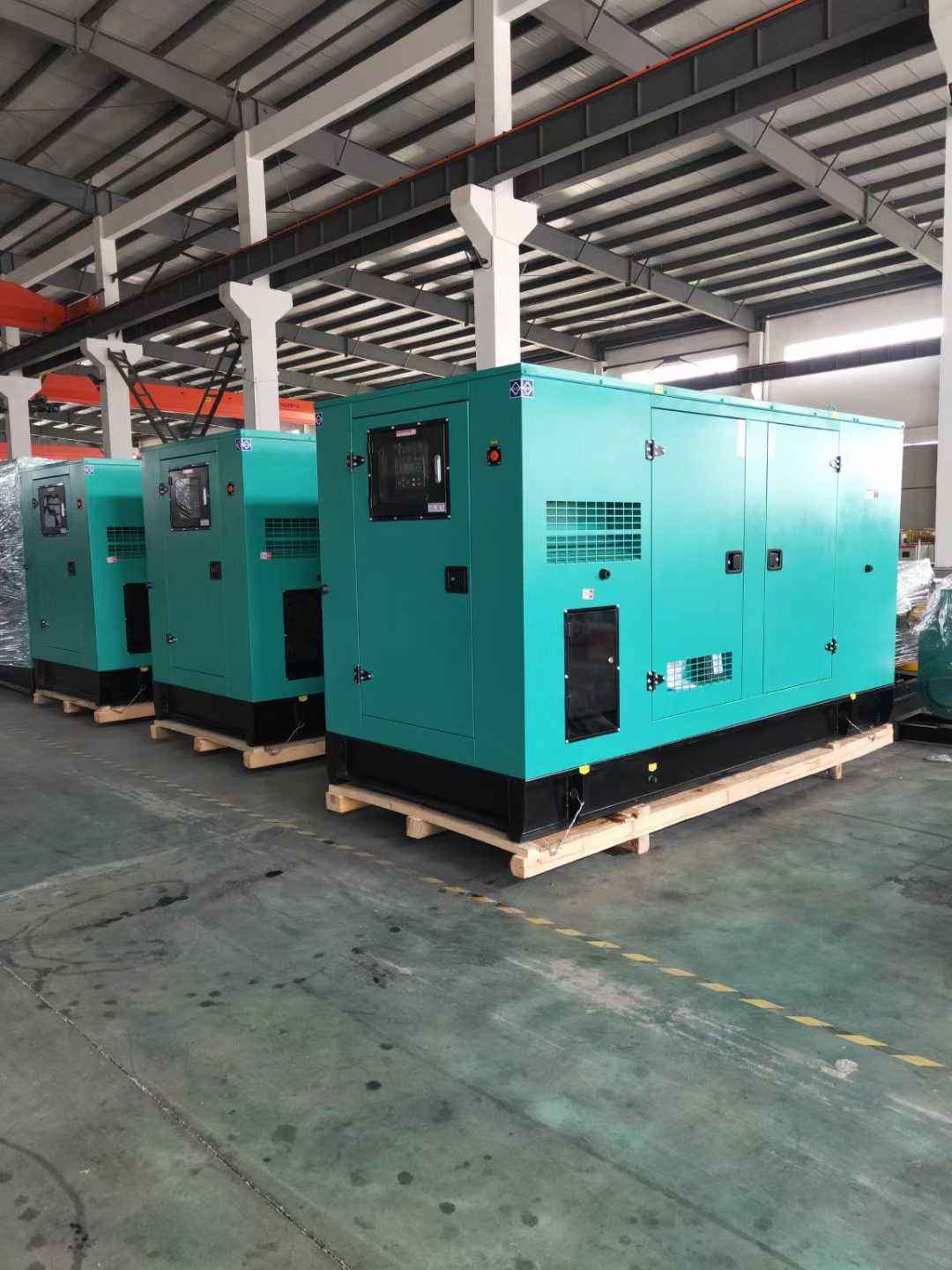
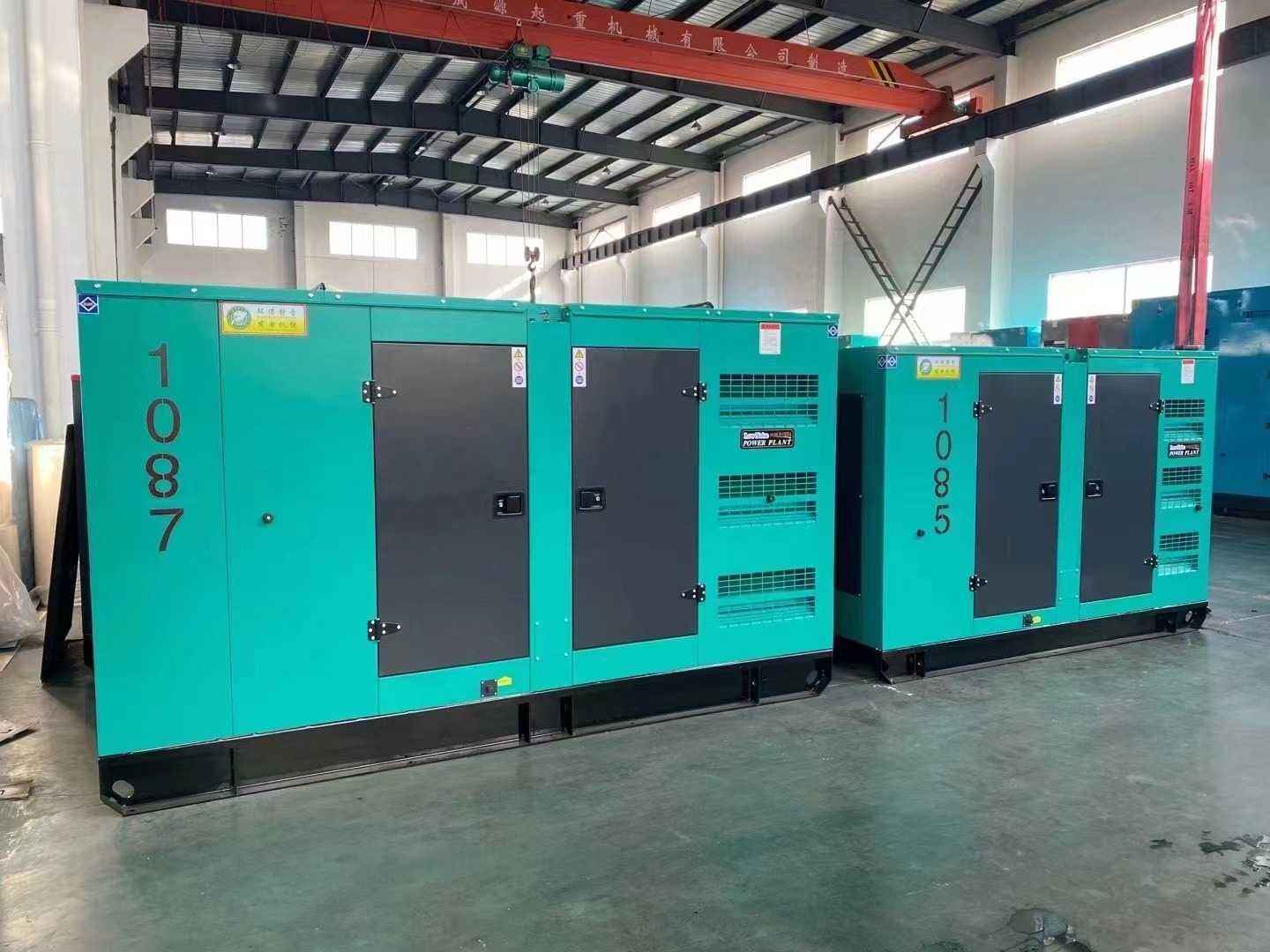
- Read the limits against the 1000kW container build for standby duty, where the plate carries the derating for a drive load.
- Ask for the measured THD at the terminals during the factory run, because a set tested into a resistive bank shows almost none.
What does genset harmonic distortion do to the machine?
It heats the alternator in places a resistive load does not reach. Fundamental current heats the stator winding through the slot, while fifth and seventh harmonic current circulates in the damper cage and the rotor surface, and eleventh and thirteenth sit high enough to concentrate in the end windings. The total current can sit inside the rating while the hottest spot runs 20 ℃ above what the resistance thermometer shows. Tesla Power reads that figure on the site sheet before the plate is printed.
The engine is largely untouched by the distortion. It delivers a torque that follows the fundamental, and the harmonic power returns to the bus rather than to the shaft. That split matters in a quotation, because a buyer who asks for a larger engine to solve a distortion problem pays for capacity that does nothing about the winding temperature.
How is the distortion read at the generator terminals?
Read it with an analyser set to harmonic mode, sampling at least 64 cycles, with the load steady for the whole window. Two numbers come out and they are not the same. THD-F is the root sum of the harmonic magnitudes divided by the fundamental, while THD-R divides by the total rms value, so the same waveform reads about 3% to 5% lower on the second basis at a distortion level near 30%.
Report the basis beside the figure, and report the individual orders as well. A bus at 28% THD-F made mostly of fifth order asks a different alternator from a bus at 28% made mostly of eleventh and thirteenth, because the first heats the damper cage and the second the end windings.
| Order | Where it comes from | Share on a typical drive bus | What it heats |
|---|---|---|---|
| 3rd | Single-phase rectifiers, saturating transformers | Under 5% | Neutral and zero sequence path |
| 5th | 6-pulse rectifier, the largest single component | 25% to 32% | Damper cage and rotor surface |
| 7th | 6-pulse rectifier, rotates against the field | 10% to 14% | Damper cage, opposite direction to the fifth |
| 11th and 13th | 6-pulse rectifier, higher order pair | 4% to 8% combined | End windings and slot walls |
| 17th upward | 12-pulse rectifier residual, switching edges | Under 4% | Stray load loss in the core |
Where do the voltage and current limits come from?
Two different documents set two different limits, and a buyer who mixes them argues with a supplier over nothing. The voltage limit belongs to the supply and is commonly 5% THD at the point of common coupling for a low voltage bus, with 3% on any single order. The current limit belongs to the load and scales with the ratio of short circuit current to load current, so a stiff bus may carry more current distortion than a weak one.
On a generator the bus is weak by nature, because the source impedance is the alternator rather than a transformer feeding from a grid. A 500kVA alternator at 12% subtransient reactance has a short circuit ratio near 8, and that figure sets how much current distortion the voltage can absorb before it crosses 5%. A set sized on kW alone often crosses it at half its rated load.
Which loads put the distortion on a generator bus?
Three groups do most of the work. Variable speed drives with a diode front end are the largest, because each one draws current in short pulses at the crest of the wave. Uninterruptible supplies and switch mode power supplies add a smaller share but a third order component that drives have little of. Arc furnaces, welding sets and induction heaters add a wide spectrum that changes with the process rather than staying fixed.
Lighting has changed the picture in the last decade. A hall lit with LED fittings and electronic ballasts draws a current that looks like a rectifier, and a load that once sat at 4% THD can now sit at 15% without a single drive on the bus. We have seen a warehouse order move from a 400kVA to a 500kVA frame on lighting alone, and the site had no drives at all. A genset sized for that hall on kW alone therefore arrives under-rated, and most genset manufacturers would have caught it by asking for the lighting schedule.
What does a 500kVA frame carry at 30% current distortion?
Work it on the frame that appears most in our drive enquiries. A 500kVA alternator at 0.8 power factor carries 400kW, which is 577A per phase at 400V. A drive load drawing 320kW at a 0.95 displacement factor asks for about 486A of fundamental, which looks comfortable against the 577A figure until the harmonic current is counted.
At 30% THD-F the rms current becomes 486 × 1.044 = 507A, still inside 577A. The winding does not read it that way. Harmonic loss rises with the square of the order, so 507A of mixed current heats the machine like 680A of fundamental would, and the 500kVA frame is carrying the equivalent of 118% of its rating. That gap is the whole argument for a K rated alternator. The figure belongs on the offer sheet beside the rating, where a buyer can read it against the site conditions.
How is the K factor calculated and used?
The K factor is a weighted sum, not an average. Square each harmonic current as a fraction of the fundamental, multiply by the square of its order, add the results, and divide by one plus the sum of the squares. The figure that comes out is the multiple of eddy current loss the winding has to survive, and a standard alternator is built for about K1.
Take a drive bus with 30% fifth, 12% seventh, 6% eleventh and 4% thirteenth. The squares are 0.09, 0.0144, 0.0036 and 0.0016, and the weighted terms are 2.25, 0.706, 0.436 and 0.270, so the numerator is 4.662 against a denominator of 1.110. That gives K = 4.2, which is a winding built for four times the eddy loss of a clean load. A K4 alternator covers it with little margin, and a K13 unit covers it with room for the drives a site adds later.
- K1 suits a resistive or a lighting load with no rectifier on the bus.
- K4 suits a mixed site with a few drives and a share of electronic load.
- K13 suits a bus dominated by 6-pulse drives, at roughly 15% more cost than K4.
Why does a 6-pulse drive heat more than its kW suggests?
A 6-pulse rectifier draws current in two pulses per cycle, each lasting about a third of the half wave, so the current waveform is a series of blocks rather than a sine. The rms value of that waveform is higher than the fundamental it delivers, and the difference is entirely harmonic. The alternator supplies the rms current through its winding, so the copper loss follows the rms figure rather than the kW.
A 12-pulse rectifier splits the load across two bridges fed from a 30° phase shift, which cancels the fifth and seventh orders and leaves the eleventh and thirteenth as the largest. The rms current falls by about 40% at the same kW, and the K factor falls from 4.2 to near 1.6. The trade is a phase shifting transformer, which costs more than the alternator upgrade on a small set and less on a large one.
Which fixes belong on the load side rather than the set?
Four fixes sit on the load side, and each one changes the number a supplier has to meet. A line reactor at the drive input raises the conduction angle and cuts the fifth order by about a third. An active front end removes most of the low order content at a cost close to a 12-pulse arrangement. A passive filter tuned to the fifth order absorbs that order and can amplify the seventh if it is sized badly. A drive with a higher switching frequency shifts the content upward, where the alternator absorbs it with less heating.
Our own preference on an export order is a reactor first, because it is cheap, it fits in the drive enclosure and it survives a site with no harmonic engineer. A genset harmonic distortion for a drive bus then rests on the reactor rather than on the alternator, which changes the quotation. A passive filter is the second choice and needs a study, since a filter tuned against a changing load can resonate with the alternator impedance and produce a voltage the site did not have before. A genset harmonic for the plant room follows the same route, and the study costs a day against the price of a replacement winding.
What does an alternator data sheet have to state for a drive load?
Three lines decide whether the machine suits the bus. The winding pitch and the damper cage arrangement, which set the harmonic impedance. The K rating or the equivalent derating curve against THD. The telephone harmonic factor, which is the older measure of how much the distortion would disturb a nearby telephone line and still appears on data sheets for marine sets.
A data sheet that states only the kVA and the power factor cannot support a drive load, and the gap is invisible in a price comparison. A genset in parallel operation splits the drive load across two windings, so the K rating of each is read on its own. A genset for a site with drives carries the K rated winding on the plate rather than in the note. Tesla Power asks for the measured spectrum from the site before the alternator is chosen, and we quote the K rating rather than a note that the set suits drives. The difference shows on the first hot afternoon when the winding resistance climbs and the load has not changed.
Which records settle a distortion argument after handover?
Two records do. The commissioning analyser file holds the spectrum at the terminals with the drive load running, and the factory test sheet holds the spectrum into the bank the bay used. Where the second shows 3% and the first shows 30%, the difference is the load rather than the set, and the argument ends there. The same frame appears in the 500kVA silent set with the ATS option, where the plate states the same basis. Tesla Power reads that figure on the site sheet before the plate is printed.
Keep the winding temperature record beside them. Conformity assessment for the alternator file reads the K rating against the spectrum the bay applied, and a mismatch there is a file problem rather than a site problem. A set that runs 20 ℃ above the ambient-corrected expectation at 70% load is carrying distortion the site did not declare, and the trend shows it within a month. The engineering notes on site planning cover the record a drive site should hold, and the IEC standards catalogue lists the harmonic measurement standards the analyser follows. The same spectrum is read against the ISO 8528-1 rating definitions at the point where the derating is applied.
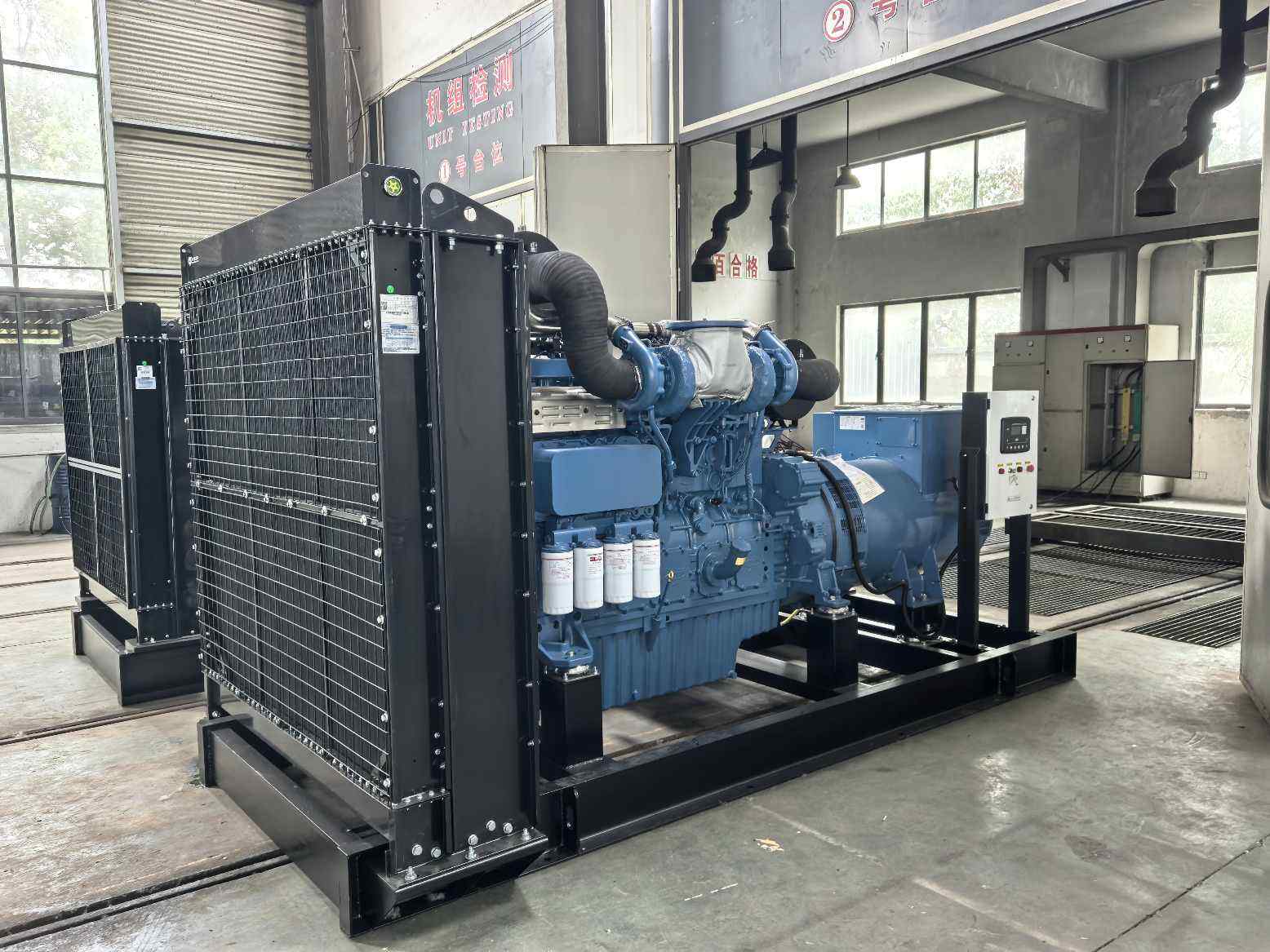
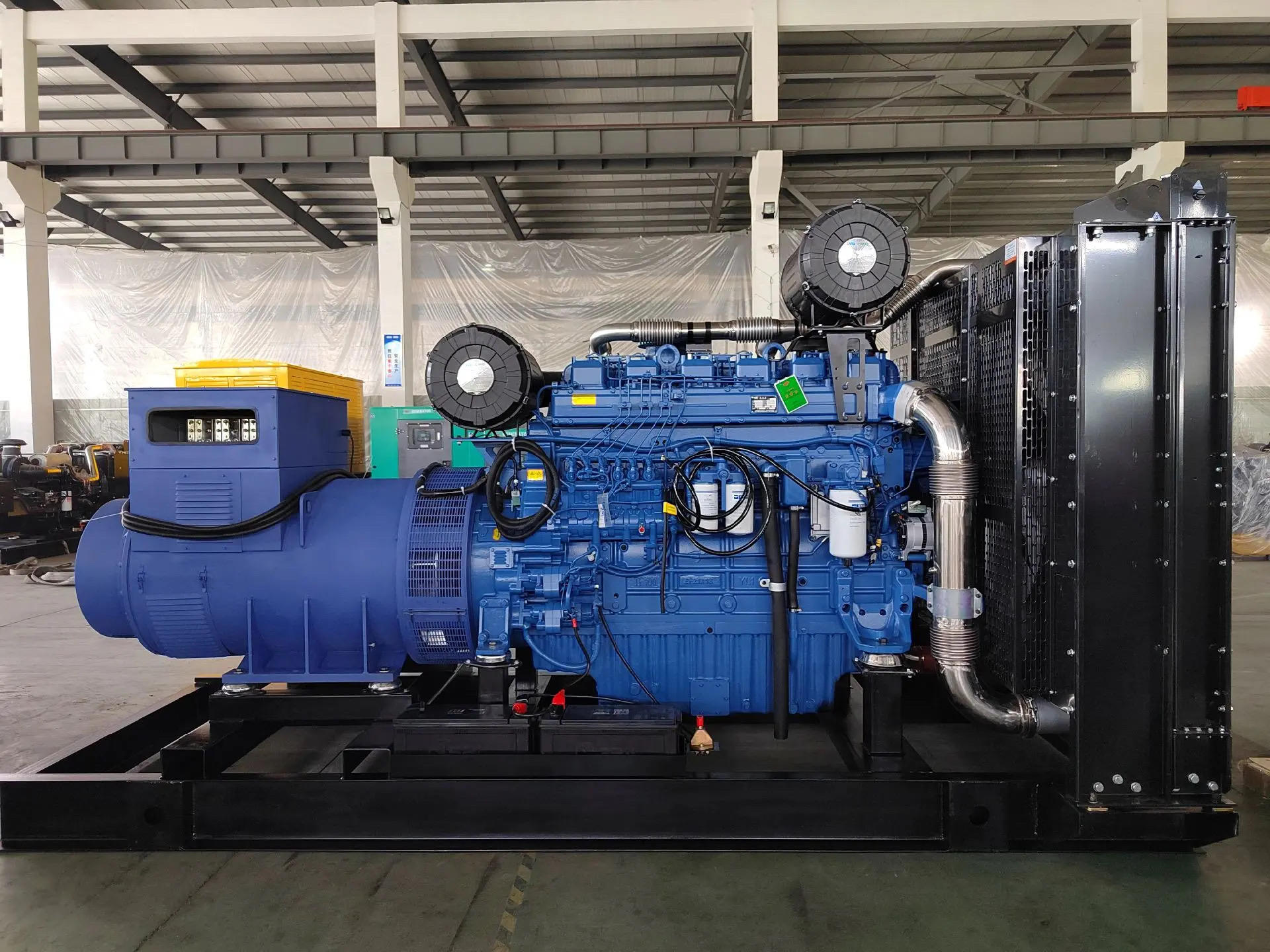
Yangzhou Tesla Power sends both spectra as one file with the set, and the factory and the test bay keeps the drive panel used for the run, and the 120kW set on the WP6 platform is tested on the same panel. A buyer who compares two offers on the K rating and the derating curve is comparing machines; one who compares on kVA is comparing labels. The same reasoning applies to the 400kW frame on the Weichai WP13 platform.
Frequently asked questions about genset harmonic distortion
Five percent voltage distortion at the terminals suits most plant, with three percent on any single order. Current distortion is a property of the load rather than the set, and a drive bus at 30% current THD is common and can be carried by a K rated alternator. Tesla Power reads that figure on the site sheet before the plate is printed.
It reduces voltage distortion, because a larger alternator has a lower impedance and holds the wave shape better. It does not reduce the current distortion the load draws, so the heating in the winding still follows the spectrum rather than the frame size.
It can worsen it. A capacitor bank forms a resonant circuit with the alternator impedance, and a tuning point near the fifth or seventh order amplifies that order instead of absorbing it. A detuned reactor is needed beside the capacitors for that reason.
THD-F divides the harmonic content by the fundamental, and THD-R divides it by the total rms value. The second reads lower in every case, by about 4% at a distortion near 30%, so a figure quoted without its basis cannot be compared with another. Tesla Power reads that figure on the site sheet before the plate is printed.
Around 10% of the alternator rating on a standard winding, and near zero on a K13 winding at the same current. The cost sits in the machine rather than in the fuel, which is why the derating line belongs on the offer.
Few do unless the enquiry asks, and the ones who quote it will name the winding and the derating curve. A quotation that states only the kVA leaves the drive capacity open, and the gap appears on the hottest day of the year.
The harmonic measurement procedure sits in the IEC 61000 series, and the generator transient behaviour is covered by the ISO 8528-1 rating definitions. Tesla Power names both on the test sheet so the record can be read by a third party.
It can, and it needs the K rating and a voltage tolerance check rather than a bigger engine. A set with no resistive base load runs at a low power factor, so the alternator may need a larger frame for reactive output while the engine stays the same size.