
Genset louvre sizing fixes the free area the radiator needs at full load, and the blade decides how much of the opening passes air. Check the specification against the fan curve, then compare supplier offers before you order. Tesla Power sizes the face from the radiator flow; send the room drawing to the technical desk and we confirm it.
- Size from the radiator air flow at its rated static pressure, not from the engine rating.
- Read the free area of the blade rather than the face dimension on the drawing.
- Keep the inlet and the outlet at least three metres apart on the same wall.
- Measure the face velocity at commissioning and write the figure on the handover sheet.
What does genset louvre sizing decide?
The louvre decides how much air reaches the radiator face and how hard the fan has to pull to get it there. A face that looks large on paper but carries 45% free area passes less than half the opening, and the fan then runs against a pressure it was not selected for. The result is a set that derates on a hot afternoon with no fault on the controller.
Sizing therefore starts from the radiator air flow at the fan rated static pressure, not from the engine rating. The face area then follows the free area of the blade, the acceptable face velocity and the pressure drop the fan can absorb. Tesla Power asks for the radiator curve before it draws the louvre, because a louvre picked from a table ignores the blade.

How is free area calculated from air flow?
Take the air flow in cubic metres per second, divide by the face velocity you are willing to accept, and the answer is the free area. A blade rated at 45% free area then needs a face about 2.2 times that figure. At 2.5 m/s a 4.5 m³/s flow needs 1.8 m² of free area and near 4 m² of face.
A 500kVA set at 0.8 pf delivers 400kW, and the radiator fan on that frame moves about 3.6 m³/s per 120kW, so the path carries 12 m³/s: 400kW / 120kW x 3.6 = 12. At 2.5 m/s that is 4.8 m² of free area, which means a face near 11 m² at 45% free area. Tesla Power prints both figures on the layout.
| Blade type | Free area | Face velocity | Pressure drop |
|---|---|---|---|
| Standard weather blade | 45% | 3.0 m/s | 20 Pa |
| Acoustic blade, 300 mm | 30% | 2.0 m/s | 45 Pa |
| Sand trap blade | 35% | 2.5 m/s | 30 Pa |
| Rain defence blade | 40% | 2.5 m/s | 35 Pa |
Why does an acoustic louvre need more face area?
An acoustic louvre puts a bend and an absorber in the air path, and both cost pressure. Free area falls to about 30% of the face, so the same flow needs a face half again as large. The absorber also collects dust, and a loaded absorber passes less air than the drawing says. Blade depth and absorber thickness both change the free area, and two louvres with the same face can differ by a third in the air they pass.
The trade is between the boundary noise figure and the fan budget. A louvre sized for 2 m/s instead of 3 m/s costs face area but keeps the pressure drop inside the fan curve. Tesla Power draws the acoustic blade at the lower velocity and lets the wall take the extra panel, because moving a louvre after the wall is up becomes a building job. Put the velocity on the drawing so a fabricator cannot substitute a thinner blade.
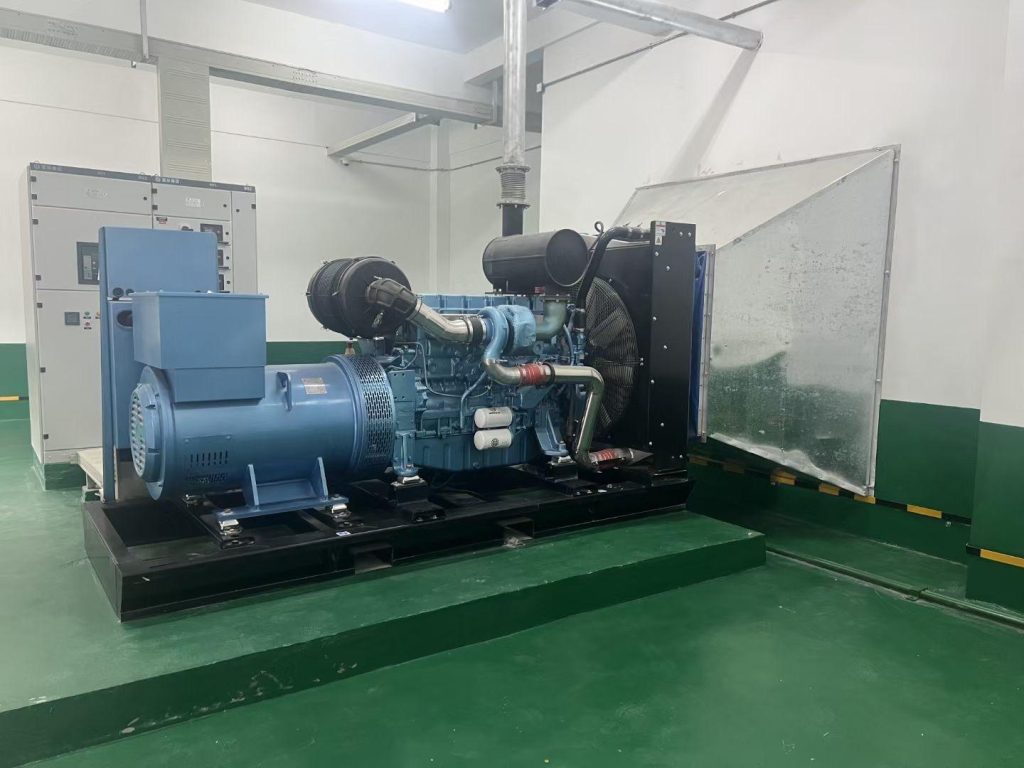
How far apart should inlet and outlet sit?
Keep the outlet downwind of the inlet at the prevailing wind, and separate them by at least three metres on the same wall. Closer than that and the hot plume curls back into the intake, so the radiator breathes its own exhaust. The set then climbs in temperature as the load rises, and the effect is worse on a still day. A plume that re-enters the intake raises the intake temperature by 5 °C or more on a still day.
Opposite walls beat one wall, and a corner beats both. Where the room allows only one wall, fit a duct to the outlet and take it above the roof line. Tesla Power Equipment sketches the plume on the layout, because a recirculation fault looks like an undersized radiator and gets fixed by buying a bigger one. Take the plume drawing to the site meeting, because the wall position is often fixed by the architect before the set is chosen.
What happens when the louvre is too small?
The fan moves less air, the water temperature rises, and the set derates or trips on high coolant temperature. The controller logs a coolant alarm rather than an air fault, so the first response is usually to check the radiator. A louvre at half the free area it needs shows up as a 10 °C rise at full load. The alarm comes on at the set point, which is too late to show the trend.
A second symptom is noise. A starved fan runs at a different point on its curve and gets louder, which surprises a site that paid for an acoustic canopy. Yangzhou Tesla Power measures the face velocity at commissioning and writes it on the sheet, so a louvre that later fills with dust is visible before the set trips. A noisy fan is often the first sign that the air path is short, and it costs nothing to check.
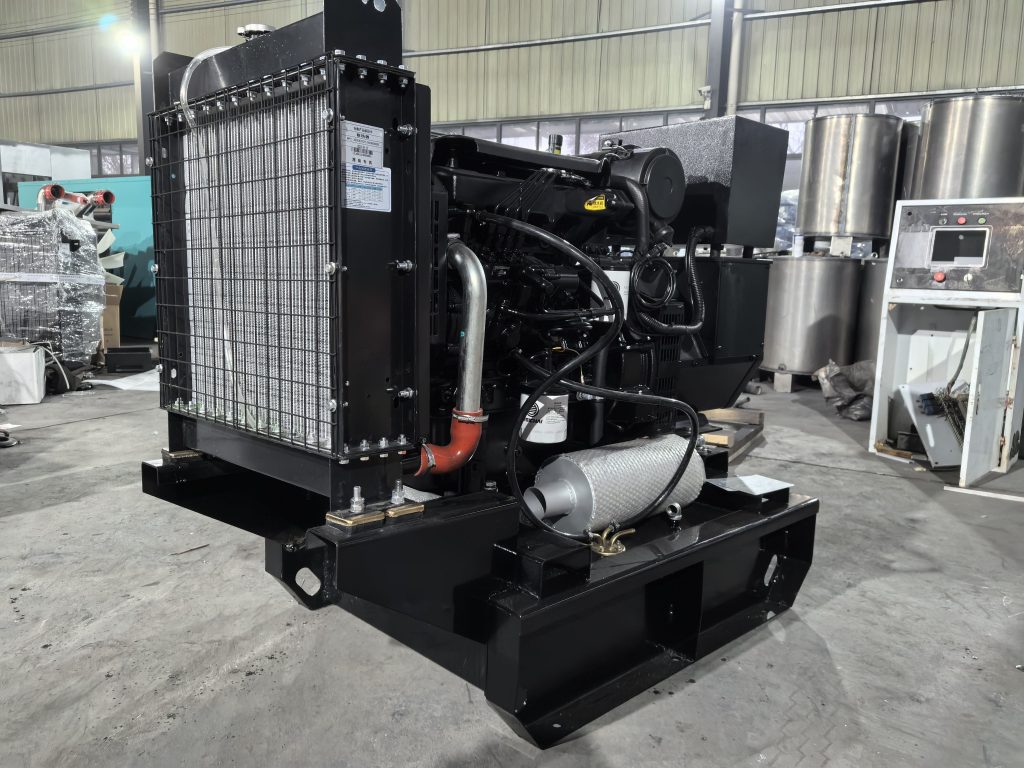
How is the air path checked on site?
Measure the face velocity at nine points across the louvre with a vane anemometer and average them. Multiply by the free area to get the flow, then compare with the radiator curve. A flow below 90% of the design figure points to a blocked blade, a closed damper or a louvre built to a different drawing. Take the readings with the set at full load and the doors closed, because a door left open hides a short path.
Then read the air temperature rise across the radiator at full load. A rise above about 12 °C means the flow is short, and a rise below 8 °C means the set is lightly loaded rather than well cooled. Log both figures with the ambient temperature, because the same louvre behaves differently at 25 °C and at 45 °C. Repeat the measurement after the first wet season, because a louvre that passes air when clean may not pass it when loaded.
What should a buyer put on the drawing?
Show the louvre face, the free area, the blade type and the velocity the louvre was sized for. Add the radiator air flow at its rated static pressure and the ambient the set has to hold. Those five items let a fabricator build the wall to the drawing instead of to a rule of thumb.
The wording on the offer matters too. Genset louvre sizing manufacturers often quote a face dimension with no free area, and Chinese genset louvre suppliers sometimes ship a 30% blade where the drawing asked for 45%. Ask for genset louvre sizing for a plant room, genset louvre for an acoustic wall and genset for a container build as three separate cases. Tesla Power lists the free area on the drawing, and the 1000kW container build shows the canopy louvre.
What does the handover file record?
The file carries the louvre face, the free area, the blade type, the measured face velocity and the air temperature rise at full load. One page covers the air path when those five items sit under the set serial number, and that page is what a commissioning engineer asks for first. Keep the conformity assessment for the plant room beside it.
Hand the page to the mechanical contractor who builds the wall rather than to the buyer who placed the order. the Yangzhou factory describes the test bay where the air path is proved. the commissioning notes lists the frames that ship with an acoustic canopy, the build range explains how a louvre is cleaned without stripping the blade, the ISO 8528-1 duty definitions sets the rating basis the air flow was taken from, and the NFPA 110 maintenance routine covers the load steps the set was accepted on.

Frequently asked questions about genset louvre sizing
No, because a door passes air only when it is open, and a plant room door is closed in service. Size the louvre from the radiator flow at its rated static pressure, then check that the door opening does not become the real restriction on the path.
It costs about 35% free area, so the face has to be larger than a standard blade for the same flow. The trade is worth it on a desert site, because a standard blade fills with sand within a season and the flow then falls away without any visible damage.
The ambient peaks in the afternoon and the air density falls, so the same fan moves less mass of air. A louvre sized with no margin then becomes the limit. Check the face velocity at the hottest hour, not in the morning when the commissioning visit usually happens.
An underground room needs a longer duct, and the duct adds pressure that the louvre calculation has to include. Add the duct loss to the louvre loss and check the total against the fan curve. A ducted path is often the real constraint rather than the blade itself.
Inspect it at every service and clean it when the face velocity falls below 90% of the commissioning figure. Dust, plastic sheeting and wasp nests all reduce the free area. Write the measured velocity on the service sheet so the next visit has a baseline to compare against.
An acoustic blade attenuates the fan noise that leaves through the wall, so a larger face at a lower velocity usually helps the boundary figure as well as the cooling. Check the insertion loss of the blade against the octave band that dominates the fan. Tesla Power lists both figures on the room drawing.