
Genset nameplate data decides whether a set matches the load, and the plate is the one document that stays with the machine. This guide lists the fields to record and the current check to run before you compare two quotations. Tesla Power sets each field from the build sheet, so send the site load list to the technical desk.
- Read the rating class before the power figure, because the same frame is sold at two duty levels.
- Record voltage, frequency and current together, since one without the others sizes nothing.
- Photograph the plate at handover, because the serial number links every later test record.
- Compare two plates field by field, not by the largest number printed on either one.
What does a genset nameplate record?
The plate records the ratings the set was built and tested to, not the ratings a brochure advertises. It carries the rated apparent power in kVA, the rated active power in kW, the power factor, the voltage and frequency, the rated current, the speed, the rating class and the standard the set was declared against. Those items travel with the machine across a border, and a photograph of them settles most arguments a year later.
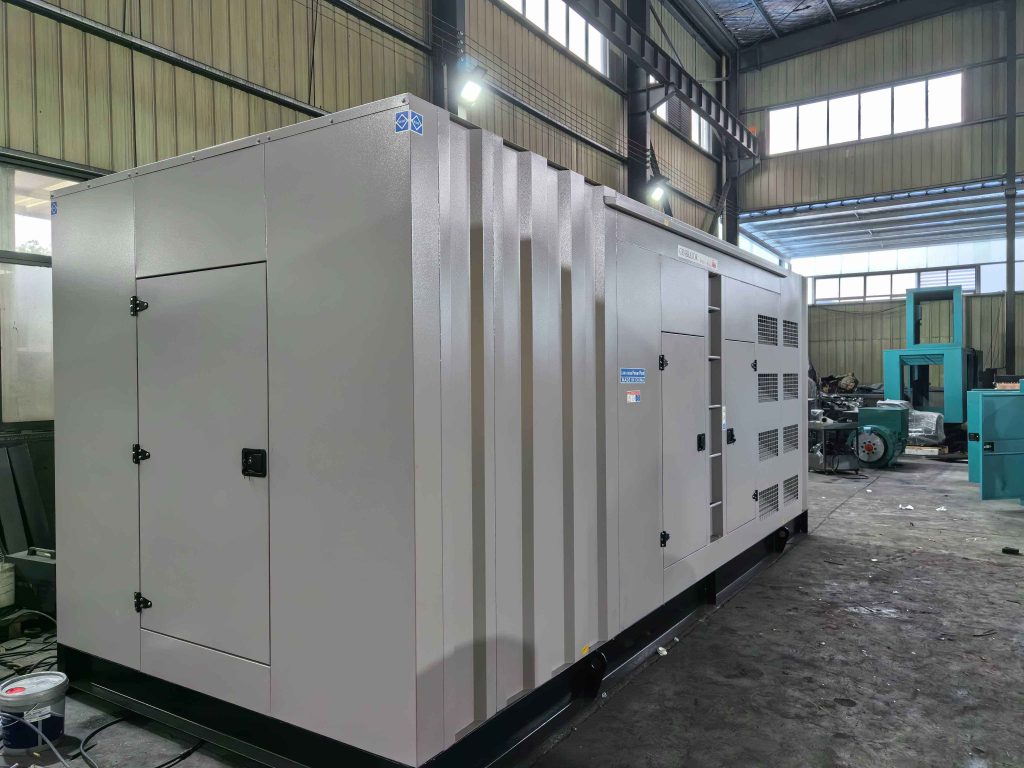
A thin plate names the model and the power only. A full plate adds the duty class, the serial number, the year of manufacture and the alternator details, which is what a service technician needs before ordering parts. Tesla Power prints the class beside the power rather than under it, so a reader cannot take the figure without the duty that qualifies it. The wider build list sits in the product range.
Which rating class belongs on the plate?
The class belongs on the plate because power alone says nothing about hours. the ISO 8528-1 rating definitions set four classes, and the two that matter for a buyer are emergency standby power and prime power. A standby rating covers the short outage and carries no sustained overload. A prime rating covers unlimited hours at a varying load, and it allows a 10 % overload for one hour in twelve.
Genset nameplate data for standby sites names the class beside the power figure, and the same frame is often sold at both levels with the standby figure about 10 % above the prime figure. A buyer who compares a standby number with a prime number is comparing two different duties, and the cheaper offer then looks stronger than it is. Tesla Power Equipment prints both figures only when both have been tested, and one class when only one applies.
| Plate field | Typical entry | What the buyer checks |
|---|---|---|
| Rated apparent power | 500kVA | The kVA matches the load calculation, not the largest load ever seen |
| Rated active power | 400kW at 0.8 power factor | The kW matches the motor and heater load after diversity |
| Rating class | Prime power or standby, per ISO 8528-1 | The hours the site expects fit the class on the plate |
| Voltage and frequency | 400/230 V at 50 Hz | Both match the site distribution and the changeover switch |
| Rated current | 722 A at 400 V | The cable and the breaker are sized from this figure |
How is current calculated from the plate data?
Current follows from kVA and voltage, and the arithmetic takes one line. Divide the apparent power in volt amperes by the square root of three times the line voltage. A 500kVA set at 400 V gives 500000 ÷ (1.732 x 400 V) = 722 A per phase, and a 100kVA set at the same voltage gives 144 A. The plate prints the result so a reader does not have to repeat the sum.
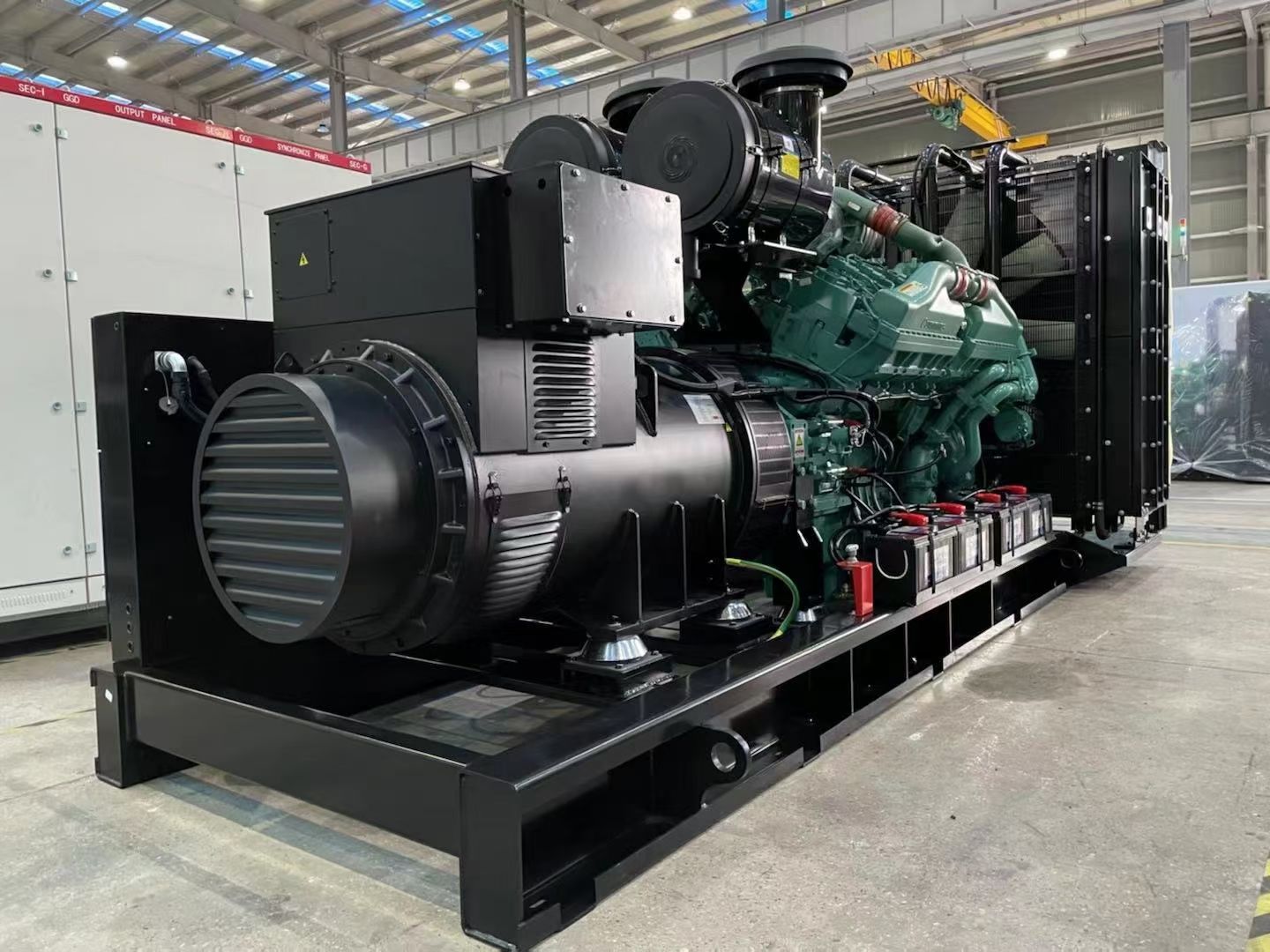
Check that printed figure against the calculation before the cable is ordered, because a plate copied from an older build carries the older current. The breaker and the cable are then sized from the current rather than from the kVA, and a small error in voltage changes both. Yangzhou Tesla Power recalculates the current for the declared voltage whenever a set is built for a non standard distribution, and the 100kVA silent set shows the plate layout used on a smaller frame.
Which voltage and frequency values must match the site?
Voltage and frequency on the plate must match the site distribution exactly, because a changeover switch does not convert either. A 400/230 V set at 50 Hz serves a European or Asian low voltage board, and a 480/277 V set at 60 Hz serves a North American board. Fitting one to the other needs a transformer, and the transformer becomes part of the standby path.
Frequency also fixes the speed, so the plate prints both. A four pole alternator turns at 1500 rpm for 50 Hz and 1800 rpm for 60 Hz, and the governor is set to that speed at the works. A set ordered at the wrong frequency runs at the wrong speed, and every motor on the site then runs fast or slow with it. Tesla Power asks for the site frequency on the enquiry for that reason, and the Yangzhou works checks it again against the changeover switch rating.
Why does the plate carry engine reference conditions?
The plate carries reference conditions because engine power is declared at a fixed ambient, not at the site ambient. ISO 3046-1 declares the figure at 100 kPa barometric pressure, 25 °C air temperature and 30 % relative humidity. A site at 1500 m or at 45 °C delivers less air to the same engine, so the usable power falls below the printed figure and the plate alone overstates the set.
The site sheet has to state the ambient and the altitude beside the plate figure, and the two numbers are then read together. A buyer who quotes the plate figure at a hot, high site plans a set that cannot carry the load in the afternoon. Tesla Power Equipment issues the derated figure as a separate line on the offer, and the reference conditions sit on the same page as the rating.
What does a buyer check before comparing two plates?
The buyer checks five items in a fixed order: class, kVA, kW at the stated power factor, voltage with frequency, and current. Two offers that agree on the first three and differ on the last two are not the same machine, and the price difference usually sits in the alternator or the changeover switch. Read the class first, because it changes the meaning of every figure below it.
Chinese genset manufacturers often print the standby figure in the headline and the prime figure in a footnote, and a reader who skips the footnote compares the wrong number with a competitor. The same pattern appears on alternator plates, where the insulation class and the temperature rise sit in small type. Tesla Power puts the class on the headline line for that reason, and the offer repeats it beside the price.
How should the plate be photographed for a quote?
Photograph the plate square on, with the serial number and the current figure both legible, then photograph the alternator plate as a second image. Send both with the site load list and the intended duty, because a supplier reads the pair faster than a description typed into an email. Two sharp photographs remove most of the questions that otherwise take a day to answer.
Keep the same photographs in the handover file, since the serial number links the plate to the test record and the warranty start date. A plate photographed at delivery also proves the rating the set arrived with, which matters when a set is moved between sites later. Tesla Power stamps the serial number on the frame as well as the plate, so the two can be matched after a repaint. the handover notes set out which pages belong in that file.
Which plate fields are usually left blank?
Five fields are left blank more often than any others: the duty class, the alternator make and insulation class, the reference conditions, the year of manufacture and the declaration reference. Each one is cheap to print and expensive to reconstruct later, because the missing item usually lives in a document that has already been filed. A plate with all five filled in is the difference between a set that can be re-ordered and a set that has to be surveyed.
The duty class is the first casualty, and it is also the one that changes the price. A plate stamped with a power figure and no class cannot be checked against the load study, so the buyer has to ask for the build sheet and wait. Genset nameplate for export orders adds the declaration reference to the same line, since a customs officer reads the plate before the folder, and the export notes list the references that are accepted at the main ports.
A genset for parallel operation also needs the reactance and the excitation data on the plate or in the schedule beside it, because two sets share reactive load only when those figures are known. A genset in container builds carries the same data on a second plate fixed inside the door, where it survives a repaint of the enclosure. reference conditions belong on that second plate as well, and a photograph of both plates covers the whole rating.
We write the gap between the printed rating and the site duty on the commissioning sheet rather than in an email. Tesla Power puts that line on the same page as the load test result, so the next engineer reads the derate beside the figure it qualifies. A blank line then means the site matched the plate, which is a useful statement in itself.
Frequently asked questions about genset nameplate data
No. The kVA figure is the apparent power and the kW figure is the active power the set can deliver to a load. The two are linked by the power factor, so 500kVA at 0.8 power factor equals 400kW. Motors and transformers draw reactive current, which is why the kVA figure is the larger of the two on every plate.
Emergency standby power suits a site that runs the set for the length of an outage and tests it monthly. Prime power suits a site that runs the set as the main supply for weeks at a time. The class on the plate has to match the hours the site expects, because a standby rating used as a prime supply shortens engine life.
The printed current is usually calculated at the rated voltage and rounded to a whole ampere, so a small difference is normal. A large difference points to a plate written for another voltage, or to a set rewound for a different frequency. Recalculate from the stamped voltage before ordering cable, and ask for the calculation sheet if the gap stays wide.
Most markets require the year or a serial number that resolves to it, and both help at resale. The year also sets which emission standard the engine was built to, since the rule applied on the build date governs the engine. Ask for the serial number and the year together, because a serial number alone is hard to date without the maker list.
The power factor states the ratio of active power to apparent power at which the rating was declared. A plate at 0.8 power factor carries 400kW when it delivers 500kVA. A load with a lower power factor draws more current for the same kW, so the set reaches its current limit before it reaches its kW limit.
A plate can be re-rated only by the manufacturer or an approved test house, and the change needs a new test record. Re-rating lifts or lowers the declared class on the basis of measured output at stated conditions. A dealer sticker added over the original plate has no standing, and insurers treat the original stamp as the rating.
The test sheet, the wiring diagram and the declaration of conformity should arrive with the plate, and each one repeats the serial number. Together they support the genset CE marking requirements for a European delivery and the genset documentation for export to other markets. Keep the set in one folder, because a missing sheet is the usual reason a claim stalls.
The test record is kept with the machine rather than in an office, so the operator logs the run against the serial number on the plate. the NFPA 110 test routine assumes the rating on the plate is the rating the site was designed for. Tesla Power prints the serial number on the log cover for that reason.