
Genset pressure test figures prove the loop holds before the set leaves the bay, and the hold time matters as much as the pressure. Check the specification against the cap rating, then compare supplier offers before the order. Tesla Power runs the test on every loop; send the radiator drawing to the technical desk and we confirm the figures.
- Test above the cap rating, not at it, because the cap is the working limit rather than the proof.
- Hold the pressure for ten minutes and watch the gauge rather than reading it once.
- Test the block, the radiator and the heater circuit separately so a leak has one owner.
- Record the drop in bar over the hold, since a small drop over ten minutes is still a leak.
What does a genset pressure test prove?
It proves the loop holds pressure without a leak, and that is a different question from whether the set cools. A joint that weeps under pressure may pass a running test because the leak is small at low load and only opens when the thermostat is wide open. The pressure test finds it cold, dry and out of the canopy. A loop that passes a running test and fails a pressure test has a joint that only opens when the coolant is cold and the pressure is high.
It also proves the components were assembled with the right parts. A hose rated below the cap pressure passes a visual check and fails a pressure test, which is exactly the substitution a buyer wants to catch. Tesla Power tests every loop before packing, because a leak found in the bay costs a gasket and a leak found on site costs a container.
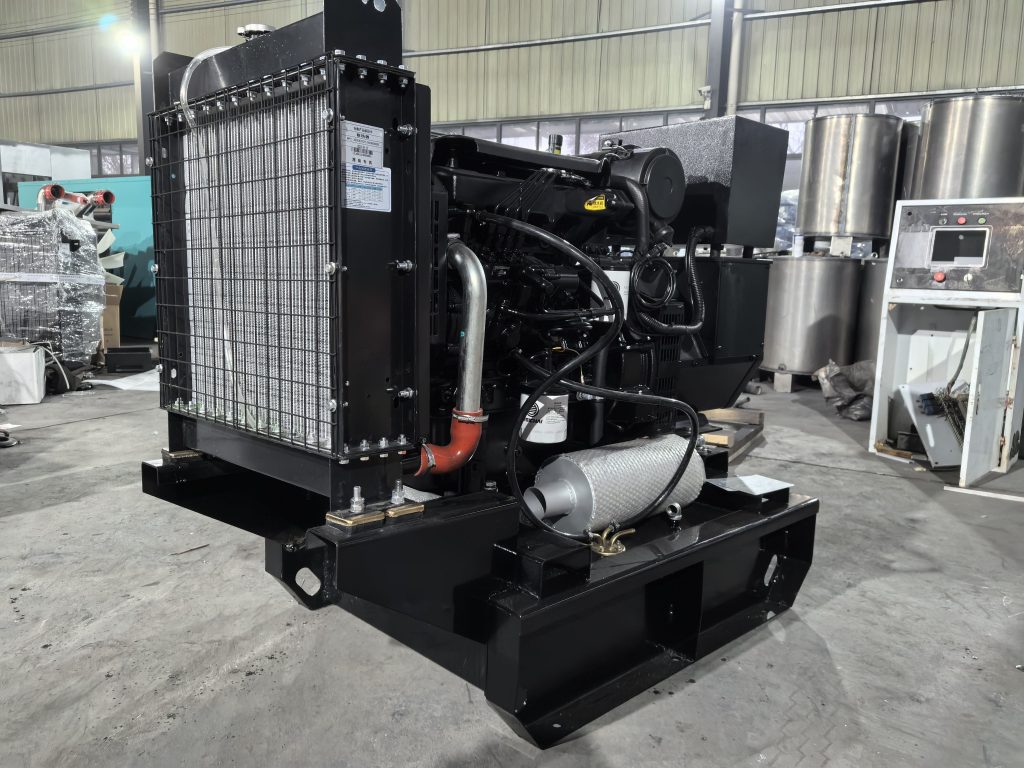
How is the test pressure chosen?
Start from the cap rating and multiply by 1.5, then check the figure against the weakest component on the loop. A 0.9 bar cap gives a test near 1.35 bar, which most hoses and cores will take. A loop built with a 0.5 bar cap and a thin core needs a lower figure, and the drawing should say which one applies.
The test pressure also depends on what is isolated. A radiator core is usually tested at 1.5 bar because that is the maker figure, while the block and head are tested at the cap figure plus a margin. Tesla Power prints the test pressure for each section on the loop drawing so the technician does not have to guess which figure applies. Write the figure on the drawing in bar and keep the units consistent, because a drawing that mixes bar and psi is how a 1.35 bar loop gets tested at 1.35 psi.
| Section | Test pressure | Hold |
|---|---|---|
| Radiator core | 1.5 bar | 10 minutes |
| Block and head | 1.35 bar | 10 minutes |
| Heater circuit | 1.0 bar | 5 minutes |
| Hose and clamp joints | 2.0 bar | 5 minutes |
How long should the loop hold?
Hold for ten minutes and read the gauge at the start and the end rather than once. On a 500kVA set at 0.8 pf and 400kW the loop holds about 40 L and is tested at 1.35 bar, so a fall to 1.28 bar is 5%: 1.35 bar x 0.95 = 1.28 bar. A drop above that is a leak until proven otherwise.
A short hold hides a slow leak, which is the kind that ruins a set in service. A long hold on a large loop costs bay time, so ten minutes is the practical compromise and it catches the leaks that matter. Tesla Power Equipment logs the start and end figures rather than a pass mark, because the trend across a batch shows a supplier problem before it becomes a site problem.
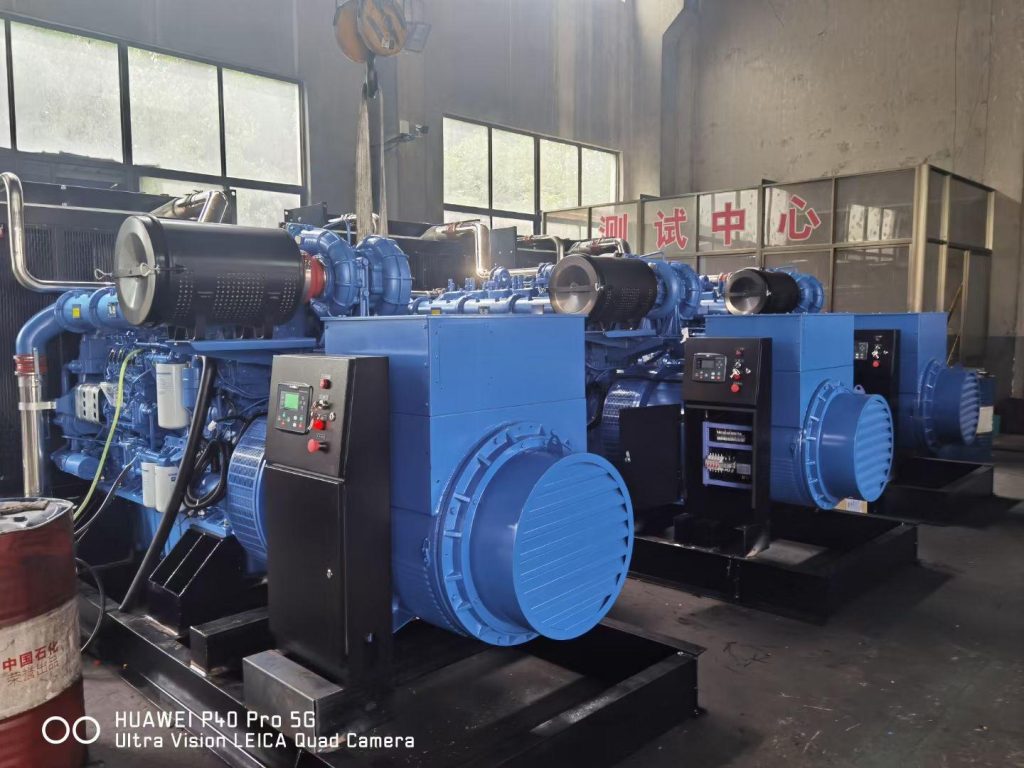
Why is an air test not a substitute?
Air is compressible, so a small leak shows as a slow fall that looks like thermal drift, and a large leak can empty a loop into the canopy without the gauge moving much. Air also stores energy, so a joint that lets go under test throws fragments rather than dripping. Water is the safer medium for a loop that has to be proved. Water also makes a leak visible at the joint rather than in the air, which is the whole point of a proof test.
Air has one use, which is finding a leak after a water test has failed to locate it. A trace of soap solution on a joint under a few tenths of a bar shows bubbles at the source. Use air for that job only, at low pressure, and not as the proof test on a loop that will hold hot coolant.
Which parts are tested separately?
Test the radiator core, the block and head, the heater circuit and the hoses as separate sections where the layout allows. A single test of the assembled loop tells you there is a leak but not where it is, and finding it afterwards means draining the loop again. Isolating each section takes longer and saves the second drain. Blank the ports with a plate rather than a plugged hose, because a plug in a hose is the leak the test is looking for.
The heater circuit is the section most often missed, because it sits behind a valve that stays closed. Open the valve for the test or blank the ports, otherwise the circuit is untested. Yangzhou Tesla Power blanks the heater ports and tests the circuit on its own, because a leak behind a closed valve is invisible until the first cold morning.
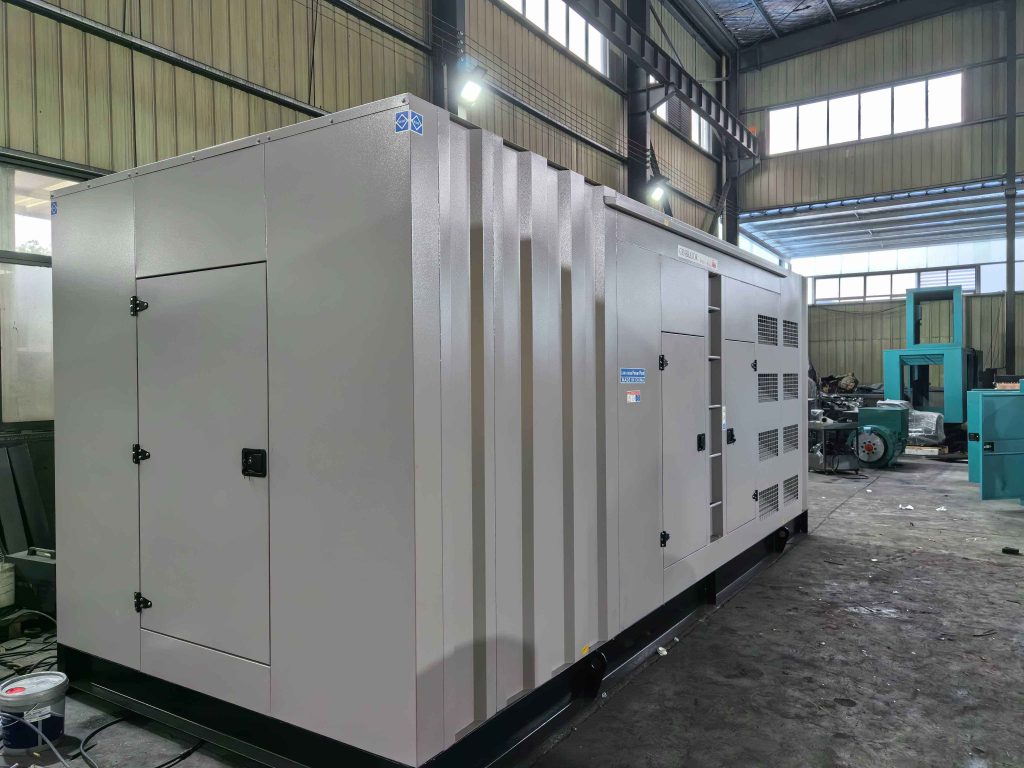
How is a leak traced?
Dry the loop first, then pressurise and watch for a damp patch rather than a drip. A weep at a hose clamp shows as a stain at the bottom of the hose after ten minutes. A core leak shows as damp at the bottom tank seam, and a head gasket leak shows as damp at the block face rather than at a hose.
Then check the drain plug and the sensor pockets, which are the two places a technician forgets. A sensor pocket that was tightened by hand passes a running test and fails under 1.35 bar. Tesla Power lists the torque for the drain plug and the sensor pockets on the loop drawing so both are checked before the test rather than after it. Dry the loop with compressed air before the test, since a wet loop hides a weep for the first ten minutes.
What should a buyer put on the enquiry?
Send the cap rating, the hose rating, the radiator maker figure and the loop volume. Add whether the heater circuit is fitted and whether the site needs a test certificate with the serial number on it. Those six items let a supplier test to a figure rather than to a habit, and they make two quotations comparable.
The wording on the offer matters too. Genset pressure test manufacturers often quote a bubble test with no gauge reading, and Chinese genset pressure suppliers sometimes test at the cap rating rather than above it. Ask for genset pressure test for a radiator core, genset pressure for a hot loop and genset for a rental fleet as three separate cases. Tesla Power puts the test figures on the drawing, and the 1000kW container build shows the drain and the pockets.
What does the handover file record?
The file carries the test pressure per section, the hold time, the start and end gauge readings, the ambient and the name of the technician who ran the test. One page covers the proof when those five items sit under the engine serial number. Add the conformity assessment for the pressure test when the installation is part of a permit package.
Hand the page to the service technician who will drain the loop in two years rather than to the buyer who placed the order. the Yangzhou factory describes the bay where the loop is proved. the commissioning notes lists the frames that ship with a remote radiator and a longer loop, the build range explains how a hose clamp is retorqued after the first hot cycle, the ISO 8528-1 duty definitions sets the rating basis the cap was chosen on, and the NFPA 110 maintenance routine covers the load steps the set was accepted on.

Frequently asked questions about genset pressure test
It can, and most bays test with the loop full because water is the medium. Drain to the minimum first if the loop is overfull, since a full loop leaves no room for expansion and the pressure rises faster than the gauge suggests. Test with the cap replaced by the test adaptor.
A new set needs it most, because a new loop has the highest chance of a loose clamp or a pinched seal. A set that has been in service for years and holds pressure is the one that can skip a test. Test new builds and test any loop that has been drained and refilled.
A fall that stops is usually the coolant compressing and the hoses swelling, which is normal in the first two minutes. A fall that continues at a steady rate is a leak. Read the gauge at two minutes and again at ten, and treat the second interval as the real test.
Isolate the core, pressurise it on its own and watch the bottom tank seam. A core that fails can sometimes be repaired, but on an export set the repair is rarely worth the risk. Replace the core and test the new one before it goes back into the frame.
A test at 1.5 times the cap rating can open a seam that was already thin, which is a finding rather than a fault of the test. Test an old core at the cap rating first and raise the figure only if it holds. A core that fails at the cap rating would have failed in service.
Check the gauge against a known reference before the batch, because a gauge that reads low passes a loop that leaks. A gauge that reads high fails a sound loop and sends a technician hunting. Calibrate the test rig once a year and write the date on the rig. Tesla Power keeps two gauges in the bay for that reason.