
Genset remote cooling moves the radiator off the skid and puts the pipe run in charge of the circuit. Tesla Power sets out the four figures we check before a remote radiator is released, and shows what a site engineer measures before a supplier can price a pump.
- Count the pipe in both directions, because head follows the round trip rather than the straight line on the drawing.
- Convert fittings to equivalent length, since six elbows cost more head than ten metres of straight pipe.
- Check the static lift against the pump curve, because a radiator above the engine adds a column the pump must hold.
- The frames themselves are listed in the range of frames the factory builds, and each drawing states whether a remote circuit is offered.
What does genset remote cooling change on a 250kVA set?
On a 250kVA set at 0.8 power factor the alternator delivers 200kW, and the engine rejects about 120kW to the jacket water and oil cooler together. A remote circuit carries that 120kW through two pipes, and the bore has to pass 4.2 litres a second without adding more than 0.35 bar of friction to the circuit.
The radiator itself barely changes. What changes is that the pump now works against a route it was not selected for, and the fan no longer sits behind a grille the site controls. Yangzhou Tesla Power reads the pipe route before the frame is released, because a circuit drawn after the set arrives is a circuit built around a pump that cannot do the job. The radiator end is the easy half of the order.
How is the pipe run measured for a remote circuit?
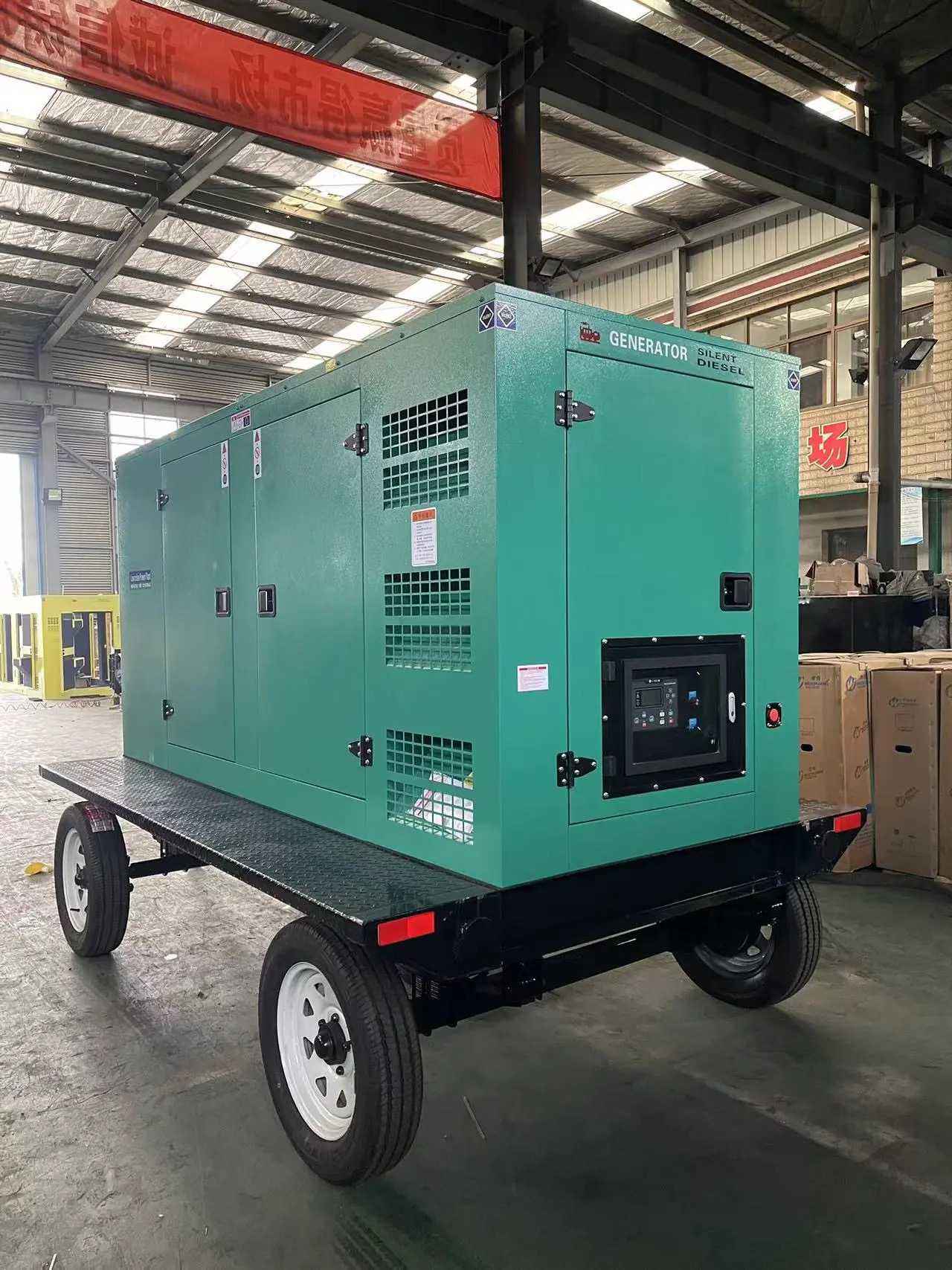
Measure the route twice, once for the flow leg and once for the return, then add the vertical lift at each end. A radiator on a roof above a plant room adds that height twice in the calculation, because the fluid climbs on the way out and falls on the way back while the static column still acts on the pump seal.
Fittings convert to straight pipe. A 90 degree elbow at 80 mm bore counts as about 30 pipe diameters, so six of them add 14 metres of equivalent length, and two gate valves with a strainer add another 20. On a run drawn as 20 metres, the circuit the pump sees can reach 54 metres. That difference between the drawing and the circuit is where most remote cooling orders are lost, and it costs nothing to count.
| Item | Figure at 250kVA | Effect on the pump |
|---|---|---|
| Heat to the circuit | 120kW | Sets the flow at 4.2 L/s |
| Flow leg and return | 40 m | Counted once each |
| Fittings as equivalent length | 14 m | Six elbows at 80 mm bore |
| Circuit total | 54 m | What the pump works against |
| Friction at 0.84 m/s | 0.33 bar | Inside the 0.35 bar budget |
| Static lift to the roof | 6 m | Held by the pump seal |
Where does a remote circuit pick up heat it should not?
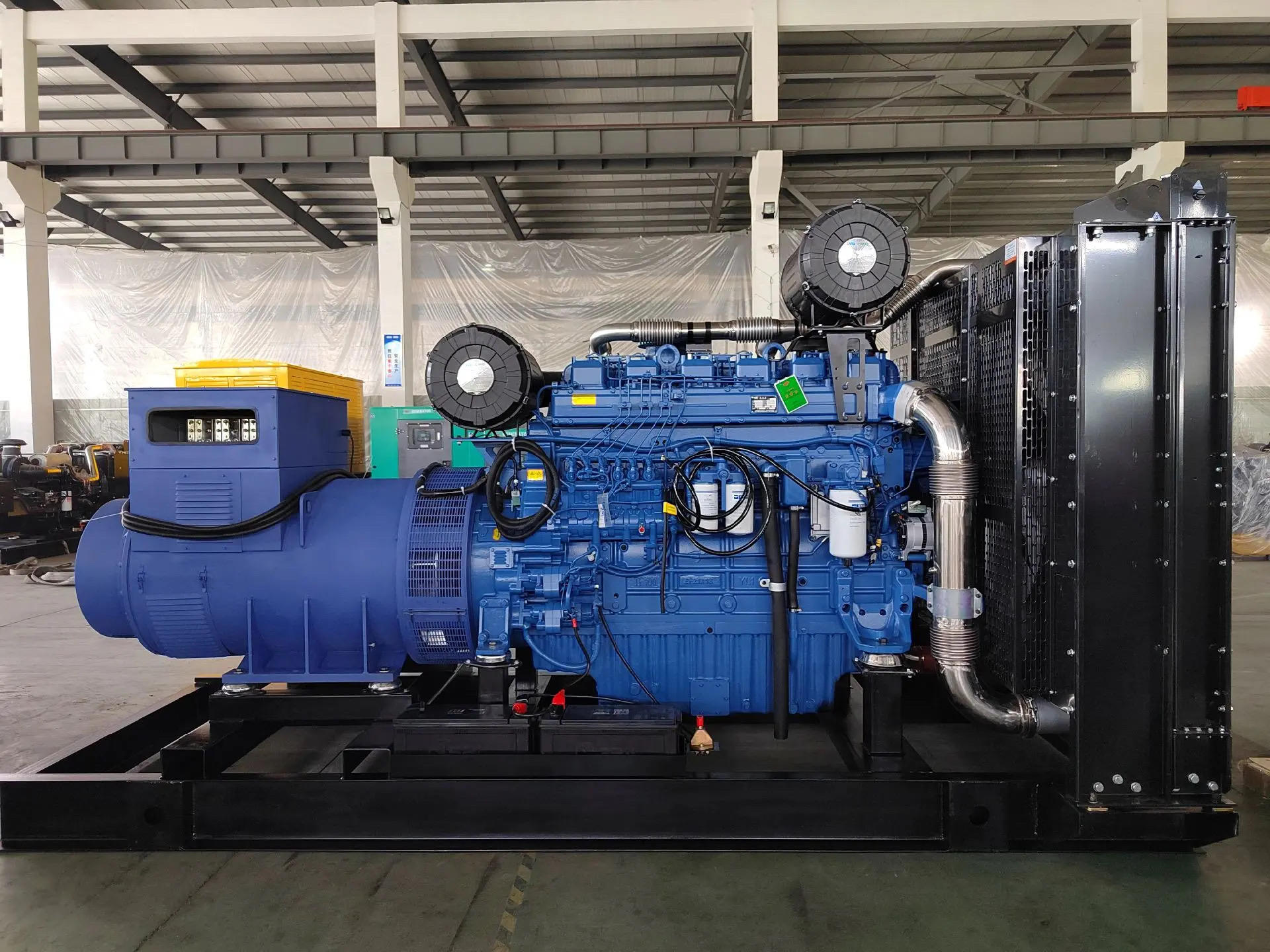
Every metre of pipe in a warm room loses heat to that room, and the loss is not the problem. The gain is. A return leg that passes a boiler house or a steam main arrives at the engine warmer than it left the radiator, and the engine then carries less margin against the alarm point on the controller.
The gain is easy to estimate. A bare 80 mm steel pipe in still air at 45 ℃ loses about 60 watts a metre, so 20 metres of exposed return drops the coolant by 12 K and gives back to the room what the radiator just removed. Insulation cuts the figure to about 12 watts a metre. Our rule is to insulate both legs wherever the route passes through a space above 35 ℃, and to insulate the return on every outdoor run.
Which pipe size and static head suit the circuit?
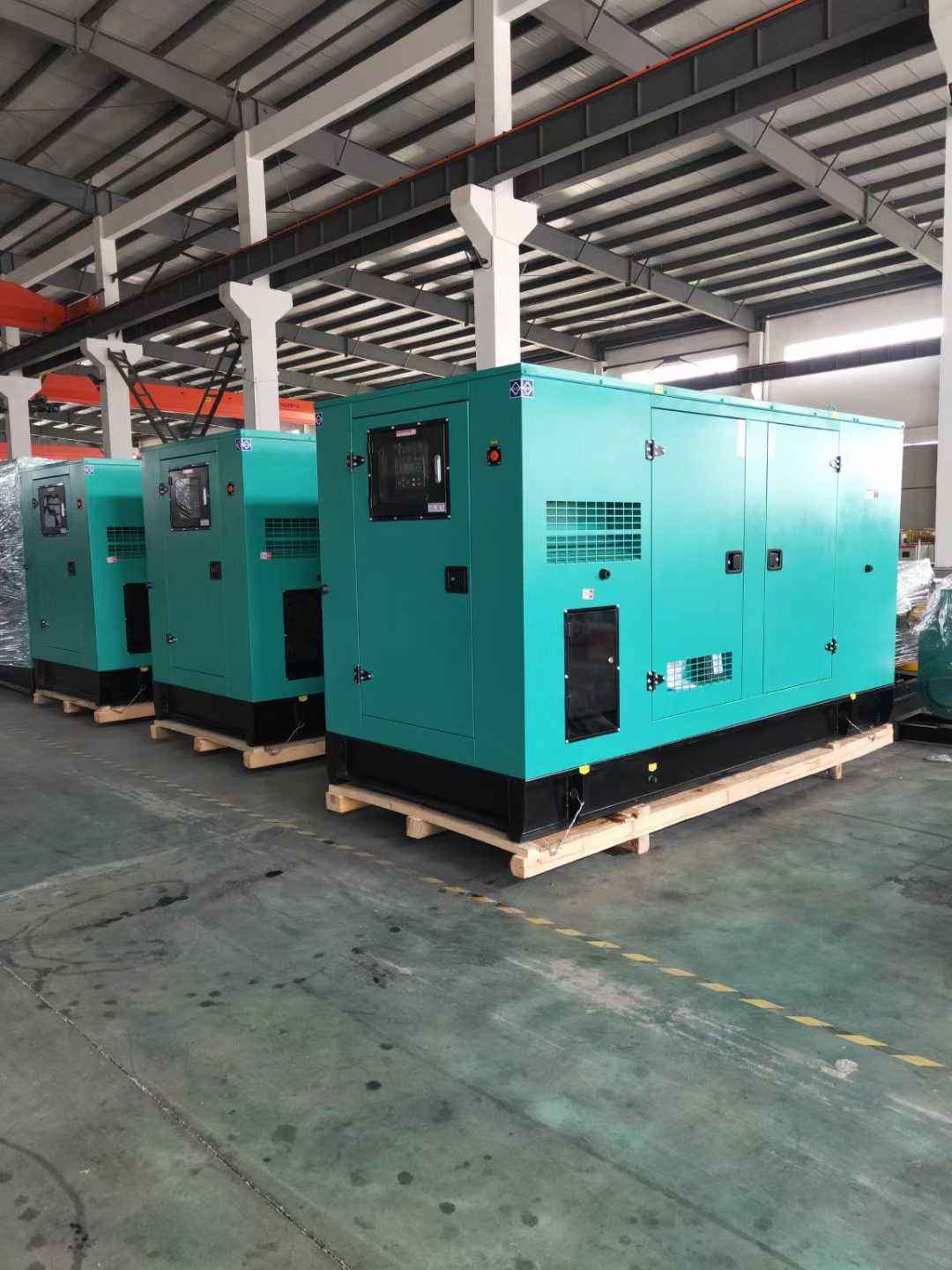
Size for velocity rather than for pressure drop. A circuit held below 1.2 metres a second keeps erosion at the fittings low and keeps friction inside the pump margin. The circuit on a 250kVA set carries 120kW at a flow of 4.2 litres a second, and the pump has 0.35 bar of head left after the engine. The same 120kW at 0.84 metres a second through 50 mm bore instead of 80 mm raises the friction from 0.33 bar to 1.9 bar, so 1.9 ÷ 0.33 = 5.8 times the pressure drop for one pipe size down.
At 50 mm bore the same flow reaches 2.1 metres a second, and friction climbs with the square of that figure. The engine pump then moves off its curve toward the low flow end, and the set runs hot at full load and cool at half load, which reads as a control fault rather than a pipe fault. On a 200kW duty the coolant pump draws about 1.1% of the alternator output, so at 400 V and 50 Hz the current works out on any frame.
The pump has a seal rating as well as a head curve, and the static column sits on that seal whether the pump runs or not. A radiator 10 m above the engine adds about 1 bar at the pump inlet, which most engine pumps accept. A radiator 25 m above adds 2.5 bar, and most do not.
Where the lift is large the circuit moves to a pressurised arrangement, with a circulating pump at the radiator and a heat exchanger at the engine. That arrangement costs more and removes the seal question entirely. Tesla Power quotes it for towers and for roof plant above about 15 m, where the head at the pump inlet passes what the seal will hold.
How is antifreeze decided on a remote run?
Decide it from the lowest ambient the circuit will see, not from the site average. A radiator on an open roof in a region that touches -10 ℃ needs protection to -15 ℃, which is a 30% glycol mix. A circuit in a heated plant room may need no glycol at all.
Glycol changes the thermal side as well. A 40% mix cuts heat transfer by about 8%, so the radiator has to be slightly larger than the water case, and the pump head rises by about 15% on the same flow. A circuit sized for water and filled with glycol runs warmer than the sheet says, which surprises the site crew on the first cold morning. The figure belongs on the offer sheet beside the rating, where a buyer can read it against the site conditions.
How is the circuit commissioned before handover?
Fill from the lowest point, vent at the highest, and run the pump with the engine off until the level stops falling. A remote circuit holds far more air than a skid mounted one, and trapped air at the top of the run shows as a temperature difference between the two legs rather than as a low level in the tank.
Then run at 80% for two hours and record the temperature at the engine outlet and at the radiator inlet. A drop of 8 to 12 K across the run is normal. A drop of 25 K means the flow is short and the pump is not moving what the drawing assumed, which is a pipe question rather than a control question.
Record the pair on the sheet that travels with the set. A remote circuit is the part of a cooling system most likely to be modified on site by a contractor who has not seen the drawing, and that record is what proves the original condition when a warranty question arrives.
Where does genset remote cooling go wrong on site?
The first error is a pipe route changed after the set was ordered, which turns a 54 metre circuit into an 80 metre one and takes the pump past its curve. The second is a radiator installed below the engine, which traps air at the top of the core and cannot vent it. The third is a circuit filled with water on a site that freezes.
Each error is cheap to prevent at the drawing stage and expensive afterwards. A remote circuit is a small part of the order value and a large part of the commissioning time, and the sites that go smoothly are the ones where the route was fixed before the frame was released.
Most genset manufacturers will price a remote radiator from a flow figure alone, and Chinese genset suppliers often do, but the pump is where the quote stops being comparable. A sketch with the heights marked takes a site engineer twenty minutes and saves a week at the far end.
Which documents make two remote quotes comparable?
Four documents do it, and Tesla Power sends all four with the offer. The circuit drawing carries the bore, the length and the fitting count. The pump curve carries the working point marked on it. The radiator drawing carries the ambient it was selected against. The fill sheet carries the volume and the glycol concentration.
With those four a second supplier can be read on the same basis, and a buyer can see whether the pump has margin or sits at the end of its curve. Genset remote cooling in a plant room raises the same four questions, plus one about the wall the pipes pass through. The 500kVA silent set with the ATS option ships with a circuit drawing for that reason.
The reference conditions behind a pump rating sit in the ISO 8528-1 rating definitions, and the test schedule for a standby set follows the NFPA 110 emergency power rules. A quote that names neither has left the basis to the buyer, and the gap appears at commissioning rather than at the desk.
What changes when two sets share one remote radiator?
A shared radiator is selected on the sum of the two heat loads, and the circuit needs isolation valves so one set can be serviced while the other runs. The valves have to be locked in a position that keeps both circuits open during a monthly test, or the first transfer finds a closed valve.
A genset in parallel operation also shares the pump duty differently. Two pumps pushing into one header reach a working point that neither curve shows on its own, and the flow through each set falls unless the header is sized for the combined figure. Tesla Power draws that arrangement per order rather than from a template.
A genset for standby duty with a single radiator avoids all of it. The saving is real, and the cost is that the standby set cannot be tested with the radiator isolated, which matters on a hospital site where the test is a monthly event.
How is the fill volume worked out for a remote circuit?
Add the engine volume, the radiator volume and the pipe volume. An 80 mm bore holds 5 litres for every 10 metres, so a 40 metre run adds 20 litres to a circuit that may only hold 35 litres on the skid. That total sets the expansion tank and the glycol quantity.
An expansion tank sized on the skid figure is undersized on the remote one. The tank has to take about 6% of the total volume between cold and hot, so a circuit that grows from 55 to 75 litres needs 4.5 litres of expansion rather than the 2 litres the original tank offered.
A sight glass on the tank is worth the small cost. A remote circuit loses level slowly through a joint that weeps under heat, and the glass shows the loss weeks before the low level switch trips the set on a cold morning.
Which records close the file on a remote circuit?
Three records close it, and Tesla Power files all three with the order. The circuit drawing with the bore and the equivalent length fixes the design. The pump curve with the working point proves the margin. The commissioning sheet with the two temperatures proves the circuit on the day it was handed over. The same frame appears in the 1000kW container build for standby duty, where the plate states the same basis.
Conformity assessment for the assembly checks that the file matches the set rather than the quotation. The 400kW frame on the Weichai WP13 platform carries a remote option, and the engineering notes on site planning set out the route rules for common buildings.
Send the route sketch, the heights and the ambient to our export desk, and the reply comes back as a circuit drawing with the pump already selected. That is the difference between a quote for a radiator and a quote for a cooling system that works on the roof it was bought for.
Frequently asked questions about genset remote cooling
It depends on the pump rather than on a fixed limit. A circuit of 50 metres of equivalent length is comfortable on most engine pumps at 80 mm bore. Beyond about 100 metres the friction and the static lift together usually justify a separate circulating pump and a heat exchanger.
Usually, if the circuit stays inside the head the pump has left after the engine. Read the pump curve at the design flow, subtract the engine restriction, and compare what remains with the circuit friction plus the static lift. A pump with 0.3 bar left on a 0.33 bar circuit runs hot.
Tesla Power Equipment supplies the same coolant with the glycol concentration set by the coldest ambient on the route rather than by the engine room. A remote circuit also holds more volume, so the fill figure on the data sheet no longer applies and the expansion tank has to be sized again.
Because a warm room gives heat back to the circuit that the radiator has just removed. An uninsulated 80 mm return in still air at 45 ℃ loses about 60 watts a metre, and 20 metres cancels several core rows. Insulation is cheap against the core size it saves.
The top of the core stops transferring heat, the engine outlet temperature climbs, and the controller reports a fault that looks like a pump failure. Vent at the highest point, fill from the lowest, and run the pump with the engine off until the level holds for an hour.
They can, with isolation valves and a circuit sized for both pumps running together. The shared radiator is then selected on the sum of the two heat loads, and the valves have to be locked open during a monthly test. Tesla Power draws that arrangement per order.
The temperature at the engine outlet and at the radiator inlet, recorded together at 80% load with the ambient noted beside them. A drop of 8 to 12 K across the run is normal. A wider drop means the flow is short, and the record shows it before the site does.
It changes what the file has to contain rather than the terms. A circuit installed to a drawing that was not the one quoted sits outside any warranty conversation, because nobody can say what the pump was selected against. Keep the drawing and the commissioning sheet together.