
Genset SCR urea dosing has to match the exhaust temperature and the fuel rate, or the catalyst passes ammonia instead of reducing it. Check the specification against the duty cycle, then compare supplier offers before the tank is sized. Tesla Power sets the dosing map; send the load profile to the technical desk and we confirm it.
- Size the reagent tank from the fuel rate rather than from the tank volume on the drawing.
- Check the exhaust temperature at the load the site actually runs, not at rated load.
- Specify heated lines and a heated tank wherever the site sees frost in winter.
- Buy reagent to the ISO 22241 grade, because a diluted drum defeats the whole system.
What does genset SCR urea dosing control?
It controls how much reagent is sprayed into the exhaust ahead of the catalyst, and that quantity decides how much nitrogen oxide the catalyst can convert. Too little leaves nitrogen oxide in the exhaust and the system fails the emission limit. Too much leaves ammonia in the exhaust, which is its own regulated pollutant and smells of a cleaning product. A system that doses on a fixed rate rather than a map is a system that will fail one of the two tests.
The dosing map therefore belongs with the engine calibration rather than with the tank. A map built for a constant load behaves badly on a site that runs at part load for hours. Tesla Power builds the map from the load profile of the site, because a standby set and a prime power set need different curves from the same engine.
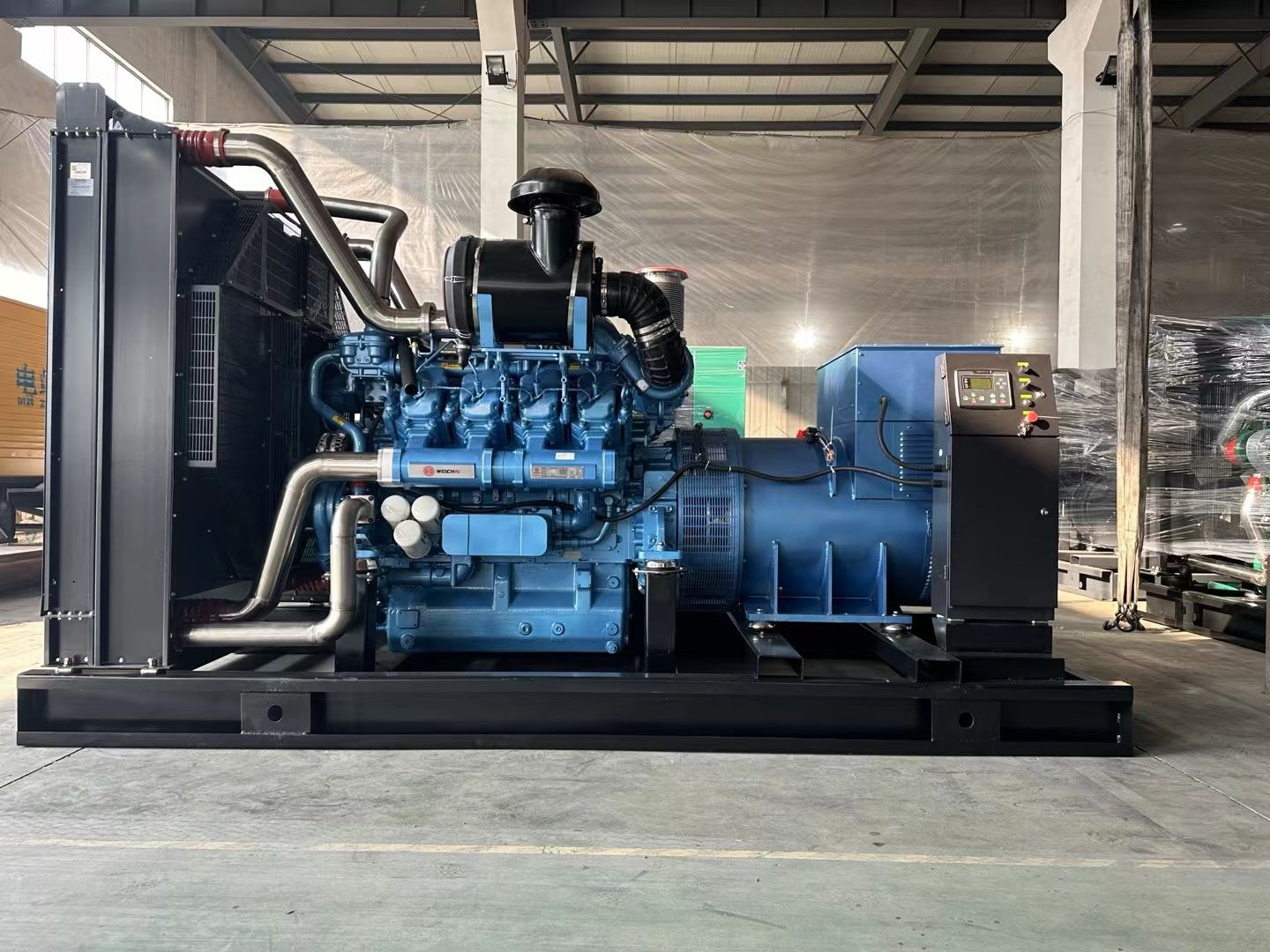
How is the dosing rate set?
The rate is expressed as a share of fuel volume, and it moves with load because the exhaust temperature and the nitrogen oxide output both move with load. A set at low load produces less nitrogen oxide but also a colder exhaust, and a cold catalyst converts poorly. The map has to hold both effects at once. The map is a table of rate against load and temperature, and it is written by the engine maker rather than by the tank builder.
A 500kVA set at 0.8 pf delivers 400kW and burns near 80 L/h at full load, so a 4% rate takes 3.2 L/h of reagent: 80 L/h x 4% = 3.2 L/h. That figure is the one the tank is sized against, and it rises per hour as the load falls because the fuel rate falls faster than the rate percentage.
| Load | Exhaust temperature | Dosing rate |
|---|---|---|
| 25% of rating | 250 °C | 2% of fuel volume |
| 50% of rating | 320 °C | 3% of fuel volume |
| 75% of rating | 380 °C | 4% of fuel volume |
| 100% of rating | 430 °C | 5% of fuel volume |
How much reagent does a set carry?
Size the tank for the run length the site actually needs, then add a margin for the refill interval. A set that runs eight hours a day at full load on the figure above needs about 26 L a day, so a 100 L tank covers three days and a 200 L tank covers a week. A standby set needs a tank sized for the test runs rather than for continuous duty. The tank also needs a low level sensor that warns before the derate, because a derate on a hospital set is a fault in its own right.
The tank also has to be reachable by whoever fills it, which on a containerised set means an external filler neck rather than a cap under the canopy. Tesla Power puts the filler on the drawing with the tank, because a tank that cannot be filled is a tank that runs dry and derates the set. A containerised set with an internal tank needs a level gauge visible from the door.
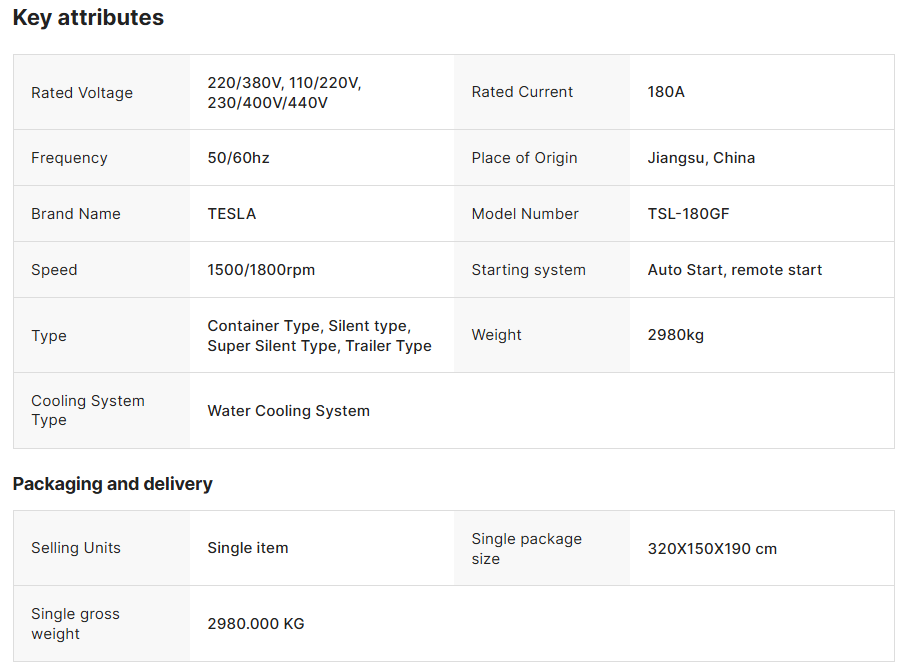
Why does the reagent freeze?
A 32.5% urea solution freezes at about -11 °C, which is a normal winter night across much of Europe and northern China. Freezing does not damage the reagent, and the thawed liquid is still usable. What freezes is the line between the tank and the dosing valve, and a frozen line stops dosing until it thaws. A tank left half full over a cold snap freezes from the top, and the thaw takes longer than a night.
The answer is a heated tank, a heated line and a dosing strategy that purges the line when the engine stops. A line left full of reagent freezes solid and splits a fitting. Tesla Power Equipment fits a heated line and a purge cycle on every cold climate build, and the site sheet names the lowest ambient the system was designed for.
What happens when the reagent is wrong?
A diluted drum lowers the conversion and raises the nitrogen oxide, and the system cannot tell until the outlet sensor reports it. A concentrated mix or a contaminated drum can poison the catalyst, which is a much more expensive failure. The reagent has a shelf life and it degrades in heat, so a drum stored in the sun for a year is not the same product. A drum that has been opened and left unsealed absorbs ammonia from the air and loses concentration over a season.
The grade is defined by a published standard, and a supplier that cannot name it is a supplier to avoid. Test the concentration with a refractometer at every delivery, because a drum that reads 30% is a drum that will fail the emission test. Yangzhou Tesla Power checks the concentration at the bay and writes the reading on the fill record.
How is dosing proved on the test bed?
Run the set at three loads, hold each one until the exhaust temperature settles, and record the reagent flow, the exhaust temperature and the outlet nitrogen oxide at each point. A map that is correct at rated load and wrong at half load shows up at the middle point. The test takes an hour and it is the only place the map is proved. A map proved only at rated load is a map that will be wrong at every other point the site uses.
Then check the ammonia slip at the same three points, because a map that over-doses to pass the nitrogen oxide test fails on ammonia. A cold catalyst at low load is where the slip appears first. Log the three points with the ambient, since the map is temperature dependent and a bay at 15 °C is not a site at 45 °C. Tesla Power keeps the three point sheet with the engine record.
What should a buyer put on the enquiry?
Send the emission limit, the load profile, the lowest ambient, the run length between refills and the fuel sulphur figure. Add the certification the site has to meet, because a Tier 4 Final build and a Stage V build use different maps and different tanks. Those six items decide the dosing system before a price is quoted.
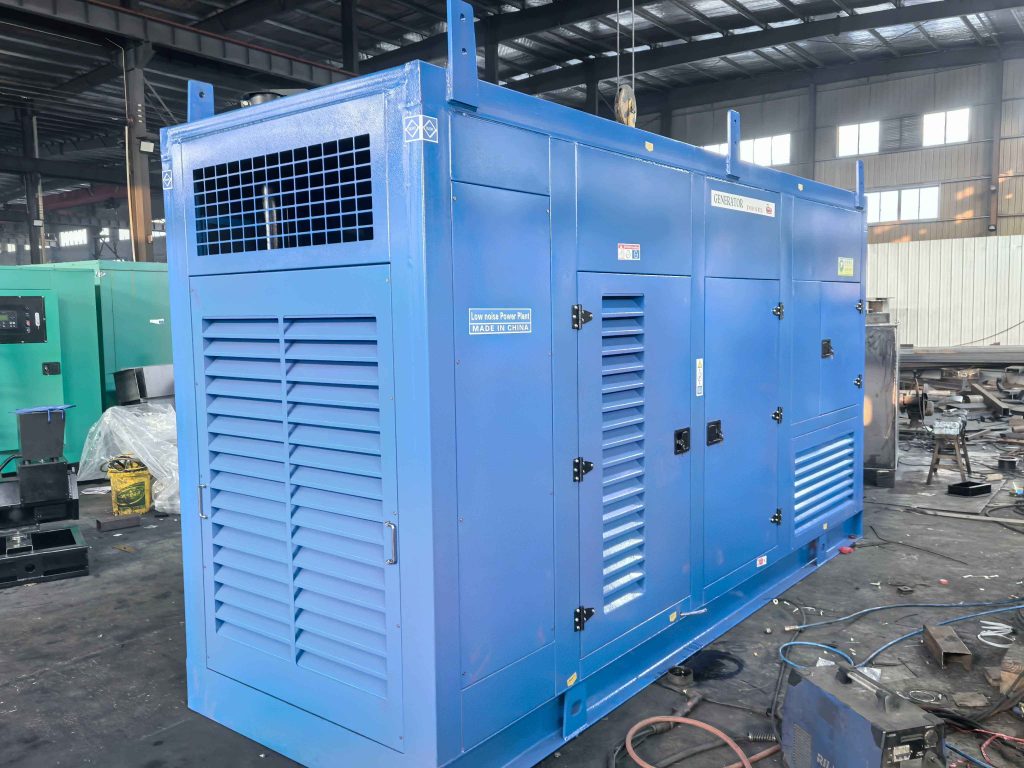
The wording on the offer matters too. Genset SCR urea dosing OEM manufacturers often quote a tank size with no dosing rate, and Chinese genset SCR suppliers sometimes ship a reagent that is not 32.5% urea. Ask for genset SCR urea dosing for a cold climate, genset SCR for a standby set and genset for a data centre as three separate cases. Tesla Power writes the map on the drawing, and the 1000kW container build shows the heated tank.
What does the handover file record?
The file carries the dosing map with its three test points, the tank volume, the lowest ambient the system was built for, the reagent grade and the concentration reading at the last fill. One page covers the system when those five items sit under the engine serial number. Add the conformity assessment for the dosing valve when the installation is part of a permit package.
Hand the page to the operator who fills the tank rather than to the buyer who placed the order. the Yangzhou factory describes the bed where the map is proved. the commissioning notes lists the frames that ship with a heated tank, the build range explains how the line is purged before a cold night, the ISO 8528-1 duty definitions sets the rating basis the map was built on, and the NFPA 110 maintenance routine covers the emission limits the set was accepted against.
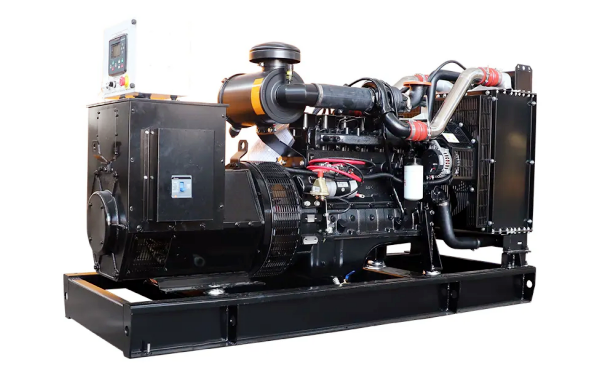
Frequently asked questions about genset SCR urea dosing
It can run, and the controller will derate it once the tank reads empty. The engine protects itself by cutting power rather than by stopping. Carrying a spare drum is the practical answer, and a site that runs out on a Saturday night learns that lesson once.
It needs whatever the emission standard for its application requires, and a standby set is often held to a looser limit than a prime power set. Check the standard that applies to the site rather than the one that applies to the engine family. A set that runs two hundred hours a year may not need SCR.
The catalyst needs a minimum exhaust temperature to work, and below that figure the reagent would pass through unreacted as ammonia. The controller stops dosing to protect the catalyst and the air. A set that runs at low load for long periods is a poor match for SCR.
A heated tank with an insulated jacket and a thermostat holds the reagent above its freeze point, and a heated line carries it to the valve. The heater draws a small electrical load that the alternator has to carry. Check that load against the auxiliary budget before the tank is specified.
It should not be, because the concentration is critical and site water carries minerals that poison the catalyst. Buy the ready mixed reagent to the published grade and keep the drum sealed. A refractometer reading at each delivery is the cheapest protection available.
It follows the fuel bill rather than the power bill, so a set at full load uses the most per hour and the least per unit of output. Budget the reagent as a share of fuel volume and check the figure against the quotation. Tesla Power states the share on the dosing page.