
Genset tank bunding is the secondary containment that catches a leak from the largest tank before it reaches the ground, and it is sized at 110% of that tank rather than at the total. Tesla Power draws the bund from the biggest single vessel and adds the drain and the liner on the same plan.
- The bund holds 110% of the largest tank, or 25% of the total where several tanks share one wall.
- A drain valve that stays shut, plus a liner under the bund, are the two items most sites miss.
- Rainwater in the bund is not a small nuisance; it is what eats the free volume for the spill.
- State the tank sizes and the site drainage, and the frames in the export frame range are quoted with the containment drawn.
What is the 110% rule and why that figure?
The 110% rule says the bund must hold the full contents of the largest tank plus 10% headroom, because a full tank that fails releases its whole volume and the 10% covers the displacement of the rainwater and the fire-fighting water that may land in it. The figure is a minimum, and most regulators add a requirement for a freeboard above that.
The arithmetic is straightforward for a single tank. A 1,000 L tank needs a bund of 1,100 L, so a rectangular pit 1.1m by 1.0m with a 1.0m side holds 1,100 L. A site with several tanks can size the bund on the largest single tank where the tanks are separated by a wall, and on 25% of the total where they are not.
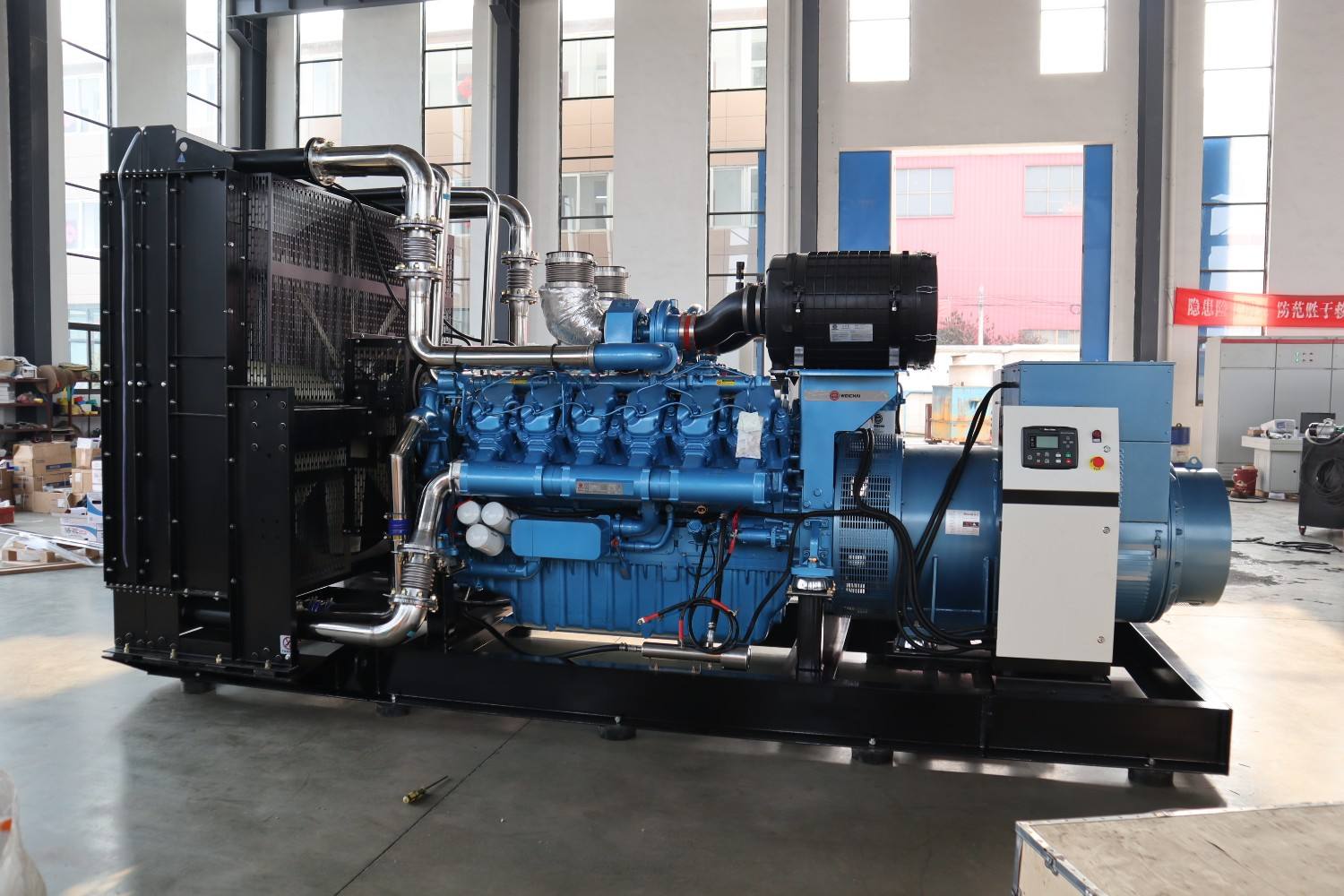
How is the bund volume calculated?
Take the tank volume, add 10%, and divide by the available floor area to get the wall height. A 2,000 L tank with a bund floor of 4m² needs 2,200 L ÷ 4 = 550mm of wall, and the freeboard above that depends on the site rule. The wall height is the figure that is usually wrong on a drawing, because the floor area is read from the outside dimension of the wall rather than the inside.
Work the check on a real set. A 400kVA frame with a 500 L baseframe tank sits in a bund 1.2m by 0.8m, which gives a floor of 0.96m². The 110% figure is 550 L, so the wall has to reach 550 ÷ 0.96 = 573mm, and a wall built at 500mm fails the rule by 73mm. The difference is the point a surveyor measures first.
Where does the drain valve fit?
The drain valve sits at the low point of the bund and stays shut in service, so a spill is held rather than released. It is opened only to remove rainwater after the water has been inspected, because rainwater that runs off a spill mixes with it and becomes contaminated. The valve needs a lockable handle or a sign, since an open valve is the single most common way a bund is defeated.
Fit the drain inside the bund rather than through the wall, and route it to a collection point rather than to the storm drain. A bund that drains to the storm system releases the spill the moment the valve is opened, which defeats the purpose on the one day it matters. A sump with a manual pump is the clean answer on a site with no oil interceptor.
What goes under and inside the bund?
An impermeable liner goes under the bund and up the inside of the wall, because concrete and brick are both porous to diesel over time. The liner is usually a hydrocarbon-resistant membrane, and the joints are the weak point, so they are welded rather than lapped. A liner that is lapped and not sealed leaks at exactly the rate the bund was meant to stop.
Inside the bund, the tank sits on a stand or a plinth above the floor, so a leak is visible and the tank bottom is not standing in water. The plinth also keeps the tank off a floor that may hold condensation. A tank sat directly on the floor corrodes from the underside, and the first sign of it is a stain in the bund rather than a drop on the gauge.
How much rainwater lands in the bund?
The rainwater is the figure that decides the free volume, and it is the reason the 10% headroom exists. A bund with an open top collects the full rainfall of its floor area, so a 4m² bund in a 1,000mm-a-year climate collects 4,000 L a year, or about 11 L a day on average. The drain interval follows that rather than the calendar.
The clean way to handle it is a cover or a roof over the bund, which removes the rainwater question and keeps the sun off the tank. A covered bund is warmer, which is its own fuel question, and a shaded open bund is the usual compromise on a tropical site. Either way the drain log is the record that shows the rainwater was managed, not ignored.
What does the site drainage have to do with the bund?
The site drainage decides where a spill goes if the bund overflows, and the two are drawn together. A bund at the top of a slope that drains into a river has a worse failure than a bund in the middle of a flat yard, and the same tank on the same slope needs a larger bund or a cut-off drain around it. The drawing shows the fall, not just the tank.
Add a cut-off drain upstream of the bund on a sloping site, so surface water runs around rather than through the containment. The drain is a small channel with a grate, and it keeps the bund from becoming the site's rainwater collection point. A genset bunded without one fills with the first storm and the operator leaves the valve open to cope.
How is the bund inspected and proved?
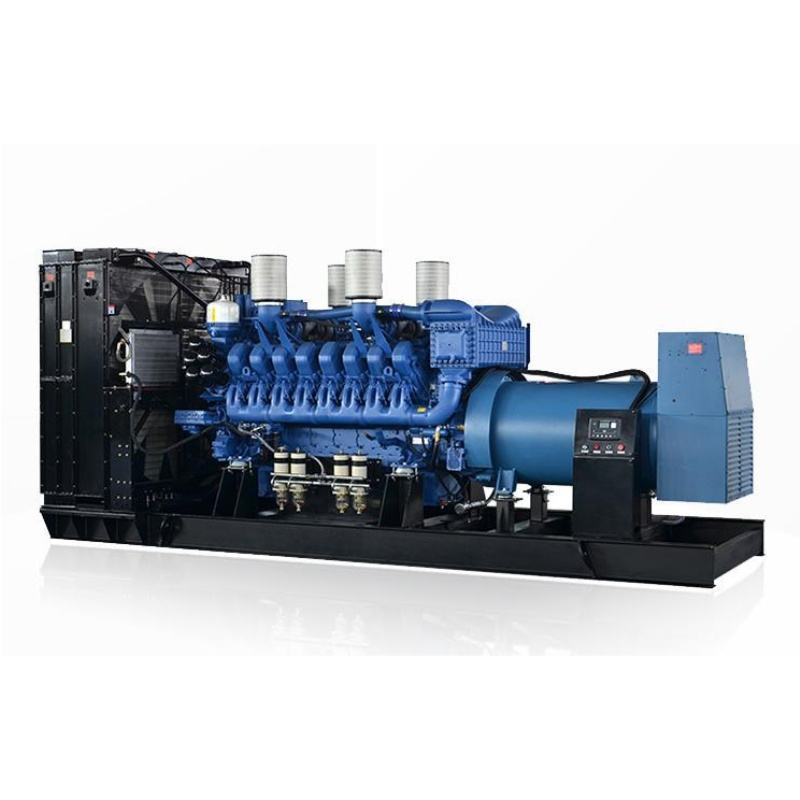
Fill the bund with water to the design level and hold it for 24 hours, then check the level and the liner joints. A hydrostatic test proves the liner and the wall in one pass, and it is the only way to catch a leak before the fuel does. Do it at commissioning and every five years after, and record the result.
The test is cheap against the alternative. A bund that leaks into the ground is a cleanup that costs orders of magnitude more than the tank, and the regulator treats a failed bund as a worse event than a failed tank. A site that has never tested its bund does not know whether it has one, which is the position a surveyor exposes in minutes.
What does the factory check on containment?
The baseframe tank on our sets carries an integral bund sized to its own volume, and the test bay checks the welds and the drain before the set ships. The site-level bund is then the buyer's scope, which is why the drawing matters. Tesla Power Equipment sends a containment sketch with every tank option so the two scopes meet without a gap.
The sketch shows the tank, the bund wall, the drain position and the fall, and it is the document the site contractor builds to. A site that skips it builds the bund from memory and discovers the 73mm shortfall at survey. The factory and the test bay keep the sketch in the order file, and it travels with the set.
How should the enquiry state the containment?
State four items: the largest tank volume, the number of tanks in the bund, whether the bund is open or covered, and where the site drains. The four decide the wall height and the liner, and they are the lines a supplier needs before the tank drawing is complete.
Send the four with the load list to the export desk, and the reply carries the bund dimensions, the wall height and the drain position on a sketch. The site planning notes carry the same four items as a form, and the sketch goes to the civil contractor as well as to the supplier.
What are the common failures at survey?
The first is the wall measured to the outside, which reads taller than the effective height and fails the 110% check. The second is a drain valve left open, which is a fail even where the bund is perfect. The third is a liner that stops at the wall base, which lets fuel escape through the floor. The fourth is a second tank added into the bund without a re-check.
All four are cheap to fix and all four are found in minutes by an inspector who knows where to look. A genset installed with these four errors passes its own test and fails the site's, which is the worst combination, because the operator believes the containment works. The survey is the point where belief turns into a number.
Frequently asked questions about genset tank bunding
The same 110% of the day tank, and the day tank is usually small enough that a commercial bunding tray does the job. A 200 L day tank needs a 220 L tray, and the tray has to catch the fill point as well as the tank. Check the fill point is inside the tray rim.
It has its own bund for its own volume, and the site bund covers the fill point and any external pipework. The two are separate containments, and the site bund still has to catch the fill hose spill. Draw both rather than assuming one covers the other.
It can, and it is sized on the larger tank where the tanks are separated by a wall, or on 25% of the combined volume where they are not. The wall between them has to be as strong as the outer wall, which is the part most drawings miss.
High enough to hold 110% of the tank over the inside floor area, plus the freeboard the local rule requires. A wall below 300mm is a trip hazard rather than a barrier, and a wall above 1.2m needs a ladder for inspection. Most sites land between those two.
It does not need one, and a roof trades rainwater for heat. Where the climate is wet, a roof removes the drain question and keeps the tank cool in the shade. On a hot site an open bund with a drain log is the usual answer.
A hydrocarbon-resistant membrane, usually a reinforced plastic or a bituminous sheet, welded at the joints. Concrete alone is not enough because diesel penetrates it. The liner runs up the inside wall and is terminated above the design level.
After every rainfall that leaves water in it, and the water is inspected before release. A bund that is never drained loses its free volume, which is the failure a full tank needs most. Log the drain so the practice is visible.
The genset CE marking requirements cover the assembly, and the site bund is outside that scope, so it sits in the site file rather than the declaration. Conformity assessment for the assembly does not test the site containment. Tesla Power sends the sketch for the site file separately for that reason.