
Genset torsional vibration twists the shaft train rather than shaking the frame, and the coupling is where that twist is absorbed or amplified. Check the specification against the engine and alternator pairing, then compare supplier offers before the order. Tesla Power asks for the case; send the pairing to the technical desk and we confirm it.
- Ask for the torsional case for the exact engine and alternator pairing, not for the frame size.
- Check the coupling stiffness against the case rather than against the torque alone.
- Look for a resonance below the running speed, because a run up crosses it every start.
- Record the coupling element type, since a substitute element changes the case.
What is genset torsional vibration?
It is a twisting oscillation along the shaft train, driven by the pulses each cylinder puts into the crankshaft as it fires. The crankshaft, the flywheel, the coupling and the alternator rotor form a spring and mass system, and that system has natural frequencies. When a firing pulse lands near one of them the twist grows far beyond the steady torque.
The frame may sit perfectly still while the shaft train oscillates, which is why a probe on the baseframe says nothing about it. A set can pass every limit on the frame at 7 mm/s and still destroy a coupling in a year. Tesla Power treats the torsional case as a separate calculation from the frame vibration, because the two are measured with different instruments and cured by different changes.
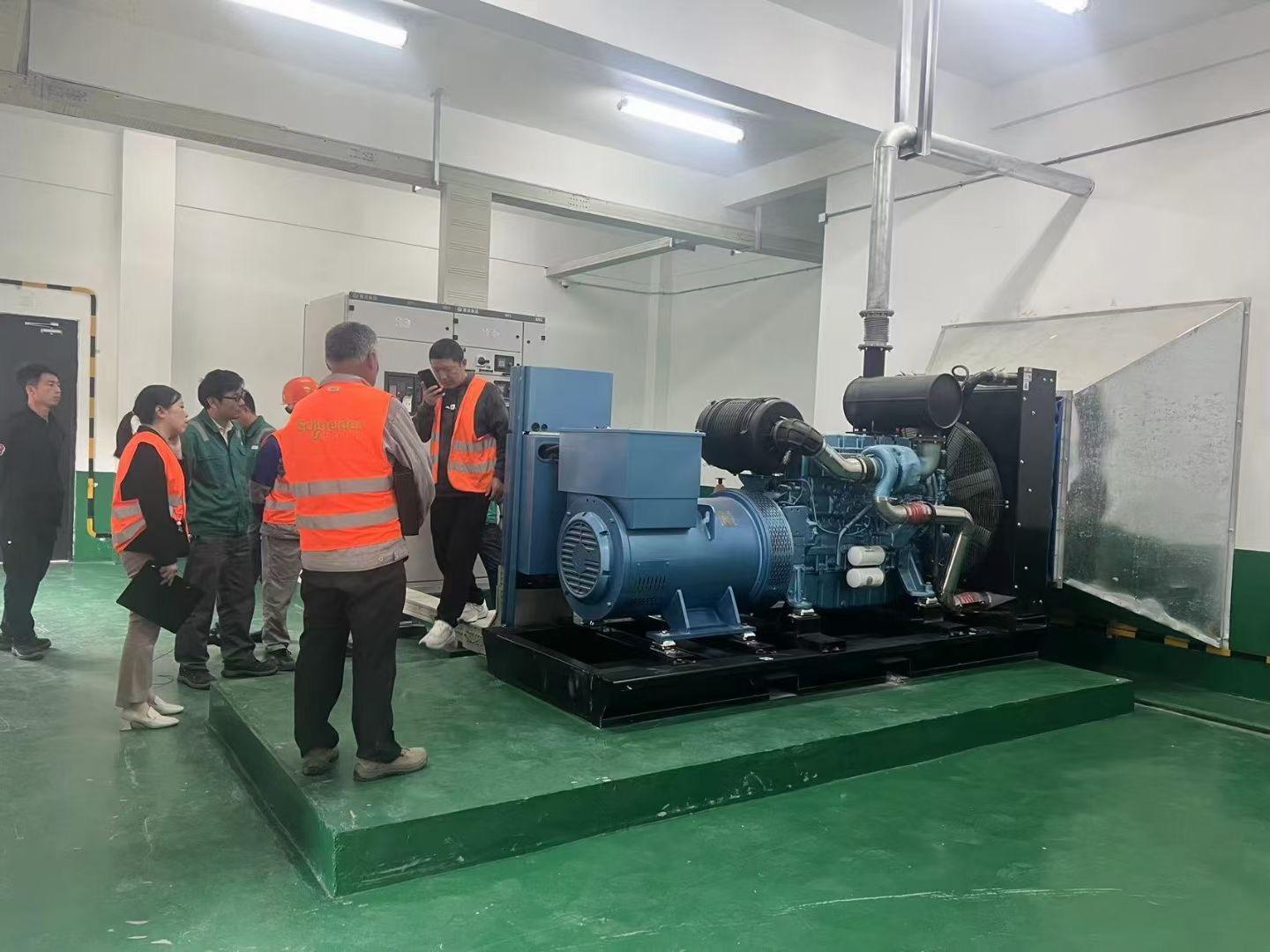
Which parts set the natural frequency?
The crankshaft and flywheel set the engine side, the rotor and its fan set the alternator side, and the coupling stiffness sits between them. The coupling is the part that is easiest to change, so it is also the part used to move the natural frequency away from a firing order. A stiffer coupling raises the frequency and a softer one lowers it.
The alternator rotor mass matters more than its rating, because two machines of the same output can differ in inertia by a third. That is why a case calculated for one alternator does not transfer to another on the same engine. Tesla Power Equipment asks for the rotor inertia with the pairing, because a case built on a rating rather than on an inertia is a guess with a number attached. Two machines of the same output and different inertia give two different cases from one engine.
| Item | Figure | Note |
|---|---|---|
| First natural frequency | Below 40% of rated speed | Crossed once on every start |
| Coupling stiffness | From the case output | A substitute element changes the case |
| Rotor inertia | From the alternator maker | Differs by a third at the same rating |
| Damper | Where the case shows front amplitude | Cheaper than a crankshaft |
How is the case calculated?
The engine maker builds a model of the shaft train, applies the firing orders and the harmonic content of the torque, and reports the stress at each speed. The output is a diagram of amplitude against speed with the resonances marked, and a pass or fail against the shaft and coupling limits. It is a calculation rather than a measurement, and it is only as good as the inertias that go into it.
The case usually takes a few days and it belongs with the order rather than with the commissioning. A pairing that fails the case needs a different coupling, a different flywheel or a damper, and all three are cheaper before the frame is built. Tesla Power will not release a large frame without the case, because a coupling failure at sea is not a service call. A case that arrives after the frame is welded is a case that arrives too late to change anything cheaply.
Why does a run up matter more than steady load?
A resonance below the running speed is crossed every time the set starts, and the amplitude at the crossing depends on how fast the set accelerates through it. A slow run up spends longer in the resonance and puts more cycles into the shaft. A fast run up passes through and does less damage per start.
That is why a set that starts and stops often is a harder case than a set that runs continuously, even at the same load. A 500kVA set at 0.8 pf delivers 400kW, and a first natural frequency at 40% of rated speed means every start crosses it once: 0.4 x 1,500 rpm = 600 rpm. A standby set with 100 starts a year accumulates those cycles quietly.
What are the symptoms in service?
The first symptom is usually coupling wear, because the element absorbs the oscillation as heat and degrades faster than the torque alone would explain. A coupling that fails at low hours on a pairing that should be comfortable is a candidate for a torsional problem rather than a manufacturing fault. The element often shows heat damage on one side rather than evenly. A coupling that has lasted ten years on one pairing and eight months on another points at the case rather than at the part.
A second symptom is a rattle from the alternator end at a particular speed, which is the rotor oscillating against its drive. A third is a fatigue crack in the crankshaft at the front of the rear web, which is the expensive outcome. Any of the three should send the set back to the case rather than to the parts catalogue. Tesla Power adds the case reference to the service card so a replacement element is checked against it.
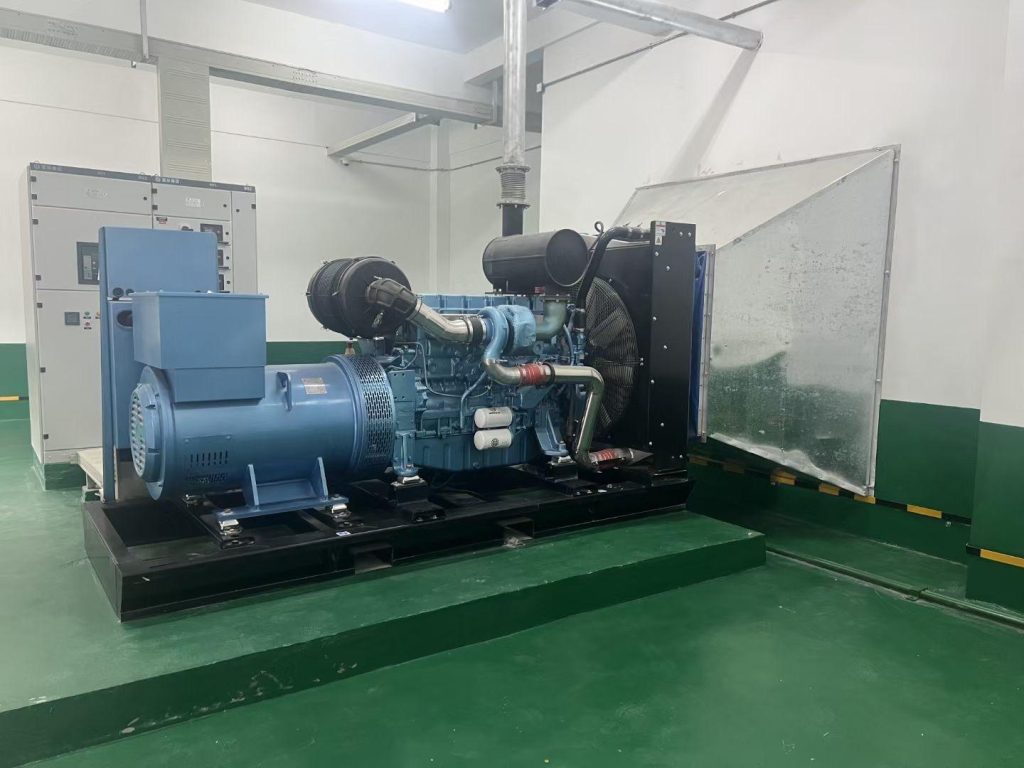
How is the coupling chosen for the case?
The coupling is chosen so that its stiffness puts the first natural frequency well away from any firing order, often by 20% of the speed in the running range, and so that the element can carry the torque ripple without overheating. A coupling chosen on torque alone often sits on a resonance it was not designed for. The case output names the stiffness range that works.
A damper may be added at the free end of the crankshaft where the case shows a high amplitude at the front of the train. A damper adds cost and it is cheaper than a shaft. Yangzhou Tesla Power lists the coupling stiffness and the damper part number on the shaft drawing, because a substitute element fitted in service changes the case without anyone noticing.
What should a buyer put on the enquiry?
Send the engine model and rating, the alternator make and rotor inertia, the coupling type, the running speed and the start frequency. Add whether the set drives through a gearbox, because a gearbox adds its own stiffness and its own rattle. Those six items let a supplier run the case, and they show whether the offer has quoted a coupling or a calculation. A case quoted as a one line note rather than a diagram is not a case, and the offer should be read for the difference.
The wording on the offer matters too. Genset torsional vibration manufacturers often skip the case on a standard build, and Chinese genset torsional suppliers sometimes substitute an element that was not in the case. Ask for genset torsional vibration for a large frame, genset torsional for a variable speed set and genset for a data centre as three separate cases. Tesla Power attaches the case to the order, and the 1000kW container build shows the coupling.
What does the handover file record?
The file carries the case reference, the coupling stiffness, the damper part number, the first natural frequency, the 3 speeds at which it sits. One page covers the shaft train when those five items sit under the set serial number. Add the conformity assessment for the shaft train when the installation is part of a permit package. A case reference on the order is what allows the pairing to be checked again in five years.
Hand the page to the technician who will replace the element rather than to the buyer who placed the order. the Yangzhou factory describes the process behind the case. the commissioning notes lists the frames that ship with a damper, the build range explains how a coupling element is identified from its marking, the ISO 8528-1 duty definitions sets the rating basis the speed comes from, and the NFPA 110 maintenance routine covers the load steps the set was accepted on.
Frequently asked questions about genset torsional vibration
They cannot, because the frame may be still while the shaft oscillates. A torsional measurement needs a strain gauge or a shaft encoder rather than an accelerometer on the baseframe. A set with a good frame reading and a failing coupling is the classic case.
A bigger coupling is usually a stiffer coupling, and that moves the natural frequency rather than removing it. The case has to be rerun with the new stiffness. A larger coupling fitted to cure a rattle can move the resonance into the running range.
The rotor inertia and the coupling stiffness are different, so the natural frequency is different. The engine does not know which alternator is behind it. That is why a case belongs to a pairing rather than to an engine model.
It is needed where the case shows a high amplitude at the front of the train and no other change brings it down. Many pairings pass without one. Fit it on the case rather than as a precaution, because a damper adds a wear part to the front of the engine.
The torque drops to zero in an instant and the shaft train rings at its natural frequency with the full load energy behind it. A case that passes at steady load can still fail on a rejection. Tell the supplier if the site sheds load regularly, because that changes the acceptance criterion.
A case takes a few days once the inertias are confirmed, and the wait is usually in confirming them rather than in the calculation. Start it with the order rather than with the drawing release. Tesla Power treats the case as a condition of release for a large frame.