
Genset trailer axle rating decides how much of the set the road leg may carry, and the drawbar takes the rest. Read how the load is shared and how the brakes are chosen. Tesla Power draws the axle position on the general arrangement, so send the site access plan to our sales desk for a quotation.
- Ask for the axle rating in kilograms, because a rating quoted in tons is read differently in different markets.
- Check the drawbar load, since a heavy nose unloads the towing vehicle and a light one makes the trailer unstable.
- Look at the brake type, because overrun, electric and air brakes suit different towing vehicles.
- Ask what the tow speed limit is, because it follows the tyre rating rather than the chassis.
What does the genset trailer axle rating cover?
The axle rating covers the load the axle itself may carry, and it is not the same figure as the gross weight of the trailer. The gross weight is shared between the axle and the drawbar, so a trailer with a 3,500 kg axle and a 350 kg drawbar load carries 3,850 kg in total. A buyer who compares a set weight against the axle rating alone is comparing two different quantities.
The rating also covers the tyres, the hubs, the suspension and the frame around the axle, and the lowest of those figures is the one that governs. Tesla Power Equipment quotes the axle rating, the tyre load index and the gross weight on the same line, because a set that fits one figure can still exceed another.
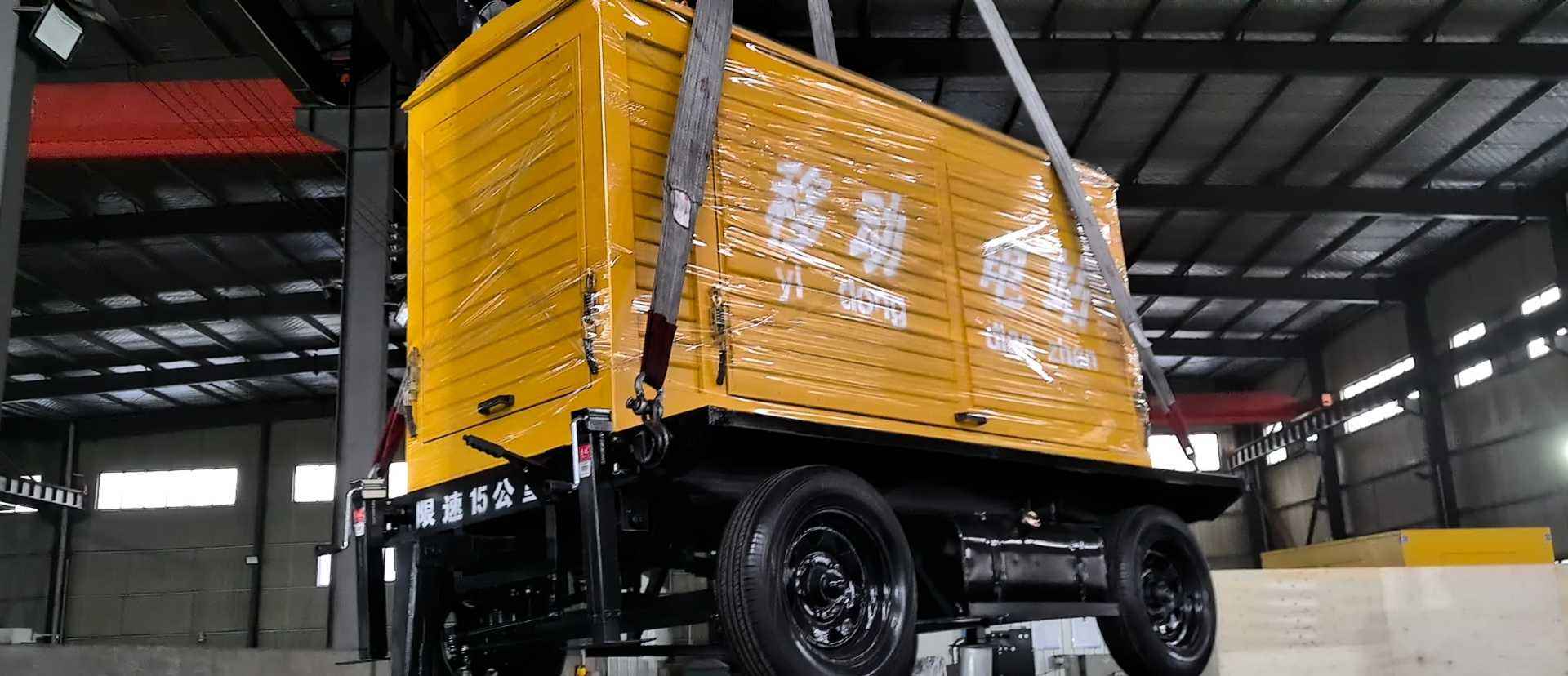
Why does axle load decide the tow vehicle?
The towing vehicle has its own limits, and the two that matter are the drawbar load it can accept and the gross train weight it is rated for. A trailer whose drawbar load exceeds the vehicle limit cannot be towed legally whatever the axle says. A trailer whose gross weight pushes the combination past the train limit cannot be towed either, and both limits are printed on the vehicle rather than on the trailer.
The consequence is that the same set can be legal behind one vehicle and illegal behind another, which is why the trailer is specified against the fleet rather than against the set. A genset for a site where the set is moved by a hired truck needs the hire class written into the order, because the site does not control what arrives. the export packing notes treat the tow vehicle as part of the transport plan, on the loading rules in the ISO 8528-1 rating bands.
| Trailer figure | What it limits | What it means for the order |
|---|---|---|
| Axle rating | Load on the axle | Set by the hubs, tyres and suspension |
| Drawbar load | Load on the tow ball | Set by the towing vehicle limit |
| Gross weight | Axle plus drawbar | Set by the trailer frame |
| Train weight | Vehicle plus trailer | Set by the towing vehicle |
| Tyre speed rating | Towing speed | Often below the road limit |
How is the load shared between the axle and the drawbar?
The share is set by where the centre of gravity of the set sits against the axle, and the set is not a uniform block. The engine, the alternator and the fuel tank sit at different points, and a tank that is full moves the centre of gravity towards whichever end it is on. A trailer specified on a dry weight and used full is a trailer that is overloaded on one axle, and the tank size belongs in the calculation before the axle position is fixed.
A 400kVA set at 0.8 pf carries 320kW, so 400kVA × 0.8 = 320kW; the set, the canopy and a full tank at 0.84 kg/L put about 3,600 kg on the trailer, and a drawbar load of 10% leaves 3,240 kg on the axle against a 3,500 kg rating, which is 260 kg of margin. That margin disappears if the tank is larger than the plan assumed, so the tank size belongs in the calculation, and the 500kVA silent unit with the ATS option quotes the figure against a stated tank.
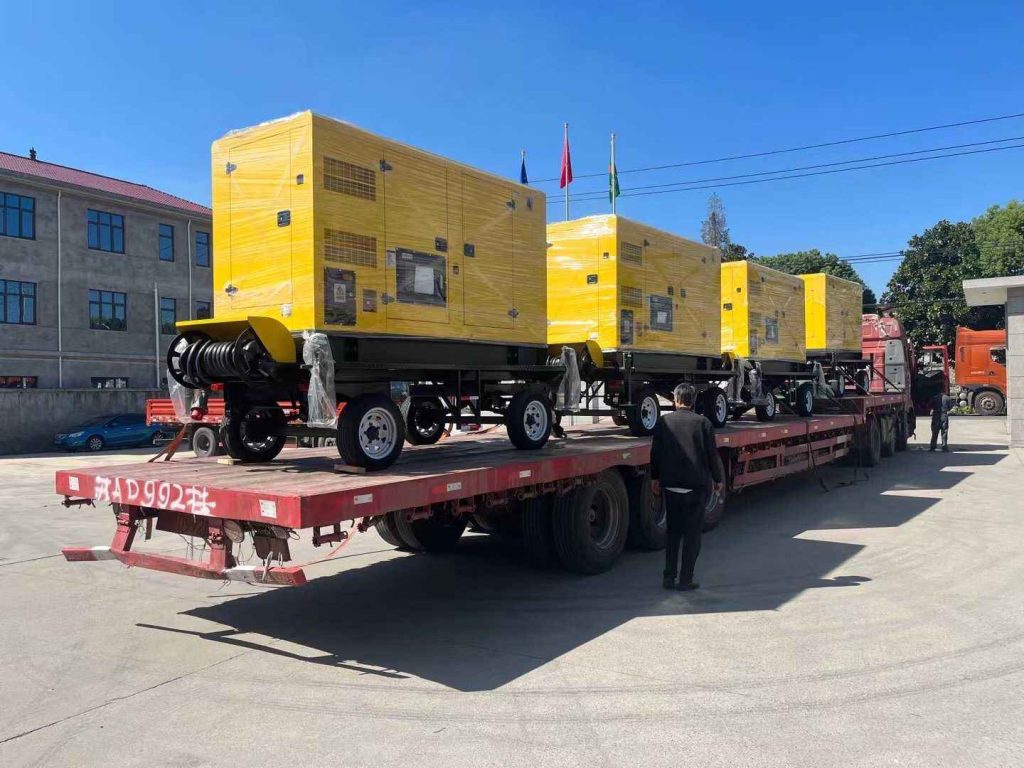
What braking does the axle need?
The brake type follows the towing vehicle and the market, and the three common answers are overrun, electric and air. An overrun brake works on the push of the trailer against the vehicle and needs no wiring, which suits a site that hires different trucks. An electric brake needs a controller in the vehicle and gives the driver a manual override. An air brake needs a vehicle with an air supply and suits heavy combinations.
The brake also has to be rated for the gross weight rather than for the axle, because the drawbar load adds to what the brakes have to stop. A trailer braked on the axle figure alone is under braked at gross weight, and the shortfall shows on a downhill grade rather than on the flat. Tesla Power states the brake rating with the gross weight so the two can be checked together.
How is the coupling checked before dispatch?
The coupling is checked by measuring the drawbar load with the set fuelled and ready, not with it empty. The measurement needs a scale under the jockey wheel and a level surface, and the figure has to fall inside the range the towing vehicle accepts. A trailer that passes on a dry weight and fails when fuelled is a trailer that was not checked against the duty it will actually see.
The check also covers the breakaway cable, the lighting board and the tyre pressures, because those three decide whether the combination is legal rather than whether it is stable. the generator set range states which frames are offered on a trailer and which are supplied on a skid for a flat rack, and the inspection routine follows the NFPA 110 inspection routine. A set that is moved twice a year does not need a trailer, and a set that is moved weekly needs a brake the fleet can operate. Tesla Power asks for the move count before it quotes a trailer.
Which records prove the trailer is legal?
Three records prove it: the axle and tyre rating sheet, the drawbar load measured with the set fuelled, and the brake test on the combination. The first shows what the trailer can carry, the second shows what it does carry and the third shows that it stops. A file with only the first describes a trailer that may be legal and may not be safe, because the rating is a permission and the measurement is the fact, and a combination can hold one and fail the other on the same afternoon.
The brake test belongs on the same visit as the load measurement, because a brake that works at one weight can fail at another. Yangzhou Tesla Power writes both figures on the handover sheet, so the site can repeat the measurement when the tank size changes or when a different vehicle takes over the tow.
What should the offer state about the chassis?
The offer should state the axle rating, the gross weight, the drawbar load range, the brake type and the tow speed limit. Those five lines let a buyer check the trailer against the fleet instead of against the set. Most genset manufacturers quote the axle rating and leave the other four to the body builder, and the four are what decide whether the combination is legal.
Chinese genset suppliers who print all five make the comparison possible, and a genset for the first year of service shows the difference the first time a hired truck arrives with the wrong coupling. A genset in a market where the road rules differ between provinces needs the tow speed on the sheet, because the tyre rating and the legal limit are not the same number.
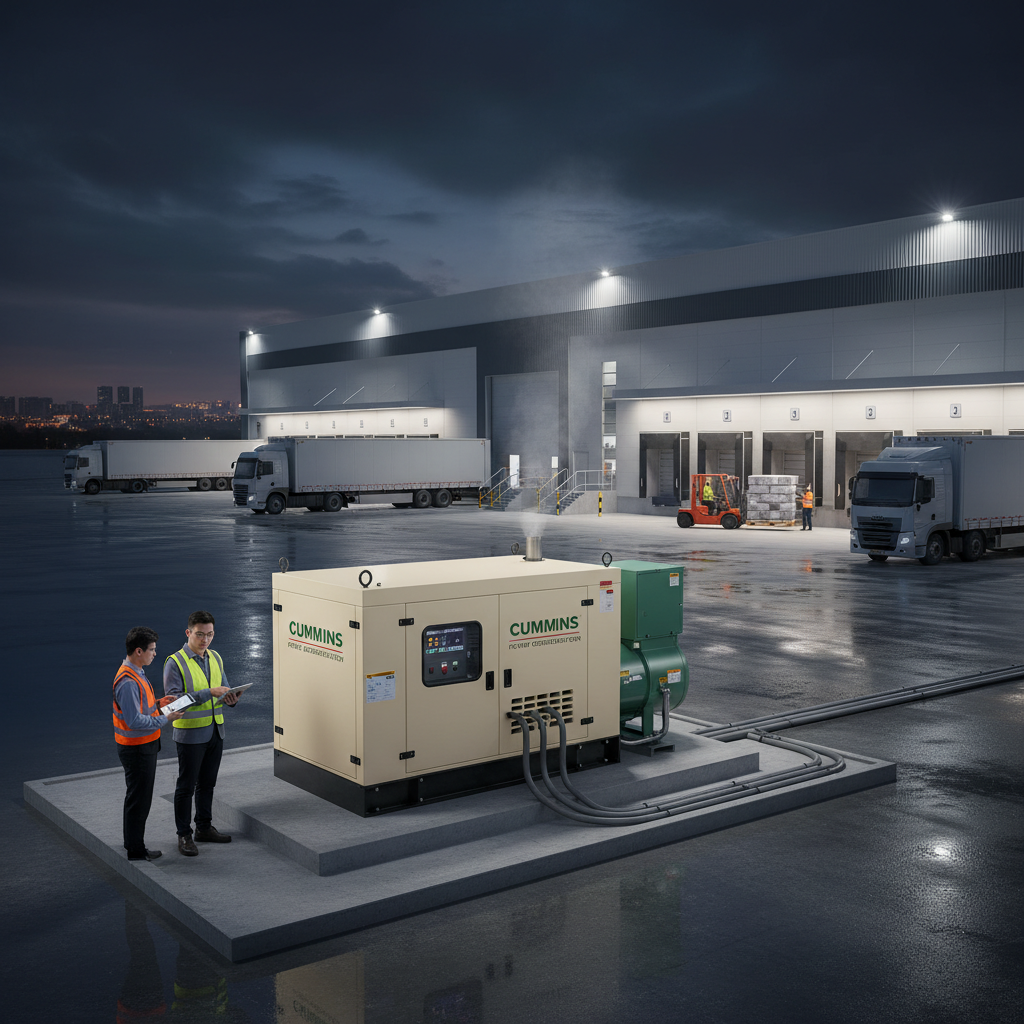
What does the handover file carry for the trailer?
The handover file carries the axle rating, the gross weight, the measured drawbar load and the brake test, all on one sheet with the serial number of the set. A buyer who reads it can tell whether the measurement was taken fuelled and whether the brake was tested on the combination. Tesla Power issues that sheet with the set, so a later change of vehicle starts from a recorded figure.
The file also carries the tyre load index and the speed rating, because a replacement tyre bought on size alone can lower both. Genset documentation for a trailer is only complete when the tyre figures appear beside the axle rating, and the bay that weighs the fuelled set follows our factory and test bay routine.
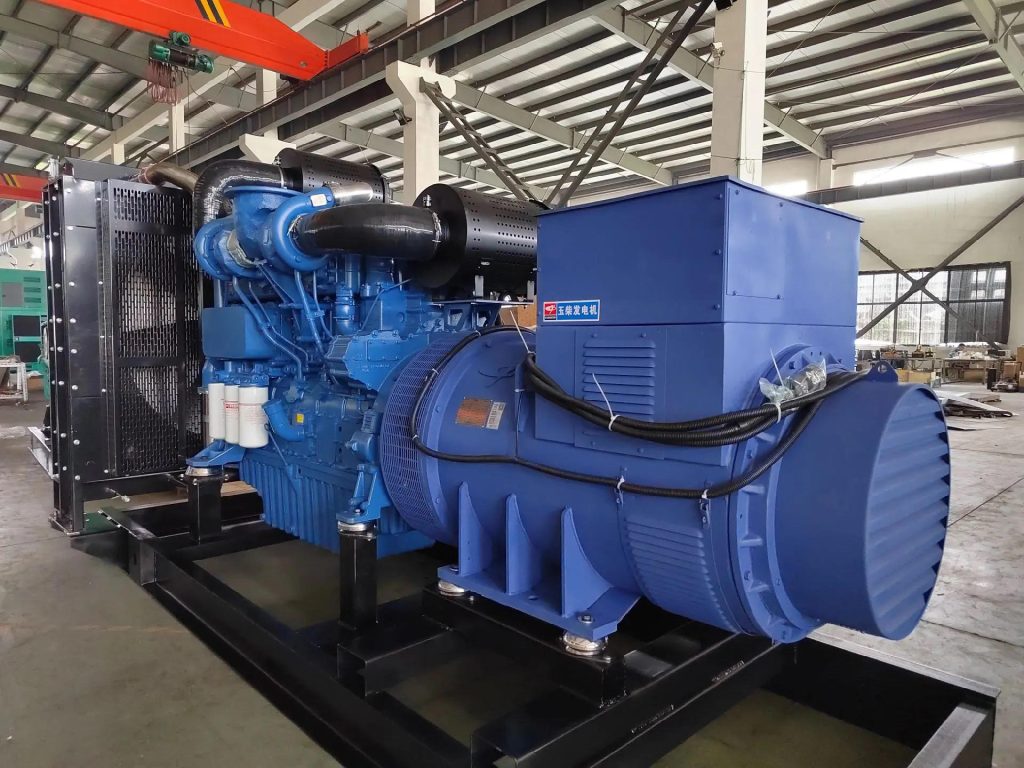
Send the fleet list and the site access route with the enquiry, and the axle, the brake and the tow speed come back as one answer instead of five items a body builder has to reconcile. Tesla Power writes that answer into the offer, so the road leg is visible before the order rather than at the first weighbridge.
Frequently asked questions about genset trailer axle
It can be uprated when the axle, the tyres and the frame all allow it, and the lowest of the three sets the new figure. A plate change alone does not uprate anything. Ask which component is the limit before ordering a different plate.
Enough to keep the trailer stable and not more than the towing vehicle accepts, which is a range rather than a figure. The range comes from the vehicle manual. A site that aims for a single number usually ends up outside the range at one end.
It does, because the fuel sits at one end of the set and moves the centre of gravity. A tank that holds several hundred litres is several hundred kilograms. The trailer should be specified and measured at the working fuel level, not at empty.
Because the tyre is rated for a speed at a load, and the two move together. A tyre carrying its maximum load has a lower speed rating than the same tyre at half load. The tow speed belongs on the sheet beside the load index.
It is enough up to the weight the coupling and the vehicle allow, and it becomes marginal on a long descent. A heavy combination usually wants electric or air braking so the driver can lead the trailer. Ask what the fleet already operates.
It can be shipped as a roll on unit and it usually costs more than a skid on a flat rack. The trailer adds a second set of restraints and a second inspection. Ask for both freight figures before deciding, and Tesla Power quotes the two side by side.