
What buyers should know first
A factory diesel generator quotation is only useful when the supplier receives clear load, site, and operating information. Before asking for price, prepare the running load, largest motor starting demand, voltage, phase, frequency, duty type, enclosure preference, and whether the system needs ATS or manual transfer.
In practice
For a factory, the generator often protects production equipment, lighting, compressed air, fire pumps, security systems, and office loads. A purchaser should separate essential loads from non-essential loads before sizing the set.
Procurement checklist
- Confirm running load, starting load, voltage, phase, and frequency.
- State whether the generator is for standby duty, prime duty, or mixed project use.
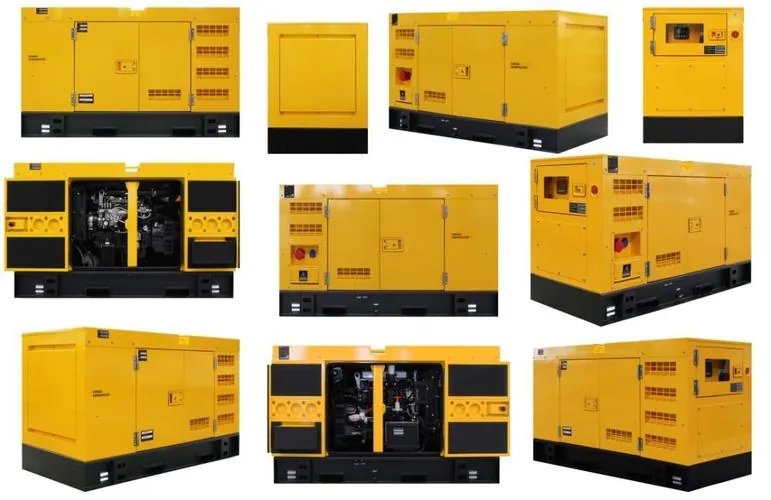
- Confirm silent canopy, open-frame, containerized structure, ATS, or manual transfer needs.
- Send altitude, ambient temperature, installation space, ventilation, and noise limits.
- Request datasheet, engine model, alternator model, controller details, drawings, and packing dimensions.
Common configuration mistakes
Many RFQ problems start when buyers compare only kW or kVA. Rating basis, motor starting demand, site condition, fuel autonomy, service access, and transfer equipment can change the correct configuration. Product options can be compared through the Cummins generator category and the silent diesel generator set category.
FAQ
What should be sent before asking for price?
Send the load list, voltage, phase, frequency, expected running hours, site condition, enclosure preference, and transfer requirement.
Is standby rating the same as prime rating?
No. Standby rating is for emergency backup. Prime rating is used when the generator carries variable load for longer operating periods.
Should ATS be included in every quotation?
ATS should be included when automatic utility-to-generator transfer is required. Manual or temporary systems may use different switching arrangements.
Can the supplier choose the final size from limited information?
A supplier can suggest a planning range, but final sizing should be checked against real load, starting current, site condition, and project engineer requirements.
What an RFQ does in a factory power project
An RFQ, or request for quotation, is the data pack a buyer sends to a supplier so that a price can be calculated from facts
rather than assumptions. For a factory diesel generator it has to answer three questions: how much power is needed and when,
what electrical standard the site uses, and which items are inside the supplier’s scope. A complete RFQ normally returns
quotations within a narrow band, because every bidder is pricing the same machine. An incomplete one returns quotes that differ
by tens of percent, because each supplier has quietly chosen a different engine rating, enclosure or control package to fill the
gaps. The table below is the minimum data set worth sending before any price is requested.
Factory generator RFQ data table
| Data field | Why the supplier needs it | Example entry |
|---|---|---|
| Total running load (kW and kVA) | Sets the alternator frame and engine power | 620 kW running, 780 kVA |
| Largest motor and starting method | Checks transient voltage dip on motor start | 90 kW pump, star-delta |
| Voltage, phase, frequency | Selects alternator winding and voltage regulator | 400 V, 3 phase, 50 Hz |
| Duty rating required | Decides whether ESP, PRP, LTP or COP applies | PRP, 4 000 h/year |
| Fuel autonomy at site | Sizes base tank, day tank and bunding | 24 h at 75 % load |
| Altitude and ambient temperature | Applies output derating to the rating | 1 800 m, 38 °C |
| Enclosure and noise limit | Selects canopy, attenuation and cooling air path | Sound attenuated, ≤ 75 dB(A) at 7 m |
| Changeover method | Decides whether an ATS and its ratings are in scope | ATS, 4 pole, 1 600 A |
| Control and monitoring | Selects controller, paralleling and remote modules | Deep Sea 7320, Modbus to BMS |
| Emissions requirement | Confirms the legal engine platform for the destination | EU Stage V / EPA Tier 4 Final |
| Certification and testing | Defines factory acceptance test and documentation | ISO 9001, CE, FAT with load bank |
| Incoterm and delivery port | Separates the machine price from freight and risk | FOB Shanghai |
Figures worth keeping in front of you
- kW to kVA: three phase sets are rated at 0.8 power factor, so kW = kVA × 0.8.
- Motor starting current: roughly 6 × full load current direct-on-line, about 2–3 × with star-delta, around 1.5 × or less with a variable speed drive.
- Transient voltage dip: commonly limited to about 15–20 % during the largest motor start.
- Minimum continuous load: keep above roughly 30 % of rating to avoid wet stacking on long light-load runs.
- Fuel consumption: modern industrial sets typically burn around 0.24–0.30 L/kWh at 75–100 % load; use the figure on the rating sheet for budget calculations.
- Derating: allow roughly 1 % of output per 100 m above 1 000 m altitude, plus an allowance above the reference ambient temperature.
Common RFQ mistakes that distort the price
- Giving kVA without a power factor, so bidders assume different kW figures.
- Omitting the largest motor, which hides the transient sizing problem until commissioning.
- Not stating the duty code, so one supplier quotes ESP and another quotes PRP on the same engine.
- Leaving the enclosure undefined, which can change the package price more than the engine itself.
- Forgetting altitude and temperature, so the delivered set cannot reach its nameplate output on site.
- Asking for “a complete package” without listing the items, which makes quotations impossible to compare line by line.
Frequently asked questions
What information should be sent before asking for a generator price?
At minimum: total running load and the largest single motor that must start while the set is on load, voltage, phase and frequency, duty rating required (ESP, PRP, LTP or COP), fuel type, enclosure type, altitude and ambient temperature at site, fuel autonomy required, and whether an automatic transfer switch and remote monitoring are in scope. Without these, any price a supplier returns is an estimate based on assumptions rather than a quotation.
How do I convert kVA to kW for a diesel generator?
Multiply the kVA figure by the power factor. Three phase diesel generating sets are conventionally rated at 0.8 power factor, so kW = kVA × 0.8. A 500 kVA set therefore delivers 400 kW of usable active power. If a quotation shows kW and kVA with any other ratio, ask the supplier to confirm the power factor assumption before comparing it with another offer.
Why does the largest motor matter when sizing a generator?
A motor started direct-on-line can draw several times its full load current for a second or two, which pulls the generator voltage down and can trip contactors or stall other equipment. As a working figure, direct-on-line starting draws roughly 6 × full load current, while a star-delta starter reduces that to about 2–3 × and a variable speed drive to around 1.5 × or less. Giving the supplier the motor rating and starting method lets them check the transient voltage dip, which is usually limited to about 15–20 %.
Should the automatic transfer switch be included in every quotation?
Only if the set is for standby duty where an unattended changeover is required. For prime power or portable site supply an ATS may be unnecessary, and including it by default inflates the package. What matters is that the enquiry states whether changeover is manual or automatic, so that all suppliers price the same scope.
What is wet stacking and why does it affect the specification?
Wet stacking is the build up of unburned fuel and carbon in the exhaust when a diesel engine is run for long periods at a small fraction of its rating, typically below about 30 % load. It causes smoky exhaust, glazed cylinder bores and reduced engine life. If a factory’s night or weekend load is very light, the enquiry should raise this so the supplier can size the set appropriately, propose load banking, or suggest a load management scheme.
Which documents should be requested with the quotation?
Ask for the ISO 8528-1 rating sheet showing the duty code, the engine and alternator model and origin, the emissions tier the engine complies with, a general arrangement drawing, the control system specification, the test and commissioning scope, warranty terms in writing, and the spare parts list recommended for two years of operation.