
CE marking diesel generator requirements run through the EU directives that apply to the set as a whole. A compliant unit carries a valid Declaration of Conformity and a technical file sized to its rating and destination. Send the target rating, voltage and country with the Tesla Power quotation request so the directives are confirmed before you order.
- The set is assessed as one machine, not as a loose collection of engine, alternator and panel.
- Three to six directives may apply, depending on voltage, noise and engine emission class.
- The manufacturer signs the Declaration of Conformity; the technical file proves every claim behind it.
Which EU directives apply to a CE marking diesel generator?
A CE marking diesel generator is evaluated against the directives that fit its design, not a single fixed list. Most sets shipped to the EU fall under the Machinery Regulation, the Low Voltage Directive and the EMC Directive at minimum. The CE marking diesel generator manufacturer must name each applicable directive in the Declaration of Conformity and keep proof in the technical file.
The practical question is which directives actually apply to a given set. A 400 V three phase alternator output sits inside the Low Voltage Directive band, so that directive applies. Any electronic control and the alternator regulator fall under EMC. A China CE marking diesel generator supplier and a European maker carry the same obligation under the Machinery Regulation (EU) 2023/1230.
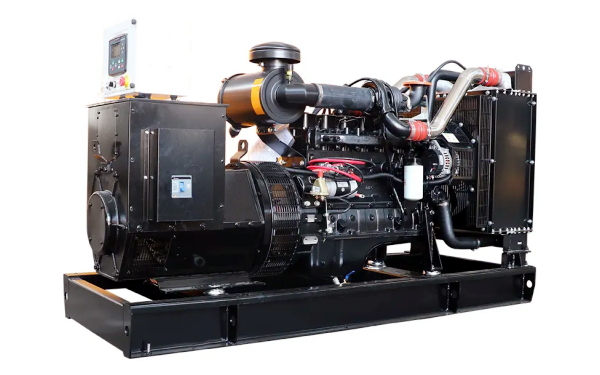
| Directive or regulation | What it covers | Typical trigger |
|---|---|---|
| Machinery Regulation (EU) 2023/1230 | Mechanical and electrical safety of the set as a machine | Rotating machine with moving parts |
| Low Voltage Directive 2014/35/EU | Electrical safety of the AC output | Output between 50 V and 1000 V AC |
| EMC Directive 2014/30/EU | Electromagnetic emission and immunity | Electronic control and regulator |
| Outdoor Noise Directive 2000/14/EC | Declared sound power level | Set used outdoors |
| NRMM Regulation (EU) 2016/1628 | Engine exhaust emission stage | Non-road diesel engine inside |
What does the Machinery Regulation require?
The Machinery Regulation treats the generator set as a machine and asks for a documented risk assessment covering every hazard a user can meet during normal operation, maintenance and transport. Guards, emergency stops, electrical isolation and exhaust heat all appear in that file. Tesla Power Equipment starts the risk file from the first design drawing and closes it only after the factory acceptance test. The file is the first document an inspector opens, so it must be complete before the set is crated.
A weak risk file is the most common reason a set is held at a European port, because market surveillance asks for it first. The regulation does not prescribe a test method for every bolt; it prescribes that the hazard was identified, the measure was chosen, and the residual risk was recorded. That discipline is what separates a genuine CE marking package from a sticker on a crate. A missing page can stop a shipment that is otherwise perfectly built.
How do the Low Voltage and EMC directives apply?
The Low Voltage Directive 2014/35/EU applies because the set delivers alternating current between 50 V and 1000 V at its terminals. It is concerned with shock protection, insulation coordination and clear marking of the supply side. A 500kVA set at 400 V sits inside that band, so the directive applies even when the set only feeds a building during an outage. The marking must stay readable for the working life of the set, not just on delivery day.
The EMC Directive 2014/30/EU covers the control module, the battery charger and the alternator voltage regulator, which can both emit and suffer radio-frequency disturbance. These two directives are satisfied mainly through design evidence rather than a single pass or fail test. The product index lists the rated voltages we build to, and each rated voltage changes which clauses are invoked. The IEC 61000 emission limits set the test methods the controller must pass before the declaration is signed.
What does the Outdoor Noise Directive add?
The Outdoor Noise Directive 2000/14/EC applies to equipment for outdoor use, and a diesel generator set is named in its scope. For power generators below 400kW it sets a specified sound power level; at or above 400kW it requires the sound power level to be measured and labelled rather than capped. The limit is computed from the rated power Pel in kilowatts, so the prime power figure from ISO 8528-1 is the one to use. Tesla Power measures every outdoor set on a semi-anechoic pad and records the value in the technical file.
Under Article 12 stage II, the specified sound power limit for generators in the upper power band is 95 plus the base-10 logarithm of Pel. Below the lowest band the constant is 95, and the middle band 96; most export sets sit in the upper band. A set quoted above the limit could not carry CE marking without a corrected measurement and a revised rating plate. The arithmetic is small but it decides whether the nameplate is lawful. The silent-type category is judged on the same limit, because the enclosure changes the measured value, not the directive.
Which engine emissions rules apply to the set?
The engine inside the set is a non-road diesel engine, so the NRMM Regulation (EU) 2016/1628 applies to it even though the set as a whole is a machine. The regulation sets exhaust emission stages for several pollutants, and the applicable stage depends on the engine displacement and power. A small engine and a large engine face different thresholds, so the engine model on the nameplate decides which stage applies. Tesla Power specifies the engine stage on the same page as the rating so the two numbers are read together.
Stage V is the current NRMM stage for most power bands, and it tightened the particulate limit for the larger displacement engine classes. A generator for hospital use and a generator for mining site use can share an engine family and therefore a stage, which keeps the conformity paperwork consistent across a product range. The engine maker supplies the emission certificate, and that certificate is one of the documents in the technical file. The Cummins range we build carries the stage on the same datasheet the buyer receives.
What goes into the technical file?
The technical file is the evidence behind the Declaration of Conformity, and a CE marking diesel generator depends entirely on that file for its completeness. It holds the risk assessment, the design drawings, the essential safety calculations, the type test reports and the supplier declarations for components such as the circuit breaker and the controller. Market surveillance can ask for the file for years after the set ships, so it must be organised, dated and signed. A set with a handsome nameplate but no file is not conforming in any practical sense. The ISO 8528-1 rating definitions give the rating language the file uses for power and voltage.
Risk assessment file
The risk assessment lists every hazard from electrical shock to hot exhaust and explains the measure taken against each one. It is a living document that starts at design and closes at the acceptance test. Tesla Power dates each revision so the file shows the reasoning, not just the conclusion, and the same folder serves every project we deliver.
Test reports and component declarations
Type test reports cover insulation, temperature rise and sound power, while component suppliers provide their own declarations for the breaker and the controller. The file is incomplete until every supplied part has a traceable document. We bind these with the test records so the chain of evidence is unbroken from the engine to the rating plate.
The drawings fix the guarding, the clearances and the earthing path that the directives expect. A change to the baseframe after the test means the drawing and the file must be revised together, because the inspection measures the set against the drawing that was signed.
How is the Declaration of Conformity issued?
The Declaration of Conformity is the document the manufacturer signs to state that the set meets every applicable directive. It names the directives, the harmonised standards used, the notified body if one was involved, and the signatory with authority to bind the company. It is written in the official language of the member state where the set is placed on the market. Yangzhou Tesla Power issues the declaration under the legal entity that built the set, and the signature is recorded against the serial number.
Language and signing
The declaration must be readable by the authority that inspects it, so the language follows the destination market rather than the factory. A single English declaration is accepted in some states but not all, and the importer may ask for a local-language version. We confirm the language need at the quotation stage so the document is ready before the container leaves.
Retention period
The Machinery Regulation requires the technical file to be kept available for ten years after the last unit of the model is manufactured. The Declaration of Conformity points to that file, so the ten-year clock is a planning fact, not a formality. A buyer who may resell the set years later relies on the file still being retrievable, and we store it against the serial number for that full window.
What does conformity assessment for the EU market involve?
Conformity assessment for the EU market is the end-to-end route from risk analysis to the signed declaration, and most sets follow the manufacturer's internal route rather than a notified-body audit. The manufacturer decides the modules, runs the tests, prepares the file and signs. Where a directive demands a notified body, that body reviews the specific evidence and issues its own certificate, which is then referenced in the declaration. We plan the route at design so no directive is discovered late.
The single most useful habit is to freeze the applicable directive list before the engine is ordered. Adding a directive after the set is built usually means rework, and rework after painting is expensive. A conformity checklist kept beside the bill of materials catches most of these gaps early. Tesla Power reviews that checklist with the buyer at the quotation stage, because the destination market can change the noise route and the engine stage at the same time. The factory profile lists the standards we build to, and the same profile names the notified bodies we use when one is required.
CE marking diesel generator for EU export: a worked example
Take a 500kVA set rated at 0.8 power factor. Under Article 12 stage II for the upper power band the specified sound power limit is 95 plus the base-10 logarithm of Pel. With Pel = 400: 95 + log10(400) = 95 + 2.60 = 97.6 dB(A). A set quoted at 98 dB(A) would sit above the limit and could not carry CE marking without a corrected measurement and a revised rating plate.
The same 500kVA set also meets the Low Voltage Directive because its 400 V output is inside the 50 V to 1000 V band, and it meets EMC through the controller type tests. The engine inside meets NRMM Stage V for its displacement class. None of those lines is optional for a CE marking diesel generator for EU export, and the declaration must list all four. We present the four lines on one page so the buyer's engineer can read the rating, the noise figure and the engine stage as a single conforming package.
Common mistakes when exporting a CE marking diesel generator
The first mistake is treating CE marking as a label rather than a file. A sticker without the technical documentation behind it is not conformity, and market surveillance asks for the file before it asks for the plate. The second mistake is mixing kVA and kW when the directive uses a specific quantity; the Outdoor Noise Directive uses Pel in kW, and quoting the kVA figure in that line is simply wrong. The third is assuming one declaration covers every destination, when the language and the notified-body route can differ by country. Tesla Power closes these gaps at the quotation stage rather than at the port.
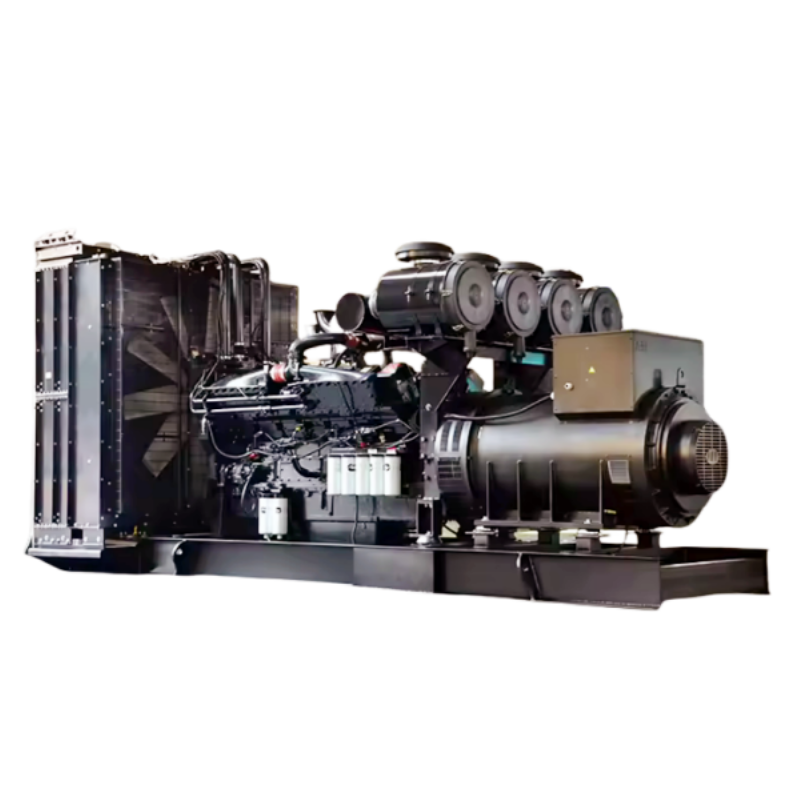
A quieter but costly mistake is letting the engine stage and the set rating drift apart during a long project. The engine certificate names a stage, and the declaration must name the same stage; a mid-project engine swap that changes the stage silently breaks the file. A CE marking diesel generator for construction site duty and a CE marking diesel generator for data center deployment may look identical on the outside, yet their environmental envelopes differ. We keep one checklist per serial number so the declaration matches the machine that ships. The help and advice library carries a worked conformity sheet for a typical export set, and the conformity certification post explains how the file supports the declaration. The outdoor noise directive post works through the sound power limit with a second example.
Frequently asked questions about CE marking a diesel generator
No. A type test certificate proves one set passed one test, while CE marking states that every unit of the model meets the applicable directives. The certificate is one input to the technical file, and the Declaration of Conformity is the output that covers the production run. The two are related but not interchangeable, and a buyer should ask for both before signing.
No. CE marking covers the set as placed on the market, not the building wiring, the fuel tank or the exhaust run that a local contractor adds. Those fall under national wiring rules and the site permit. The declaration ends at the set boundary, and the installer picks up the responsibility from there.
A 400 V three phase set meets the Low Voltage Directive band and the EMC Directive through its controller. As a rotating machine it meets the Machinery Regulation, and if used outdoors it meets the Outdoor Noise Directive. The engine meets NRMM. Five directives is a normal count for a standard export set, and the declaration names each one.
The Machinery Regulation requires the file for ten years after the last unit of the model is manufactured. The Declaration of Conformity references that file, so the ten-year window governs both. We store the file against the serial number for the full period so a later resale can be supported with the original evidence.
Yes. The manufacturer or its authorised representative signs the declaration, and the manufacturer can be outside the EU. A set built in China and exported to Europe is still declared by its maker, with the importer named where the directives require it. The legal entity on the declaration must be the one that built the machine.
No. CE marking addresses health, safety and environmental protection, not output, fuel burn or reliability. A set can be fully conforming and still be the wrong size for a given load. Tesla Power keeps the rating and the declaration consistent on the datasheet so the buyer reads both numbers together and judges performance from the load test.