
Generator fuel contamination problems start where water, sediment and microbial growth reach the day tank, and the fix begins with a fuel sample rather than a new filter. Water sources, the field checks that separate them, and the filter and separator details to compare with a supplier before you order are set out below.
- Sample the tank bottom, not the filler neck, because water and sediment settle low. Tesla Power asks for that sample with every fuel complaint.
- Read the day tank sizing notes before the tank is specified, not after it is installed.
- Compare the result against the 200 mg/kg water limit that EN 590 sets for delivered diesel.
- Drain the separator bowl weekly and record the volume, not just the colour.
- Send the tank size, the annual turnover and the ambient range with the enquiry.
What causes generator fuel contamination problems?
Four sources explain most cases: condensation in a part-filled tank, water carried in through the fill point, microbial growth at the fuel-water interface, and sediment lifted off the tank floor. Each source leaves a different signature in a bottom sample, and each one needs a different correction. Treating all four as a single fault is why some sites report the same symptom every wet season.
Condensation is the slowest source and the most common one. A tank that sits half full breathes with every temperature swing, and moist air condenses on the cold steel above the fuel line. The water runs down that wall and settles under the fuel, out of sight from the fill point. A site that draws fuel once a year collects the most, because the tank spends longer with a large vapour space.
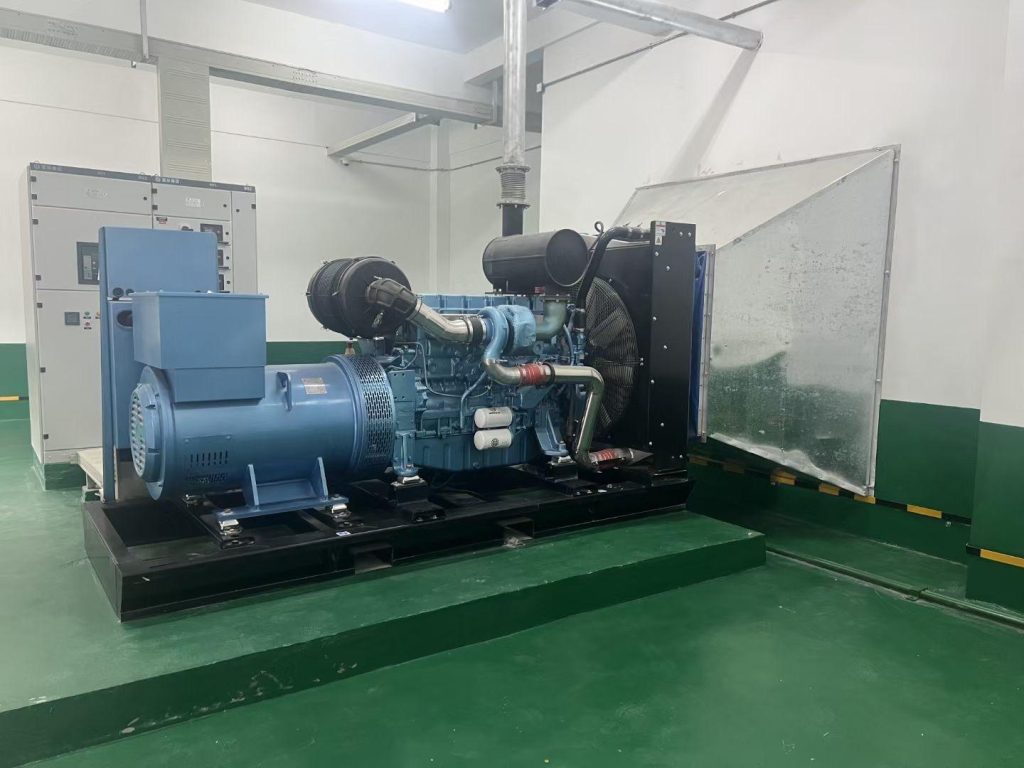
Which field tests show water, sediment or microbial growth?
Three field tests separate the sources before anything is dismantled. A bottom sample drawn into a clear jar shows free water as a sharp line within an hour, and sediment as a dark band under the fuel. A crackle test on a heated plate hisses when water is present in the fuel itself. A microbial dip slide, incubated for a few days, confirms growth at the interface when the jar shows a cloudy layer and a sour smell.
Read the three results together, because one test alone misleads. Clear fuel with a water line points to condensation or a leaking fill cap, and the tank clean is a schedule correction. Cloudy fuel with no free water points to microbial growth or an additive reaction. Dark fuel with fine sediment points to a degrading tank lining or to dirt entering through the breather. We record all three results on one sheet at Tesla Power Equipment, so the sample history survives a staff change at the site.
How much water does a day tank tolerate?
The engine tolerates almost none. EN 590 caps total water content at 200 mg/kg for fuel delivered to the site, and ASTM D975 allows 0.05% water and sediment by volume in the United States. Those figures describe clean, delivered fuel. Once a tank holds free water, the separator and filters carry the whole burden, and whatever passes them reaches the injection pump.
A separator removes free water and leaves dissolved water in the fuel, so the bowl level is the number worth watching. A tank drawing 1000 L with a 0.05% layer holds 0.5 L of water under the fuel, which fills a separator bowl several times over. Reaching the bowl within a week means the tank floor is holding a standing layer. The Weichai standby frame carries its separator on the engine side, and the bowl volume is stated on the data sheet.
How does contaminated fuel damage the injection system?
Water and abrasive particles attack different parts at different speeds. Water sits in the pump and injector galleries, corrodes the steel, then scuffs the plungers as the oil film breaks down. Fine sediment passes the element only when it is saturated, and it erodes nozzle seats and needle tips that run with clearances of a few micrometres. Neither failure appears as a single dramatic event.
Performance drops in a recognisable order. Hard starting and a longer crank come first, because injection pressure falls away at cranking speed. Rough running and grey smoke follow, then a loss of power under load with a rising exhaust temperature. A return-flow test on the injectors confirms the diagnosis before any pump work begins, and it costs far less than a pump rebuild. The ISO 8528-1 rating class fixes the output the set must still deliver, which turns the power loss into a measured figure rather than a complaint. Tesla Power sorts its service reports by that order, because it points to fuel before it points to the pump.
Which fuel limits decide whether a tank passes?
The figures below are the ones a fuel test report quotes, and the field check column is what a site team can confirm without a laboratory. Two of them decide most disputes: water, because it separates and corrodes, and total contamination, because it loads the filters.
| Property | EN 590 limit | ASTM D975 limit | Field check |
|---|---|---|---|
| Water content | 200 mg/kg max | 0.05% by volume | Clear jar, bottom sample |
| Total contamination | 24 mg/kg max | Sediment inside the 0.05% | Filter differential pressure |
| Sulphur | 10 mg/kg max | 15 mg/kg for S15 grade | Supplier certificate |
| Cetane number | 51 minimum | 40 minimum | Supplier certificate |
| Density at 15 C | 820 to 845 kg/m3 | Reported, not capped | Hydrometer on the sample |
The water row matters on a standby site, because delivered fuel usually passes and stored fuel usually fails. The contamination row explains an element that blocks in weeks rather than months. Sulphur and cetane belong to the supply contract, so they are argued with the fuel supplier rather than with the engine builder, and the engineering notes list the records a claim needs.
Worked example: fuel burn and water volume on a 500kVA set
Take a 500kVA standby set at 0.8 power factor, an engine figure of 210 g/kWh from the data sheet, and diesel at 0.84 kg/L. Real output is 500kVA x 0.8 = 400kW. Full-load burn is 400kW x 210 g/kWh = 84,000 g/h, which is 84 kg/h, and 84 kg/h divided by 0.84 kg/L = 100 L/h. A 1000 L day tank therefore holds ten hours at full load.
The same tank carries 1000 L x 0.0005 = 0.5 L of free water at the ASTM limit, and a 0.1 L bowl would fill five times over if that water moved forward in one slug. That is why the routine is a bowl drain rather than a filter change: the water has to leave the system before the element sees it. Yangzhou Tesla Power prints the burn figure at three load points on the data sheet, so the ten-hour number can be checked against the site's own duty.
How do you clean a tank that is already contaminated?
Cleaning is a sequence, and each step has a stopping point. Isolate the tank, pump the fuel out through a polishing filter into a clean container, and keep the last few litres for disposal because that is where the water and sludge sit. Open the inspection cover, remove the standing sludge by hand, and wash the floor with a diesel-compatible cleaner. Refill only after the floor is dry and the vent and fill cap are sound.
Microbial growth needs the water gone, not just a biocide dose. A biocide kills the organisms and leaves the biomass and the acid behind, so the sludge still has to be removed and the fuel still has to be polished. Sites that dose and stop report the growth returning within a season. Fit new elements after the clean, run the set on load for an hour, then inspect the first bowl drain. The maintenance checklist sets out that sequence for a handover file.
Which filters and separators belong in the specification?
Specify two stages at minimum: a water separator and pre-filter ahead of the lift pump, then a fine element on the pressure side. A 10 to 30 micrometre pre-filter protects the lift pump and drops the free water. A 5 micrometre final element suits a mechanical injection pump, and a 2 micrometre element is the figure common-rail systems ask for. Most generator manufacturers name the rating on the data sheet, and that figure governs.
Hardware detail decides whether the schedule can be kept. A bowl drain valve that a gloved hand can reach, a differential pressure indicator on the fine element, and a filter head with a heater for cold starts turn a monthly task into a two-minute check. Clear bowls show water at a glance, and metal bowls hide it. Tesla Power fits the drain valve on the engine side of the frame, so the bowl empties into a tray rather than onto the base.
What belongs in an enquiry for a site with dirty fuel?
Send four things with the enquiry: the tank volume and material, the annual fuel turnover, the ambient temperature range, and one recent fuel test report. Those four answers set the filtration stage, the separator size and the tank heating question. Generator fuel contamination problems in storage tanks follow the climate and the turnover, so a humid coastal site with a 2000 L tank and one fill a year is a different specification from a mine that burns its tank every fortnight. Generator fuel contamination problems for standby sets usually trace back to that one slow fill.
Ask the supplier to state the filter ratings, the separator bowl volume, the drain valve position and the water limit the fuel must meet on delivery. Those are specification facts rather than promises, and they belong in the offer. The standby and prime rated set range lists the filtration stage for each frame. Ask any Chinese generator manufacturer to name the same four figures, because a comparison against a second offer only works when both quotes carry them. Tesla Power Equipment answers that comparison line by line.
Which records keep a fuel system clean over years?
One sheet per tank carries the whole history: date, litres added, litres drawn, bowl drain volume, filter differential pressure and the result of any sample. Five columns and a date are enough. A site that logs the bowl volume weekly sees a rising trend before the fuel reaches the filters, and a site that logs only the element change sees nothing until the set fails on load. A prime power site burns its tank faster, so generator fuel for prime power sites needs the same checks at a shorter interval.
Trends decide the maintenance interval. A bowl volume that doubles between drains points to a fill point or breather fault. A differential pressure that climbs over three months points to microbial growth or a saturated element. Flat readings across a year mean the schedule is working. The records also settle a warranty discussion, because they show the fuel the engine received. The NFPA 110 test schedule gives that sheet a fixed review date, and Tesla Power keeps it with the handover pack. Recent build notes in the news section show the format on new frames.
Frequently asked questions about generator fuel contamination problems
It can run for a short time on fuel with dissolved water inside the EN 590 limit, because the separator and element handle that load. Free water is a different case: it reaches the pump galleries, corrodes the plungers and can seize an injector. A set that stumbles under load with a full bowl is already past the safe point, so stop it and drain the system.
Weekly on a standby set, and daily on a prime power site that burns fuel continuously. Drain until clean fuel appears, then close the valve and note the volume. Tesla Power asks for that volume on the service sheet, because a bowl that needs draining every day means water is entering faster than the separator can be serviced.
Only partly. A biocide stops the growth from spreading, but it does not remove the biomass or the acidic sludge already in the tank. The water layer has to be drained, the tank floor cleaned, and the fuel polished before the dose has any lasting effect. Dosing a tank that still holds standing water usually brings the growth back within one season.
A 10 to 30 micrometre pre-filter with a water separator ahead of the lift pump, then a 5 micrometre final element for a mechanical injection pump. Common-rail engines ask for 2 micrometres, and the engine data sheet states the figure. Fitting a finer element than the lift pump allows can starve the pump, so the rating follows the data sheet.
Cloudiness points to emulsified water or microbial growth, and a dark colour with fine particles points to sediment or a degrading tank lining. Clear amber fuel with a sharp water line underneath is the normal case for a tank that has not been drained. Hold the jar against a white card in daylight, because colour judged under sodium lighting misleads.
Six months is a practical working limit for stored diesel without treatment, and fuel held longer needs sampling rather than assumption. Storage life shortens in warm climates and in tanks that breathe heavily through a part-filled vapour space. A site that tests the bottom sample every quarter knows its own limit, which is worth more than a general figure.
Check the fuel path before the electrical side. A blocked element shows as a pressure drop at the filter head and a set that carries less load each week. A water layer shows as a full separator bowl and a stumble under a step load. Both faults are visible in under five minutes, and both cost less to fix than a pump.
The buyer and the fuel supplier should agree the delivered fuel limit first, and the set specification follows it. Ask for the water, contamination and sulphur figures in writing, plus generator documentation for the export file and conformity assessment for the EU market where the project needs it. Send the tank volume and the fuel report to the engineering desk for a filtration check before the order. Tesla Power's review uses the fuel a site actually receives.