
Generator load bank testing is the only way to prove that a 500kVA diesel generator set delivers its rated output at site conditions. This procedure covers the test sequence, the measurements that matter, and the records the Tesla Power engineering team asks for after handover.
- Prepare the load bank and cable schedule before the engine starts. Our load testing notes list the instruments you need.
- Record voltage, frequency and current at every load step.
- Hold each step long enough for coolant and oil temperatures to stabilise.
- Compare the results with the datasheet before you sign the handover.
What does generator load bank testing actually prove?
A load test proves three things at once. It proves the alternator can hold voltage under a resistive and reactive load. It proves the engine can carry that load without overheating. It also proves the protection and control systems trip at the values they are set to. None of those can be confirmed by a no-load run at the factory gate.
The test also exposes weak points that a visual inspection misses. Loose busbar connections heat up under load. Undersized cables show a voltage drop you cannot see at no load. A tired battery will still crank a cold engine, but it may fail the restart test at the end of the run. Each of these faults is cheap to fix before shipment and expensive to fix on site. A written record turns the test into evidence rather than opinion. Tesla Power Equipment builds every export set to this sequence.
How do you size a load bank for a 500kVA set?
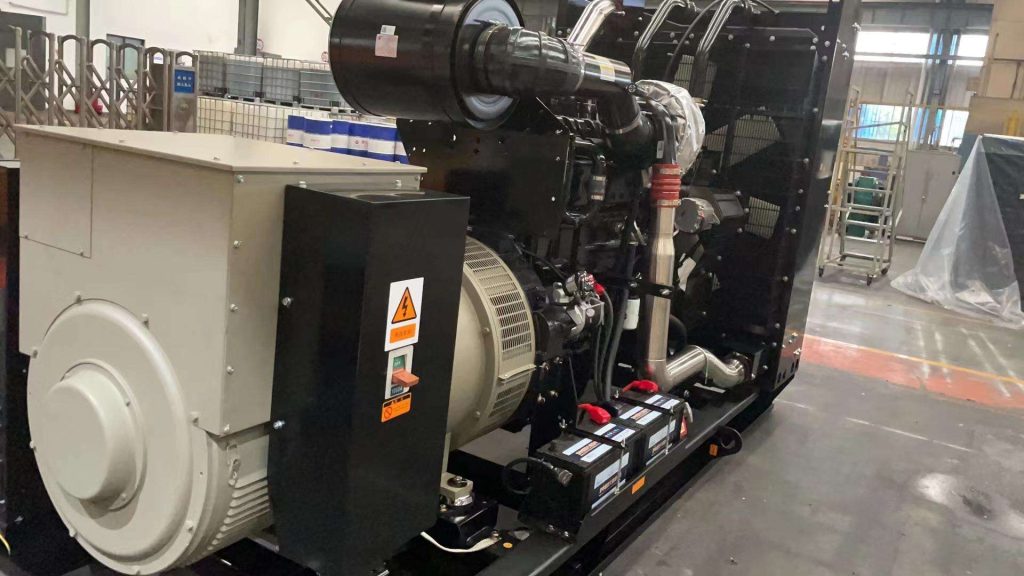
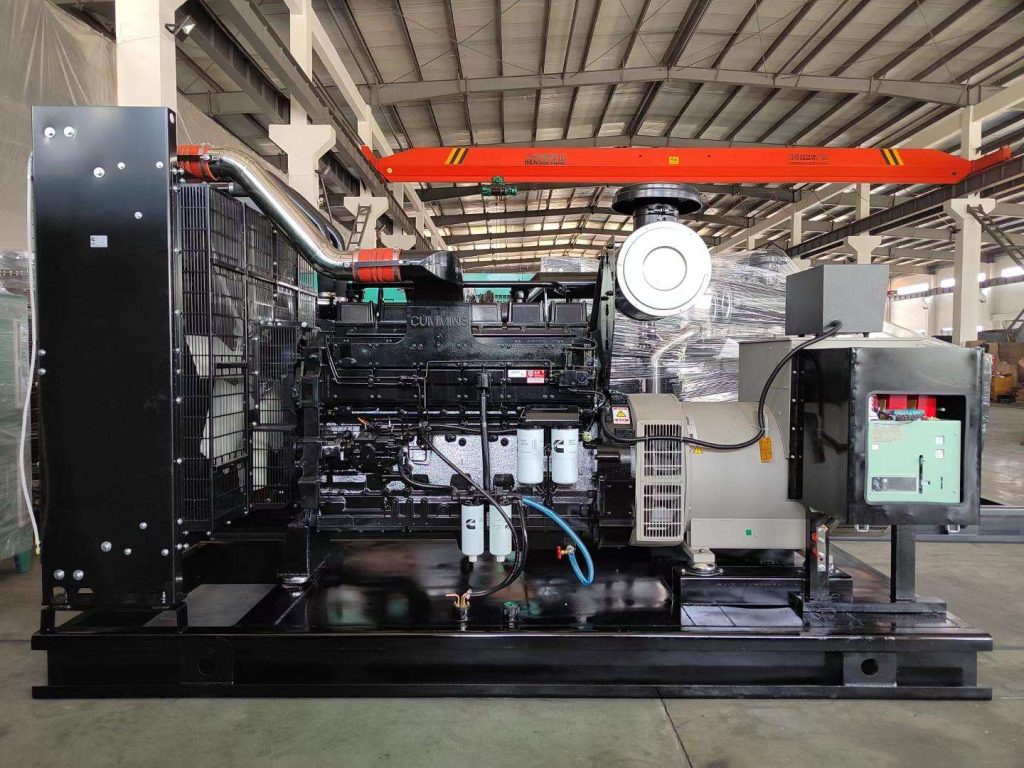
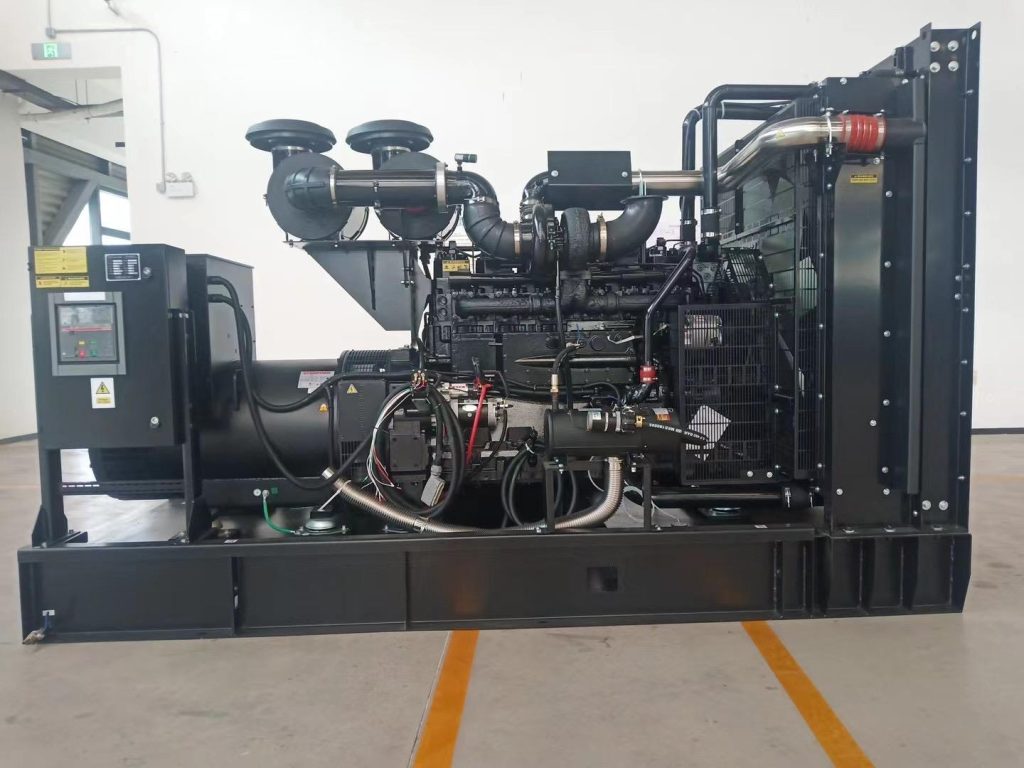
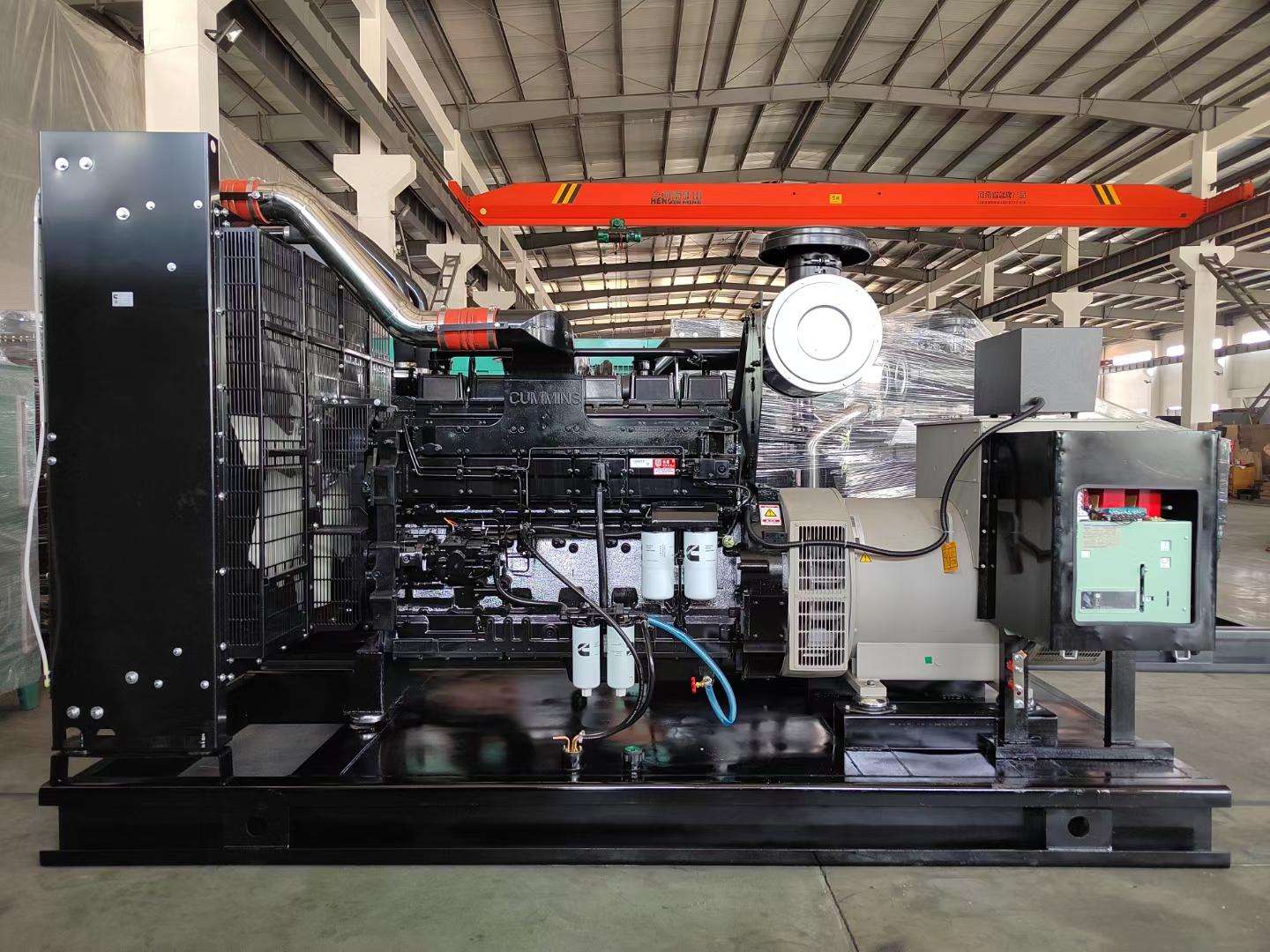
Size the bank so the highest step reaches the rated output without exceeding the alternator current limit. A 500kVA set at 400 V draws about 722 A per phase at full load. The bank should be built from switched steps, so the operator can hold 25%, 50%, 75% and 100% of rating in turn. Resistive steps are enough for a basic acceptance test. The open-frame diesel generator set on our product page uses the same step plan.
Add a reactive step when the alternator must feed motors, transformers or UPS rectifiers. Those loads pull current out of phase with voltage, and the alternator has to hold voltage while it does so. A purely resistive load bank cannot reproduce that condition. The datasheet states the alternator subtransient reactance, and that value sets the voltage dip you should expect at the terminals. A reactive step also proves the excitation system can recover from a sudden load change. Resistive vs reactive load bank testing answers two different questions.
Which measurements belong in the test record?
| Measurement | Acceptance limit | Recorded at |
|---|---|---|
| Voltage | Within 2.5% of 400 V | Every load step |
| Frequency | Within 1% of 50 Hz | Every load step |
| Oil pressure | Within the maker band | Start and finish |
| Coolant temperature | Below the alarm point | Steady state |
The test record is the document a warranty claim will lean on. It should show the ambient conditions, the fuel type, the oil grade and the instrument serial numbers. Every reading needs a timestamp and the name of the person who took it. Generator documentation for ISO 8528-1 lists the rating definitions a third party will check each figure against.
Keep the raw instrument files as well as the summary table. Modern power analysers export a waveform capture, and that capture settles arguments about a single odd reading. Store the files with the generator serial number in the filename. A shared folder beats an email attachment, because the folder survives staff changes. Contact our engineering team if you need the template we use. Tesla Power keeps the same folder structure for every project.
Sign the record on the day of the test. A signature added a month later carries much less weight with an engine maker's service network. Sign the scan and file it with the load steps.
What does 500kVA deliver at 0.8 power factor?
The arithmetic is simple. Take the alternator rating of 500kVA and multiply by the power factor of 0.8. The result is 500kVA x 0.8 = 400kW of usable real power. At 400 V three phase, that real power corresponds to a line current of about 577 A. If the site load is mostly resistive, the practical limit is closer to the full 500kVA.
This difference matters at the quotation stage. A buyer who sizes a set from a kW figure alone may order a machine that is too small for a motor-heavy load. A buyer who sizes from kVA alone may pay for capacity that the site cannot use. State the power factor in the enquiry, and read our published commissioning notes before you freeze the rating. Tesla Power quotes both figures on every offer.
Ask for the alternator subtransient reactance as well. That single figure tells you how far the voltage will dip when a large motor starts, and it costs nothing to request. Generator load bank testing for data centres follows the same sequence, with a longer hold at full load.
Step-by-step test sequence
- Isolate the site load and confirm the generator breaker is open.
- Connect the load bank cables and torque every terminal to the maker figure.
- Start the set and let it run at no load for five minutes.
- Apply the first step and hold it until temperatures settle.
- Step up through 50%, 75% and 100% of rating, recording at each point.
- Remove the load in reverse order and run the set for a cool-down period.
The cool-down step protects the turbocharger. A hot shutdown traps oil in the bearing housing and cooks it over time. Ten minutes at no load is enough to bring the temperatures down. Log the cool-down period in the same record, because a short cool-down is a common cause of early turbo failure on prime power sites.
Repeat the sequence at the end of the run to prove the set can restart under load. This is the step that most load steps schedules skip, and it is the one that finds a weak battery. A battery that passes a cold crank test may still fail a hot restart, so run both.
How do you read the load acceptance curve?
The load acceptance curve shows how quickly the engine picks up a block of load. The horizontal axis is time in seconds. The vertical axis is the transient frequency dip or voltage dip. A healthy set recovers to steady state within a few seconds of the step. Plot the trace against the step size. A 25% step should recover faster than a 100% step. If the shape changes between runs, the engine or the governor has changed too.
The load acceptance curve also shows the recovery shape. A sharp dip followed by a fast recovery points to a healthy governor. A slow sag that does not recover points to a fuel or air restriction. A dip that trips the breaker points to a protection setting that is too tight for the load. Keep every trace, not just the last one. Tesla Power keeps every trace in the project folder for five years.
Common failure patterns and what they indicate
A voltage dip larger than 15% on a motor start usually means the alternator is undersized for the starting current. The fix is a larger frame or a soft starter, not a higher excitation setting. Measure the starting current with a clamp meter and compare it with the alternator subtransient reactance. The generator manufacturer publishes a maximum ambient for each frame size, and that figure settles the argument.
A rising coolant temperature at constant load points to a fouled radiator or a failing thermostat. Both are cheap parts and both are easy to verify before shipment. Our load testing notes list the parts that fail most often on export sites, and the spares we ship with every set. Yangzhou Tesla Power ships that spare kit with every export order.
A frequency that wanders under steady load points to the governor or the fuel system. Air in the fuel line will cause the same symptom, so bleed the system before any governor work. Protection settings follow NFPA 110, so check the trip points against that document before you change them. Generator load bank testing for prime power sites runs longer, because the set carries the load every day. A set that trips on coolant temperature during the run needs diagnosis rather than a longer test, and the overheating fault sequence covers that work.
Site safety and documentation
Treat the load bank as live equipment for the whole test. Cables carry the full current and they get warm. Barricade the area and keep one person at the emergency stop at all times. Use a lockout tag on the site breaker so nobody reconnects the building load while the bank is connected. Ask any China generator supplier for the same three documents before you compare quotations.
Record the ambient temperature, because a hot day changes the result. An engine that holds load at 20 C may derate at 45 C. The datasheet states the derate curve, and the test record should note where the site sits on that curve. Read the factory profile for the altitude limits we build to, then check the site altitude before you accept the rating. Tesla Power publishes the same curve in the handover pack. Conformity assessment for the EU market is a separate file, and it names the standards the set was checked against.
- Keep a fire extinguisher rated for fuel and electrical fires at the test point.
- Confirm the earthing before the first start.
- Log every alarm, even the ones that clear on their own.
Frequently asked questions about load testing a 500kVA generator set
How long should a full load test run?
Hold full load for at least 30 minutes after the temperatures stabilise. Short runs hide slow faults. A longer run also proves the fuel system can feed the engine at rated output for a realistic period, which a five minute check cannot show.
Can a load test be done without a load bank?
Only if the site has a real load that can be applied in controlled steps. Resistive heaters and large motor loads work if they can be switched. A building load that cannot be controlled will not produce a usable record, and it will not prove the set at rated output.
What power factor should the test use?
Use the power factor stated on the enquiry or in the site load study. A test at unity power factor proves the engine and the real power path. A test at 0.8 power factor proves the alternator and the excitation system under a realistic reactive load.
How often should a set be load tested?
Annual testing suits standby sets that run a few hours a month. Prime power and continuous duty sets need a shorter interval, often quarterly. Sets in dusty or hot locations need a shorter interval again, because derating changes the true load on the engine.
Which instruments are needed for the record?
A three phase power analyser, a clamp meter, a tachometer and a contact thermometer cover most tests. Every instrument should carry a calibration certificate that is still in date, and the certificate number belongs in the record.
What if the set fails a load step?
Stop the test and find the cause before the next step. Repeat the step after the fix and record both attempts. A record that shows the failure and the correction is stronger evidence than a clean sheet with no notes.
Does a load test void the engine warranty?
No, provided the test follows the manufacturer's procedure and the record is complete. Read the engine manual before the test. Some makers set a limit on how long the set may run at overload, and exceeding that limit is what causes a warranty dispute. Tesla Power keeps that limit in the commissioning file so the site team can check it.