
Most generator overheating causes trace back to five faults: a blocked radiator core, low coolant, a stuck thermostat, an overloaded set, and hot air recirculating into the intake. This page walks through the readings that separate them, with the numbers we record on commissioning. Tesla Power tests every export set at rated load before shipment.
- Start with the radiator, because a blocked core is the single most common cause we see on site. Our plant room fault notes list the readings to take before you open anything.
- Measure the coolant level cold, then confirm the thermostat opens at its stamped temperature.
- Compare the room temperature against the design ambient, not against yesterday.
- Log the load percentage at the moment the alarm appears, because an overload and a cooling fault look identical on a gauge.
What are the most common generator overheating causes?
Generator overheating causes fall into two groups: the heat the engine makes and the heat the room will not let out. An overloaded set makes more heat than its radiator can reject, so the coolant temperature climbs steadily and the set derates. A blocked radiator core, a slipping fan belt, or a louvre that was left closed does the same thing from the other direction. Diagnosis starts with that split.
Read the exhaust and the coolant together before you blame the engine. A set that runs hot at full load but cools at half load is short of airflow or short of coolant capacity. A set that runs hot at light load points at a thermostat that stays closed, a fan turning backwards, or a temperature sensor that has drifted. The two patterns need different tools and different spare parts on the shelf.
How do you tell a cooling fault from an overload?
Separate the two by watching how fast the temperature moves and what the load does at the same time. An overload pushes coolant temperature up within two or three minutes of the load step, and the exhaust gas temperature rises with it. A cooling fault creeps instead, taking ten minutes or more to cross the alarm point while the load stays flat. That difference in timing is the whole diagnosis.
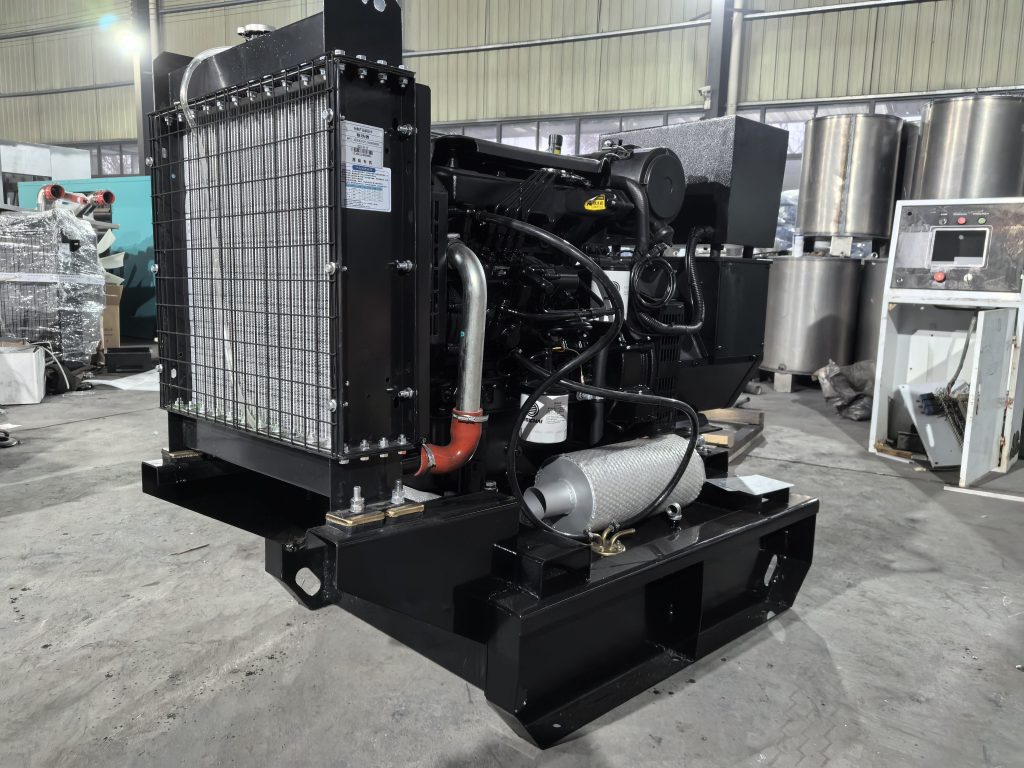
Check the ammeter before you touch a spanner. A set running above its rated current is overloaded, and the fix is a smaller load or a larger set rather than more coolant. Our open-frame diesel generator set carries a plate that states the standby and prime currents side by side, so the comparison is quick. A clamp meter on the outgoing cable settles the question in seconds, and Tesla Power prints both currents on every offer sheet.
Which coolant and thermostat faults raise temperature?
Coolant faults show up as a fast climb that continues after the load settles. A low level leaves the top of the radiator core dry, so the fan blows air across metal that carries no heat. A cap that holds less than its rated pressure lets the coolant boil at a lower temperature, and the loss compounds on every run. A pressure test on the cap takes two minutes and rules it out.
Thermostat faults behave the opposite way. A thermostat stuck open keeps the set cold at light load and then lets it overheat under a long pull, because the coolant spends too long in the block. A thermostat stuck closed sends the temperature straight up within a few minutes of start, and the top hose stays cool while the block gets hot. Feel both hoses before you order parts. Yangzhou Tesla Power records the opening temperature of every thermostat on the test sheet.
What does a 500kVA set need at 45 C ambient?
The arithmetic starts with the heat the set rejects. A 500kVA set at 400V and a power factor of 0.8 delivers 500kVA x 0.8 = 400kW of real power, which is about 722A per phase. The rest of the fuel energy leaves as heat through the radiator, the exhaust and the block. That single equation explains why a set that runs cool in winter trips in summer, because the air it draws is thinner and carries less heat away.
Convert that heat into airflow before you size anything. Divide the rejected heat by the air density, the specific heat of air and the temperature rise you will accept. At 45 C ambient a typical figure is 4.2 m3/s of radiator airflow, and the room needs about 1.5 times that once combustion air and leakage are added. State the ambient you design for, because the same set carries a different rating at 25 C and at 45 C. Tesla Power publishes both figures on every room schedule.
Which readings belong on the temperature log?
| Reading | Acceptance limit | Recorded at |
|---|---|---|
| Coolant temperature | Below the alarm set point | Every 15 minutes |
| Room temperature | Within 5 K of design ambient | 30 minutes at rated load |
| Exhaust gas temperature | Within 10% of the datasheet figure | Rated load |
| Load percentage | At or below rated current | Each load step |
| Coolant level | Between the marks when cold | Before start |
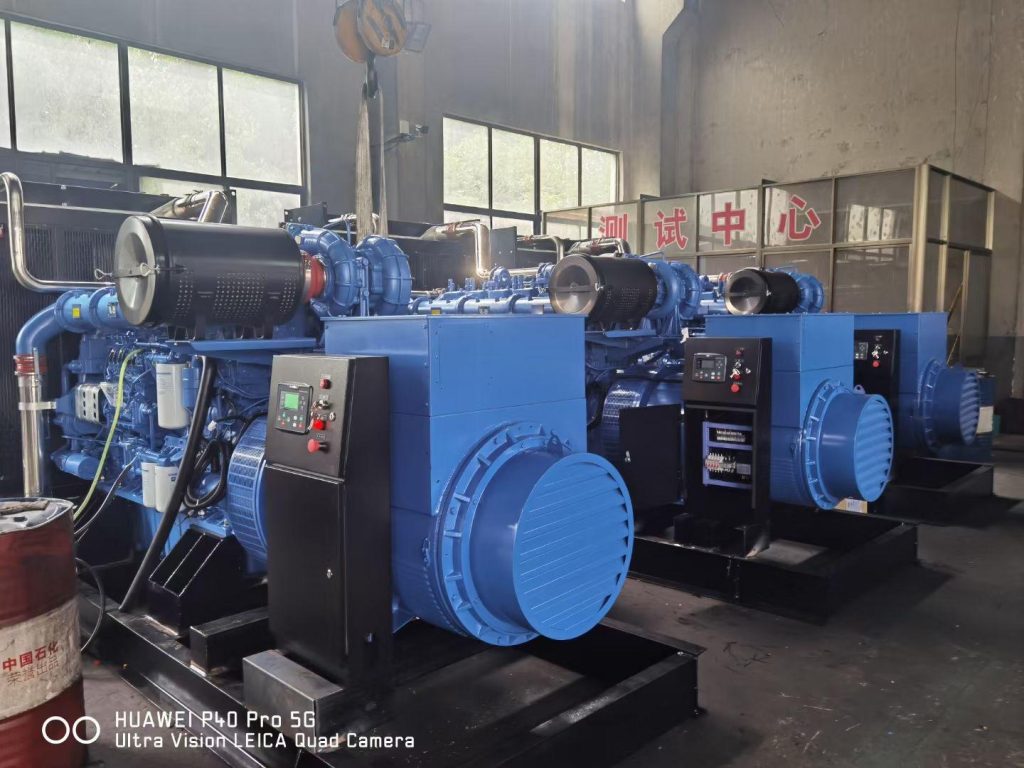
The log is the document a warranty claim leans on, so it needs a timestamp and a name against every row. Write down the instrument model as well, because a drifting gauge explains an odd reading better than a real fault does. Keep the raw files, not only the summary table. A shared folder survives staff changes and an email attachment does not. Tesla Power keeps the same folder layout for every export project.
Protection settings follow NFPA 110 requirements, so check the alarm and shutdown points against that document before you change them. Raising a trip point to silence an alarm hides the fault and shortens the life of the alternator insulation. A generator for continuous duty carries a lower rating than the same set on standby, so set the protection points to match the rating you bought. Our site notes on standby protection cover the same points in plain language.
How do you read a rising temperature trend?
A trend tells you more than a spot reading, and it costs nothing to collect. Plot coolant temperature against time for the first hour at load. A curve that flattens is a set working inside its cooling capacity. A curve that keeps climbing has not reached steady state, and the number you wrote down at ten minutes is not the operating temperature.
Compare the room temperature against the coolant temperature on the same axis. When both climb together, the room is the limit and the set is doing its job. When the coolant climbs while the room stays flat, the restriction is inside the cooling circuit: the core, the thermostat, the pump or the belt. The gap between the two lines is the diagnosis.
- A flat coolant line with a rising room line points to ventilation.
- A rising coolant line with a flat room line points to the coolant circuit.
- Both lines flat but high points to a design ambient that was set too low.
- A high reading that settles after the load step points to an oversized load, not a cooling fault.
- A generator factory in China keeps the same test record, so the sheet travels with the unit.
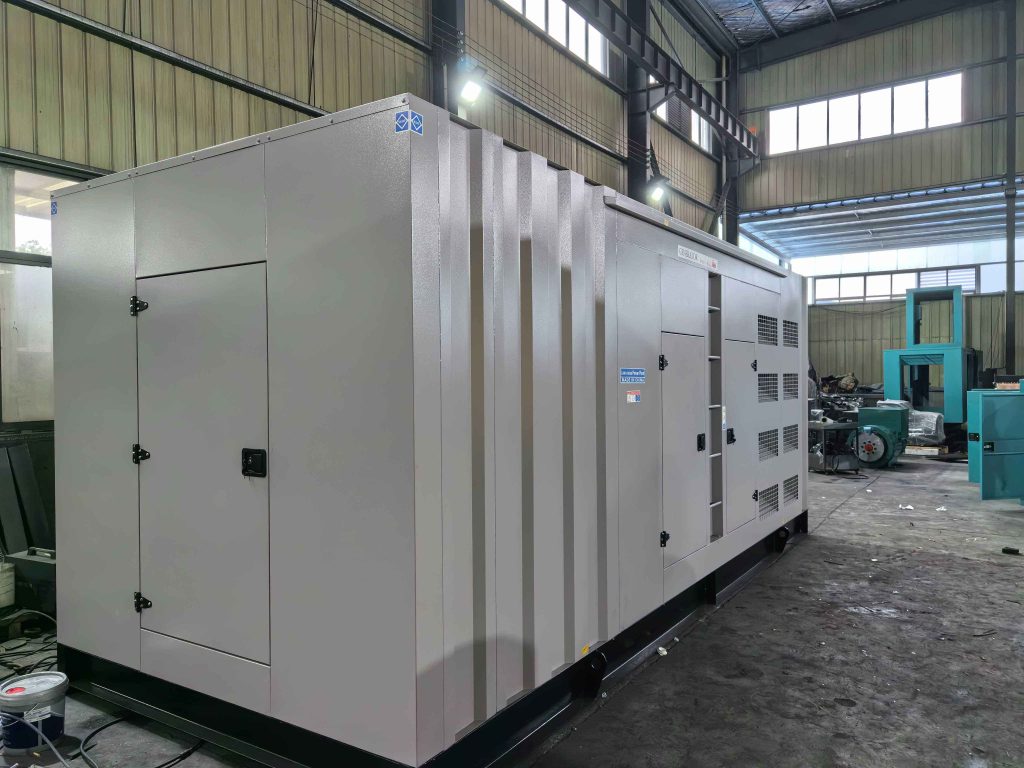
Log the ambient temperature at the start of the run as well, because a hot afternoon changes the result. A set that holds its rating at 25 C may need to derate at 45 C, and the datasheet carries the curve that says by how much. Tesla Power quotes that curve with every offer, and the airflow checks for plant rooms cover the room side of the same calculation. A generator in hot climates needs a larger louvre and a longer discharge duct to hold the same rating.
What does generator documentation for ISO 8528-5 require?
Generator documentation for ISO 8528-5 describes how a set is expected to behave when load changes, and temperature is part of that picture. The standard separates rating definitions, so a standby rating and a prime rating are not interchangeable on a hot day. Ask any generator manufacturer for the rating definition in writing before you compare two quotations on price alone.
The ISO 8528-5 text also sets out how transient behaviour is measured, which matters when a large motor starts and the voltage dips before the engine recovers. A set that recovers slowly runs hot for longer, because the fuel burned during the recovery leaves as heat. Conformity assessment for the EU market is a separate file and it names the standards the set was checked against.
Keep the rating definition, the ambient design figure and the derate curve in one folder. A third party who checks the installation will ask for all three, and a missing ambient figure turns a simple question into a site visit. Tesla Power prepares that folder before the set leaves the works, and the factory profile lists the altitudes and ambients we build to. A generator for standby duty runs a few hundred hours a year, so the ambient figure matters less than the starting reliability.
Site checks before you call the service team
Work through the cheap checks first, because most callouts end with a louvre that was closed or a level that was low. Barricade the set, confirm the breaker is open, and let the coolant cool before you open a cap. Then run the sequence below and write down what you find at each step. Generator overheating in enclosed plant rooms usually points at a louvre rather than a failed component.
- Confirm the intake and discharge louvres are open and clear.
- Check the coolant level cold and top up to the mark if it is low.
- Look at the radiator core with a torch for dust, straw or insect mesh.
- Check the fan belt tension and the fan rotation direction.
- Start the set, apply load in steps, and log the temperature at each step.
- Hold rated load for thirty minutes and record the steady figure.
Give the service team the log rather than a description. A sheet with six temperatures, the ambient at start and the load at each step lets an engineer name the likely fault before the van leaves. Tesla Power Equipment asks for the same sheet on every warranty call, and sending the load list to our engineering desk is faster than a phone description. Generator suppliers in China work from the same six readings, so a short log beats a long call.
Frequently asked questions about generator overheating
What are the first signs of generator overheating?
The coolant temperature gauge climbs past its normal figure and the panel alarm follows. Before that, the set may derate or hunt as the engine protection cuts fuel. Listen for a fan that sounds different and look for a wet patch under the radiator. Catching the derate before the shutdown saves the alternator insulation.
Can a generator overheat at light load?
Yes, and it is common. Light load lets the engine run cold, which allows unburned fuel and soot to build on the exhaust side and glaze the cylinder bores. The set then runs hot the next time it takes a real load. Hold at least a third of rated load during any extended run.
How much coolant loss is normal?
Almost none between services. A healthy closed system loses a small amount through the overflow over a year, not a litre a week. A steady drop points to a leaking hose, a failed cap, a weeping core or a head gasket. Pressure test the system before you add a second top-up.
Why does the temperature rise after a load step?
The engine makes more heat the moment fuel increases, but the coolant needs time to carry it to the radiator. The temperature therefore overshoots and then settles. A rise that settles within a few minutes is normal behaviour. A rise that keeps climbing is a cooling fault.
Does a bigger radiator fix an overheating set?
Only when the radiator is the restriction. If the louvre is undersized or the room recirculates hot air, a larger core makes the problem worse by raising the pressure drop across the fan. Measure the airflow and the free area first, then decide whether the core or the room is the limit.
Which standard covers temperature limits?
ISO 8528-5 sets out rating definitions and transient behaviour, and ISO 3046 covers engine performance. Site protection points usually follow NFPA 110, which sets alarm and shutdown temperatures for emergency systems. The set datasheet carries the manufacturer limits that sit inside those documents.
How do you test a thermostat without removing it?
Run the set from cold and feel the top hose. It stays cool until the thermostat opens, then warms quickly as hot coolant passes through. A hose that warms slowly from the start suggests a thermostat stuck open. A hose that stays cold while the block is hot suggests one stuck closed. Both readings belong in the log.
Where should the ambient design figure come from?
Take it from the site, not from the catalogue. Record the highest shade temperature the plant room reaches in summer, then add the rise the room itself creates. Tesla Power writes that figure on the handover sheet so the next engineer works from the same number.