
Generator ventilation requirements decide whether a standby set can hold its rated output on a hot afternoon. This guide covers the airflow arithmetic, the louvre free area, the readings worth recording, and the faults that appear once the room is closed. Tesla Power applies the same sequence to every export project.
- Size the intake and the discharge from the radiator airflow figure, not from the room volume. Our generator room airflow notes list the instruments the check needs.
- Keep the discharge and the intake on opposite walls wherever the layout allows it.
- Record the ambient temperature and the louvre free area on the handover sheet.
- Check the room temperature after thirty minutes at rated load, not at no load.
What do generator ventilation requirements actually control?
Ventilation controls three things at once. It controls the combustion air the engine needs to burn fuel. It controls the cooling air that carries radiator heat out of the room. It also controls the air that keeps the alternator and the control panel inside their temperature limits. None of those duties is met by a louvre that was sized from a rule of thumb.
A room that is too tight shows up as a slow derate rather than a hard trip. The engine loses power as inlet air temperature climbs, and the alternator insulation ages faster than the datasheet curve predicts. Recirculation makes it worse, because hot air leaving the radiator re-enters the intake and lifts room temperature on every cycle. A written airflow calculation turns the room design into evidence rather than opinion. Tesla Power Equipment sizes every plant room on that basis.
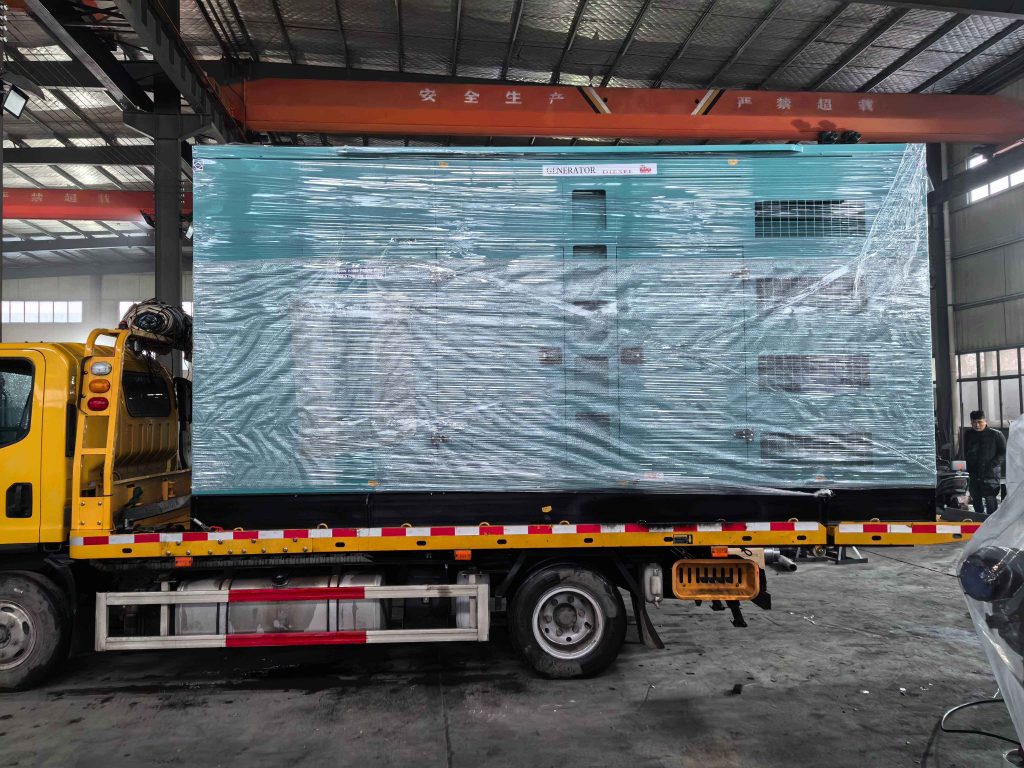
How do you size the airflow for a 500kVA set?
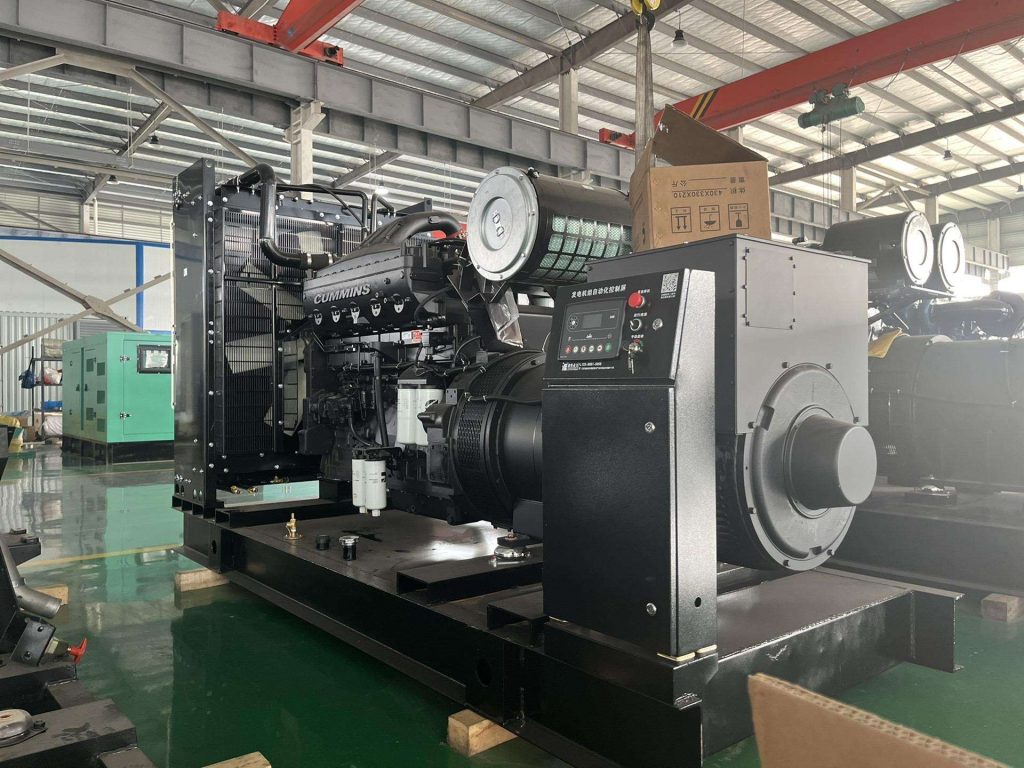
Start from the heat the room has to remove, not from the room volume. The radiator and the engine reject heat in proportion to load. The airflow figure follows from the temperature rise you are willing to accept. At full load a 500kVA set at 400 V draws about 722 A per phase, and at a power factor of 0.8 it delivers 500kVA x 0.8 = 400kW of real power. Most fuel energy that is not turned into electricity leaves as heat. The open-frame diesel generator set on our product page uses the same ducting plan.
Airflow is not a fixed percentage of radiator airflow. The intake has to carry the combustion air plus the cooling air, and the discharge has to carry the cooling air plus the leakage the room allows. Allow about 1.5 to 2 times the radiator airflow through the room when the ducting is short. Add a margin when the intake faces the prevailing sun or a wall that absorbs heat. Tesla Power quotes both figures on every room schedule.
Which measurements belong in the ventilation record?
| Measurement | Acceptance limit | Recorded at |
|---|---|---|
| Room temperature | Within 5 K of design ambient | 30 minutes at rated load |
| Louvre free area | At or above the schedule figure | Handover |
| Airflow at intake | Within 10% of design | Rated load |
| Static pressure | Below the radiator fan limit | Rated load |
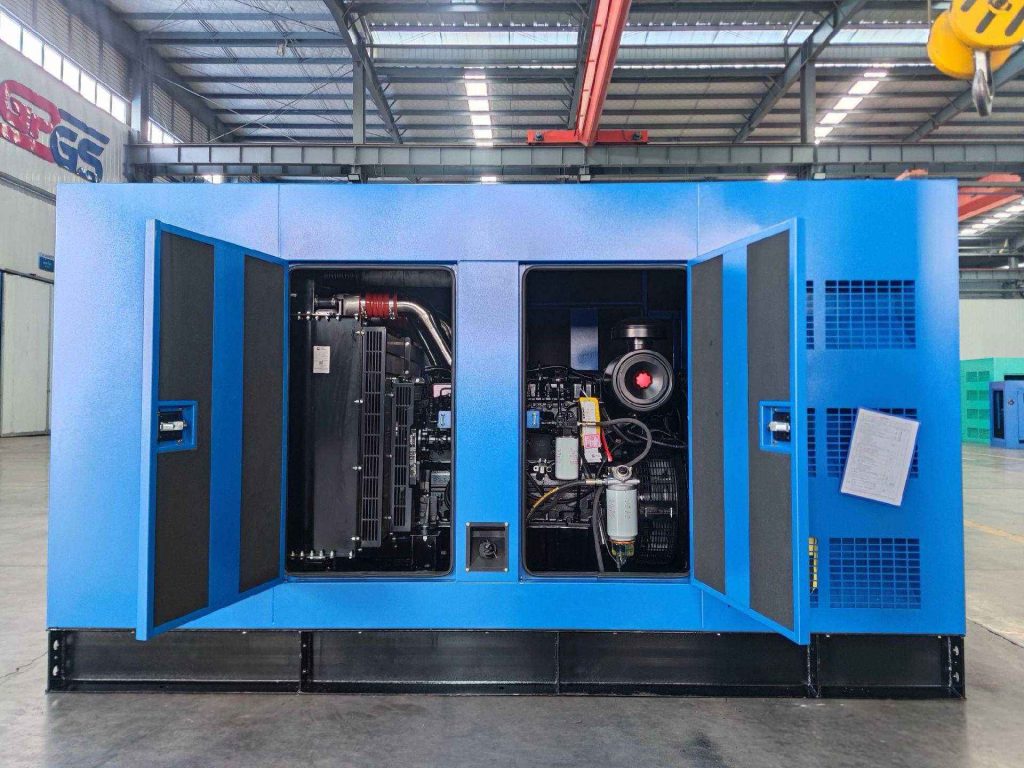
The record is the document a warranty claim leans on. It should show the design ambient, the louvre free area, the instrument model and the serial numbers. Every reading needs a timestamp and the name of the person who took it. Generator documentation for ISO 8528-5 lists the rating definitions a third party will check each figure against.
Keep the raw instrument files as well as the summary table. A modern anemometer exports a trace, and that trace settles arguments about a single odd reading. Store the files with the generator serial number in the filename. A shared folder beats an email attachment, because the folder survives staff changes. Send the site load list to our engineering desk if you need the template we use. Tesla Power keeps the same folder structure for every project.
What does a 500kVA set need at 45 C ambient?
The arithmetic is simple. Take the heat the set rejects at rated load. Divide it by the air density, the specific heat of air and the temperature rise you allow. A 500kVA set with a radiator that moves 4.2 m³/s of air needs a room airflow of about 4.2 x 1.5 = 6.3 m³/s once the allowance for combustion air and leakage is applied. That is the figure the intake and the discharge have to pass without choking the radiator fan.
Convert the airflow into louvre free area before you order anything. At a face velocity of 2.5 m/s, 6.3 m³/s needs about 2.5 m² of free area. Louvre free area is not the panel size. A 2.5 m² requirement can mean a 5 m² panel once the blades and the frame are counted. State the free area in the enquiry, and read our published generator sizing notes before you freeze the room layout. Tesla Power quotes both figures on every offer.
Ask for the radiator airflow figure as well. That single number tells you how much air the room has to move, and it costs nothing to request. Generator ventilation requirements for basement plant rooms follow the same arithmetic. Generator ventilation requirements in hot climates add a larger louvre and a longer discharge duct.
Step-by-step ventilation check sequence
- Isolate the site load and confirm the generator breaker is open.
- Confirm the intake and the discharge louvres are clear and fully open.
- Measure the free area of every louvre against the schedule.
- Start the set and let it run at no load for five minutes.
- Apply load in steps and record the room temperature at each step.
- Hold rated load for thirty minutes and log the airflow again.
The thirty minute hold is the step that matters. A room that looks fine at half load can climb past its limit once the radiator is working hard. Ten minutes is not enough to bring the walls and the ducting up to temperature.
Repeat the measurement at the end of the run to prove the room recovers. This is the step that most checklists skip, and it is the one that finds a blocked louvre or a fan running backwards. A room that passes cold may fail hot.
How do you read the radiator airflow curve?
The radiator airflow curve shows how much air the fan moves against static pressure. The horizontal axis is airflow in cubic metres per second. The vertical axis is the static pressure the fan has to overcome. A healthy installation sits well inside the curve. Add a long discharge duct or a tight louvre and the operating point moves left, so the room gets less air than the schedule assumed.
Plot the measured airflow against the curve at handover. A measured figure that sits far left of the curve points to a restriction you can still fix. Keep every trace, not just the last one. A curve that moves between visits means something changed in the room. Tesla Power keeps every trace in the project folder for five years.
Common airflow faults and what they indicate
A room that runs hot at full load usually means the intake is undersized for the radiator. Measure the free area and compare it with the schedule before you touch the fan. Louvre blades, insect mesh and a painted frame all cut the free area, and the panel size hides the loss. A second common cause is recirculation, where the discharge sits too close to the intake.
A room that runs hot at light load points to a different problem. Cold running, a stuck thermostat and a fan that turns the wrong way all show the same symptom. Our plant room airflow notes list the checks that separate them, and the spares we ship with every set. Yangzhou Tesla Power ships that spare kit with every export order.
A louvre that whistles is passing air faster than its design face velocity. The noise is the symptom, not the fault. Protection settings follow NFPA 110 requirements, so check the room temperature trip point against that document before you raise it. Generator ventilation requirements for containerised sets run tighter, because the enclosure adds its own restriction. A room with clear louvres that still runs hot is a different fault, and our notes on generator overheating work through that sequence.
Site safety and documentation
Treat the plant room as live equipment for the whole test. The discharge air is hot enough to burn and the louvre blades move. Barricade the intake and keep one person at the emergency stop at all times. Ask any China generator supplier for the same three documents before you compare quotations. Read the factory profile for the altitude limits we build to, then check the site altitude before you accept the rating. Tesla Power publishes the same ambient and altitude limits in the handover pack.
Record the ambient temperature, because a hot day changes the result. A set that holds load at 20 C may derate at 45 C. The datasheet states the derate curve, and the handover sheet should note where the site sits on that curve. Conformity assessment for the EU market is a separate file, and it names the standards the set was checked against.
- Keep a fire extinguisher rated for fuel and electrical fires at the plant room door.
- Confirm the earthing before the first start.
- Log every alarm, even the ones that clear on their own.
Frequently asked questions about generator ventilation requirements
How much airflow does a generator room need?
Start with the radiator airflow the generator manufacturer publishes, then add the combustion air and a leakage allowance. A common working range is 1.5 to 2 times the radiator figure for a short duct run. Long ducts, hot climates and restrictive louvres all push the figure up.
Can a generator room be ventilated without a fan?
Yes, when the room is small and the radiator fan can drive the whole air path. Natural convection alone is rarely enough for a set above a few hundred kVA, because the pressure drop across louvres and ducts rises with airflow. Most plant rooms end up with the radiator fan as the only mover.
What free area should the intake louvre have?
Divide the design airflow by the face velocity you are willing to accept. At 2.5 m/s, 6.3 m³/s needs about 2.5 m² of free area. Free area is the open space between the blades, not the panel size. Ask the louvre supplier for the free area figure in writing, because a painted or meshed panel can lose a third of it.
Why does the room get hotter after an hour?
The walls, the floor and the ducting store heat, so the room keeps climbing after the air path has stabilised. A reading taken ten minutes after a load step is not a steady state reading. Hold the load for thirty minutes and take the temperature again before you sign the handover.
Does a container need extra ventilation?
A containerised set needs more care than a masonry room. The enclosure adds a second restriction around the radiator, and the discharge often turns back into the intake. Generator ventilation requirements for containerised sets usually call for a ducted discharge that carries hot air clear of the intake face.
Which instruments are needed for the record?
A hot wire anemometer, a differential pressure gauge, a contact thermometer and a tape measure cover most rooms. Every instrument should carry a calibration certificate that is still in date. The certificate number belongs in the record next to the reading it produced.
What if the room fails the temperature check?
Find the restriction before you raise the trip point. Measure the free area, check the fan rotation and look for recirculation between the discharge and the intake. Repeat the check after the fix and record both attempts. A record that shows the fault and the correction is stronger evidence than a clean sheet. Tesla Power keeps that record in the commissioning file so the site team can check it.