
Generator sizing calculator kW figures follow from the load list rather than from the tool itself. This guide sets out the steps: list the running loads, convert to apparent power at 0.8 power factor, add a margin, then check the largest motor start. Tesla Power's engineering team runs the same steps on every export enquiry.
- Build the load list before you touch a sizing tool, because the tool cannot know your site.
- Read the running load and the starting load as two separate numbers.
- Convert kilowatts to kVA at the site 500kVA export set power factor, not at a default.
- Keep the margin and the motor start in the same calculation.
How do you read a generator sizing calculator kW result?
A generator sizing calculator kW figure is a starting point, not an answer. The tool multiplies a load list by a margin and returns a number, and the number is only as good as the list behind it. Two buyers can enter the same site and get 400kVA and 500kVA from the same tool, because they counted different loads and chose different margins. Read the result as a check on your arithmetic, not as a substitute for it.
Start with the running load, because that is what the set carries for most of the day. Then add the largest motor start, because that is what the set must survive for a few seconds. A figure that covers only the running load leaves the set short at every start, and a figure that adds every motor at once buys an oversized machine. The two lines are different, and the sizing calculation needs both.
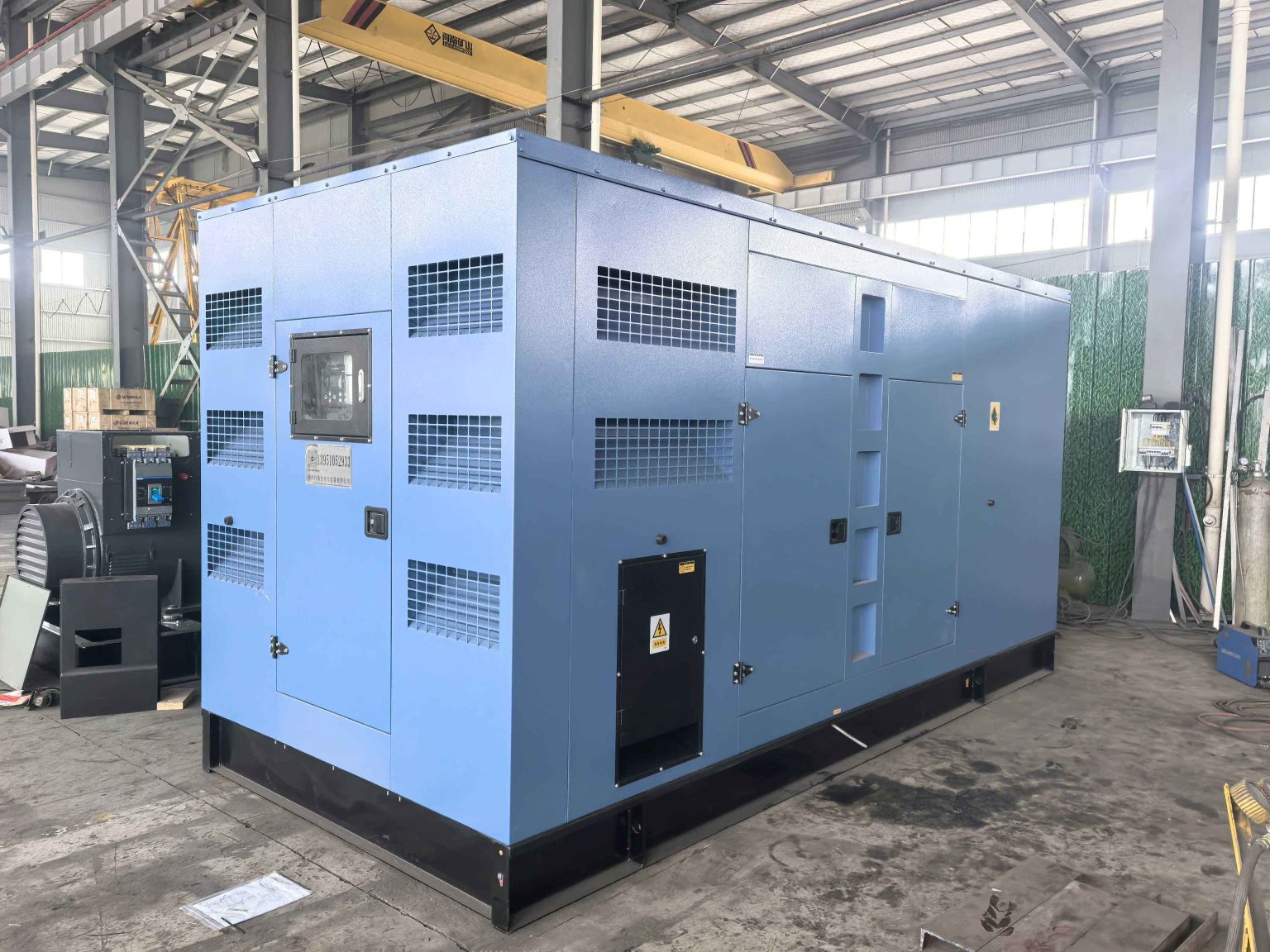
What goes into the load list before you size anything?
The load list is a table with one row per load group. Each row carries the running kW, the starting kW where a motor is involved, and a note on how long the load runs. Group the site by function rather than by circuit, so chillers, pumps and lighting each get a row. A list built from the distribution board is easier to check than one built from memory.
Leave nothing off the list because it looks small. A controls cabinet and a set of UPS chargers may add 40kW between them, and that is the margin the sizing calculation needed. Site teams usually underestimate the small continuous loads and overestimate the large intermittent ones. Our help and advice pages list the fields we ask a buyer to fill in before a size is confirmed, and Tesla Power returns the list with the offer.
Which loads must be counted at their starting current?
Any load with a motor behind it draws a starting current far above its running current. A direct-on-line motor pulls about six times its rated current for the first moment, and a star-delta starter cuts that to about two or three times. The starting kW on the load list is not the same as the running kW, and the difference is what sizes the alternator frame.
Count the largest motor at its full starting figure and the rest at their running figures. Most sites rarely start every motor at once, so adding every starting figure at the same time buys capacity the site will not use. A single chiller start on a live site is the case that decides the frame, and that case belongs in the calculation. Emergency systems add a second rule: they must start and carry load inside a fixed time under NFPA 110.
What does a load list look like in numbers?
A short load list makes the arithmetic visible. The table below lists four groups from a small industrial site, with the running load in each group and the note that matters for sizing. The total line is the number the sizing calculation starts from, and every row has to earn its place on the list.
| Load group | Running kW | Note for sizing |
|---|---|---|
| Lighting and small power | 40kW | Continuous through the shift |
| Chillers and air handling | 160kW | Largest motor on the site |
| Pumps and fans | 80kW | Two duty, one standby |
| Controls and UPS | 40kW | Sensitive to voltage dip |
| Total running load | 320kW | Sum of the column |
Read the note column before you read the total. The chiller row carries the motor start, and the controls row carries the sensitivity to voltage dip. A sizing calculation that treats all four rows as equal misses both, and the mistake shows up as a voltage dip on the controls. A 400kW export set covers a list of this shape. Tesla Power keeps the note column on every sizing sheet.
Worked example: from a load list to a 500kVA set
Add the running column: 40kW + 160kW + 80kW + 40kW = 320kW. Convert to apparent power at 0.8 power factor: 320kW ÷ 0.8 = 400kVA. Add a 25% margin for growth and motor starting: 400kVA × 1.25 = 500kVA. The largest motor adds 80kW at start, which lifts the load to 400kW and 500kVA at the same factor, so a 500kVA set carries the start with the rest of the site running.
The arithmetic shows why the margin and the start belong together. Without the margin the answer is 400kVA, which covers the running load and nothing else. Without the start check the answer is 400kVA again, and the set drops the chiller on every hot afternoon. The two checks together give 500kVA, and Tesla Power Equipment quotes that figure with the load list attached to the offer.
What margin should the sizing calculation add?
A margin of 20% to 25% over the running load covers most sites. The margin absorbs load growth, a hot ambient day and the derate that comes with altitude, and it keeps the set below its continuous rating. A site that expects new equipment within two years should sit at the top of that band rather than the bottom, and a site that plans a second shift should sit above it.
Do not confuse the margin with the motor start. The margin is spare capacity for normal running, and the start is a short overload the set must ride through. A set sized at the running load plus a 25% margin may still be too small if the largest motor starts direct-on-line. Most generator manufacturers publish a sizing table, and ISO 8528-1 names the duty classes behind it. Our load bank testing note shows how the finished set is proved at the factory.
Why does the power factor change the kVA figure?
Power factor links real power to apparent power. A load list is written in kW, which is real power, while a generator set is rated in kVA, which is apparent power. The conversion is kW divided by the power factor. At 0.8 power factor, 320kW of real load needs 400kVA of apparent capacity, and the gap is the magnetising current the motors and transformers draw.
Read the site power factor before you convert. A site full of motors runs near 0.8, and a site that is mostly lighting and heating runs nearer 0.95, which lowers the kVA figure for the same kW. If the enquiry states only the kW and not the factor, the seller must assume a value, and the assumption usually changes the set size by one frame. Tesla Power states the assumed factor on the offer.
How do you check the largest motor start?
Take the largest motor on the list and give it its full starting current. A generator sizing calculator for motor starting needs the starter type as well as the motor rating. On the example site the chiller adds 80kW at start, so the load rises from 320kW to 400kW for the moment of the start. At 0.8 power factor that is 500kVA, and the alternator holds voltage through that step.
The starter type changes the step. A direct-on-line starter gives the full multiple, and a soft starter or a variable speed drive spreads the same current over several seconds and lowers the peak. Fit the soft starter before you buy a larger alternator, because a larger frame costs more than a starter and adds no benefit on the running load. Tesla Power checks the step on every motor-heavy enquiry, and the factory profile lists the test bay where that run happens.
What should the enquiry state before you order?
Send the load list, the site power factor, the largest motor start and the site conditions. Those four items let the seller reproduce your arithmetic and return a set size that matches it. A list without the power factor forces an assumption, and China generator suppliers usually assume 0.8, which may not match your site.
State the duty as well. A standby set and a prime set take different margins, so generator sizing for standby duty and generator sizing for prime duty give different answers. The duty class decides which figure applies, and the conformity assessment for the European market names that class in the technical file.
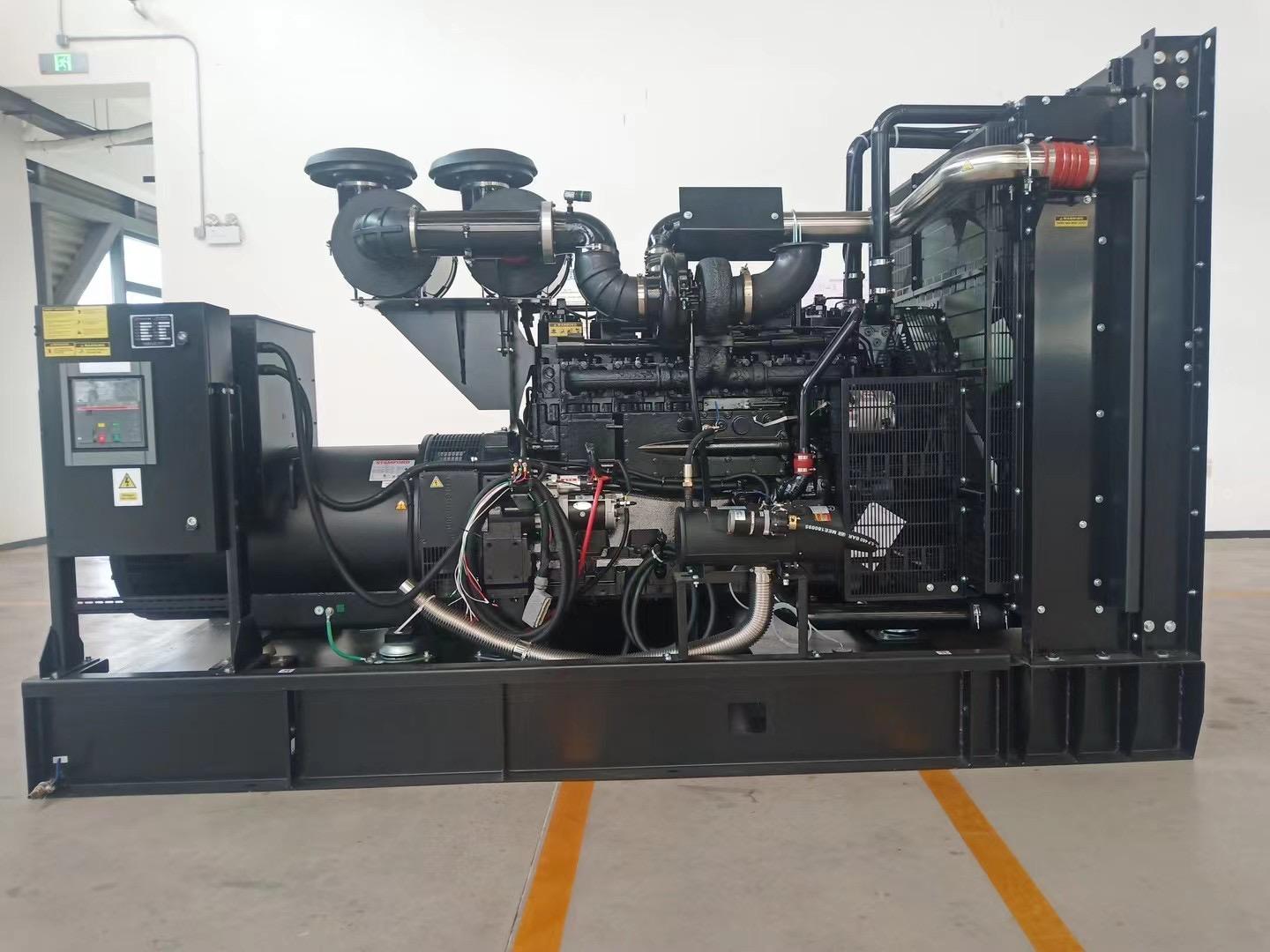
Frequently asked questions about generator sizing
Divide the kW total by the site power factor. A 320kW running load at 0.8 power factor needs 320kW ÷ 0.8 = 400kVA of apparent capacity. Use the site factor rather than a default, because a motor-heavy site and a lighting-heavy site give different answers from the same kW total.
Add 20% to 25% over the running load. The margin covers load growth, a hot day and the derate at altitude, and it keeps the set below its continuous rating. A site that plans new equipment within two years should sit at the top of the band, not the bottom.
Size on both. The running load sets the continuous figure, and the largest motor start sets the transient figure the alternator must survive. A set that covers the running load but not the start will trip on the first hot afternoon, when the chiller restarts with the rest of the site live. Tesla Power checks both lines on every enquiry.
Yes. The set is rated in kVA and the load list is written in kW, and the power factor links them. A lower power factor raises the kVA figure for the same kW, so a site near 0.8 needs a larger set than a site near 0.95 with the same real load.
Give the largest motor its full starting current and check the alternator holds voltage through that step. A direct-on-line starter is the hardest case, and a soft starter or variable speed drive lowers the peak. Fit the starter first, then buy a larger frame only if the step still exceeds the alternator capability.
Apply diversity to the starting figures, not to the running figures. Most sites rarely start every motor at once, so adding all the starting figures together overstates the load. The running load stays at its full total, because every running load is live at the same time.
Send the load list, the site power factor, the largest motor start, the site ambient temperature and the duty class. Those five items let the seller reproduce the sizing calculation and return a set size that matches the site rather than a catalogue tier.
Send the load list and the power factor to our engineering desk, and Yangzhou Tesla Power will return the kVA figure, the margin and the motor start check before you place the order.