
A genset factory test is the set of checks a builder runs before a diesel generator leaves the works, and reading that record is the fastest way to confirm the machine will do the job you paid for. This guide sets out the load steps, the voltage and frequency tolerances, the insulation reading and the noise figure a buyer should check, then shows how to compare bids on equal terms and request a scoped test report before you place an order. Tesla Power builds open-frame and containerised sets for export projects, and the same acceptance run is used at the works and again at site handover. The practical answer is that a set must hold each band inside the agreed tolerance while temperatures settle, and the short proof step must not trip. Get those inputs right and the rest of the purchase is straightforward. A fourth input, often overlooked, is the as-found curve rather than a pass line; that trace shows the real margin at full load and belongs in the project file from the start. Buyers who fix all four before they ask for a quote avoid the rework that follows a rating chosen on a nameplate total alone.
- Confirm the full-load step held voltage and frequency inside the ISO 8528-1 band.
- Ask the supplier for the as-found load curve, not just a pass line.
- See our site planning notes for the room checks the run does not cover.
- Keep the test report with the commissioning file for the warranty period.
Last updated 2026-11-17.
What does a genset factory test actually confirm?
A genset factory test is not a single switch-on. It is a staged run built on a fixed load ladder, proving the set at no load, at each rated band, and above rating for a short proof step. The run also measures what the eye cannot see. Winding insulation, regulation under load swings, and the noise the enclosure delivers all belong in the record. A buyer who reads the report can confirm the machine was proven, not just assembled. Keep the nameplate photo with the file.
The scope matters because the report is the only independent evidence you receive before the set is crated. A band that dips outside tolerance is caught in the works and fixed before dispatch. That is cheaper than finding it on site after the ship has sailed. A genset in the works is easier to correct than one crated for export. Treat the report as a specification, not a formality, and ask which standard the run followed.
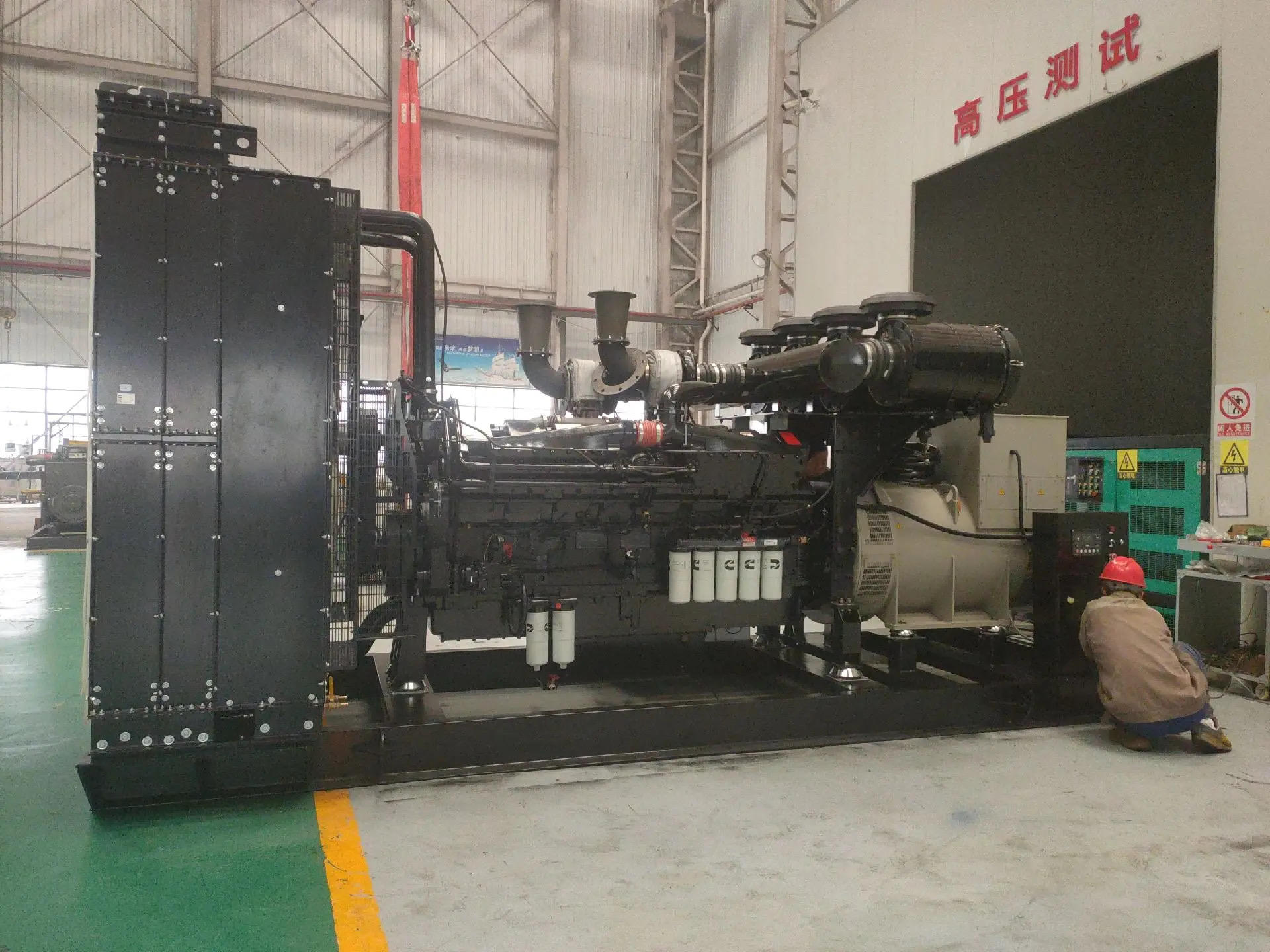
Tesla Power Equipment treats the as-found curve as the contract between the workshop and the buyer. Ask for signed data, not a generic template. A builder that runs a genuine load bank and records each band has nothing to hide. The serial number, the date and the instrument list belong on every page of the file.
How do the load steps build up to full rating?
Start with the rating and work in real power. A 500kVA alternator at 0.8 power factor delivers 500kVA x 0.8 = 400kW of real power. At 400 V three phase, 400kW corresponds to about 577 A line current. Check the alternator can supply that current for the hold time, not just for a nameplate instant. The short proof step lifts the set to 550kVA, which equals 440kW, held for one hour. Work the test energy too: 400kW held for 2 h gives 800kWh of recorded energy. The genset factory test for export orders follows one ladder on every frame.
Next apply the site condition. A hot plant room derates the engine because the cooling air is already warm, and a site above sea level derates it again. Apply both derating factors before you compare the figure with the load. The worked sizing example on our product page uses the same order: load first, then environment, then frame. Skipping the environment step is the most common cause of an undersized set on an export site.
Why read the as-found curve before you pay?
Reading the load-test report before you pay is the cheapest quality control a buyer can do. A pass line that says OK tells you nothing about how close the set came to the limit. The as-found curve shows the real margin. A thin margin at full load is a warning you want before money moves. Ask the workshop to sign the as-found data, and compare it with the rating on the nameplate before you confirm the order.
Tesla Power keeps the tolerance at each band in the project file, because the margin shrinks as the load rises. A curve drawn by hand rather than measured is the first thing to question. Ask for the raw analyser files as well as the summary table. They settle an argument about a single odd dip more quickly than a written description. The factory build records show how the same frame is configured for each duty class.
Which voltage and frequency bands must the report show?
Voltage and frequency bands are the numbers that decide whether the set can feed sensitive loads. ISO 8528-1 sets the steady-state band at ±5% voltage and ±1 Hz around the rated value, with tighter limits for the transient step response. A set that holds these bands at full load is safe for most commercial switchboards. A set that drifts outside is a problem waiting at the transfer switch. The ISO 8528-1 steady-state band definitions set the terms, but the dip limit belongs in the load specification.
Measure the dip at the alternator terminals and again at the distribution panel. A difference between the two points points to cable voltage drop, which a longer site run makes worse. Record the trace with the band size marked on it. A dip that recovers quickly is healthy. A slow sag that does not recover points to a governor or fuel restriction. ISO 8528-5 describes the structure of the acceptance run and the order of the bands.
| Load band | Voltage band | Frequency band | Recorded at |
|---|---|---|---|
| 25% of rating | Within ±5% | Within ±1 Hz | Alternator terminals |
| 50% of rating | Within ±5% | Within ±1 Hz | Distribution panel |
| 75% of rating | Within ±5% | Within ±1 Hz | Alternator terminals |
| 100% of rating | Inside the agreed dip limit | Within ±1 Hz | Both points |
| 110% proof step | No trip, stable | Within ±1 Hz | Alternator terminals |
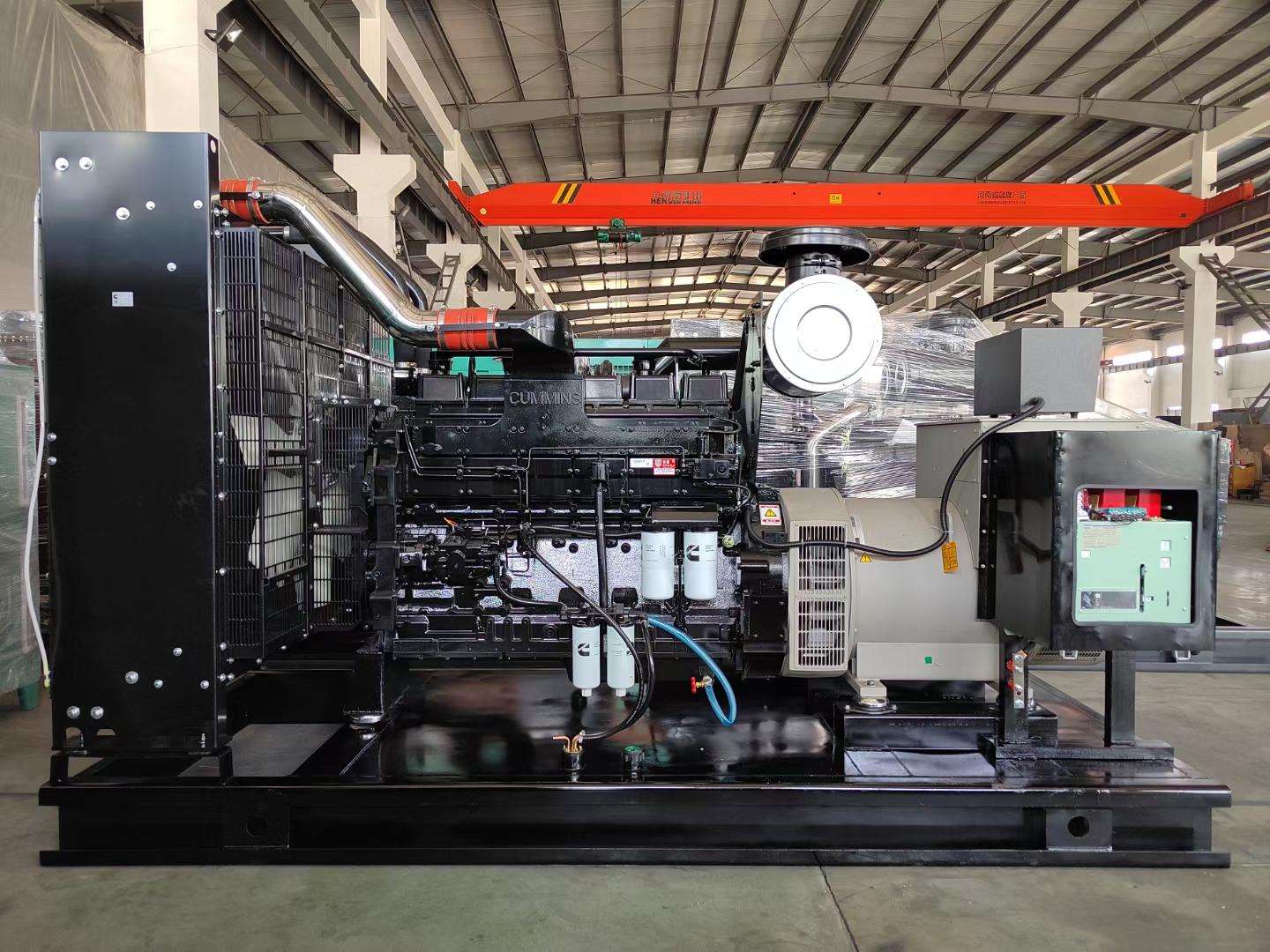
The table keeps the bands as percentages, so the same ladder works for any frame size. ISO 8528-10 covers the noise measurement at a fixed distance, usually 7 m. Read the three standard numbers together: the rating, the run structure and the measured noise. They describe one machine, not three separate tests.
How are insulation and noise figures recorded?
Insulation resistance is measured at 500V before the set is energised for the run. Record the value with the ambient temperature and the humidity, because both move the reading. A low figure points to moisture in the windings, and the workshop should dry the machine before it is crated. Ask for the instrument serial number beside the value. That small detail makes the report auditable years later.
Noise is measured per ISO 8528-10 at a fixed distance, usually 7 m, and the figure depends on the enclosure grade. An open-frame set can read above 100 dB(A) at 7 m, while a sound-attenuated canopy brings that down toward 75 to 80 dB(A). Yangzhou Tesla Power configures the enclosure so the graded figure matches the one on the order, since a swapped canopy after the run changes the number.
What paperwork ships with the tested set?
The paperwork is as important as the run itself. A complete file holds the as-found load curve, the insulation reading at 500V, the noise measurement, and the signature of the person who ran the bank. Many buyers also ask for the data sheet, the packing list and the conformity file in the same folder. Keep it with the commissioning record so a later warranty claim is simple. Ask for the template before the run, not after it. Log the calibration date of each meter on the same sheet, and store the folder under the set serial number. A missing signature is the most common reason a warranty file stalls.
Tesla Power ships the test file as a PDF with the set, and the same numbers appear on the nameplate and the report. If a value on the nameplate does not match the report, stop and query it before acceptance. Genset documentation for the buyer should name the standard on every page so the evidence stays traceable. Conformity assessment for the EU market is a separate file; request it alongside the test record, not instead of it. Use the contact our test desk form to send the same document list to each bidder.
How do you spot a weak test result?
A weak result hides in the detail, not the headline. Watch for a report that lists only no load and full load with no mid bands, or a curve that is too smooth to be measured data. Also question any voltage band wider than ±5% at full load, because that is outside the rating. A genuine run shows the small wobble of real measurement, and the step changes are visible in the trace.
The other red flag is a report that cannot be tied to the actual set. The serial number on the report must match the nameplate and the packing list, and the date should sit before dispatch. If the supplier offers a generic report and promises to fill the serial later, that is not a test you can rely on. Ask for the as-found data tied to your machine. The load shedding on standby power note uses the same record format.
Common mistakes buyers make with test reports
Reading only the headline pass mark is the first mistake. A pass at full load with a one-percent voltage margin is far tighter than a pass with a four-percent margin, yet both say pass. Read the margin, not the verdict. The margin is what survives a hot afternoon on site. The curve tells you the truth the stamp hides.
A second mistake is confusing the no-load figure with the loaded figure. The set looks good at no load, and some reports lead with that number. Insist on the full-load band reading for voltage, frequency and noise, because that is the condition your loads impose. A third mistake is buying on a single power figure without stating the power factor, so a buyer compares a kVA offer with a kW offer and assumes they are the same. Tesla Power flags all four items at the enquiry stage so they are not lost in a busy project.
Comparing supplier test records before you order
Put every offer on the same basis before you choose. Ask each bidder to state the rating class, the ambient condition it applies to, the alternator reactance, the fuel grade and the test record format. An offer that leaves any of these blank is not cheaper; it is incomplete. A bidder who answers with a data sheet and a load step trace is giving you something you can check. Use the same question list for each bidder, so the answers can be compared line by line.
Then check the commercial terms against the technical answer. Delivery, spares and the service interval all follow from the duty class selected earlier. Tesla Power quotes both the running and the proof figures on each offer so the comparison stays honest. Put every report from genset factory test manufacturers on the same footing, and ask chinese genset suppliers for the dip figure in writing. A genset for standby duty needs a graded enclosure checked against the site limit. Protection settings follow NFPA 110 emergency supply test intervals where an emergency supply is involved, and the EPA Tier 4 nonroad engine rules set the emission baseline for the engine. IEC 60947-2 covers the breaker coordination for the same package.
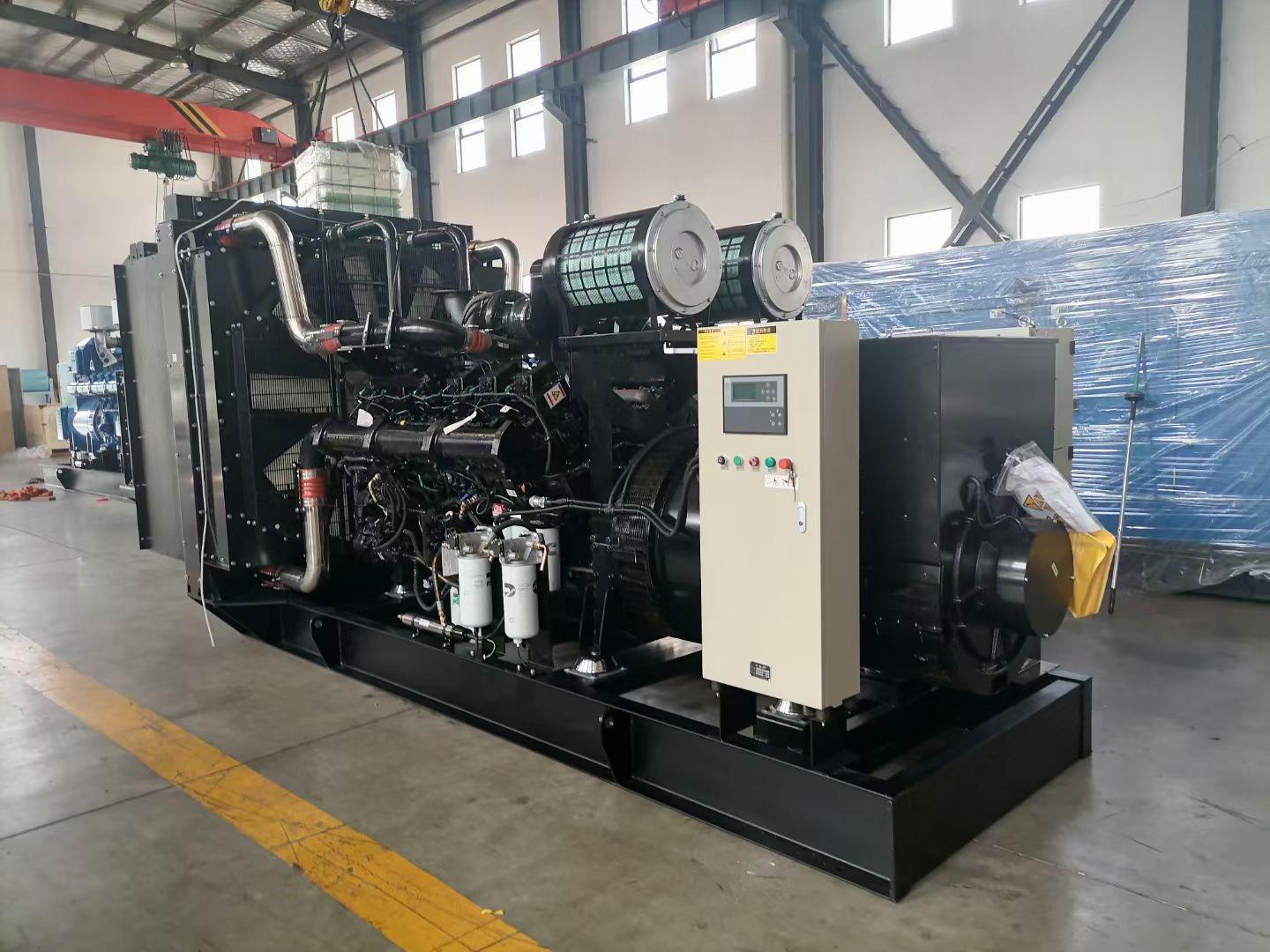
The containerised genset range on our site shows the usual build for a coastal order. A lower price on a prime-rated set is not a saving if the site only needs standby duty. Put the test evidence next to the price, because the cheaper quote often quietly dropped the load bank.
Frequently asked questions about genset factory tests
A full acceptance run for a 500kVA set takes roughly one working day, including the two-hour full-load hold and the one-hour proof step. Smaller sets finish faster, while parallel or enclosed packages need extra time for the enclosure noise check. Book the bay before production starts so the slot is not the critical path. Confirm which bands will be shown and ask for the proof step to be included.
A load bank test is one part of a factory test, not the whole thing. The bank proves the load steps and the regulation, but the full run also covers insulation, noise and the paperwork. Ask for the complete file, because a bank-only certificate leaves the noise and insulation numbers unproven for your site. The two documents are not interchangeable.
Accept a steady-state voltage band of ±5% at full load per ISO 8528-1, with the transient dip shown as well. A wider band means the set is outside its rating and may upset sensitive switchboard loads. Read the as-found curve at the full-load step, not the no-load headline, because the loaded value is what your site experiences each day.
Yes, the test report is the baseline for any warranty or commissioning dispute. Keep it with the nameplate photo and the packing list so the three documents agree. A missing or generic report makes a later claim slow, because the builder cannot confirm the as-tested condition of your specific machine. Request it before dispatch, not after a fault appears.
Yes, the noise figure changes if the enclosure grade is swapped after the test, because the rating is tied to the canopy. Confirm the graded enclosure in the report matches the one shipped, and reject a post-test swap. The measured figure is what the local authority enforces, so the tested configuration must be the delivered configuration.
The acceptance run is governed by ISO 8528-5 for the run structure, ISO 8528-1 for the ratings and tolerances, and ISO 8528-10 for the noise measurement. In the United States, NFPA 110 sets the emergency power supply requirements the report should also address for standby sets. IEC 60947-2 covers breaker coordination. Ask the supplier to name the standard on every page.
A genset factory test is defined by the load ladder, the tolerance bands and the signed record. Size for the proof step, prove the voltage dip with a load run, and put every offer on the same basis. Request the record with the quote, and the choice becomes a checkable decision rather than a guess. To review a test file against the load list, the Tesla Power team can work from the survey form.