
Diesel generator power ratings explained by the four ISO 8528-1 classes decide how much load a set can carry. This guide works through ESP, PRP, COP and LTP, the overload each class allows, and the figures to compare before you request a quote. Tesla Power's engineering team reads the same class on every export offer.
- Read the rating class on a 500kVA silent diesel generator set before you compare power figures.
- Match the class to the duty, because emergency, prime and continuous duty carry three different ceilings.
- Check the overload allowance the class permits and the running hours it assumes.
- Compare the derated figure at the site ambient temperature, not the catalogue number.
How are diesel generator power ratings explained on a nameplate?
A nameplate carries one figure, but the same machine is sold under four ratings. ISO 8528-1 defines the classes, and each class fixes how long the set runs, how much overload it absorbs, and how many hours a year it may work. Read the class first, then read the number, because a 500kVA ESP figure and a 500kVA PRP figure describe two different duties on identical hardware. The class is the promise; the figure is only the size.
Buyers who compare catalogue pages often compare the wrong line. A seller may quote the ESP figure because it is the largest, while the site runs the set as prime power every working day. That mismatch shows up as an overload trip in the first busy month, not at commissioning. Ask which class the quoted figure belongs to before you compare anything else.
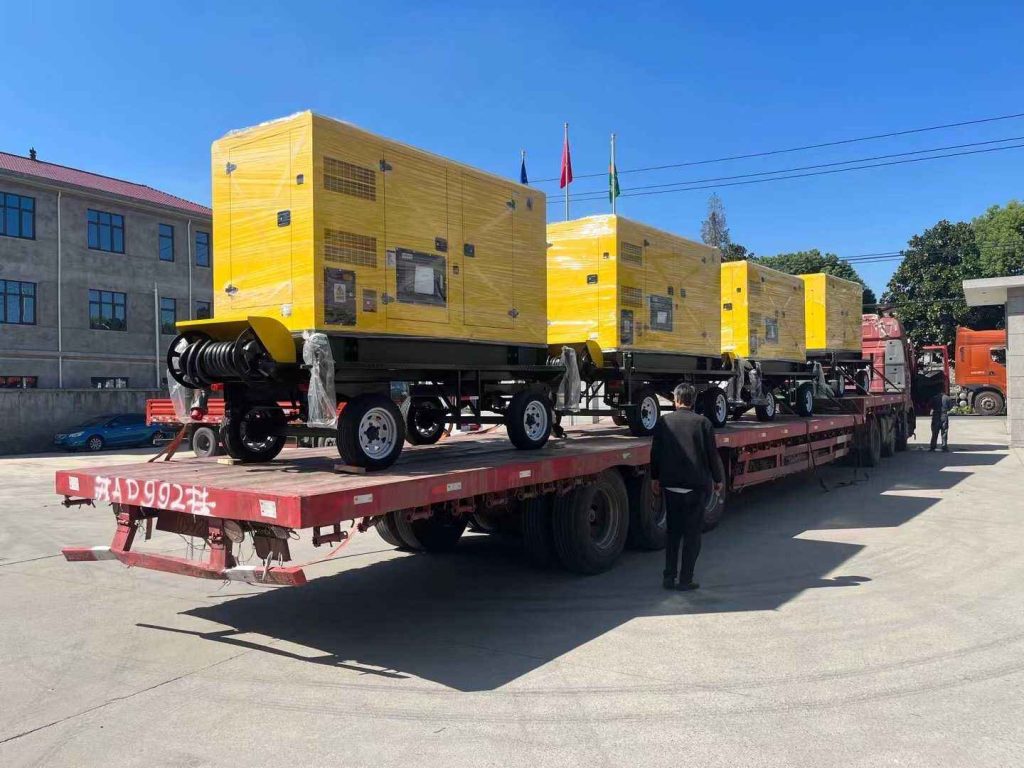
What are the four ISO 8528-1 rating classes?
ISO 8528-1 names four classes. Emergency standby power (ESP) covers a set that runs when the mains fails, with no overload allowance. Limited-time running power (LTP) covers a set that runs for a capped number of hours a year, again with no overload. Prime power (PRP) covers unlimited running hours and allows a 10% overload for one hour in twelve. Continuous power (COP) covers unlimited running at a steady load with no overload at all.
The four classes are not quality tiers. They describe duty, and one alternator and engine can be sold under any of them. A set built for COP duty carries a larger cooling margin than the same frame sold as ESP, because continuous running heats the machine more than an occasional emergency start. That is why the COP figure is the lowest of the four and the ESP figure the highest. Tesla Power prints the class beside every figure, and our help and advice pages list the class behind each rating.
Why do ESP, PRP, COP and LTP give four different numbers?
The four numbers trace back to one question: how hot does the machine get? An engine that runs an hour a month can be pushed to its thermal limit for that hour. An engine that runs every day must sit below that limit for thousands of hours, so the maker publishes a lower figure for the same hardware. Overload allowance follows the same logic, because a class that permits a 10% step must keep headroom for it.
| Class | Duty | Overload allowed | Same machine |
|---|---|---|---|
| ESP | Emergency standby | None | 550kVA |
| LTP | Limited hours a year | None | 550kVA |
| PRP | Unlimited hours | 10% for one hour in twelve | 500kVA |
| COP | Unlimited, steady load | None | 440kVA |
Read the table as a ladder rather than a menu. The 550kVA at the top belongs to a set that works a few hundred hours a year, and the 440kVA at the bottom belongs to the same set working flat out. Different diesel generator power ratings manufacturers publish the ladder in different layouts, so ask for the class and the duty hours behind each figure. A buyer who pays for the top figure and runs the set like the bottom one shortens engine life. Tesla Power keeps the same ladder on every offer.
Which class fits standby, prime and continuous duty?
Standby duty sits in the ESP and LTP classes. On diesel generator power ratings for standby duty, the mains carries the load for most of the year, the set starts on a failure, and the running hours stay low. A hospital, a bank branch and a data hall all sit here, and the owner buys the largest figure the machine will give. The annual hour cap in the class is what keeps that figure high.
Prime duty takes the PRP class, and diesel generator power ratings for prime duty carry the 10% overload step. Continuous duty takes COP, and diesel generator power ratings for continuous duty drop the overload reserve entirely. A base-load plant sits on COP rather than a backup role, and continuous duty sets are built with a wider cooling margin than a standby frame. Tesla Power quotes the class with every load list.
Worked example: matching a load list to a rating class
A site load list totals 400kVA, and the site needs prime power for eight hours a day. A set rated 500kVA PRP carries that load at 400kVA ÷ 500kVA = 80% of rating, leaving 20% spare. The same machine is offered at 550kVA ESP for emergency duty and 440kVA COP for continuous duty. Choose the class that matches the duty, then check the derated figure at the site ambient temperature.
The margin matters more than the headline figure. A 500kVA PRP set that runs at 80% of rating has room for a motor start and a hot afternoon. The same set run at 100% of the ESP figure would sit at its ceiling on a cool day and trip on a hot one. Size on the PRP figure for daily duty, reserve the ESP figure for the hours the mains is down, and read the altitude derating note before you fix the margin.
How does the duty class change the overload allowance?
Overload is the part buyers miss. PRP allows a 10% step for one hour in twelve, so a 500kVA PRP set may reach 550kVA for that hour. ESP and COP allow no step at all, and LTP allows none either. The allowance is a thermal budget, not a marketing figure, and the one-hour-in-twelve rule keeps the average load inside the cooling design.
Plan the load list against the step, not against the base figure. If the largest motor on the site adds 50kVA at start, the PRP step on a 500kVA set covers it. If the step runs longer than an hour, the set leaves the class and the duty assumption fails. Write the expected step and its duration into the enquiry, so the seller can confirm the class. Tesla Power confirms the class in writing on every offer.
Which rating should a buyer specify in a purchase order?
Write the class, the duty hours and the site conditions into the enquiry. A purchase order that names only a power figure leaves the class open, and a seller can meet it with the cheapest class on the list. State prime or standby, state the daily running hours, and state the ambient temperature the set works in. Chinese diesel generator power ratings suppliers often bury the class in a footnote, so read that line first.
Ask for the derated figure at those conditions as well as the reference figure. A set rated 500kVA at 25°C loses output at 40°C and at altitude, so the usable figure on a hot site is lower. Our conformity certification note lists the papers that travel with the set, and it names the class and the duty hours on the same page as the rating.
How do you record the rating class in a conformity file?
A conformity file holds the data sheet, the class, the duty hours and the test record. ISO 8528-1 sets the class, and the data sheet states which class each published figure belongs to. A file that lists a figure without the class cannot be checked, because the same number means a different duty in each class.
Keep the class beside the test record. A witnessed load test at the factory proves the set reaches the figure; the class proves the figure suits the site. Emergency systems that must start and carry load inside a fixed time fall under NFPA 110, and the start time is checked against the same rating. Tesla Power Equipment ships the class, the duty hours and the conformity assessment for the European market in one pack.
How does ISO 8528-1 sit next to NFPA 110?
ISO 8528-1 names the rating class and the overload the class allows. ISO 8528-1 does not set a start time or a runtime. NFPA 110 sets those for life-safety systems, with a 10 second start time and a 2 hour run at rated load for a Type 10, Class X set. The two documents answer different questions.
Read them together. The class fixes the figure the set can hold, and NFPA 110 fixes how fast it must reach that figure and how long it must stay there. A set rated 500kVA PRP can still fail an NFPA 110 duty if it takes 20 seconds to start. Tesla Power checks both lines on a life-safety order, and the factory profile shows the test bay where the start time is witnessed.
Frequently asked questions about diesel generator power ratings
ESP is emergency standby power, with no overload and a low annual hour cap. PRP is prime power, with unlimited hours and a 10% overload for one hour in twelve. On one machine the ESP figure is higher than the PRP figure, often by about 10%, because the set is expected to run far fewer hours a year. Match the class to the duty, not to the larger number.
No. The classes describe duty, not build quality, and the same frame can be sold under any of them. A high ESP figure on a set that runs daily is a liability, because the duty assumption behind the figure no longer holds. Judge the set on the class that matches your running hours and on the derated figure at your site conditions.
LTP is limited-time running power, capped at a few hundred hours a year, and the exact cap sits in the standard and on the data sheet. It suits a site that needs occasional long runs rather than daily service. If the set runs more hours than the cap allows, step down to the PRP figure and re-check the load list against it.
Prime power allows a 10% overload for one hour in every twelve. A 500kVA PRP set may therefore reach 550kVA for that hour, which covers a motor start or a short peak. The allowance is not a licence to run the set at the top figure all day, because the average load still has to sit inside the cooling design of the class.
Continuous power assumes the set runs at a steady load for unlimited hours, so the maker removes the overload reserve and publishes a lower figure. A 500kVA PRP machine is often listed at 440kVA COP. The gap is thermal margin, and it is the price of running the set as a base-load plant instead of a backup machine.
Yes. The engine and alternator are unchanged, and the class is a declaration about duty rather than a different build. A maker can list one machine at 550kVA ESP and 500kVA PRP, and both figures are honest for the duty each describes. Ask which class your running hours fall into before you accept either figure.
Name the class, the figure that belongs to it, the duty hours and the site conditions. A figure without a class is open to interpretation, and the cheapest class usually wins the order. Add the largest motor step and its duration so the seller can confirm the overload allowance covers the start.
Send the load list and the running hours to our engineering desk, and Yangzhou Tesla Power will return the class, the overload allowance and the derated figure for your site before you place the order.