
A kVA to amps calculator three phase formula needs two inputs: the apparent power and the line voltage. This guide works the formula both ways, runs three conversions at different voltages, and lists the figures to compare before you request a quote. Tesla Power's engineering team uses the same formula to size cable and breakers.
- Write the line voltage on the enquiry, because the current moves with it.
- Use the square root of three for a balanced load, not for a single-phase load.
- Check the result against the cable and the 500kVA export set breaker rating.
- Keep the worked figure on the commissioning sheet for the site team.
What is the kVA to amps calculator three phase formula?
The formula links apparent power, line voltage and line current. For a balanced three-phase load, current in amps equals kVA times 1000 divided by the square root of three times the line voltage. Written out, I = kVA × 1000 ÷ (1.732 × V). The square root of three appears because the three windings share the load, so each conductor carries less current than a single-phase conductor would at the same apparent power.
Work the formula in one direction and you size cable from a set rating. Work it in the other direction and you check a set against a measured current. Both directions use the same three numbers, and the only figure that changes between sites is the line voltage. Keep the formula on the commissioning sheet so the site team can repeat it without a calculator, and record the voltage the figure belongs to.
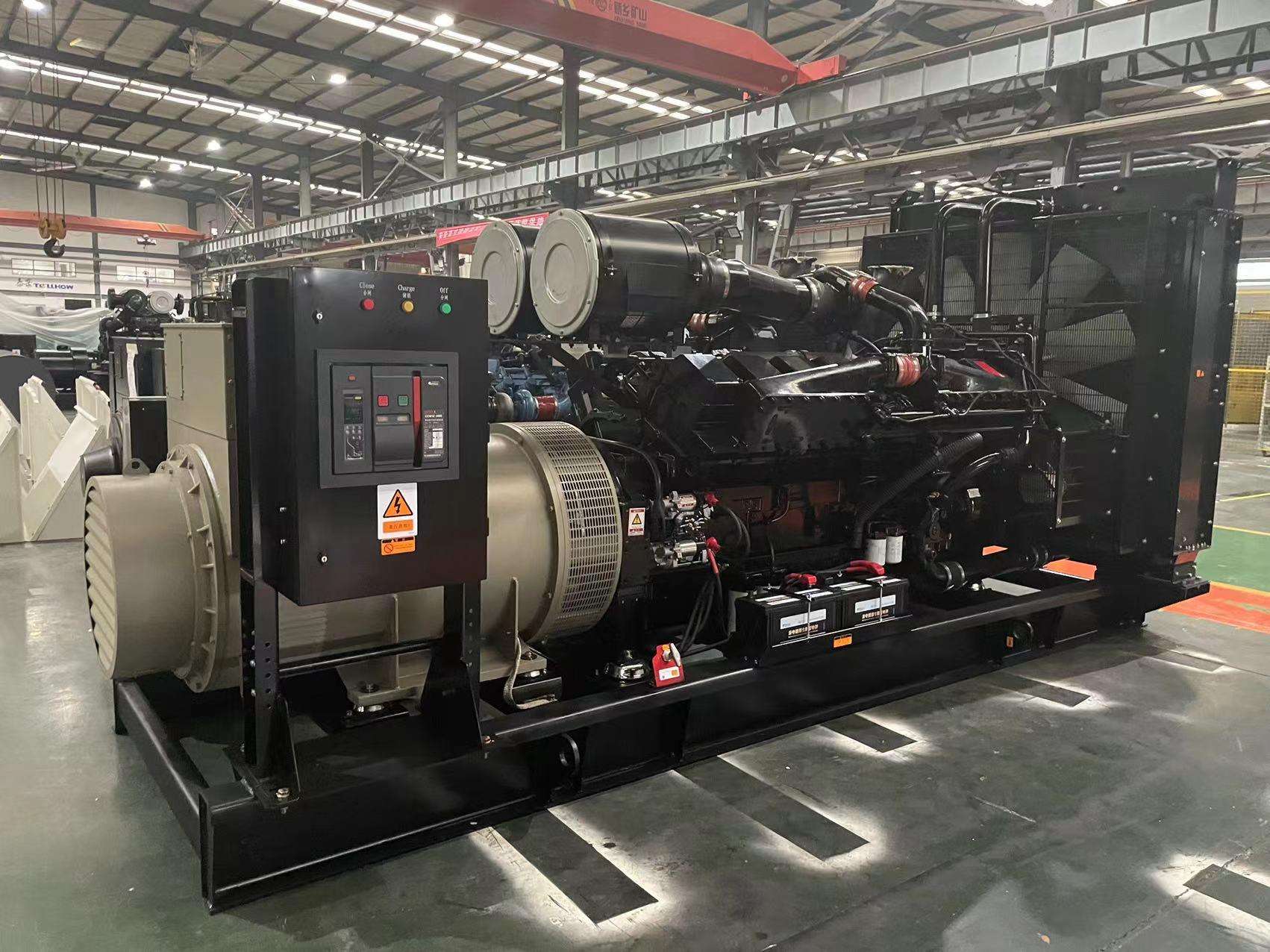
What does the square root of three actually do?
The square root of three, about 1.732, is the factor that turns a phase voltage into a line voltage. In a star-connected alternator the three phase voltages sit 120 degrees apart, and the line voltage between any two phases is 1.732 times the phase voltage. The same factor appears in the current formula for a different reason, and it is the number that separates a three-phase calculation from a single-phase one on any site.
Drop the factor and the current comes out 1.732 times too high, which buys cable the site does not need. Keep it for an unbalanced load and the answer drifts the other way, because the formula assumes the three phases carry equal current. Check the balance before you trust the result, and note the worst-phase current when the load is not balanced, because that phase sets the cable. Our help and advice pages list the voltage and balance fields Tesla Power asks for.
Which voltage do you put into the formula?
Put the line-to-line voltage into the formula, not the phase voltage. A 400V three-phase supply has a line voltage of 400V between phases and a phase voltage of about 230V to neutral. The current formula uses the 400V figure. A site that writes 230V into the three-phase formula gets a current 1.732 times too high and a cable two sizes too large for the load.
Read the voltage from the nameplate of the set rather than from the site drawing. Export sets are built at 400V, 415V or 480V, and the current at 480V is 20% lower than the current at 400V for the same kVA. Confirm the voltage before a cable schedule is issued, because the two figures give different answers.
What currents do common voltages give?
The table below works the formula at three line voltages and three set sizes. Read a row to see how the current falls as the voltage rises, and read a column to see how it rises with the apparent power. The numbers assume a balanced load, which is the usual case for a generator set feeding a distribution board.
| Line voltage | Current at 100kVA | Current at 250kVA | Current at 500kVA |
|---|---|---|---|
| 400V | 144A | 361A | 722A |
| 415V | 139A | 348A | 696A |
| 480V | 120A | 301A | 601A |
Use the table as a cross-check rather than a substitute for the formula. A 500kVA set at 400V draws about 722A per phase, and the same set at 480V draws about 601A, so the voltage choice changes the cable and the breaker. A 500kVA standby set ships with a cable schedule built from these figures, and Tesla Power Equipment keeps the same table on the offer.
Worked example: 500kVA at 400V, 480V and 230V
Take a 500kVA set on a 400V three-phase supply. The line current is I = 500kVA × 1000 ÷ (1.732 × 400V) = 722A. On the same set at 480V the current falls to 500kVA × 1000 ÷ (1.732 × 480V) = 601A. A single-phase 500kVA load at 230V draws 500kVA × 1000 ÷ 230V = 2174A, which is why three-phase cable is smaller for the same apparent power.
The arithmetic shows the trade the site makes. Raising the line voltage lowers the current for the same kVA, and a lower current allows a smaller cable and a smaller breaker. Most export projects run at 400V or 480V for that reason, and the set nameplate states the voltage the current figure belongs to. Different kVA to amps calculator manufacturers round the current to the nearest amp, so work the formula yourself before you compare offers. Tesla Power works the formula on every export offer, because a kVA to amps calculator for standby sets may round to a whole amp.
How do you work the formula backwards, from amps to kVA?
Turn the formula around and it sizes a set from a measured current. Apparent power in kVA equals 1.732 times the line voltage times the line current, divided by 1000. A 301A load on a 480V supply needs 1.732 × 480V × 301A ÷ 1000 = 250kVA, so a 250kVA set covers it with the load running at its measured figure and a small margin on top.
Work the reverse direction whenever the site has a measured current but no kVA figure. A clamp meter on a running load gives the current, and the voltage comes from the same panel. Put the two numbers into the reverse formula and you have the apparent power the set must supply. Add the motor start margin before you convert the figure into a set size, and check the class the figure belongs to under ISO 8528-1.
Why does three phase carry more power on the same cable?
Three phase spreads the load across three conductors instead of two. For the same conductor size, three phase carries about 1.732 times the apparent power of a single-phase circuit, because the three currents share the return path and the phase angles add rather than cancel. That is the reason a 500kVA set runs on three cables that would carry only part of the load in a single-phase design.
The saving shows up in the cable tray and the breaker panel. A three-phase circuit needs three current-carrying conductors plus a neutral, and the neutral carries little current when the load is balanced. A single-phase circuit at the same kVA needs much heavier conductors, and the note on overheating causes shows what happens when an undersized conductor runs hot on a long run.
How do you pick the cable and breaker from the current?
A kVA to amps calculator for cable sizing gives the starting figure, then the installation derates it. Cable current ratings fall with ambient temperature, with grouping and with the installation method, so the 722A figure from the formula is not the cable rating. Apply the derating factors to the cable, and pick a breaker above the running current and below the derated cable rating.
The breaker protects the cable, not the set, and the setting sits between the two. IEC 60947-2 covers the low-voltage breaker family, and the manufacturer's table gives the trip curve for each frame. A generator set has a limited fault current, so the breaker must still trip on the set's fault level, which is why the breaker standard and the set data sheet travel together. Tesla Power builds the panels to that pair of documents.
What should the enquiry state before you order?
Send the set rating in kVA, the line voltage and the load type. Those three items let the seller work the current and return a cable schedule with the set. A kVA to amps calculator for motor circuits also needs the largest motor start, because the starting current is several times the running current and it changes the breaker curve.
State the frequency as well, because a 50Hz site and a 60Hz site use different alternator frames even at the same kVA. Chinese kVA to amps calculator suppliers usually publish a current table for 400V and 480V, and the conformity assessment for the European market names the class the set is sold under. Tesla Power keeps the current table on the offer, with the panel range listed in our factory profile.
Frequently asked questions about kVA to amps conversion
Current in amps equals kVA times 1000 divided by the square root of three times the line voltage. For a 500kVA set at 400V, that is 500kVA × 1000 ÷ (1.732 × 400V) = 722A. Use the line-to-line voltage, not the phase voltage, or the answer comes out 1.732 times too high.
The three phases sit 120 degrees apart, and the line voltage between two phases is 1.732 times the phase voltage. The same factor carries into the current relationship for a balanced load. It is the number that separates a three-phase calculation from a single-phase one, and it applies only when the three phases carry equal current.
Multiply 1.732 by the line voltage and by the current, then divide by 1000. A 301A load on a 480V supply gives 1.732 × 480V × 301A ÷ 1000 = 250kVA. Work the reverse direction when the site has a measured current but no kVA figure on the drawing.
No. The kVA to amps formula works on apparent power, and the power factor links apparent power to real power rather than to the current. A 500kVA set draws the same line current at 0.8 power factor as it does at unity, as long as the apparent power stays at 500kVA. Tesla Power states both figures on the offer.
Use 400V as the line-to-line voltage in the formula. The phase voltage to neutral is about 230V, and that figure belongs in a single-phase calculation, not in the three-phase one. Writing 230V into the three-phase formula overstates the current by a factor of 1.732 and overstates the cable size.
At 400V a 250kVA set draws about 361A per phase, and at 480V it draws about 301A. The current falls as the voltage rises for the same apparent power. Check the line voltage on the nameplate before you read a current figure from any table, because the two voltages give different answers.
Size the cable on the running current and check the breaker against the motor start. Cable ratings fall with ambient temperature and installation method, so apply the derating factors before you compare the result with a cable table. The breaker sits above the running current and below the derated cable rating.
Send the set rating, the line voltage and the load type to our engineering desk, and Yangzhou Tesla Power will return the line current and the cable schedule before you place the order.