
Choosing an OEM diesel generator supplier comes down to eight checks that separate a real factory from a trading desk. Tesla Power answers those checks with an open build file, a witnessed test and a written quotation. Use the list below to compare suppliers before you order.
- Confirm who owns the engine, the alternator and the build drawing, not just the brand on the canopy.
- Ask for the test record from the factory run, with the load steps and the readings that go with them.
- Check the quotation for the scope line, the spare parts list and the documents that ship with the set.
- Agree the packing, the marking and the customs papers before the container is booked.
What does an OEM diesel generator supplier actually control?
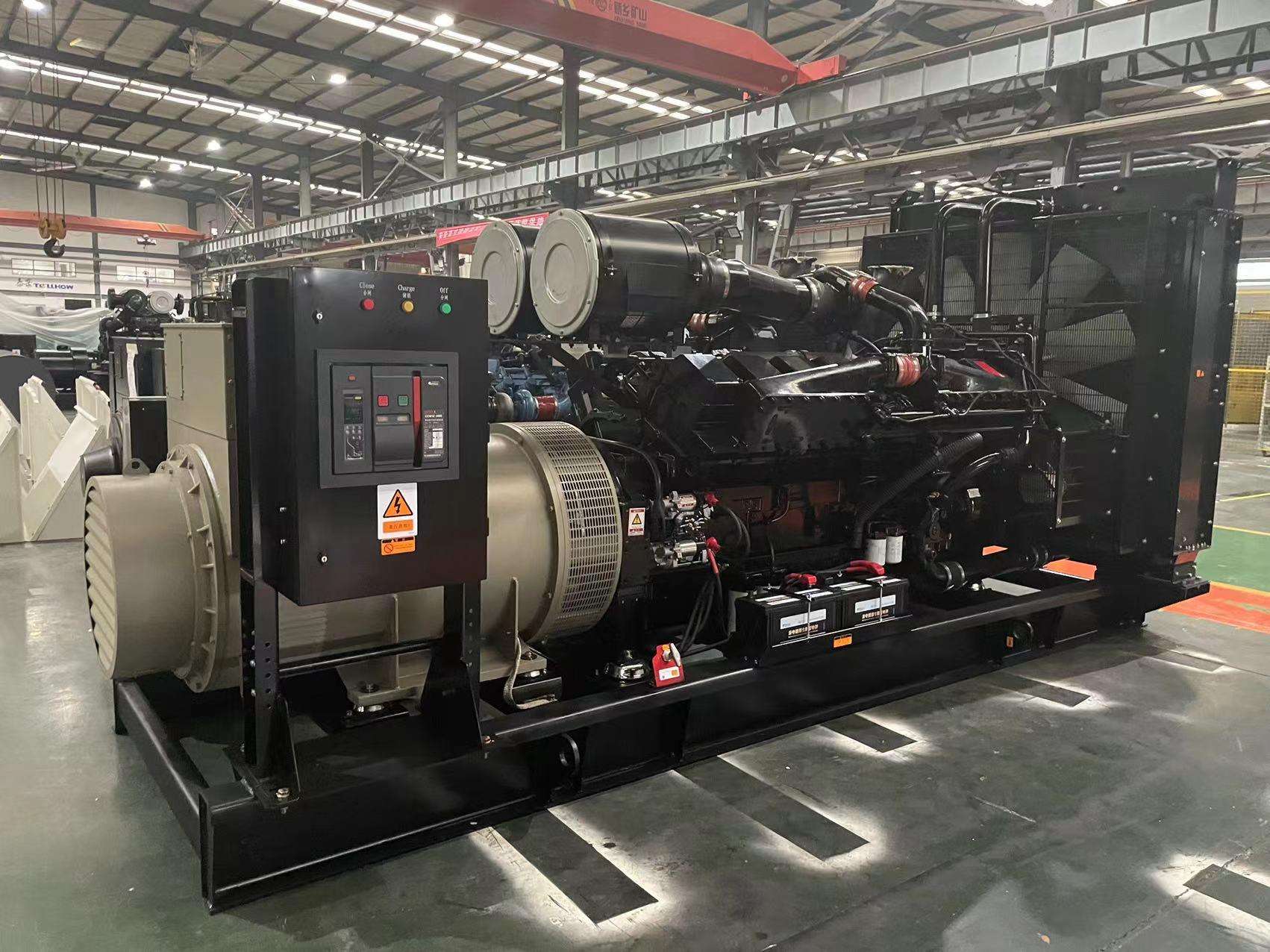
An OEM supplier owns the match between engine, alternator and controller, and it holds the build drawing that fixes that match. The canopy, the base frame and the control panel follow from the same drawing. Change one part and the coupling, the wiring loom and the test plan all move with it. A buyer who wants a 500kVA set with a named engine should ask who signs that drawing.
The second control point is the factory test. A load bank run records voltage, frequency and temperature at each step, and the record travels with the set. Tesla Power Equipment files that record under the order number and sends it with the quotation. Those readings are the difference between a promise and a document. A site engineer compares them against the nameplate on arrival, so the two sets of numbers have to agree. Temperatures settle within a few minutes of each step, and the steady figure is the one worth quoting to the client.
Which checks separate a real factory from a trading house?
A trading house quotes a set it has not built, so the first question is who assembles the unit. The answer sits in the build drawing, the welding records and the paint specification. Ask for the name of the workshop, then ask for the torque figures used on the coupling bolts. A workshop that cannot produce those figures is not assembling the set it is selling.
| Check | What the buyer asks for | Document that proves it |
|---|---|---|
| Engine match | Named engine model and coupling drawing | Build drawing and engine data sheet |
| Alternator | Frame size and excitation type | Alternator data sheet and test record |
| Test | Load steps up to 100% of rating | Factory load bank report |
| Documents | Declaration and test certificate | Conformity file and packing list |
Two more answers expose a trading desk. A factory states the alternator frame and the excitation type from its own stock list, and it names the engine model without a call to a third party. A desk that has to check with someone else before it replies is a reseller. The price it quotes carries a second margin, and the delivery date carries a second risk.
How do you verify engine and alternator provenance?
Provenance starts with serial numbers. The engine plate, the alternator plate and the control panel all carry one, and the three numbers appear on the build drawing before assembly begins. A buyer should ask for those numbers in writing, then check them against the plates on the finished set at the pre-shipment visit. That single cross-check closes the most common gap in an export order.
The second layer is the data sheet behind each number. An engine data sheet gives the continuous rating, the fuel map and the derate curve, while an alternator data sheet gives the frame, the insulation class and the excitation type. Tesla Power files both sheets under the same order number, so the drawing, the plates and the paper trail point at the same machine. Our pre-shipment inspection note lists the plate checks a buyer runs before the balance is paid.
What should an OEM quotation and test file contain?
A clean quotation separates scope from price. The scope line names the engine, the alternator, the controller, the enclosure type and the voltage and frequency. Exclusions sit in their own block, so a buyer can see what the set does not include. Items such as an automatic transfer switch, a fuel polishing unit or a remote radiator change the build, and the offer should say so plainly rather than leaving them to a site argument.
The test file runs alongside the quotation. Ask for the factory load bank report, the insulation resistance readings and the wiring check, and keep them with the OEM diesel generator CE marking requirements that apply to the destination market. The same folder holds the OEM diesel generator documentation for export, which customs and the site engineer both read, and Yangzhou Tesla Power issues it with every order.
ISO 8528-1 names the duty classes behind the rating, so the test file should state which class the set was run to. A prime rating and a standby rating are not interchangeable, and a buyer who compares two offers needs that line on both.
How does customisation change an OEM diesel generator for hospitals?
Hospital work adds three demands that a standard set does not carry. The first is a step load from a medical imaging unit, which pulls a large block of power for a few seconds. The second is a low noise limit at the boundary fence, and the third is a start signal that follows the building management system rather than a key switch. An OEM diesel generator for hospitals is therefore a different build from a construction-site unit.
Data rooms push the same logic further. An OEM diesel generator for data centres usually ships with two independent starters, a jacket water heater and a monitoring link, because the site has no one on hand to walk to the plant room. A 1250kVA hospital set shows the whole option list on one page, and Tesla Power writes those options into the scope line before the price is fixed.
NFPA 110 sets a 10-second start for a life-safety set, so a hospital build has to prove that start on the load bank rather than on paper. The test record carries the start time next to the load steps.
What does the factory audit cover before you order?
A factory acceptance run steps the load in blocks: 100kVA = 20% of a 500kVA rating, 250kVA = 50%, and 500kVA = 100%. The set holds 400V and 50Hz at each step, and frequency recovers to within 5% after the block change. The report records those figures next to the ambient temperature, because a hot afternoon shifts every reading. A buyer who reads the report can reproduce the run without a second visit.
The audit also covers the build station. A walk through the workshop shows the torque tools, the fuel and oil lines and the test bay, and it shows whether the alternator is coupled on site or arrives pre-assembled. Tesla Power invites buyers to that walk before the order is placed, and the notes from it feed the final scope. Our last hospital set was signed off this way.
How do packing, marking and shipping documents work?
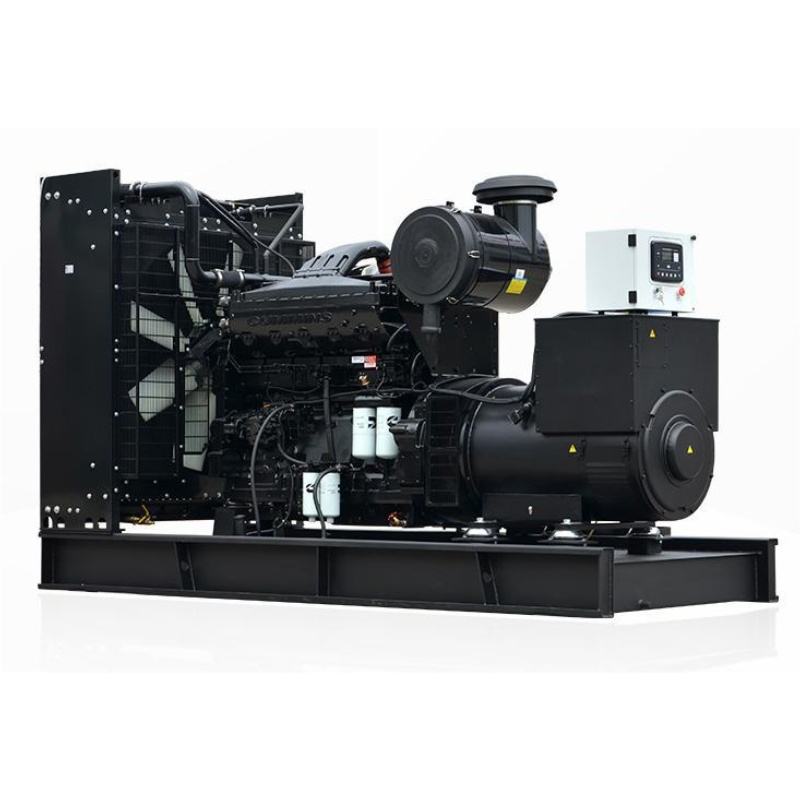
An OEM diesel generator in a container leaves the factory with a packing list that matches the scope line item by item. The container number, the seal number and the gross weight go on the same sheet, so the receiving site can check the load against the paper before it opens a single crate. Marking follows the buyer's instructions, and the shipping marks go on two sides of every large crate.
The document set travels ahead of the cargo. A commercial invoice, a packing list, a certificate of origin and the bill of lading cover most routes, and a conformity declaration joins them for a regulated market. Tesla Power adds the flat-rack papers to that set when the load needs them. Our note on out-of-gauge genset shipping lists those extra papers, because those loads sit outside a standard container and attract their own checks.
What does an OEM diesel generator factory in China quote?
A factory in China quotes the set, the options and the freight as three separate lines. The set line follows the build drawing, the options line lists each added item, and the freight line depends on the route, the weight and the port of discharge. Splitting the three keeps the comparison honest, because a low set price can hide a heavy option list. An OEM diesel generator factory in China that shows all three lines lets a buyer weigh the total landed figure.
Currency and payment terms sit next to those lines. A quotation in US dollars with a fixed validity period removes one source of drift between the offer and the order. Tesla Power states the validity window on the offer and holds the price inside it, so a slow internal approval does not reopen the negotiation.
Engine emissions add a fourth line for a regulated market. Regulation (EU) 2016/1628 sets the stage limits for a non-road engine, and the offer should name the stage the engine meets.
How do you compare two OEM diesel generator manufacturers?
Compare on four axes and the decision becomes simple. Set the build drawing beside the build drawing, the test report beside the test report, the scope line beside the scope line, and the document set beside the document set. Two OEM diesel generator manufacturers can quote the same rating and still differ on all four, and the difference shows up at commissioning rather than at the desk.
The fifth axis is the response after the order. A supplier that answers a technical question within a working day is easier to work with than one that goes quiet. Ask for a named contact and a spare parts list with lead times before the contract, then judge the answers on their detail. Contact our engineering team with a load list and we will answer against your site, not against a catalogue.
Frequently asked questions about OEM diesel generator suppliers
An OEM supplier owns the build drawing, assembles the set and runs the factory test, so it can change the build when the site demands it. A reseller buys a finished unit and passes it on, which means the drawing, the coupling and the test stay with the original factory. Ask who signs the drawing; the answer tells you which one you are dealing with.
Ask for a sample report from a similar build before the deposit, and the report for your own set before the balance. The sample shows the format and the readings a factory records, while your own report proves the unit met the agreed steps. Tesla Power sends a sample on request, because a format a buyer cannot read is no evidence at all.
The build time depends on the options, the engine availability and the enclosure type, so a fixed number would be a guess. Ask the supplier to state the drawing approval date, the test date and the loading date as three separate milestones. Those three dates are the ones you can hold a supplier to, and they map onto your own site programme.
Yes, and a visit before the order is worth more than one after it. Book the walk to coincide with a test run on a similar set, so you see the load bank in use rather than an empty bay. Bring the drawing and the scope line with you and check the parts against the paper on the bench. Read about our factory before you book the trip.
Expect the build drawing, the engine and alternator data sheets, the load bank report, the wiring diagram and the conformity file for the destination market. Ship that folder with every set and keep a copy under the order number. A missing document is a question to raise at handover, not at commissioning.
The offer should state the reference conditions behind the rating, such as an ambient temperature and an altitude. A rating quoted at sea level does not transfer to a highland site, and the derate has to be applied before the set is sized. Ask the supplier to quote the derated figure at your own site conditions.
Normalise the two offers onto one scope first. Strip the options from both quotes, compare the bare set, then add each option back at its own price. That method exposes a low headline price that hides a long option list. Two OEM diesel generator manufacturers compared this way give a decision a buyer can defend, and Tesla Power prices every option as a separate line for that reason.