
Diesel generator response time is the gap between a load step and a steady voltage, and it decides whether a drive rides through or trips. Read how the engine and the alternator split that gap, and Tesla Power will return a quotation with the recovery time stated.
- Ask for the recovery time at the class you are buying, because the dip on a motor start is only half of the figure.
- Separate the voltage recovery from the frequency recovery, since two systems produce them.
- Compare the figure with the ride-through time of the drives on the bus.
- Keep the trace, because the seconds on site are read against the trace in the file.
What does diesel generator response time measure?
Diesel generator response time for a data hall measures the seconds between the moment a load arrives and the moment the voltage and frequency settle inside their steady band. Two numbers belong to it, one for the dip and one for the recovery, and a tender that names only the dip has asked half a question. The recovery is what a drive on the bus feels.
The measurement starts at the step and ends when the trace stays inside the band rather than crossing it. A trace that enters the band and leaves again has not recovered, and a supplier quoting the first crossing has quoted the wrong number. Recovery is a settled state, and the settling is what the class fixes rather than the depth of the dip alone. A trace read at the first crossing flatters every frame on the list.
How is the figure split between engine and alternator?
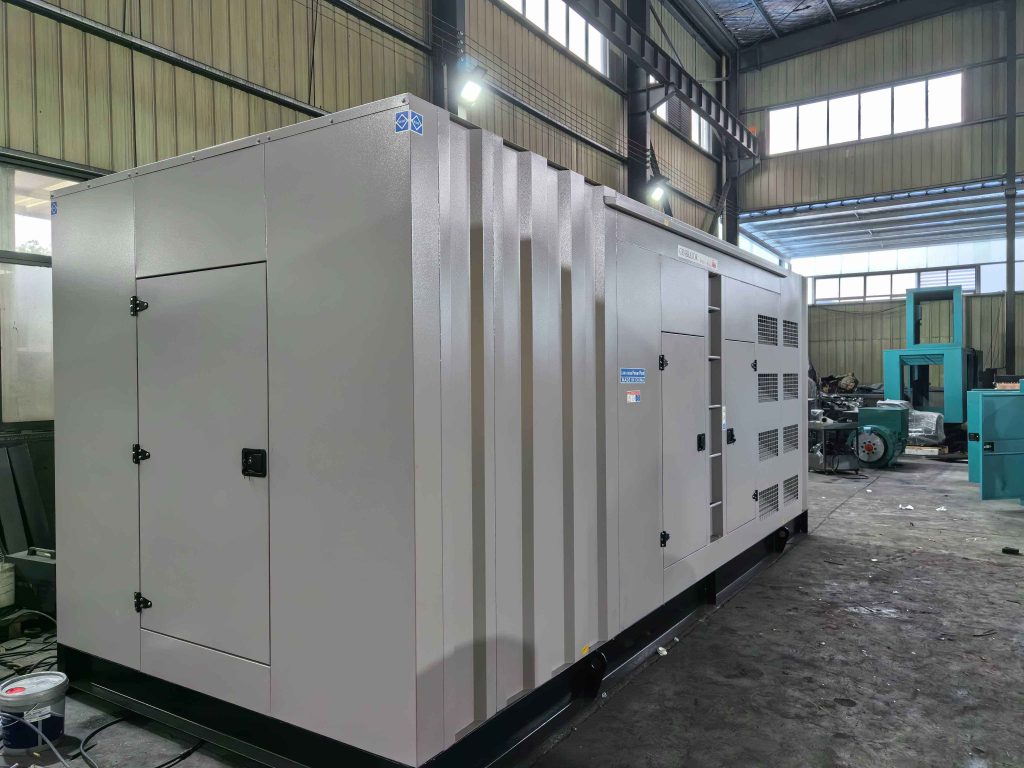
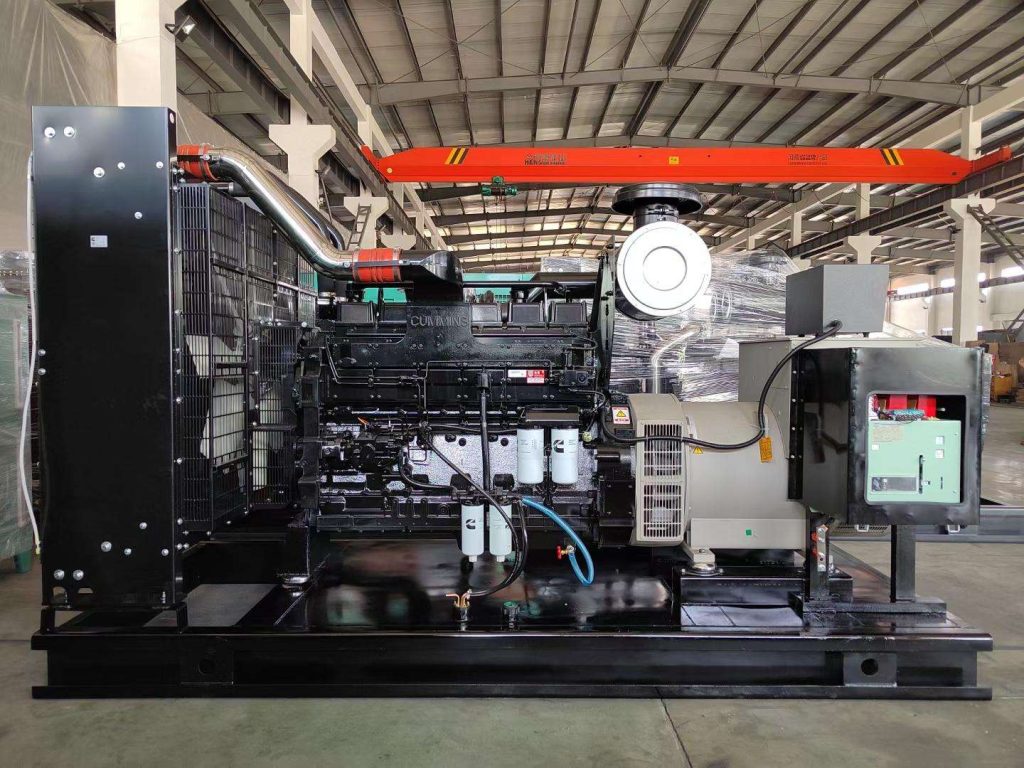
The engine carries the frequency and the alternator carries the voltage, and the two respond on different clocks. A governor reacts within a few hundred milliseconds and the turbo takes a second or more to deliver the air that the fuel demands. The alternator and its excitation respond in tens of milliseconds, which is why the voltage usually recovers first.
That split explains a result that surprises buyers. A set with a fast voltage recovery can still fail a data hall test, because the frequency takes longer to settle and the drives are sensitive to both. The ISO 8528-5 performance classes name the two recoveries separately for that reason, and a tender should require both lines. Tesla Power prints both on the offer sheet.
| Event | Typical time | What sets it |
|---|---|---|
| Voltage recovery | 0.3 to 0.8 s | Excitation and alternator reactance |
| Frequency recovery | 1.5 to 4 s | Governor and turbo air delivery |
| Full settle on a 60% step | about 3 s | The slower of the two systems |
| Transfer to the set | 8 to 15 s | The ATS and the start sequence |
Worked example: a 60% step on a 625kVA frame
Take a 625kVA frame at 0.8 power factor, which is 500kW, and apply a step of 60% of the plate. The voltage recovers in about 0.6 s and the frequency settles in about 3.2 s. A drive with a ride-through of two seconds trips on that set, and the same drive rides through on a frame that settles in 1.8 s.
The difference is not the alternator. It is the turbo and the governor, and the fix is a frame with a larger air margin rather than a faster excitation system. Tesla Power Equipment records both recovery times on the test sheet, so a buyer comparing two frames can see which of the two numbers moved the price.
Why does a turbocharged engine respond slower?
Because the air arrives after the fuel does. A turbocharger is driven by exhaust gas, and the gas only appears once the engine has burned more fuel, so the first second of a step runs on the air that was already in the manifold. A naturally aspirated engine has no such lag and picks up a step faster at the same rating.
The lag is why a turbocharged set carries a published load acceptance limit. A frame that accepts a 60% step in one block may accept a 100% step only in two stages, and the second stage has to wait for the turbo to catch up. Most diesel generator manufacturers print that limit as a curve, and a tender that ignores it asks for a step the engine cannot take. Tesla Power quotes that curve with the frame.
- Ask for the largest single step the frame accepts, as a share of the plate.
- Ask whether the step is applied in one block or in stages.
- Compare the recovery time at that step rather than at a smaller one.
What does ISO 8528-5 allow for recovery?
The standard pairs each performance class with a recovery time, and the class belongs in the enquiry rather than in the reply. A G1 set may take 10 seconds to settle, G2 takes 5, G3 takes 3 and G4 takes 1.5. The class also fixes the depth of the dip, so the two figures move together and a buyer should name both.
A data hall usually asks for G3 or better, because the drives on the bus ride through about three seconds. A diesel generator in a workshop with motors and lights sits comfortably in G2, and paying for G4 there buys seconds the site does not use. Read the ride-through of the load first, then choose the class that fits it rather than the highest class on the list.
How does a data hall load differ from a workshop load?
A data hall load is nearly constant and almost entirely electronic, so the step arrives as a block when the transfer happens. A workshop load is mixed and mechanical, so the step arrives in pieces as machines restart. The two patterns stress the set differently, and the recovery figure that matters follows the pattern rather than the size.
The block step is harder on the frequency, because the engine has to pick up the whole load at once. A diesel generator for a data hall is therefore chosen on load acceptance rather than on running load, and the frame is often one size above what the kW figure alone would suggest. A diesel generator for a workshop can be chosen on the running load with a margin, because the machines come back one at a time.
Which figures belong on the enquiry?
Four figures let a supplier answer without a second exchange. The largest single step as a share of the plate, the class required, the ride-through of the load and the site ambient are the four. A fifth, the transfer time of the switchgear, belongs beside them because the load sees the whole sequence rather than the set alone.
The enquiry should also name the largest motor and its starting method, because a motor start and a block step stress different parts of the machine. Chinese diesel generator suppliers often quote a response time without saying which step it was measured at, and a figure without the step is a figure that cannot be compared. The machine limits behind both come from the IEC rotating machine standards. Tesla Power asks for the step before it quotes the seconds.
What goes wrong at the first transfer?
The common failure is a set that meets its class on the bench and misses it on site, because the bench step is resistive and the site step is not. A drive bus draws current out of phase with the voltage, and the alternator has to hold both while the governor catches up. The dip then runs deeper than the test predicted.
The second failure is a transfer that closes onto a bus with the load already connected. The set starts, the ATS closes, and the whole building load arrives as one step rather than as a ramp. That is the hardest step a set ever sees, and the recovery figure for it belongs in the test plan. The step load acceptance notes set out the sequence, and the range of frames we build lists the acceptance limit of each size. The frequency droop notes show how the governor setting moves the same trace.
How is the figure proved before shipment?
A load bank applies the step in one block and the analyser records both traces against the clock. The engineer marks the moment the step lands, the deepest point of each dip and the moment each trace settles, and the three points are read against the class. The record is signed on the day rather than reconstructed later.
A set that meets the depth and misses the recovery is a set with a governor or a turbo that is too small for the class, and neither can be changed at the quayside. Tesla Power records both times against the serial number, so the seconds promised on the quotation and the seconds measured on the bench sit on one page. That page is what a commissioning argument is settled with.
Frequently asked questions about diesel generator response time
No. Start time is the seconds from a mains failure to the set carrying load, which includes cranking and the transfer. Response time is the seconds from a load step to a settled voltage on a set that is already running. The two figures answer different questions.
Rarely. The governor setting can be adjusted within a narrow band, and the turbo and the air margin cannot be changed at all. A set that misses its class on site usually needs a larger frame rather than a setting change, and Tesla Power sizes on that basis.
It recovers faster at the same step, because the step is a smaller share of the plate. The engine also has more air available, which shortens the turbo lag. The gain is real and it comes at a price, so the two should be compared on the same quotation.
Most industrial drives ride through two to three seconds of low voltage, and some ride through five. The figure is in the drive manual rather than in the generator data, and it is the one that decides the class the set has to meet.
It changes it slightly, because a hot engine has less margin in its fuel and air systems. The class is measured at reference conditions, so a site at 45 °C should ask for the recovery figure at that ambient rather than at 25 °C.
Because the engine has to accelerate a rotating mass and wait for the turbo to deliver air. The alternator only has to change its excitation, which is a magnetic event rather than a mechanical one, so the voltage arrives first.
Write the largest step, the class and the ride-through on one page, and send it to our export desk. Yangzhou Tesla Power returns the two recovery times as lines on the quotation. The diesel generator response time CE marking requirements sit in the technical file rather than on the plate, and conformity assessment for the assembly follows the same route as for a standard frame, so one file covers either class.