
Generator voltage regulation AVR holds terminal voltage inside the band a load can tolerate, and the response figures decide whether a set rides through a motor start or trips. This specification guide explains the AVR, the figures worth comparing, and how to request a quote. Tesla Power's engineering team sizes the AVR with the alternator.
- Read the steady-state regulation figure on the 500kVA export set before you compare prices.
- Ask for the transient dip and the recovery time after a full load step.
- Match the excitation type to the load profile, not to the catalogue tier.
- Keep the response record with the alternator datasheet in the handover file.
What does generator voltage regulation AVR control?
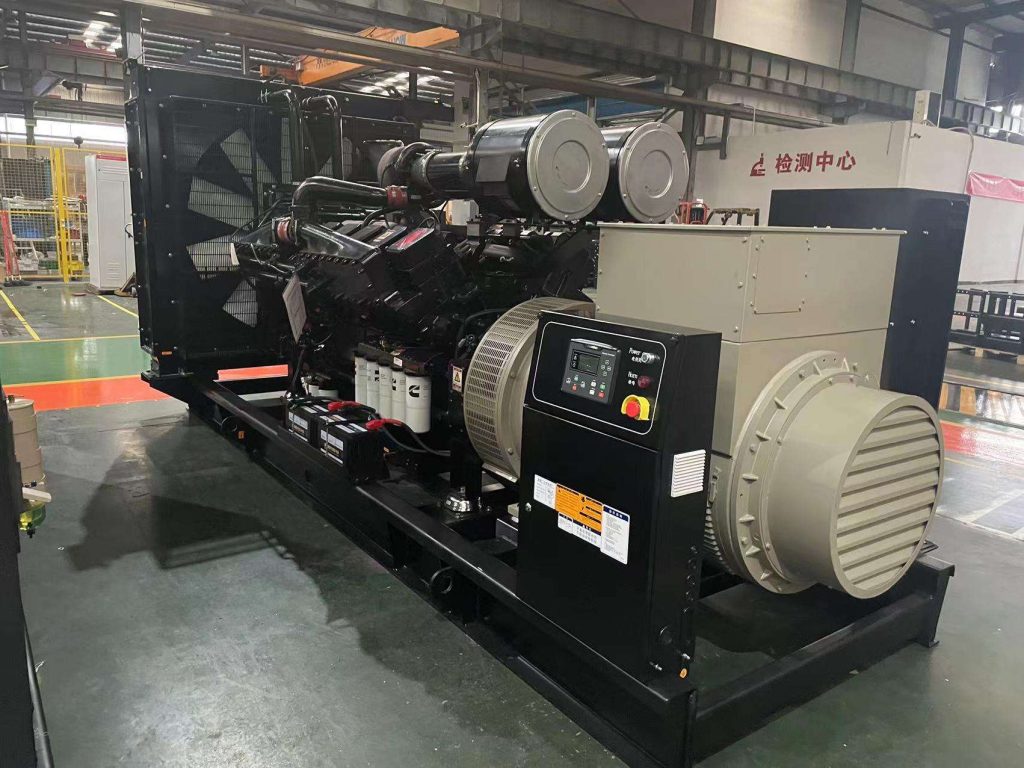
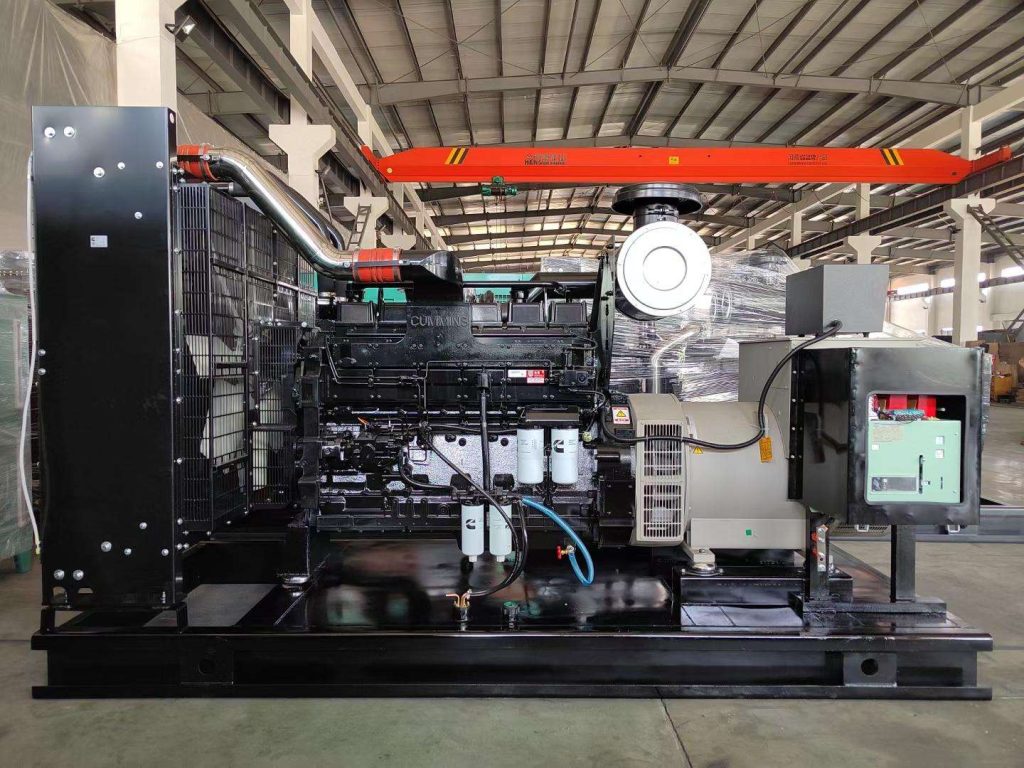
An AVR is the control loop inside the alternator terminal box. It samples the output voltage, compares it with a reference, and adjusts the field current to hold the terminal voltage steady as the load changes. On a 400V, 50Hz set the reference sits at the rated voltage, and the loop corrects within a fraction of a second. The loop is small, but every load on the site feels its behaviour.
The AVR also sets the ceiling on how far the voltage can fall when a large motor starts. Field current cannot change instantly, so the terminal voltage dips before the loop catches up. That transient dip is a specification figure, not a fault, and the alternator datasheet states it. A buyer who reads only the steady-state number misses the figure that decides whether a chiller or a lift motor will start.
What specification figures define AVR performance?
Four figures separate one AVR from another. Steady-state regulation sets the band at constant load. Transient dip sets the worst voltage during a load step. Recovery time sets how long the dip lasts. Excitation ceiling sets the field current available at the top of the range. Tesla Power quotes all four on an export offer, because a buyer comparing two sets on price alone is comparing two different machines.
| Figure | Typical range | What it decides |
|---|---|---|
| Steady-state regulation | Plus or minus 1% at rated load | Whether sensitive equipment stays inside its input band |
| Transient dip on a full step | 15% to 25% | Whether a motor start trips a contactor or a UPS |
| Recovery time | Under 1 second | Whether the dip is a blink or a shutdown |
| Excitation ceiling | Set by the frame size | How much starting load the set can ride through |
The two dip figures matter most on a site with motors. A 15% dip is a dimming light. A 30% dip drops a contactor and stops the machine. The AVR datasheet states each figure at a stated step, so compare two sets at the same step, not at the best number on each sheet. Our help and advice pages list the figures we ask a supplier to declare before a set is ordered.
How does an AVR respond when a motor starts?
When a motor starts, the current rises before the shaft turns. The alternator sees a load step far larger than the motor nameplate. Terminal voltage falls because the internal impedance drops voltage in proportion to current. Tesla Power Equipment sets the excitation ceiling high enough to ride through the start, and the response time decides how deep the dip goes. A load bank test reproduces that step on site.
A contactor drops at about 70% of its coil voltage, so a 30% dip releases a contactor that was holding. The cure is rarely a larger AVR. The cure is a bigger alternator frame, a soft starter, or a star-delta start that spreads the current over a longer window. Each option changes the dip figure the datasheet reports, and each option changes the price of the set.
Which AVR types suit which load profiles?
Three excitation types cover most export sets. A self-excited AVR draws its field power from the alternator output and suits lighting and resistive loads. A separately excited AVR takes field power from a permanent magnet generator, so it holds voltage even when the output is shorted. A permanent magnet AVR suits a motor-heavy site where the dip figure is the deciding number.
Match the type to the load list rather than to the price. A generator for motor loads needs the separately excited type, because the field supply does not collapse when the terminal voltage dips. A generator for standby power runs a few hours a month and suits the self-excited type. A generator for the site load should be chosen on the load profile, and Tesla Power quotes the type on the offer.
Worked example: voltage dip on a motor start
Take a 400kVA set at 0.8 power factor, which delivers 320kW of real power. The alternator subtransient reactance is 0.12 per unit. A direct-on-line motor draws about 3 times its rated current at the instant of start. The instantaneous dip is the reactance multiplied by the current multiple, so 0.12 x 3 = 0.36, and the terminal voltage falls about 36% before the AVR recovers it.
The arithmetic explains a site problem. A set that holds 400V at steady load can still drop to about 256V at the instant of a motor start, because 400V less 36% is 256V. That figure sits below the drop-out point of many contactors, so a machine stalls even though the AVR is working. A larger alternator frame lowers the reactance per unit and narrows the dip. A 100kVA set shows the same trade-off at a smaller scale.
What records confirm AVR performance at handover?
Commissioning should record the AVR response, not just the no-load voltage. Take a reading at no load, at half load, and at full load. Then apply the largest motor step the site will use, and record the dip and the recovery time. Tesla Power ships a response record with every export set so the site team works from the same columns at handover.
The record belongs in the project file with the instrument serial numbers. A voltage dip is easy to measure with a power analyser and hard to argue about afterwards without one. Keep the waveform capture next to the summary table, and note the ambient temperature on the day. A cold morning gives a better dip figure than a hot afternoon on the same set, so a heat-related fault check belongs in the same file.
How do you specify AVR performance in a purchase order?
Write four numbers into the enquiry. State the steady-state regulation as a percentage at rated load. State the transient dip at a named load step. State the recovery time. State the excitation type. A supplier who answers all four gives a buyer something to compare. A supplier who answers none of them leaves the dip figure to chance on site.
Ask for the figures at the site ambient temperature, not at the factory reference. A hot room changes the field resistance and the response. Ask for the alternator subtransient reactance as well, because that single figure predicts the dip on any motor step. Tesla Power Equipment returns all five figures with the offer, and our factory profile lists the frames we build.
What documents support an AVR conformity file?
A conformity file for an export set holds the alternator datasheet, the AVR response curve, and the test record. The file states the standard the set was checked against, and the alternator datasheet names the rating class. Most generator manufacturers publish the response curve as a graph, and a buyer can read the class from the same sheet.
Read the AVR curve against the rating class before you file it. A curve quoted at standby duty is not valid for a prime duty set, and the class sits in the ISO 8528-1 standard. Emergency systems that must start and carry load within a set time fall under the NFPA 110 emergency power standard. When you compare China generator suppliers, ask for the same three documents, and Yangzhou Tesla Power returns them with the generator CE marking requirements and the conformity assessment for the eu market in one pack.
Frequently asked questions about generator voltage regulation AVR
For an industrial alternator, steady-state regulation of plus or minus 1% at rated load is common, and a figure between 0.5% and 2% covers most export sets. A tighter figure costs more and matters only for sensitive electronics. Ask for the figure at the site power factor, because regulation is stated at a named load.
No. The dip comes from the alternator impedance and the starting current, not from the AVR size. A larger AVR changes the field supply, but the reactance per unit still sets the floor on the dip. Fit a bigger alternator frame or a soft starter instead, and treat the AVR as the recovery device.
Sometimes. The alternator has to expose the field winding and accept the excitation type the new AVR needs. A self-excited machine may need a permanent magnet generator added before a separately excited AVR will work. Ask the alternator maker for the field data first, then match the AVR to it.
Hunting usually points to a stability setting that is too aggressive, or to a load that pulses faster than the loop can correct. Check the AVR gain and the stability adjustment first. A loose sensing wire or a poor reference connection causes the same symptom, so inspect the terminals before you change any setting.
Run the set at no load, at half load and at full load, and log the voltage at each point. Then apply a load step and capture the dip and the recovery on a power analyser. The test record ships with the set. A response record signed at the factory is stronger evidence than a catalogue figure.
Set it for the site power factor, and state that figure on the enquiry. A 400kVA set at 0.8 power factor delivers 320kW, and the regulation figure is quoted at that factor. A set run at a different factor has a different response, so the test record and the offer should name the same number.
Only the separately excited type. A self-excited AVR takes field power from the alternator output, which is why it struggles when the voltage collapses. A permanent magnet generator gives the AVR a steady supply, and it keeps the field alive during a heavy motor start or a short circuit on the bus.
Send the load list and the site power factor to our engineering desk, and Tesla Power will return the dip figure at the largest motor step on the site before you place the order.