
A diesel generator maintenance schedule is the written set of daily, monthly and annual service steps that keeps a standby set ready to carry load. This guide lists each interval, the readings to record and the checks a buyer should compare with Tesla Power before placing an order.
- Read the schedule as an interval table, not a list of parts.
- Match each task to a record the site team can sign.
- Hold the annual load test on the calendar, not on memory.
- Check the spare parts shelf against the same intervals.
What does a diesel generator maintenance schedule cover?
The schedule covers three bands of work: a daily walk-round, a set of interval checks at 250 hours or 12 months, and an annual load test that proves the set still carries its rating. Each band has an owner, a tool and a record, and our diesel generator maintenance checklist lists the items behind each one. A controlled document changes only when someone dates and signs the change, and the revision date sits on the cover.
Most Chinese diesel generator manufacturers publish a table like this, and the intervals rarely differ by more than one step. Tesla Power Equipment groups the tasks by what fails first: fuel, air, oil and coolant. A schedule that lists parts without the reading that proves the part still works is a shopping list, not a plan. Ask for the interval table with the offer, and check that every row names the reading that proves the task was done.
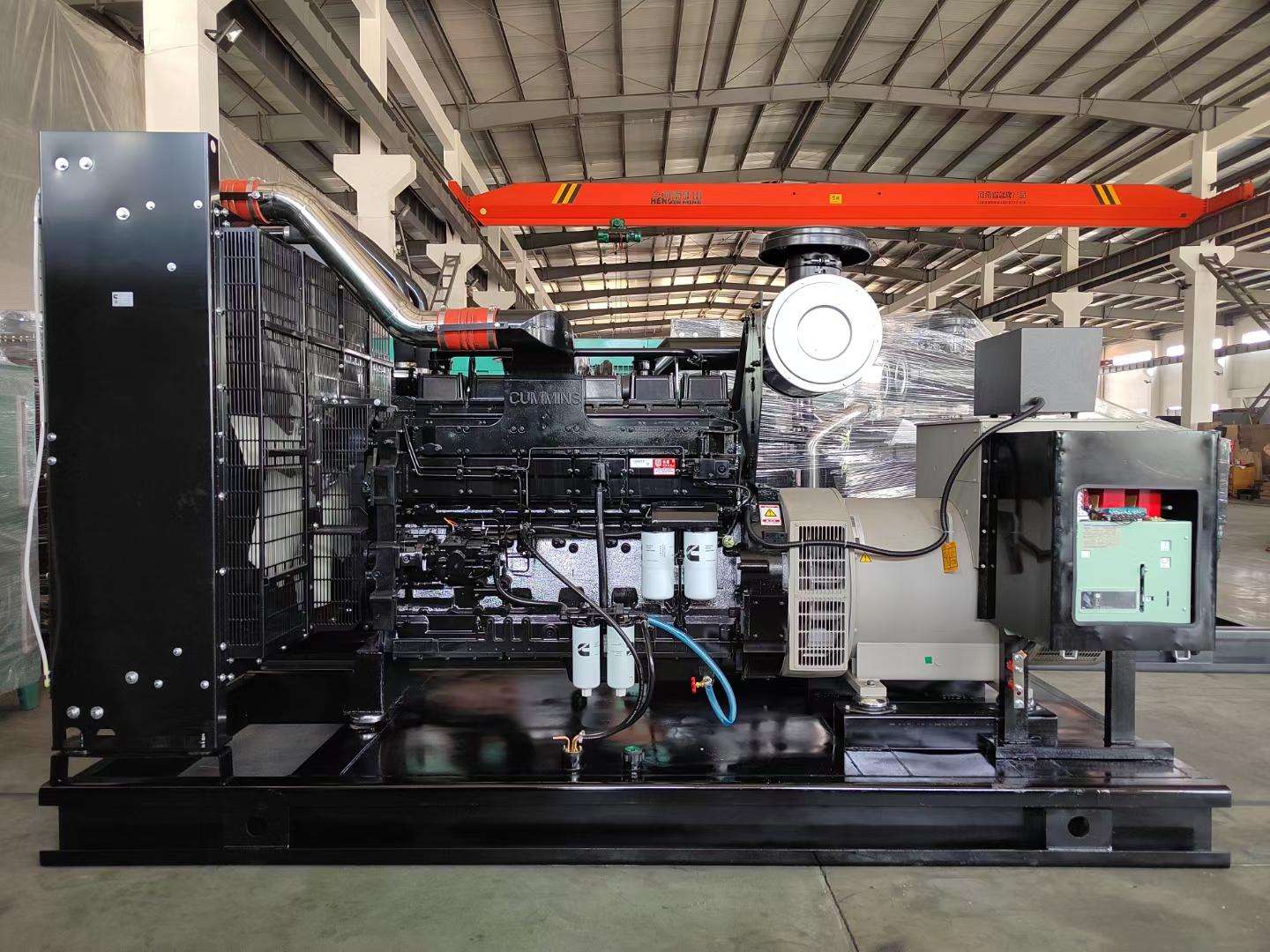
Which intervals does the schedule set for a standby set?
A standby set that runs only during an outage still needs a fixed calendar, because diesel, coolant and batteries age whether the engine turns or not. Set the walk-round at every start, the oil and filter work at 250 hours or 12 months, and the full load test at 12 months. The shorter number wins, and the site log records which one applied. Diesel ages faster than the tank label suggests, so the date matters more than the level.
Prime power sites run a different clock. A set that carries the load every day needs oil sampling every 500 hours and a valve check at the annual service. Ask the supplier which duty class the schedule assumes, because a standby interval applied to a prime set shortens engine life, and a 250kW diesel generator set is the frame most prime sites start from. The duty class sits on the nameplate and on the offer. A standby set may run 50 hours a year, while a prime set runs 4,000, and the two need different tables.
| Interval | Task | Record to keep |
|---|---|---|
| Every start | Walk-round on oil, coolant, fuel and leaks | Daily log sheet |
| 250 hours or 12 months | Oil and filter change, battery voltage, belt tension | Interval service sheet |
| 12 months | Load test at rated load, coolant change, valve clearance | Annual test report |
| 5 years | Radiator flush, hose and mount replacement | Major service report |
What do the oil and coolant records show?
Oil and coolant records show whether the engine is wearing at the expected rate. A rising iron count in the oil sample points to a bearing or a liner, and a falling coolant level points to a leak that a visual check misses. Keep the sample bottle number next to the reading. A 100kVA standby diesel generator set on a hospital contract uses a 250 hour sampling interval, and Tesla Power applies the same interval to a small site set.
A coolant record also shows whether the inhibitor is still doing its job. Glycol breaks down over time, and a weak mix allows scale and corrosion inside the jacket. Test the concentration at every annual service, then top up with the coolant grade the maker lists for the set. Mixing two coolant types is a common mistake that costs a radiator. The coolant record belongs in the same file as the oil sample, so a later reader can see both readings side by side.
How do you check the fuel system and the filters?
The fuel system fails more often than any other part of a standby set, and the cause is usually water or age rather than a broken component. Drain a little fuel from the tank bottom into a clear jar at every monthly visit. Water settles at the bottom, so the jar shows the truth in seconds. Replace the primary filter before it blocks, not after the set trips.
Filters carry a part number, and that number belongs in the schedule next to the interval. A cheap copy can look identical to the maker's part and still restrict flow, so measure the restriction with a gauge instead of trusting the label. Change the air filter when the restriction reading reaches the maker's limit, and write that reading down. Keep one spare set of every filter on the shelf, because a two week wait for a part is the same as a two week outage for a site that runs on the set.
What annual load test does the schedule require?
The annual test is the one item that proves the whole chain, because it loads the engine, the alternator and the switch together. Run the set at its rated load for at least 2 hours, and record the voltage, frequency and coolant temperature at every step. A no-load run proves nothing about the alternator or the fuel system, and the NFPA 110 emergency power standard sets the same expectation for a standby system.
Work the arithmetic before the test so the target is not a guess. A 200kVA set at 0.8 power factor delivers 160kW, so 200kVA x 0.8 = 160kW, and a 2 hour run at 50Hz draws about 320kWh of fuel energy. Check the figure against the ISO 8528-1 rating classes before you accept the result. Log the ambient temperature as well, because a hot day trims the output the set can hold, and Yangzhou Tesla Power prints that note on every offer.
How does site condition change the schedule?
Heat, dust and salt air all shorten the intervals, and the site sets the multiplier rather than the maker. A set in a dusty quarry needs the air filter checked every 50 hours, while a clean plant room can follow the standard 250 hours. Read the standby rating definition before you compare two quotes, because the duty class changes the service burden. A coastal site adds a corrosion check on the battery terminals at the same visit.
Altitude and ambient temperature change the derating, so a site above 1,000 m should shorten the cooling system check as well. Two sites can run the same set and need different intervals, and the difference is the air, not the engine. Tesla Power writes the site condition on the first page of the schedule, so a new technician reads it before the first visit. Salt air also reaches the control panel, so wipe the terminals at every visit.
What records must the diesel generator maintenance schedule hold?
The file must hold the interval table, the signed service sheets, the oil and coolant samples and the annual test report. A diesel generator maintenance schedule or the site log should answer the same question, so a reviewer can see what changed since the last visit. Keep every sheet for the life of the set, because a warranty claim may arrive years after the last service. A blank row in the table is itself a finding, not a gap to skip.
A photograph of the meter reading is the fastest record a technician can make, and it costs nothing. Note the ambient temperature and the load on the sheet, because a reading without its condition proves little. Our note on generator overheating causes shows how one missing coolant reading turns into an expensive repair. Conformity assessment for the maintenance file follows the same evidence, so the declaration and the sheets must agree. Tesla Power Equipment keeps the sheets in one folder, not in three places.
Which spare parts should sit on the shelf?
The shelf should hold one full filter set, a spare fuel lift pump, a belt pair, a battery charger fuse and one set of hoses. Those items cover the failures that stop a set dead, and each one has a short shelf life. Rotate the stock every 12 months so the oldest part leaves first. A part that expires in the box is the same as no part at all. Write the expiry date on every box with a marker.
Match the spares list to the interval table, so the shelf carries only the parts the schedule uses. A critical spares list belongs with the offer, and it should name the part number rather than a description. Our help and advice section shows the format we use for export sites, and it keeps the list short enough to check in one pass. Label the shelf by interval, not by alphabet.
How do you hand the schedule over to a new site team?
Hand over the file, not a verbal briefing. Walk the new team through the interval table, the sample points and the load test, then watch them run one walk-round themselves. A handover that ends with a signature is worth more than one that ends with a handshake. Contact our technical team if you want the checklist we use at handover; Tesla Power sends the same file it keeps on the build.
The schedule also needs a review date. Set one review a year, or after any change of duty class, fuel supplier or site layout. The review is a short meeting with the interval table on the table, and its output is a dated revision. A schedule with no revision history is a document nobody owns. Write the review date on the cover, and note the name of the person who signed the last one.
Frequently asked questions about the maintenance schedule
A standby set needs a walk-round at every start, an interval service at 250 hours or 12 months, and a full load test once a year. Whichever limit arrives first sets the date, because diesel, coolant and battery life run on the calendar as well as on the hour meter.
A missed interval does not fail the set on the day. It moves the failure closer, and it usually shows up as a hard start, a rising temperature or a shorter run time. Record the missed date, then bring the set back to the calendar rather than shortening the next interval to catch up.
Check the oil level, the coolant level, the fuel level, the battery terminals and the floor under the set. Look for fresh leaks, loose belts and a blocked air inlet. The walk-round takes a few minutes, and it catches most faults before the set has to start under load.
Run at rated load for at least 2 hours after the temperatures settle. A shorter run hides slow faults and does not prove the fuel system at full flow. Record voltage, frequency and coolant temperature at every step, and keep the trace with the report.
Yes. A prime set runs far more hours, so oil sampling and valve checks move to a shorter interval. Use the duty class on the nameplate to pick the table, and confirm it with the engine maker's own service plan. A standby table on a prime set is a warranty risk.
Each record should show the date, the hour meter reading, the task completed, the reading that proves it and the name of the person who signed it. A record without a reading is a claim, and a claim is hard to defend at a warranty review.
The technician who did the work signs the sheet, and the site manager countersigns it. Tesla Power keeps a copy in the project file for every set we build, so a later owner can trace the service history from the first start to the last visit.