
The generator derating temperature chart shows how much output a diesel set loses as the site temperature rises above the ISO 3046 reference point. Tesla Power sizes every export enquiry from the real ambient, so buyers should read the chart before ordering and send the site figure to request a corrected rating from the supplier.
- Read the site's maximum ambient, not the yearly average, before sizing.
- Confirm the nameplate reference temperature and the derating rate per 10°C.
- Send the load list and the ambient to request a scoped quote from the supplier.
What does the generator derating temperature chart show?
The generator derating temperature chart answers one question: how much output survives when the air around the set gets hotter than the test condition. Every diesel set is rated at a reference ambient, usually 25°C, and the chart reduces that rating as the site temperature climbs. A buyer who skips the chart risks ordering a machine that cannot hold its nameplate on the hottest afternoon of the year. See the generator product range for the frames we build with their stated rates.
The chart is not a suggestion; it reflects the cooling margin the alternator and engine need so the set does not overheat at full load. Generator manufacturers publish the rate as a percentage loss per 10°C above the reference, and the figure differs by enclosure. A silent canopy loses more than an open frame because the air it recirculates starts warmer each cycle. Reading the chart early keeps the order honest, because a corrected frame is the only one safe to commission.

Why does temperature cut a diesel set's output?
Heat cuts output because the engine and alternator both lose capacity as intake and cooling air warm up. Combustion leans out as the air gets thinner, and the alternator insulation reaches its limit sooner at high ambient. Tesla Power Equipment documents the derating rate on every data sheet, because a rating with no rate is a rating no one can commission against at the real site.
The loss is not a fault; it is the maker protecting the machine from slow thermal damage. Running a 500kVA set at its nameplate in 45°C air pushes the windings past their design temperature and shortens life. The chart tells you the honest figure before the set is built, not after it fails on site. A generator for standby power often runs only on failure, so the derating caps the pick even though the running hours are few and far between.
How much output does ISO 3046 remove per degree?
ISO 3046 sets the reference condition. Tesla Power quotes against that baseline, so altitude and ambient temperature are stated against one common baseline that every supplier can quote. Above the 25°C reference, the common data-sheet basis removes about 3% of output for every 10°C of ambient rise. The rate is a planning figure; the nameplate or the engine maker's curve is the binding one for a given frame.
The percentage is not uniform across the catalogue, which is why a generator for export sites must carry its own curve rather than a generic rule. A tropical specification that assumes 50°C needs a larger frame than one written for a temperate climate. The silent generator noise level dB limit and the thermal limit are solved together, because the canopy that cuts noise also traps the heat that drives the derating.
What ambient limit do most nameplates assume?
Most nameplates assume a 25°C to 40°C maximum ambient and a site near sea level, because that covers the majority of inland industrial sites. Tesla Power prints the reference on every data sheet, so anything hotter or higher must be corrected, or the rated output no longer applies at the real location. The reference is printed on the data sheet, and buyers should read it before trusting any headline rating they are shown.
A generator in tropical climates routinely meets 45°C ambient, and a generator in high-temperature sites can sit at 50°C inside a closed room during a summer outage. At those temperatures the 3% per 10°C rule removes 6% to 9% of output before altitude is even counted. Send both numbers to our engineering team so the quote carries the corrected frame, not the showroom figure that looks better on paper.
How do you read a generator derating temperature chart?
Tesla Power Equipment builds each curve from the maker's tested data, so you read the chart by finding the site ambient on the horizontal axis, then dropping to the curve to read the available output as a fraction of the reference rating. The generator derating temperature chart is only useful once you know the reference temperature and the rate, because two suppliers quoting different references mean two different real numbers.
Use the table below to see the pattern at common frames, then apply your own site figure on top of it. The correction is multiplicative, so a 20% combined heat and altitude loss leaves 80% of the nameplate available. Keep the data sheet beside the chart, because the chart is a summary of the maker's tested curve, not a replacement for the binding document you commission against.
| Set rating at 25°C (kVA) | Site correction | Available output (kVA) |
|---|---|---|
| 500kVA | 0% | 500kVA |
| 500kVA | 20% | 400kVA |
| 1000kVA | 0% | 1000kVA |
| 1000kVA | 20% | 800kVA |
Worked generator derating temperature chart example
Take a 500kVA set rated at the 25°C reference. A 20% combined temperature and altitude correction leaves 500kVA × 0.8 = 400kVA available. Because the set runs at 0.8 power factor, that 400kVA also delivers 400kW of real power. Order against the 400kVA corrected figure, or the nameplate will promise more than the engine can hold on a hot day.
That one line settles four decisions: the frame size, the alternator kVA, the cable ampacity and the breaker rating. It also shows why a buyer who quotes only the 500kVA headline may overload the set by a fifth of its true need. Send the same schedule to our engineering team and the quote returns with the cable and breaker already specified. The load factor explainer shows why running near the corrected rating also trims fuel cost at the duty point you actually run.
Which standards set the derating reference?
Yangzhou Tesla Power keeps the reference ambient and the derating rate on every data sheet, because a rating with no reference is a rating no one can commission against. ISO 3046 sets the reference condition, so the derating is measured against one baseline that two suppliers quoting the same class can both honour. The chart is drawn against that baseline, and the class decides the allowable service life.
For standby applications the NFPA 110 pickup-time requirement sets the pickup time and the testing expectation, while IEC 60947-2 governs the output breaker. Where the set ships into the EU, the (EU) 2016/1628 emissions regulation sets the engine tier. The ISO 3046 reference condition is the number the chart is drawn against, and conformity assessment for the EU market gathers these into one file.
Generator ce marking requirements sit inside that same conformity file, alongside the emissions evidence and the machinery documentation for the EU market. Ask for the full set before the set leaves the factory, because a missing document is cheaper to add at build time than to chase after shipment has already left the dock.
How do you specify a tropical-site set?
You specify a tropical-site set by raising the reference ambient in the enquiry, not by hoping the frame has hidden margin. State the worst-case site temperature and the altitude, then let the supplier apply the chart and return the corrected kVA. A set specified this way runs at its rated load on the hottest afternoon instead of tripping off it during the outage you planned for.
Chinese generator suppliers who quote without the chart often ship a frame that is a size too small for the climate it lands in. Read our company profile for the alternator types we fit and the test routine each set passes before it ships. Tesla Power quotes both the nameplate and the corrected figure on the offer, so the buyer sees the gap and can plan the cable size before the order is cut.
What cooling margin should buyers keep?
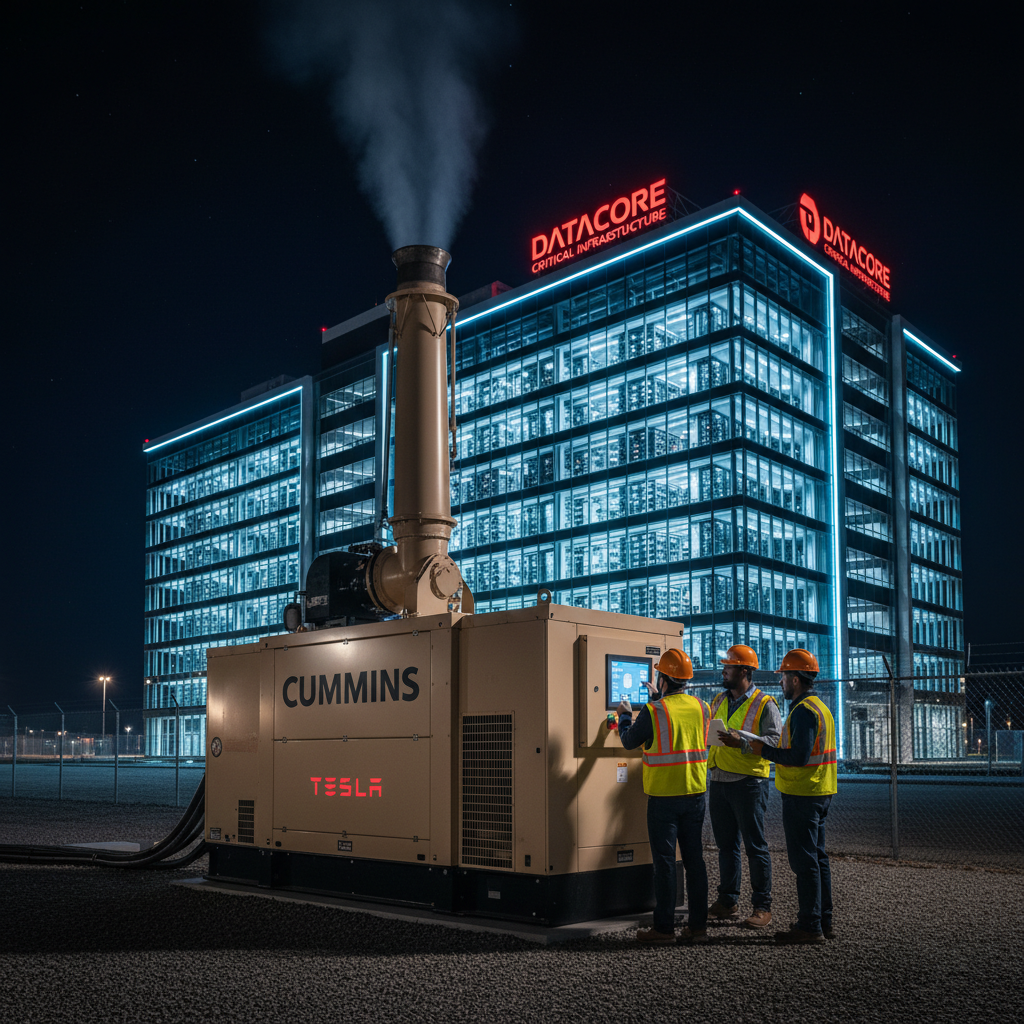
Buyers should keep a visible cooling margin by reading the chart before the frame is fixed, because the margin is what lets the set survive a hot day with the load it was sold. A frame chosen with zero margin runs at its thermal limit the moment the ambient climbs, and the protection trips before the breaker ever does its job.
Separate the intake from the discharge so hot air cannot loop straight back into the engine. The generator derating temperature chart assumes cool intake air, and a room that recirculates negates the rating the nameplate promises. A gap of a few metres, or a ducted discharge, restores the margin the chart was drawn with and keeps the set inside its design envelope.
Frequently asked questions
Most diesel sets are rated at a 25°C to 40°C maximum ambient and near sea level, because that covers the majority of inland industrial sites. Anything hotter or higher must be corrected on the chart, or the rated output no longer applies at the real location. The reference is printed on the data sheet and should be read before any headline rating is trusted.
Yes. Thinner air at altitude reduces engine power and worsens alternator cooling, so altitude is added on top of the temperature correction. The combined loss is multiplicative, which is why a mountain or high-plateau site needs a larger frame than its sea-level rating suggests. State both numbers on the enquiry so the quote reflects the real site.
At 45°C, 20°C above a 25°C reference, the common 3% per 10°C basis removes about 6% of output from a 500kVA nameplate. Add altitude on top, and a 20% combined correction leaves 400kVA available. Order against the corrected figure, not the headline, or the set will overload on the hottest afternoon of the year.
It can, but the enclosure traps heat, so the effective ambient inside is higher than the room reading. The chart assumes cool intake air, and a closed plant room recirculates discharge back to the intake. Duct the radiator discharge outside and separate the louvres to restore the nameplate margin the set was built to hold.
Yes. The supplier cannot apply the chart without the worst-case ambient and the altitude, and a quote that omits them is a 25°C rating by default. Send both figures with the load list so the returned frame is the corrected one you will actually run on the hottest day, not a showroom number.
No. The rate and the rated reference differ by enclosure, cooling system and engine maker, so one generic rule under-sizes a real set. Use each frame's tested curve, and treat the percentage as a planning estimate until the data sheet confirms it. Compare suppliers on the corrected number, not the headline that looks best on paper.
ISO 3046 sets the reference condition so altitude and ambient are stated against one common baseline every supplier can quote. Above that reference the output is reduced by a stated rate, which is the figure the generator derating temperature chart is drawn against. The rating class then decides the allowable service life of the machine.
Keep the margin by specifying the real site ambient up front, separating intake from discharge, and ordering against the corrected kVA rather than the nameplate. Tesla Power documents the reference ambient and the derating rate on every data sheet, so the buyer commissions against the figure the set was actually built to hold through a hot season.