
Silent generator noise level dB is the figure you and your neighbour watch, and this guide explains how it sets the operating window before the build. ISO 8528-10 measures at 7m under load and the EU directive 2000/14/EC sets the outdoor cap. Send the desired dB limit and room layout with the RFQ desk at Tesla Power.
- EU directive 2000/14/EC caps outdoor sets between 60 and 105dB(A) at 7m by rated power band.
- ISO 8528-10 measures under load — the data sheet reading matters more than the static figure.
- Two enclosure moves do most of the work: the canopy thickness and the exhaust silencer.
- RFQ check: include the dB limit, the room boundary, and the night-time use flag.
What dB limit applies to a silent generator noise level dB at 7m?
The reference distance for noise measurement on diesel generator sets is 7m. ISO 8528-10 sets the published measurement point. At that distance an open-frame set reads 95 to 105dB(A). A sound-attenuated canopy reads 60 to 75dB(A). Both readings depend on load.
EU directive 2000/14/EC splits outdoor sets into five rated-power bands. Each band carries a different cap. A 10kVA canopy set caps near 96dB(A). A 200kVA set caps near 80dB(A) or so. The directive also separates the measured figure from the regulatory cap. Check both on the data sheet and quote the regulatory cap when you size the room. The silent generator noise level in a hall is judged at the room boundary, not at the engine block. See the sizing and compliance notes for the room-boundary method.
Which enclosure design drives the dB figure?
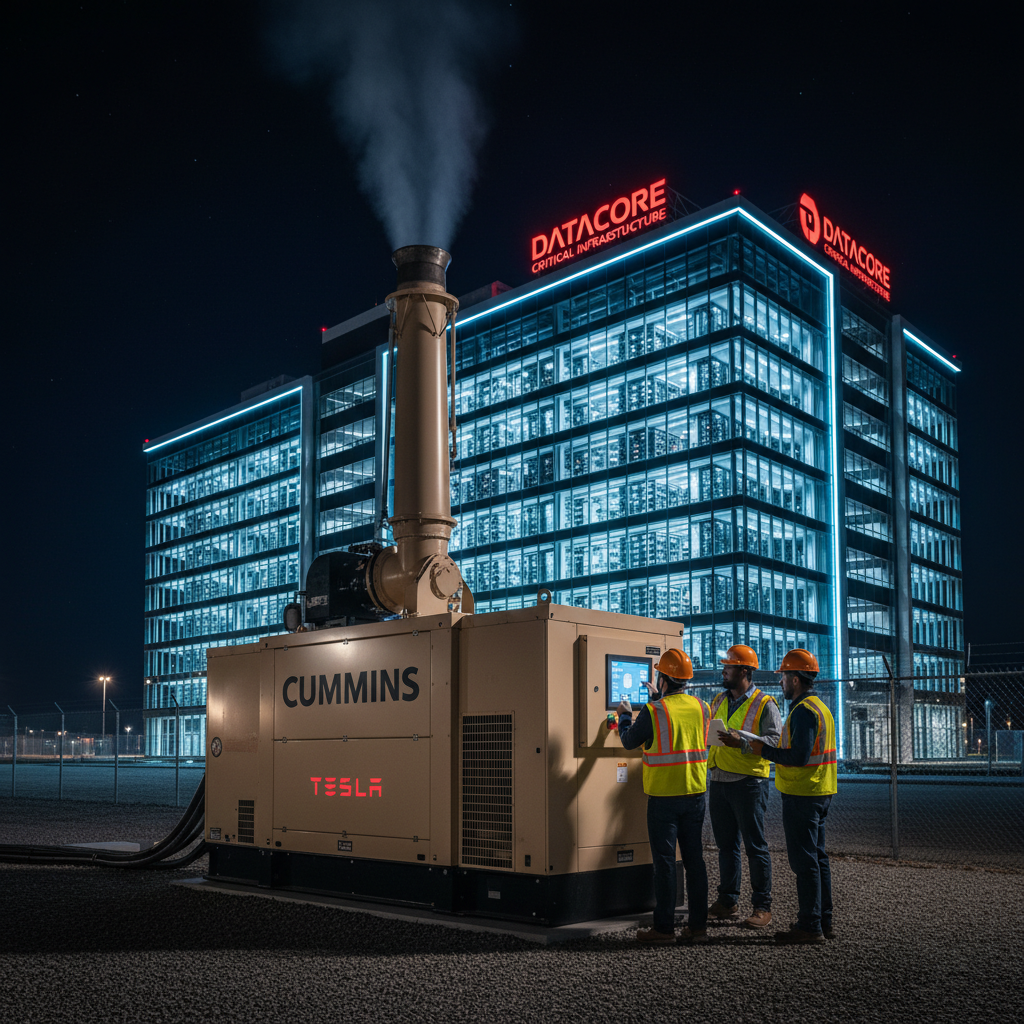
The enclosure drives the dB figure through two paths: the canopy walls block engine noise, and the exhaust silencer drops the loudest single source by 20 to 30dB(A). For a 50kVA canopy set, walls of 50mm mineral wool with a 0.8mm steel skin give 25 to 30dB(A) of insertion loss. The cooling air path is the leak that almost everyone forgets — it costs 5 to 10dB(A) if it is not lined. Most chinese silent generator noise level suppliers quote only one figure and skip the 7m reading.
For tighter limits the build moves to a containerised set, multi-layer walls, and a residential silencer. Each step adds cost. A residential-spec set costs 30 to 50% more than a standard canopy for the same kVA. A Tesla Power Equipment quote should show the dB at 7m against the 2000/14/EC cap, and the cost of each step upward, so the project can decide which ceiling it is paying for. Our Yangzhou facility lists the test cells used for the 7m sweep.
How does load level change the dB at the site boundary?
The dB at the site boundary moves with load because the engine fan and exhaust gas flow rise with load. At 25% load a 100kVA canopy set reads 65dB(A) at 7m. At 100% load it reads 71 to 73dB(A). The 6 to 8dB(A) rise is mostly low-frequency exhaust noise. That is the part that carries furthest at night.
Measure the boundary at the load the site will actually run, not at full load only. The night-time figure is what the residential neighbour hears, and the night-time figure is what the local authority enforces. For a silent generator noise level dB specification that holds at night, ask for the day and night figures separately. A generator load factor guide shows how the running load changes the reading.
What does the EU Outdoor Noise Directive require from a generator?
Tesla Power quotes every silent set against the EU outdoor cap. EU directive 2000/14/EC applies to most outdoor generator sets placed on the EU market. The cap is set by the rated power band. Compliance is marked by the CE mark and the regulated dB figure on the technical file. Sets used indoors with a remote radiator are out of scope — they are judged on the receiver side at the wall penetration. Emergency sets run only during a power failure are exempt; weekly test runs put the set back in scope.
The conformity file gathers the test record, the data sheet figure, and a calculation of the dB at the receiver point. Conformity assessment for the EU market gathers the noise evidence with the engine emissions evidence into one file. The silent generator noise ce marking requirements sit inside that same file. The supplier signs it as part of the CE marking. Ask for the file before the set leaves the factory — a missing document is the most common cause of a delayed customs clearance on a Rotterdam shipment.
Why do two 50kVA canopy sets show different noise numbers?
Two 50kVA canopy sets can show different noise numbers because the silencer, the fan curve, and the room layout all matter. A 50kVA set with a residential silencer, lined louvers, and a 30mm acoustic door seal reads 60 to 62dB(A) at 7m. The same 50kVA set with a standard silencer and basic louvers reads 70 to 72dB(A). The kVA is the same. The engine is similar. Only the enclosure work changes. The 10dB(A) difference is the boundary between a residential neighbour and an industrial site.
Check the data sheet for two numbers before you compare two 50kVA quotes — the dB at 7m under load and the dB at 1m. If two data sheets show only the 1m figure, the 7m reading has to be calculated. A Chinese silent generator noise level dB supplier that quotes only one figure usually builds to the cheapest silencer. Tesla Power states both numbers on every data sheet the factory ships. For high sites, the altitude derating note explains the extra margin.
What dB level fits a residential neighbour site?
A silent generator noise level for residential needs the 55 to 60dB(A) range as the usual night-time target. A silent generator noise level dB manufacturer quotes both the day and night figure so the project can pick the ceiling. Three moves get the dB down to the neighbour's ceiling: silencer selection, wall lining, and night-time auto-shutdown. The factory-quoted dB at 7m and the neighbour's compliance margin usually meet in the 55 to 60dB(A) range at night for residential, 50 to 55dB(A) for a care home, and 60 to 65dB(A) for an industrial border. Tesla Power treats the night figure as the binding one for residential approvals.
Why does a hospital standby set need a lower dB figure?
A hospital standby set needs a lower dB figure because the patient comfort floor sits around 35dB(A) at night. Any generator noise above that level triggers complaint. Night-time dB caps for hospital standby sets typically fall in the 50 to 55dB(A) range at the nearest patient window — 10dB(A) stricter than the typical industrial cap. The hospital also runs the generator at weekly test intervals, often outside working hours. The night-time figure is the operating figure, not a fallback.
The silencer for a hospital standby set is usually a residential grade plus a critical-grade silencer on the exhaust. Combined with lined walls and a lined inlet louvre, a 500kVA standby set can meet 50 to 55dB(A) at the nearest patient window. The additional silencer cost is non-trivial. A silent generator noise level for hospital standby needs a lower ceiling because the patient comfort floor leaves little headroom. Document the dB tier on the offer and pin the boundary figure on the data sheet so the handover pack carries the same number the site team tested.
How does ductwork and an exhaust silencer change the reading?
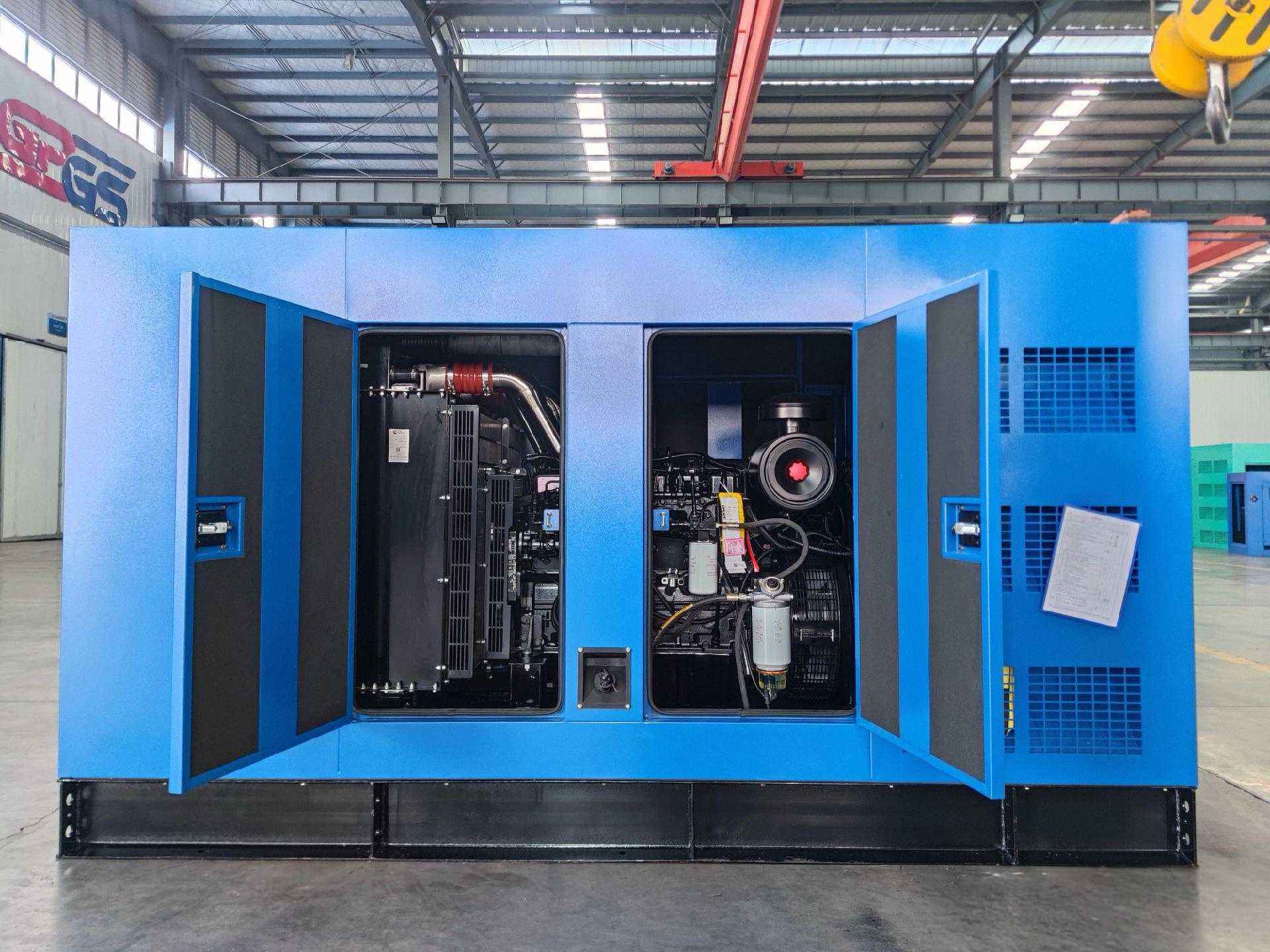
Tesla Power lines the duct on every critical build. The ductwork and the exhaust silencer drop another 5 to 15dB(A) on top of the canopy reading, and they are the most cost-effective place to spend the noise budget. A standard residential silencer brings a 50kVA canopy from 72dB(A) to 65dB(A) at 7m. A critical-grade silencer brings it to 58dB(A). The ductwork adds another 3 to 5dB(A) if the duct is lined. The elbow count matters too — every 90-degree bend costs another 1 to 2dB(A) of insertion loss.
For indoor sets the ductwork carries the noise into the ventilation, and the silencer at the wall penetration is where the boundary figure gets decided. A 200kVA indoor set with a 15m lined duct and a critical silencer can hit 50 to 55dB(A) at the boundary. That is the residential-hospital range. The total comes from silencer, lining, and ductwork added together, not from any one alone.
How is the sound test run before shipment?
The sound test runs on the factory test bed before shipment. The microphone sits at 7m for the outdoor figure and at 1m for the indoor figure. The load bank holds the set at 25%, 50%, 75%, and 100% load. The engineer records the dB(A) at each load step with a type 1 meter. The reading at 100% load is the figure stamped on the data sheet. The certificate travels with the set in the conformity file. Tesla Power repeats the same 7m sweep on every set it exports. The standby product range lists the tested canopy builds.
On site the sound test is repeated at the boundary points that matter. The microphone position uses the same procedure as the factory test, but the boundary points add the running equipment sound. The site engineer subtracts the background and reports the generator-only contribution. Document both numbers in the commissioning report and file the report next to the data sheet. A dB drift from 65 to 68 on first site test usually points to a door seal or a louvre lining — both are field-fixable.
What belongs on the RFQ for a soundproof canopy set?
The RFQ for a soundproof canopy set should carry four artefacts so the supplier can quote the dB ceiling against the right boundary. The first is the desired silent generator noise level dB at 7m under full load — written as a single number, not a range. The second is the local authority figure or planning condition on the boundary noise. The third is the day / night use pattern, which affects the night-time add-on the silencer must hold. The fourth is the cable and duct layout from the set to the boundary point.
Send these to the RFQ desk with the project name in the subject line so the engineering team can route them. Expect a counter-proposal that names the dB at 7m under load, lists the silencer model, and quotes the conformity file for the EU directive. If the counter-proposal omits the dB at full-load, push for it — that number is the deliverable. A Tesla Power Equipment quotation pairs the dB at 7m with the silencer model and the conformity file. The technical reference for the EU cap is on the EUR-Lex directive page, and the test method is on the ISO catalogue; both belong in the conformity file.
| Silencer tier | Typical dB(A) at 7m under load | Cap under EU 2000/14/EC by rated power | Best fit |
|---|---|---|---|
| Standard canopy | 70 to 75dB(A) | 85 to 105dB(A) | industrial, rural |
| Residential silencer | 60 to 65dB(A) | 60 to 80dB(A) | residential border, light commercial |
| Critical silencer | 55 to 58dB(A) | 50 to 65dB(A) | hospital, care home, data hall |
The dB at 7m under load for each silencer tier covers most of the working range of EU 2000/14/EC. Pick the tier that hits the boundary the site team is judged on.
Frequently asked questions about silent generator noise level dB
A typical sound-attenuated canopy set reads 60 to 75dB(A) at 7m under full load, depending on the silencer grade and the cooling air path. A standard canopy with a residential silencer lands near 65dB(A). A critical-grade silencer brings that to 58 to 60dB(A). EU directive 2000/14/EC sets the cap at 60 to 105dB(A) by power band, so the 65dB(A) canopy sits inside the cap for a 200kVA build.
The data sheet dB applies to a single measurement point under load. It does not separate day from night. Most local authorities apply a night-time penalty of 10 to 15dB(A). A canopy that meets 65dB(A) at the day boundary may still be over the night-time cap on the same boundary. Ask the manufacturer for the night-time adjusted figure.
Some silencers fit as a retrofit on a standard canopy, but most residential-grade and all critical-grade silencers need a redesign of the duct path and the door seals. A retrofit silencer brings a 5 to 8dB(A) improvement at best, and the cost usually lands within 60 to 80% of a factory-fit residential build. A retrofit is cheaper than re-tendering the enclosure.
EU directive 2000/14/EC does not require periodic re-test on a fixed installation, but most local authorities do, especially for sites near residential boundaries. Annual re-test is the most common cadence, sometimes quarterly for sensitive sites. The re-test reads the boundary dB at the same points the factory test used.
The radiator fan dominates at low load. The exhaust dominates at high load. On a 100kVA canopy set the fan contributes around 40% of the dB(A) at 25% load and falls to 25% by 100% load. The exhaust follows the opposite pattern. Silencer selection has to address both — a quiet exhaust with a standard fan leaves a 5 to 8dB(A) ceiling on the set.
dB is the raw sound-pressure measurement. dB(A) is the same measurement weighted by the A-filter, which approximates the frequency response of human hearing. The data sheet figure is normally dB(A) at 7m. dB(C) appears in some low-frequency specifications. When comparing two data sheets, check that both quote dB(A) at 7m.
Weather changes the boundary dB by 3 to 5dB(A) across typical day-night cycles. The night-time inversion carries noise further on a still, cold night. Wind direction matters too — a sound source downwind of a receiver reads 5 to 10dB(A) louder than upwind. The 7m dB on the data sheet is measured under standard atmospheric conditions.
Yes. Two canopy sets in parallel at 50% load each typically read 2 to 4dB(A) lower at the boundary than one large set at full load. Each canopy runs below its loudest fan and exhaust point. The combined cost is usually higher — two control panels, two silencers, two maintenance schedules. For sites with a strict night-time cap, two medium sets can beat one large set on noise.