
An open type vs silent generator choice comes down to noise, heat and cost, and the site decides which one wins. Tesla Power's engineers compare the enclosure, the airflow and the price gap here, then show how to evaluate both options before you request a quote.
- Compare the sound power level first, because the noise limit drives the enclosure.
- Check the cooling airflow, because a sealed canopy traps heat.
- Price the enclosure against the distance to the nearest home.
- Confirm the duty class, because prime power needs a larger radiator.
What is the difference between an open type and a silent generator?
An open set lets the engine breathe through a steel frame and a radiator. A silent set wraps the same engine in a steel canopy with lined panels and a louvred air path. The two share an alternator, a control panel and a rating class. They differ in noise, heat and cost, and the site decides which build wins. The product page for an open frame and silent set shows both builds on one chassis family.
The choice rarely comes down to the machine. It comes down to the site, the distance to the nearest home, and the ambient temperature. A silent set costs more and runs hotter, and both effects follow from the same sealed enclosure. Read the noise limit first, because it rules one option out before the price matters on an urban site. That is the first question to answer.
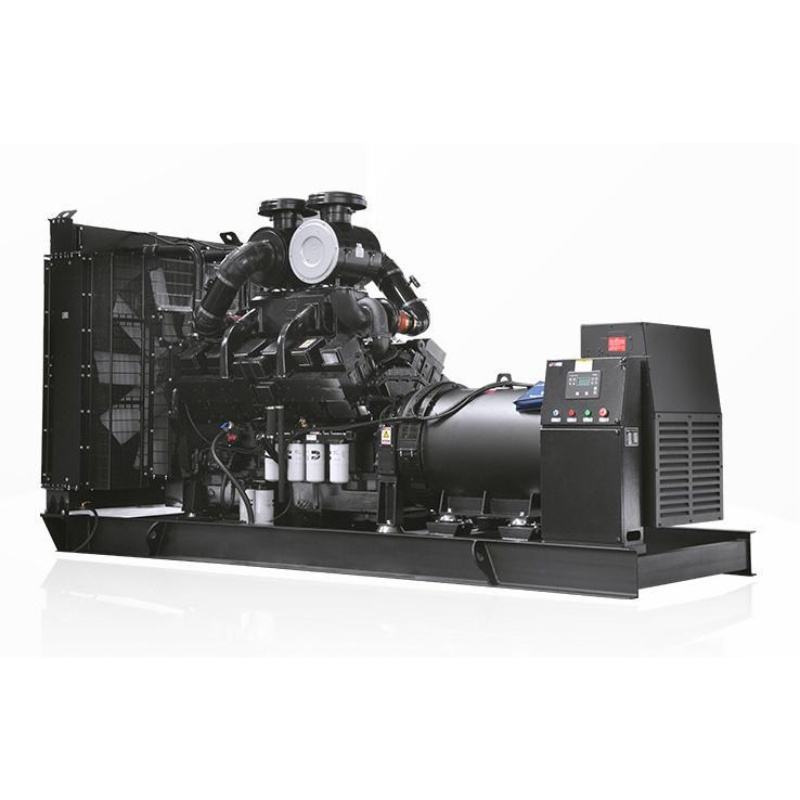
Open frame sets suit a fenced plant room, a farm or a factory yard where the noise reaches no neighbour. Silent sets suit a hospital, a hotel, a data centre or an urban site where the limit sits in a permit. The duty class matters too, because a prime power set runs long hours and needs a larger radiator in either build.
How much noise does an open type vs silent generator make?
Sound power level is the number to compare, and a test to ISO 8528-10 states it. An open set commonly sits near 100dB(A) at one metre, while a silenced canopy can bring the same set down by 15dB(A) or more. A 10dB(A) cut sounds about half as loud to the ear, so the gap is worth real money on an urban site.
The figure depends on the load and the distance. A set at 75% load is louder than the same set at 25% load, and the reading falls as you move away. Measure at the nearest sensitive receptor, not at the canopy, because the site boundary sets the limit. Our note on the EU Outdoor Noise Directive covers the boundary test in detail, and the ISO 8528-10 page gives the method. Tesla Power measures at the receptor, not at the canopy door.
Why does a silent canopy run hotter than an open set?
Lined panels cut noise and also cut airflow. The canopy adds two louvre banks and a baffle path, and each one adds a pressure drop that the fan has to overcome. The same radiator therefore rejects less heat at the same air temperature, and the engine runs closer to its alarm point. A silent set needs a larger radiator or a larger louvre free area to hold the same rating.
Ambient temperature compounds the effect. A set that holds full load at 25°C may derate at 40°C, and the canopy makes the room temperature higher than the outdoor figure. Size the louvre on the free area after the grille, not on the frame size. Read the room ventilation figures before you fix the enclosure, and keep the radiator clear of any wall by at least one fan diameter.
What does the enclosure cost next to the noise limit?
The enclosure is the cheapest part of the choice to get right at the quotation stage and the most expensive part to change later. A silent canopy adds steel, acoustic lining, louvres and a larger radiator, and the price gap widens as the set grows. Buyers should price the enclosure against the noise limit, not against a generic upgrade.
| Build | Typical sound level | Usual site |
|---|---|---|
| Open frame | About 100dB(A) at 1m | Fenced plant room |
| Silent canopy | About 85dB(A) at 1m | Urban and hospital site |
| Container type | About 80dB(A) at 1m | Data centre and plant |
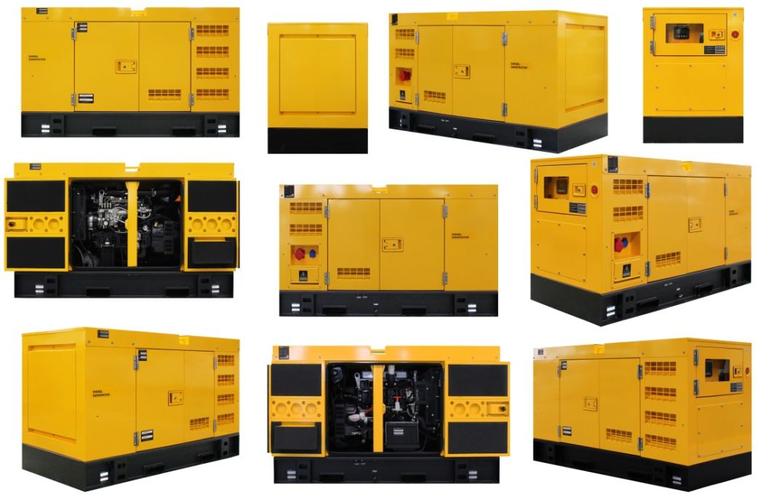
A container type adds a further step, because the box also carries the tank and the switchgear. Tesla Power prices all three builds on one sheet, so the buyer can read the noise figure and the cost together rather than in two separate offers.
How do you select the right enclosure for a site?
Start at the boundary, then work back to the set. Measure the distance to the nearest home or office, read the local limit, and pick the build that meets it. A rental fleet may buy both builds, because the site changes every month and the limit changes with it. The site survey is the cheapest document in the whole order.
Then check the heat budget. A silent set in a hot climate needs a bigger louvre and a larger radiator than the same set in a temperate one. The silent set for outdoor events shows the larger radiator in a compact canopy. Confirm the ambient design figure before you freeze the enclosure, and state the duty class at the same time.
What does a noise and cost example look like in practice?
Take a 500kVA set that reads 100dB(A) in the open and 85dB(A) in a canopy. The cut = 100 − 85 = 15dB(A), and a 10dB(A) cut halves the perceived loudness. At 400V the set draws about 722A per phase, so the cable and the breaker stay the same in both builds.
The enclosure adds weight as well as cost. A canopy for a mid-size set can add hundreds of kilograms, and that weight moves onto the shipping plan and the base slab. The base slab has to carry that extra load, and the room air has to carry the heat away. Tesla Power lists the weight and the opening on the drawing so the site team can pour the base before the set arrives.
How do you specify the enclosure for export?
Write the sound power level, the ambient design temperature and the duty class into the purchase order. Open manufacturers usually build the silent version on the same line, so a buyer can compare both builds in one bay. Open suppliers in china usually quote both builds on one sheet, which makes the price gap easy to read. State the enclosure finish too, because a coastal site needs a heavier coating than an inland one.
The conformity assessment for the silent generator adds the noise test to the technical file. The conformity assessment for the open type is shorter, because the open build may fall outside the outdoor noise rule. The room ventilation figures travel in that file too, because the noise test and the cooling test share the same room. Yangzhou Tesla Power keeps both files, and a buyer can compare them before the order is placed.
Where does the enclosure sit next to ISO 8528 and the noise rules?
ISO 8528-1 names the rating class, and ISO 8528-10 names the sound measurement method. The enclosure does not change the rating class, but it does change the measured sound level. Read the two together, and check the local limit against the measured figure rather than a catalogue number. A catalogue figure measured in a free field at no load can sit several dB(A) below the site reading, and that gap is what decides a permit. Keep the test report with the offer, because a reviewer will ask for it, and the method has to match the boundary test.
A set bound for the EU also meets the Outdoor Noise Directive where it applies, and the marking follows the measured level. The noise rule and the rating rule are separate checks, and both sit on the same offer sheet. A buyer who reads only one may order a set that fails the other. Tesla Power Equipment prints both on the offer, and you can contact our engineering team for a noise and cooling check against a specific boundary.
Frequently asked questions about open type and silent generators
It is worth the cost when a permit or a neighbour sets a noise limit that the open build cannot meet. If the site sits in an industrial park with no close receptor, the open build is cheaper and cooler. Price the enclosure against the measured boundary figure, not against a general preference.
A typical canopy cuts the sound level by about 10 to 20dB(A) at one metre. The exact figure depends on the set, the load and the lining. Tesla Power quotes the sound power level at the site load, because a figure measured at no load flatters the canopy and hides the fan noise at full load.
No. The engine and the alternator still set the rating. The canopy changes the cooling margin, so the set may derate sooner at a high ambient temperature. Read the derate curve at the room temperature inside the canopy, not at the outdoor figure, before you confirm the rating.
Partly. A retrofitted canopy can cut the noise, but the cooling and the access have to be redesigned at the same time. A bolt-on box that ignores the airflow turns a cool set into a hot one. Compare the cost of a retrofit against a new silent set before you commit to either route.
A container type usually suits a data centre, because the box carries the tank, the switchgear and the exhaust in one unit. The container also gives a low sound level and a weatherproof enclosure. The trade is weight and footprint, so confirm the base and the crane plan before the order.
Ask for the sound power level in dB(A) at the site load and at a stated distance. A figure without a distance and a load is not comparable. Ask for the test method as well, because ISO 8528-10 sets the reference surface and the result depends on it.
A standby set runs a few hours a month and tolerates a smaller radiator. A prime set runs daily, so it needs a larger radiator and a larger louvre to hold the rating. State the duty class before the enclosure is sized, because the change affects the wall opening and the base slab. Tesla Power states both on the offer.